

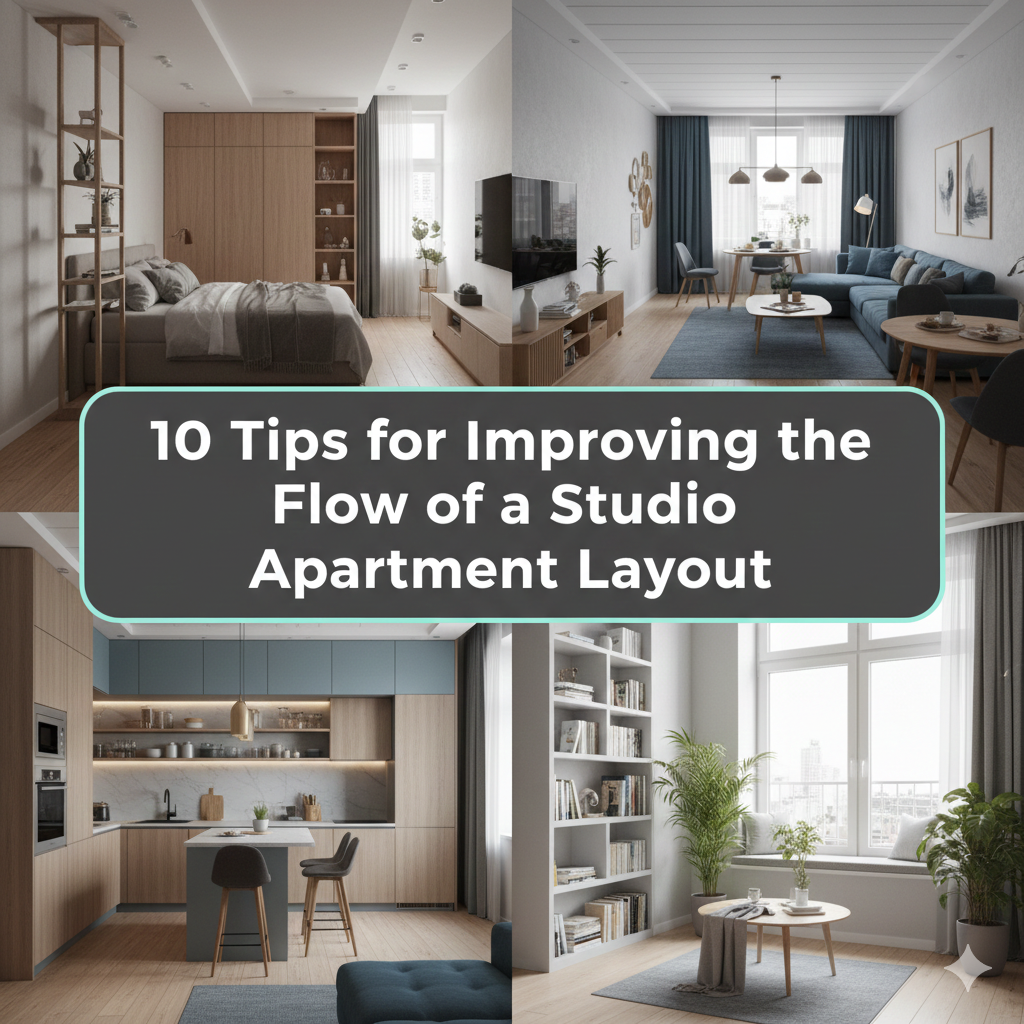
You enter your studio apartment and something seems… off.
Maybe it feels cramped. Perhaps you keep walking into furniture. Maybe the couch is too close to the bed, and the kitchen seeps into everything else. You can’t quite put your finger on it — but the space just doesn’t work.
The thing is, it’s not usually about size.
Most studio apartment design dilemmas aren’t all about the square footage. They’re caused by poor flow. Flow is the invisible force that makes a space feel airy, easy to navigate and comfortable to live in. A big room can feel suffocating when flow falls flat. With flow right, even a tiny studio can feel surprisingly spacious.
The good news? Flow is fixable. You don’t have to tear down walls or hire an interior designer. And with the right studio apartment space hacks for improved layout flow, you can literally change the way your space feels — all without spending a ton of cash.
These 10 hacks are pragmatic, tried-and-true and plainspoken. Whether you are new to moving into a studio or have just been in the same one for years feeling like something isn’t working, this guide is here to help.
Let’s fix your flow.
What “Layout Flow” Really Is (And Why It’s So Important)
Before we jump into the hacks, let’s clarify one thing.
Layout flow is not a designer buzzword. It’s a daily feeling for you.
Flow is how easily and naturally you pass through a space. It’s the route your eyes take when you walk through the door. It’s whether the way you have arranged your furniture makes daily tasks easier or harder. It is the difference between a room that feels like a maze and one that feels like a sudden blast of fresh air.
Flow is even more important in a studio apartment because you’re living, sleeping, working and eating in the same room. Each zone must transition seamlessly to the next. If you make one zone awkward, the entire apartment suffers.
Good layout flow means:
- Clear pathways between furniture
- Defined zones for different activities
- No visual clutter blocking the eye line
- Furnishings that match the scale of the space
- Light that moves freely through the space
Bad layout flow means:
- Furniture pushed against every wall
- Lack of division between sleeping and living spaces
- A sense of chaos despite how clean the room is
- Cramped, awkward pathways you have to shuffle through
So let’s make it right — hack by hack.
Hack #1 — Map Your Space Before You Move One Piece of Furniture
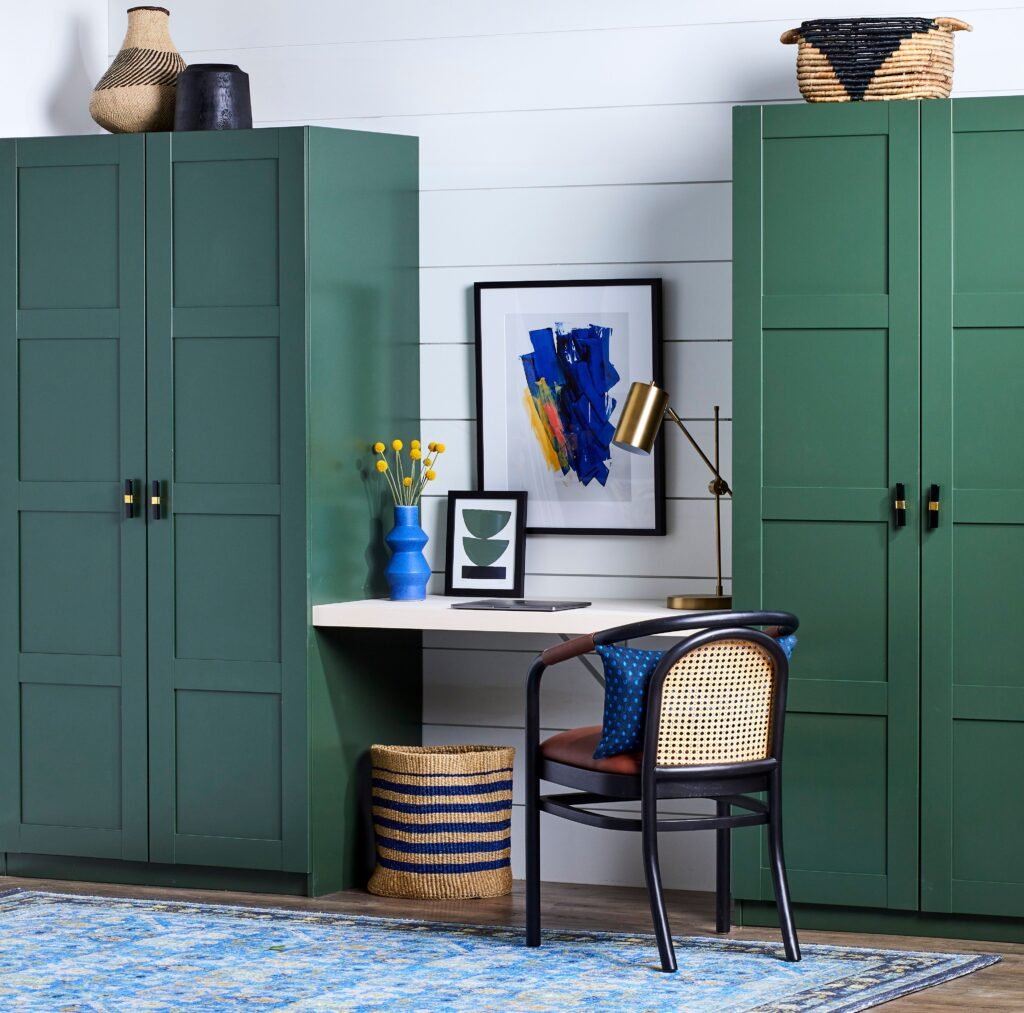
This one costs absolutely nothing. And it spares you hours of frustration.
Don’t rearrange anything before taking a piece of paper and drawing what your apartment looks like. You don’t have to be perfect. Just rough measurements and a general idea of where the windows, doors, and outlets are.
Why This Step Changes Everything
Most people skip this step. They feel their way around a room, tire out and end up with a layout no better than before.
Map the space first and get a holistic view. You can spot natural pathways. You can identify dead zones. You can figure out where the light is coming from and where it isn’t hitting.
Studio Apartments and the 3-Zone Rule
In every studio apartment, there need to be three distinct zones:
| Zone | Purpose | Key Furnishings |
|---|---|---|
| Sleep Zone | Rest and privacy | Bed, nightstand, soft lighting |
| Living Zone | Relaxing and socializing | Sofa, coffee table, TV or bookshelf |
| Work/Dining Zone | Eating and productivity | Desk or dining table, chair |
Draw a map of these three zones onto your sketch. Ensure each one has its own space — even when that space is small. This very simple act of defining zones is the basis of good layout flow.
Hack #2 — Pull Furniture Away From the Walls
This sounds backwards. Smaller room = stow it all against the walls, right?
Wrong. This is a classic studio apartment mistake — and it kills flow completely.
When all furniture is pressed against a wall, the center of the room acts as dead space. The room resembles a waiting room. Everything feels stiff and disconnected.
The Float Method
Try “floating” your furniture. Move your sofa a few inches — or even a foot — from the wall. Place your bed so it’s centered on one side of the room, not shoved into a corner.
Floating furniture serves two powerful functions:
- It tricks the eye into seeing more space by displaying floor on each side
- It inherently delineates zones, with no walls or dividers required
Hack #3 — Designate Spaces Without Putting Up Walls
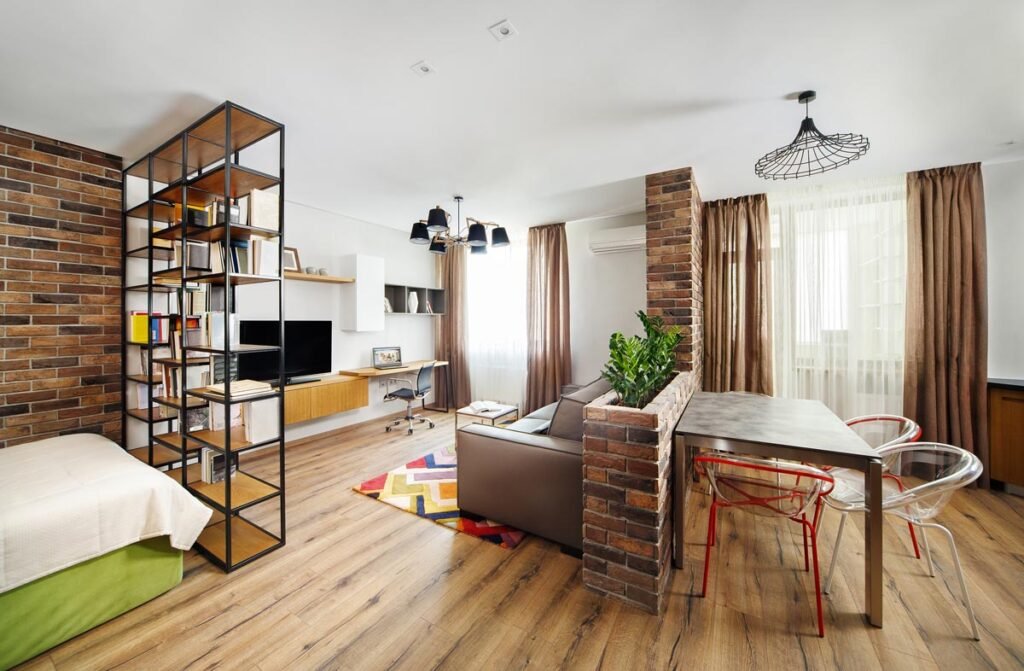
One rug. That’s all it takes to make an open, confusing studio feel like a purposefully designed one.
Rugs are one of the most effective studio apartment space hacks for smoother layout flow — and one of the most underused.
How Rugs Create Flow
A rug beneath your sofa and coffee table instantly declares: this is the living space. A new rug placed under your desk declares: this is the workspace. You haven’t built anything. You haven’t bought new furniture. You just told a visual story using color, texture and placement.
That matters, because your brain processes zones automatically. You feel more comfortable in the space when the zones are clear. When everything runs together in one indistinct room, your brain works harder — and the space feels smaller and more stressful.
Rug Sizing Guide for Studios
Getting the size of your rug wrong is the #1 rug mistake in small apartments. Here’s a quick guide:
| Zone | Recommended Rug Size | Placement Tip |
|---|---|---|
| Living area | 5×8 ft or 6×9 ft | Front legs of sofa on the rug |
| Bedroom area | 5×8 ft or 4×6 ft | Under the bottom two-thirds of the bed |
| Work/dining zone | 4×6 ft or round rug | Centered under the table and chairs |
A rug that is too small is worse than no rug at all — it leaves furniture looking like it’s floating uncomfortably. Always size up when in doubt.
Hack #4 — Use Furniture Layout to Make a Visual Divide
No room dividers. No curtains. No bookshelves acting as walls.
Sometimes the smartest divide is just smart furniture placement.
The Back-of-Sofa Trick
Place your sofa so that its back faces the sleeping area. This one move creates a natural visual and psychological separation between your living zone and sleep zone — without cutting out light or making the room feel smaller.
It works because the back of the sofa functions like a soft wall. You slip through the living side to unwind. You walk around the other side to sleep. Two distinct zones. One piece of furniture. Zero extra cost.
Other Furniture Divides That Work
- A narrow console table positioned behind the sofa adds structure and a landing spot for keys, bags or a lamp
- A bookshelf placed perpendicular to the wall (not flat against it) serves as a natural room divider while also offering storage
- A bench at the end of the bed shows where the sleeping zone ends
These aren’t mere space hacks — they’re layout flow solutions. They lead the eye and the body from one zone to another seamlessly.
Hack #5 — Choose Furniture That Has More Than Just One Job
In a studio apartment, single-purpose furniture is a luxury you likely can’t afford. Not for the sake of money — but because of space.
Every piece of furniture needs to justify its square footage by performing at least two functions.
The Best Multi-Function Furniture for Studio Flow
| Furniture Piece | Primary Use | Bonus Use |
|---|---|---|
| Storage ottoman | Seating / footrest | Hidden storage for blankets, books |
| Daybed or sofa bed | Sofa for living zone | Bed for guests |
| Dining table with drawers | Eating and working | Storage for office supplies |
| Bed with under-storage | Sleeping | Seasonal clothing, shoes, bedding |
| Bench with storage | End-of-bed accent | Extra seating, shoe storage |
| Nesting coffee tables | Surface space | Tuck away when not needed |
Multi-function furniture improves flow because it decreases the number of pieces in the space. Fewer pieces means more floor space. More floor space means wider pathways and a more open feel.
Hack #6 — Nail Your Lighting Zones
Lighting is the most underappreciated layout tool in any home. In a studio apartment, it’s nearly essential.
Here’s why: overhead lighting treats your whole apartment like one flat room. It doesn’t distinguish between zones. It doesn’t create atmosphere. It makes everything seem equal — and that’s a problem in a studio.
Layer Your Lighting
The goal is to have at least one light source per zone, placed at different heights. This is known as layered lighting, and it changes the atmosphere of a space.
🌟 LIGHTING LAYER GUIDE

TOP LAYER     → Overhead light (general illumination for whole room)
MIDDLE LAYER  → Floor lamps, table lamps (zone-specific ambiance)
LOW LAYER     → LED strips, under-shelf lighting (depth and warmth)
Lighting by Zone
- Sleep zone: A warm bedside lamp sets a cozy, wind-down mood. Avoid bright white bulbs here.
- Living zone: A floor lamp beside the sofa creates warmth and defines the seating area.
- Work zone: A focused desk lamp helps with eye strain and signals: this is a productive space.
When every zone has its own independent light source, the eye follows naturally from zone to zone. The room feels intentionally designed. Flow improves dramatically — and not a single piece of furniture has been moved.
Hack #7 — Remember to Keep Pathways at Least 30 Inches Wide
This is a rule, not a suggestion.
If you can’t walk through your apartment comfortably without turning sideways or bumping into furniture, your layout flow is broken. Full stop.
The 30-Inch Rule
Interior designers and architects recommend a minimum of 30 inches (roughly 76 centimeters) of clear pathway between pieces of furniture. This is the minimum for easy movement.
Main pathways — such as the route from your front door to your kitchen — need to be 36 inches or wider.
How to Check Your Pathways
Stroll through your apartment as if performing your normal morning routine. Make a note of every place you feel squeezed. Measure those spots.
If any pathway is under 30 inches, something has to give. Common fixes:
- Replace a big sofa with a smaller loveseat
- Swap a full dining table for a compact drop-leaf table
- Get rid of a piece of furniture altogether and enjoy the open space
Less furniture, wider pathways, improved flow. It’s that simple.
Hack #8 — Use Mirrors to Create a Bigger Visual Space
Mirrors are one of the oldest tricks in the interior design playbook — and they never fail.
A mirror in the right spot makes a room feel larger by reflecting light and creating the illusion of depth. In a studio apartment, this visual trick is incredibly powerful for enhancing perceived flow.
Where to Place Mirrors for Maximum Effect
- Opposite a window: Bounces natural light deep into the room, making it appear brighter and larger
- At the end of a narrow pathway: Gives the illusion that the path continues, lessening the feeling of being boxed in
- Behind a light source: A mirror behind a lamp doubles its glow and warms up a zone
- A leaning floor mirror near the living area: Creates depth without taking up wall space
Mirror Sizing Tips
| Room Size | Recommended Mirror |
|---|---|
| Under 400 sq ft studio | Large floor mirror OR one oversized wall mirror |
| 400–600 sq ft studio | Two medium mirrors in different zones |
| Any size | Avoid many small mirrors — they create visual noise |
One large mirror does more for layout flow than three small decorative ones. Go big or skip it.
Hack #9 — Clear the Floor (Your Pathways Are Sacred)
You could have your furniture placed perfectly. Beautiful rugs. Great lighting.
And then you put stuff on the floor — and it all falls apart.
Floor clutter is the number one enemy of layout flow in studio apartments. Bags dropped by the door. Shoes scattered near the bed. A pile of laundry in the corner. Books stacked on the floor next to the sofa.
All of these things limit your pathways. They cause your eye to break its natural movement through the space. They also make the room feel chaotic, even when it technically isn’t.
The Floor-Clear Habit
Make it a habit to keep the floor free of anything that doesn’t belong there permanently. This means:
- Shoes go on a rack — not left on the floor
- Bags hang on hooks — not dropped by the door
- Laundry belongs in a hamper — not piled in a corner
- Chargers and cords get managed — not snaking across the floor
This is less about organization and more about flow. Clear floors = open pathways = a room that breathes.
For tips on keeping your entire studio neat and functional from top to bottom, Studio Apartment Setup covers everything from furniture picks to layout strategies that really work in real small spaces.
Hack #10 — Go Light on Color to Make the Space Feel Larger
Color has a direct effect on how large or small a space feels. And in a studio apartment, the wrong color choices can make even a well-arranged space feel constricting and heavy.
This does not mean that your apartment needs to be all white. It means being selective about where you apply color and how much.
The Light-Base Rule
Use light, neutral tones — whites, creams, warm grays, soft beiges — on your largest surfaces: walls, floors and large pieces of furniture.
These colors reflect light rather than absorbing it. They visually push the walls outward. They make ceilings feel higher. They are the foundation of a space that feels airy and open.
Add Color Through Accents
Once your base is light, bring in personality with accents: throw pillows, a colored rug, artwork, plants or a single bold-colored chair. This gives your studio personality without weighing it down.
🎨 COLOR FLOW FORMULA FOR STUDIOS

60% → Light neutrals (walls, floors, large sofa)
30% → Mid-tone accents (rugs, curtains, bedding)
10% → Bold pops of color (pillows, art, plants)
According to Architectural Digest’s guide to small space design, a light color palette is consistently one of the top recommendations for making compact living spaces feel larger and more open — particularly in single-room layouts like studios.
Dark walls absorb light. Light walls amplify it. In a small space, that difference is enormous.
Putting It All Together: Your Layout Flow Checklist
Here’s a quick-reference summary of all 10 hacks:
| # | Hack | Cost Level | Impact |
|---|---|---|---|
| 1 | Map your space and plan 3 zones | Free | ⭐⭐⭐⭐⭐ |
| 2 | Float furniture away from walls | Free | ⭐⭐⭐⭐⭐ |
| 3 | Use rugs to define zones | Low–Medium | ⭐⭐⭐⭐⭐ |
| 4 | Divide zones with furniture placement | Free | ⭐⭐⭐⭐ |
| 5 | Choose multi-function furniture | Medium | ⭐⭐⭐⭐⭐ |
| 6 | Layer lighting by zone | Low–Medium | ⭐⭐⭐⭐ |
| 7 | Keep pathways 30 inches wide | Free | ⭐⭐⭐⭐⭐ |
| 8 | Use mirrors to expand visual space | Low–Medium | ⭐⭐⭐⭐ |
| 9 | Keep floors clear at all times | Free | ⭐⭐⭐⭐⭐ |
| 10 | Go light on color as your base | Low | ⭐⭐⭐⭐ |
Free hacks total: 5 out of 10. Better layout flow doesn’t require a big budget. It requires a smart approach.
Layout Flow — Common Mistakes to Avoid
Studio layouts can still go wrong, even with good intentions. Here’s what to watch out for:
Blocking natural light. Tall furniture should never be placed near windows. Light is your best layout tool — don’t deny it.
Too much furniture. More furniture does not equal more function. In a studio, that means less flow. Edit ruthlessly. Every piece has to earn its placement.
Matching everything too perfectly. Ironically, rooms where every piece of furniture coordinates can feel stiff and staged. Mixing textures and scales adds visual interest and helps make zones feel distinct.
Ignoring vertical space. Flow isn’t just horizontal. Draw the eye upward with tall shelves, hanging plants or artwork hung high on the wall. This makes ceilings seem higher and gives the room a greater sense of space.
Treating the studio like a mini version of a large apartment. Studios require their own design logic. A king-sized bed in a 400 sq ft studio destroys flow. Scale matters enormously.
Frequently Asked Questions
Q: What is the most important studio apartment space hack for improving layout flow?
A: The most important step is deciding what your three zones — sleep, living and work — are first. That foundation is what everything else gets built on. Without clear zones, no amount of furniture moving is going to fix the flow.
Q: How can I create a sense of separation between my bed and living area without a wall?
A: The back-of-sofa trick works best. Place your sofa so the back faces the bed. You can also use a large area rug to anchor the living zone, a bookshelf placed perpendicular to the wall, or simply different lighting temperatures in each of your zones.
Q: Is it possible to fix layout flow in a studio apartment under 300 square feet?
A: Absolutely. Smaller studios often benefit the most from flow improvements because every inch of wasted space is felt immediately. Focus on clear pathways, multi-function furniture and light colors to make the most of a very small footprint.
Q: Should I place my bed against the wall or in the center of the room?
A: Neither extreme is always correct. Pushing the bed right back into a corner can create an enclosed and difficult-to-make space. Centering it could waste precious space. A good middle ground is placing the headboard flat against a wall with space on both sides — at least 24 inches on the sides you walk past every day.
Q: What size rug is best for a studio apartment living area?
A: For studio living zones, a 5×8 ft or 6×9 ft rug is generally the sweet spot. Its front legs should be on the rug — this anchors the zone and makes it feel purposeful. Steer clear of small rugs that fit only under the coffee table.
Q: How do I improve layout flow with no budget?
A: Start with the free hacks. Map your zones. Float your furniture away from walls. Keep floors completely clear. Widen your pathways. Rearrange what you already own. Without spending a single dollar, these steps alone can dramatically change how your studio feels.
Q: Does lighting really make a difference to how spacious a studio feels?
A: Yes — significantly. Layered lighting with zone-specific lamps gives each area a purpose and distinct character. A single overhead light flattens the room, stripping it of all sense of dimension. Adding a single floor lamp in your living zone creates an instant improvement in how the space feels.
Wrapping It Up
A studio apartment isn’t a compromise. It’s a design challenge — and one you can definitely win.
Good studio apartment space hacks for layout flow don’t need a renovation budget or an interior design degree. They need a fresh perspective, a willingness to rearrange, and some smart investments in the right places.
Map your zones. Float your furniture. Use rugs and lighting to define spaces. Keep pathways wide and floors clear. Let light — both natural and artificial — do the heavy lifting.
When flow is right, everything changes. The apartment feels bigger. Daily routines feel easier. Guests walk in and feel at home right away. And most importantly, you belong.
Small space. Smart layout. Big difference. That’s the studio apartment mindset.