

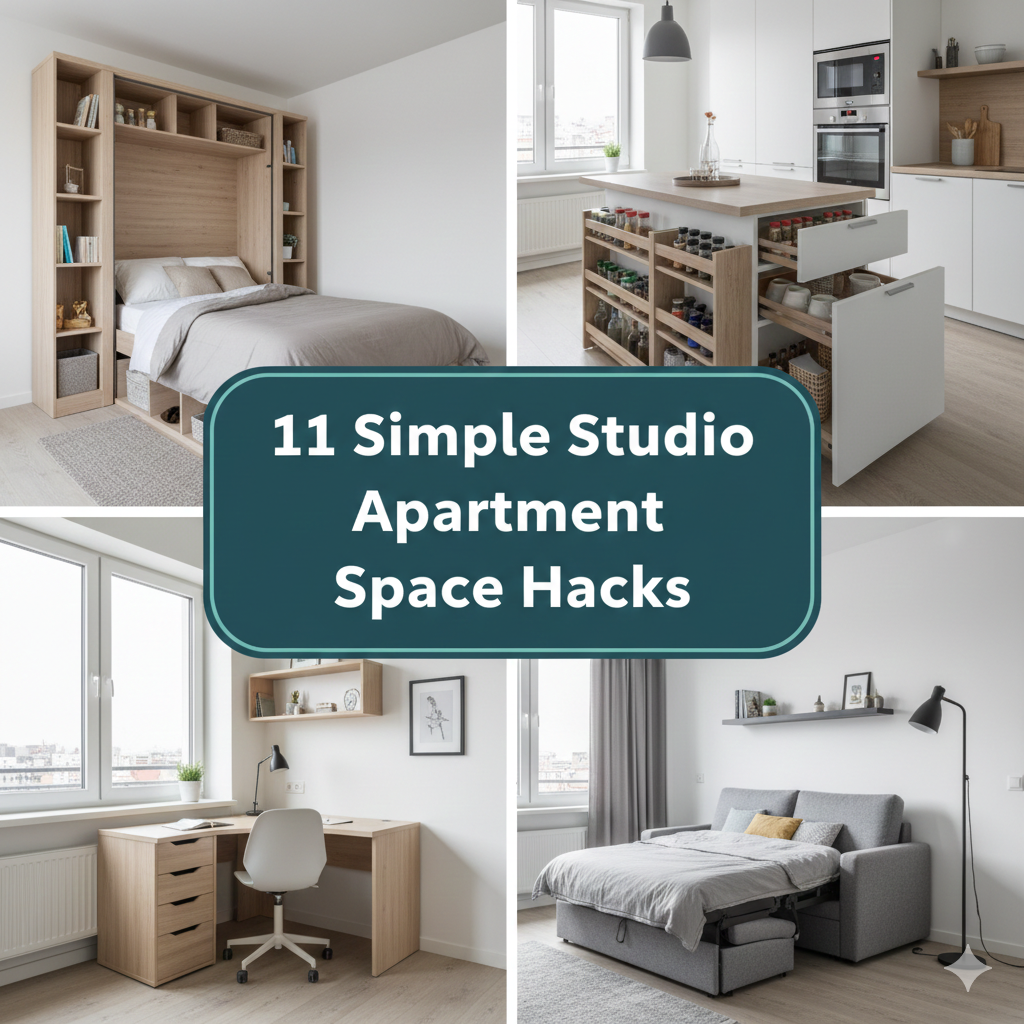
Living in a studio is kind of like playing a puzzle every day.
You have a bathroom, a kitchen, and one room that has to be your bedroom, living room, dining area, and workspace — all at once. And of course, you want it to look good, too.
That’s where balance comes in.
A balanced interior does not mean it has to all match perfectly. It means that your space is calm, intentional, and livable. It means nothing is overly crowded or too empty. It means coming into your apartment and feeling ease, not overwhelm.
The great news? You don’t need a designer’s budget or a larger apartment to get there. All you need are the right studio apartment space hacks — the kind designed with small, open-plan living in mind.
This piece runs you through 11 simple, pragmatic hacks to help you create a well-balanced interior without stress, hefty spending, or one wall being knocked down.
Let’s get into it.
1. Before You Do Anything Else, Define Your Zones
The number one reason studio apartments feel so chaotic is the lack of zones.
In a home where your bed is three feet from your couch and your desk is wedged next to the kitchen, everything bleeds together. Your brain never properly switches off from work mode or relaxes into sleep mode, and there’s no visual separation.
The fix? First, define your zones — before you even move a piece of furniture.
Consider your studio to be full of virtual rooms. You might have:
- A sleep zone (the area around your bed and nightstand)
- A living area (sofa, coffee table, possible TV)
- A workstation (desk, chair, lighting)
- A dining area (a small table or even a breakfast bar)
You don’t have to wall off these zones. You need intention.
Zone-Breaking in Wall-Free Spaces
| Method | How It Works | Cost |
|---|---|---|
| Area rugs | Visually anchor each zone | $30–$150 |
| Bookshelf dividers | Create a physical barrier between spaces | $40–$200 |
| Curtain panels | Soft, flexible room dividers | $20–$80 |
| Lighting changes | Different lamps for different zones | $15–$100 |
| Furniture placement | Strategic back-to-back arrangements | Free |
Once you have defined your zones, everything else seems to snap into position much more naturally.
2. Pick One Color Palette and Stick to It
Color is one of the most effective tools in a small space — and one of the most misused.
A studio apartment with too many different colors competing for your attention ends up looking very busy and unbalanced. The eye doesn’t know where to rest. The room feels smaller than it appears.
The answer is relatively straightforward: pick one main color palette and stick with it.
A color palette doesn’t need to be dull or uninspiring. You can have:
- One dominant color (for example: white, cream, or pale gray for the walls and larger pieces of furniture)
- One accent color (for cushions, throws, and artwork — think terracotta, sage green, or navy)
- One neutral (to pull it all together, like natural wood tones or beige)
That’s it. Three colors, maximum. Everything in your apartment should fall into one of those three categories.
Why a Cohesive Color Palette Creates Harmony
When colors flow from zone to zone, the eye circulates smoothly through the space. The apartment feels cohesive — as if it was thoughtfully designed rather than assembled piece by piece.
This is one of the most underrated studio apartment space hacks because it costs absolutely nothing to plan but is a game changer aesthetically.
3. Make Your Furniture Multitask
In a tiny apartment, single-use furniture is a luxury you cannot afford.
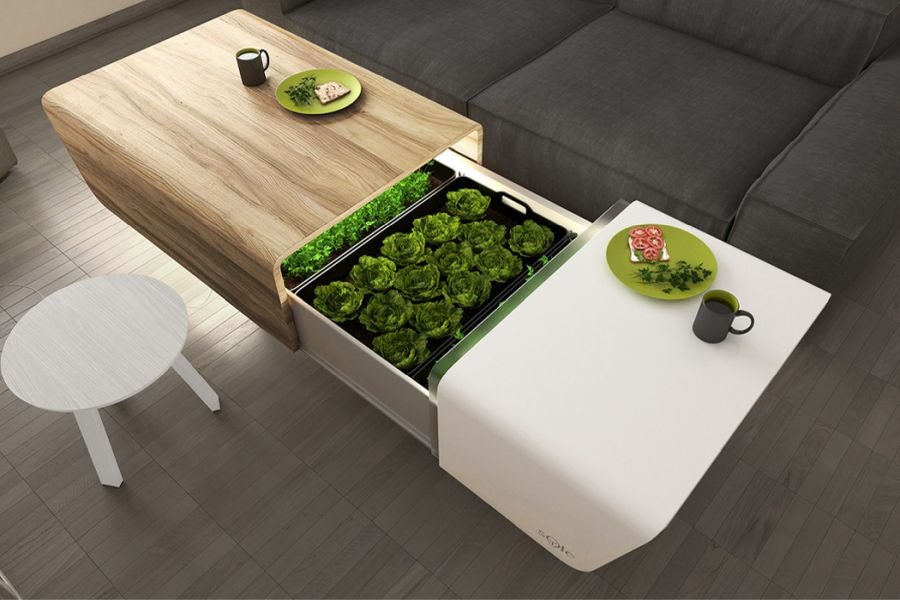
Every piece has to earn its keep. A bed should provide storage beneath. A coffee table should have a shelf or lift top. An ottoman should lift up to hold blankets or spare pillows.
This is not only about saving space — it’s a matter of balance. You have fewer pieces of furniture in the end if each serves more than one use. Fewer pieces lead to less visual clutter. Less clutter means a more balanced, breathable interior.
Best Multi-Purpose Furniture for Studios
- Storage bed frame: Drawers underneath serve in place of a dresser
- Lift-top coffee table: Hidden storage and a dining/work surface
- Sleeper sofa: Couch by day, guest bed by night
- Nesting tables: Put them away when not in use
- Storage ottoman: Footrest, seating, and storage in one
- Fold-down wall desk: Disappears entirely when not needed
- Storage bench: Sits at the foot of the bed, stores extra items
Every swap clears out a furniture piece you don’t need anymore. Your room immediately feels more open and more balanced.
4. Use Rugs to Ground Every Zone
A rug does something magical in a studio apartment — it signals to your brain “this is one space and this is another.”
Without rugs, an open-plan studio is one big room without walls. With the right rugs in the right places, it suddenly feels like a considered home.
The main rule: each zone should have its own rug.
Your living zone gets a rug under the sofa and coffee table. Your dining area gets a rug beneath the table. Your sleep zone gets a rug alongside the bed. Even your work zone can have a small mat under the desk chair.
Studio Apartment Rug Sizing Guide
| Zone | Ideal Rug Size |
|---|---|
| Living space (sofa + coffee table) | 5×8 ft or 6×9 ft |
| Dining zone (table + chairs) | 4×6 ft or 5×8 ft |
| Bedroom zone (next to the bed) | 2×3 ft runners on either side |
| Work zone (desk area) | 3×5 ft or office mat |
Stick to rug colors and patterns within your color palette. That’s how the zones read as separate, yet still visually connected — which is what a balanced interior is all about.
5. Conquer the Vertical Space
When you can’t spread wide, soar upward.
This is one of the most classic studio apartment space hacks, and it’s just as effective for balance as it is for storage.
Vertical elements draw your eyes upward. This makes ceilings seem higher and rooms feel roomier. It also introduces a visual rhythm — an important ingredient in a balanced interior.
How to use vertical space effectively:
- Bookshelves that nearly touch the ceiling
- Floor-to-ceiling drapes hung high and wide
- Vertical gallery walls instead of horizontal groupings
- Tall plants such as fiddle leaf figs or snake plants
- Wall shelving stacked in a vertical arrangement
The Curtain Trick That Changes Everything
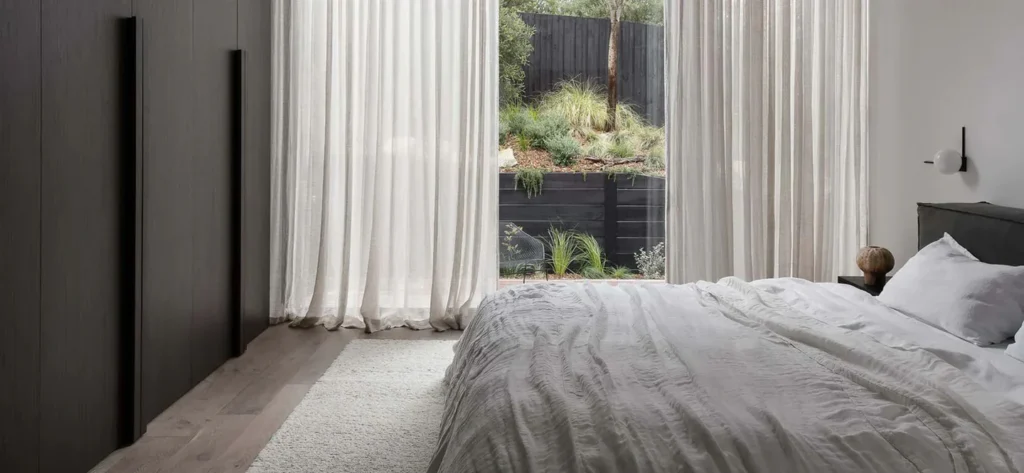
Hang your curtains as close to the ceiling as possible — even if the actual window is much lower. Let them drop all the way down to the floor.
This simple trick makes your ceilings feel dramatically taller. It’s one of the simplest and most transformative studio apartment space hacks you can pull off in an afternoon for less than $50.
6. Keep Negative Space — Not Everything Has to Be Full
Here’s a hack that goes against the instinct of most people living in a small apartment: leave some space empty.
Negative space is the intentional emptiness in a room. It is the corner that has nothing in it, the shelf with only two things on it, the wall that has nothing hanging from it.
A lot of people crowd every corner of a small apartment, whether out of need or habit. But this doesn’t create balance — it creates visual chaos.
Negative space provides a resting place for your eye. It allows the other things in the room to shine more. It gives the entire space a more serene and purposeful feeling.
A Simple Principle for Negative Space
A good rule of thumb is the 60/40 principle: try to fill your visual space by about 60% and leave 40% open. It applies to shelves, walls, and even floor space.
If your shelves are crowded with things, take a third of them away. If every wall has something hanging on it, remove one piece. If every corner has furniture, try clearing one.
The result is immediate. The room breathes. The balance returns.
7. Bring in Natural Light Wherever You Can
Light is the quickest way to change how a room feels.
A bright studio apartment feels larger, airier, and more balanced than a dark one — even when the square footage is exactly the same. Natural light also makes colors appear more true to life, so your carefully selected color palette will really pop.
How to make the most of natural light in a studio:
- Get rid of heavy drapes and replace them with sheer curtains or blinds
- Place a mirror opposite a window to reflect light
- Keep windowsills clear of clutter
- Avoid blocking light with furniture — choose glass or lucite pieces near windows
- Opt for light-colored flooring or large rugs to bounce light upward
When Natural Light Is Limited
Not every studio has fantastic windows. If yours doesn’t, artificial lighting becomes your best friend.
Layer your lighting with three types:
- Ambient lighting — overhead lights that provide general illumination
- Task lighting — desk lamps and reading lights for specific activities
- Accent lighting — LED strips, fairy lights, or small lamps for warmth
Multiple layers of light give a room the feeling of being designed and balanced, rather than illuminated by a single harsh ceiling bulb.
If you’re interested in building a properly balanced studio from the ground up, Studio Apartment Setup is packed with tons of practical inspiration for small-space living.
8. Choose Furniture That Matches the Scale of Your Space
Scale is everything in a small apartment.
A massive sectional sofa may look fabulous in a showroom. In a 400-square-foot studio, it’s a disaster. It steals space, obstructs pathways, and throws off every other element in the room.
Balanced interiors demand furniture that is proportionate to the environment it lives in.
Scale guidelines for studio apartments:
- Sofa: Two-seater or apartment-sized (less than 80 inches wide)
- Dining table: A round table for two or a narrow rectangular table seats more without dominating
- Bed: A low-headboard platform bed allows the room to feel open
- Coffee table: Small-to-medium and preferably with open legs to keep the floor visible
- Desk: A small wall-mounted or corner desk
Visual Weight Matters Too
Furniture with thin legs and open bases feels visually lighter. Low-profile furniture or pieces with visible floor space beneath them make the room feel less stuffy.
This is why a glass coffee table or a sofa with tapered legs can work wonders for balance in a small studio. According to Architectural Digest, choosing furniture with exposed legs is one of the top designer-recommended tricks for making small spaces feel more open and airy.
9. Declutter Regularly — Balance Needs Breathing Room
There’s no design hack that can save a cluttered apartment.
Clutter is the number one enemy of balance in a small space. No matter how beautiful your color palette is or how well you’ve defined your zones — if your surfaces are cluttered, the room feels chaotic.
Decluttering in a studio apartment must become a habit, not just a one-time event.
A simple monthly declutter routine:
- Walk into each zone with a basket
- Remove things that are out of place in that area
- Put things back in their proper place — or get rid of them entirely
- Clear everything off flat surfaces (tables, counters, bookshelves)
- Ask yourself: have I used this in the last 30 days? If no, does it need to stay?
The One-In, One-Out Rule
Whenever something new comes into your apartment, something else has to go.
Buy a new throw pillow? Donate the old one. Get a new kitchen gadget? Remove one that you hardly ever use.
This rule prevents clutter from gradually creeping back in — which happens faster in small spaces than anywhere else.
10. Use Mirrors Strategically for Visual Balance
Mirrors are one of the most versatile studio apartment space hacks available — especially when it comes to creating balance in your home.
A properly placed mirror does more than make a tiny room look bigger. It creates symmetry, bounces light around, and introduces a decorative element that feels deliberate.
Strategic mirror placement ideas:
- Facing a window: Bounces natural light around the room
- At the end of a narrow space: Gives the room a sense of length
- Behind a light source: Strengthens the glow from a lamp or candle
- As part of a gallery wall: Provides depth among framed art
- Full-length leaning mirror: Gives the illusion of height and fits in any zone
Mirror Shapes and What They Add
| Mirror Shape | Visual Effect | Best Placement |
|---|---|---|
| Large rectangular | Elongates the room | Above a sofa or bed |
| Round | Softens angular spaces | Living or dining zone |
| Full-length | Adds height, checks outfits | Bedroom zone or entryway |
| Arched | Adds elegance | Against a blank wall |
| Clustered small mirrors | Creates art installation feel | Gallery wall |
A well-placed mirror can genuinely change the balance and proportion of a room.
11. Bring in Plants for Life and Visual Rhythm
Plants do what no couch can do — they bring organic, natural energy into a space.
Plants serve a double purpose in a studio apartment. They add color and texture. And they provide a visual rhythm — a repeating element that connects zones and creates the feeling of flow.
A couple of carefully placed plants around your studio help the space feel linked together. One in the living zone, one near the window, one on a bathroom shelf — all of a sudden there’s a through line connecting the entire apartment.
Best plants for studio apartments:
- Snake plant: Flourishes in low light, grows tall and upright
- Pothos: Trails beautifully from shelves or hanging planters
- ZZ plant: Nearly impossible to kill, looks very sculptural
- Peace lily: Enjoys shade, brings a soft white bloom
- Fiddle leaf fig: A statement plant for a sunny corner
- Succulents: Small and easy to care for, ideal for desks and shelves
How to Use Plants for Balance
Don’t put all your plants in one corner. Place them intentionally across your zones. Alternate heights — a tall floor plant here, a small shelf plant there, a trailing plant in a hanging pot somewhere else.
This generates rhythm and movement throughout the space, which is just what a balanced interior calls for.
Your Balanced Studio: A Quick-Start Checklist
Before you head out to rearrange furniture or make new purchases, use this checklist to guide your plan of action:
Foundation Steps:
- ✅ Set your zones (sleep, live, work, dine)
- ✅ Choose a three-color palette
- ✅ Identify multi-purpose furniture swaps
Visual Balance Steps:
- ✅ Place rugs in each zone
- ✅ Use vertical elements (tall shelves, high curtains)
- ✅ Leave intentional negative space
Light and Scale Steps:
- ✅ Maximize natural light
- ✅ Layer artificial lighting
- ✅ Verify furniture is proportionate to your space
Finishing Touches:
- ✅ Place mirrors strategically
- ✅ Add plants across different zones
- ✅ Declutter every surface
Take this list step by step. You don’t need to do it all in one weekend. Just working on two or three of these will make a noticeable difference.
FAQs About Studio Apartment Space Hacks for Balanced Interiors
Q: What does it really mean to have a “balanced interior” in a studio apartment? A: A balanced interior is one where the space feels visually calm and intentional. Everything feels just right — not too busy, not too sparse. Colors, furniture, and decor work well together rather than compete with each other. It is about harmony — not perfection.
Q: How can I divide my bedroom from my living room in a studio? A: Area rugs, a bookshelf or open shelving unit, curtain panels, and even a shift in lighting can indicate the transition between zones. You don’t need walls — you need visual cues that signal to your brain that one zone has ended and another has begun.
Q: What are the best colors to use for a balanced studio apartment? A: Base colors should be light, neutral tones such as white, cream, soft gray, and warm beige. Add one accent color — dusty blue, sage green, or warm terracotta — for personality. Limit to a maximum of three colors total.
Q: How can I make my studio feel less cluttered while keeping all my stuff? A: Start with flat surfaces. Empty every counter, table, and shelf, then put back only items that are practical and visually intentional. Use storage solutions that conceal clutter — baskets, ottomans, under-bed bins — so there’s a home for everything.
Q: Are patterned rugs OK to use in a small studio? A: Yes, but keep patterns subtle. A low-contrast geometric or a soft stripe works nicely. Avoid large, bold, busy patterns in a small space — they can make the whole room feel chaotic instead of balanced. If you’re a fan of bold patterns, use them sparingly as a throw pillow or single accent piece.
Q: How many plants can I have in a studio apartment? A: There’s no precise number, but three to five plants spread across different zones is a good place to start. Vary the sizes and heights. The goal is rhythm and connection throughout the space — not a jungle in one corner.
Q: Do I have to buy all new furniture to balance out my interior? A: Absolutely not. The majority of these studio apartment space hacks work with furniture you already own. Rearranging, decluttering, adding rugs, and adjusting lighting and mirrors can create major balance without a single new purchase.
Wrapping It All Up
Achieving a balanced studio apartment isn’t wishful thinking — it’s absolutely possible when you go about it mindfully.
It starts with intention. Define your zones. Choose your palette. Pick furniture that fits. Let light in. Leave some space empty. Bring in a few plants. Keep surfaces clear.
None of these studio apartment space hacks involve a big budget or an extraordinary renovation. They require a rethink of how you use your space. It helps you stop trying to squeeze everything in, and start thinking about how things relate, flow, and feel together.
Balance isn’t about having less. It’s about getting the right things in the right places.
Your studio apartment is small — but it doesn’t have to feel small. With these 11 hacks, it can feel like a space that has been curated and designed with you in mind.
Start with one hack today. Notice how it changes the energy in your space. Then try another. In no time, you’ll have a studio apartment that feels balanced, beautiful, and completely yours.