

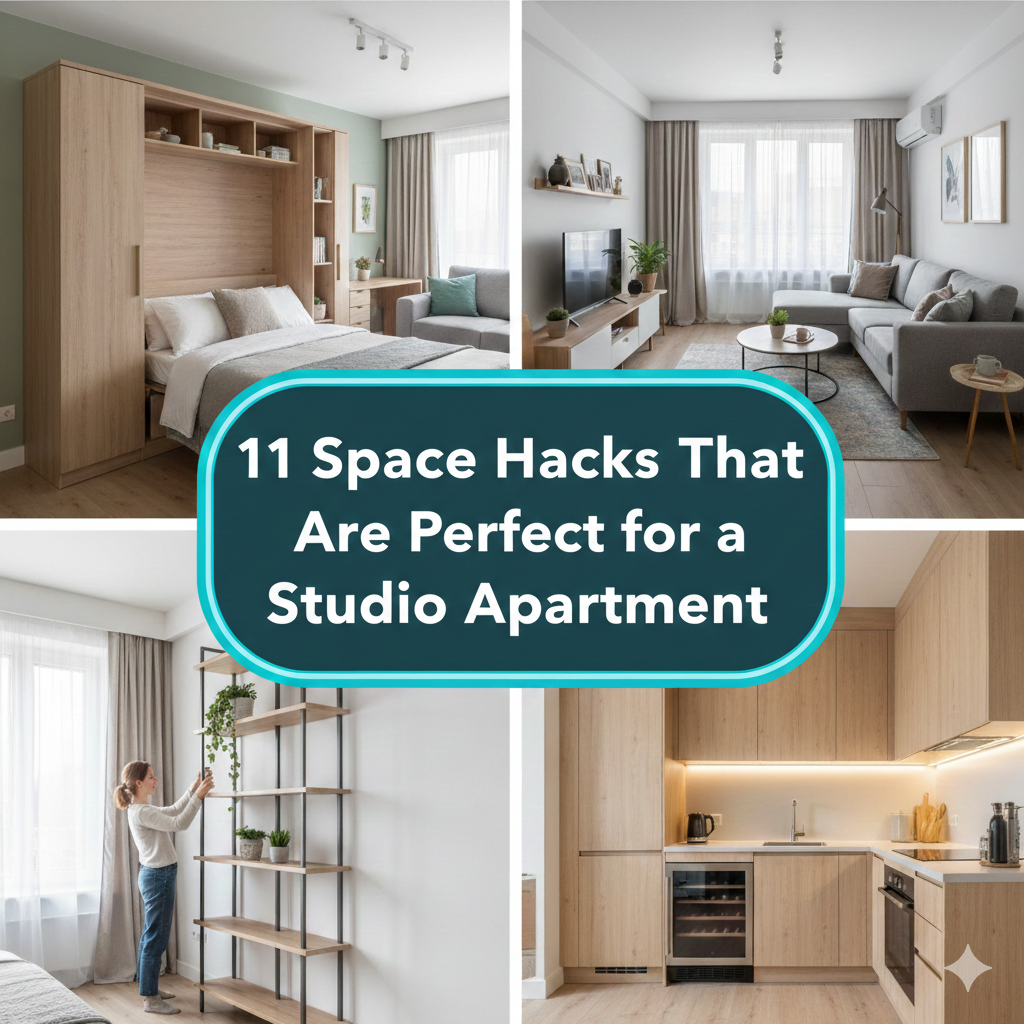
Studio living can feel like a puzzle at times. Everything has to fit into a single room — your bed, your couch, your kitchen and workspace, plus all of your stuff. It can get overwhelming fast.
But the good news is that you don’t have to spend thousands of dollars on a fancy renovation in order for your studio to feel bigger, more organized and more like home. You just need the proper tricks.
What we’re covering in this guide are 11 budget-friendly real-life studio apartment space hacks that work. These are all practical, affordable and simple to do — even those of us renting will not be able to make permanent changes.
Perhaps your studio is 300 square feet, or perhaps it’s 600; either way, these ideas are sure to make breathing easier, moving around simpler and actually enjoying the space you live in possible.
Why Mastering Small Space Living Is a Worthwhile Skill
Studio apartments are hotter than ever. As rents rise in big cities, more people are choosing smaller quarters to save money. The average size of a new apartment has been shrinking over the last decade, according to the U.S. Census Bureau.
Downsizing isn’t a punishment. It is a way of life that requires you to be imaginative, deliberate and organized. And once you know the tricks, it can even feel liberating.
The secret is to think smart — not spend big.
Hack No. 1: Use the Vertical Space Like It Is Free Real Estate
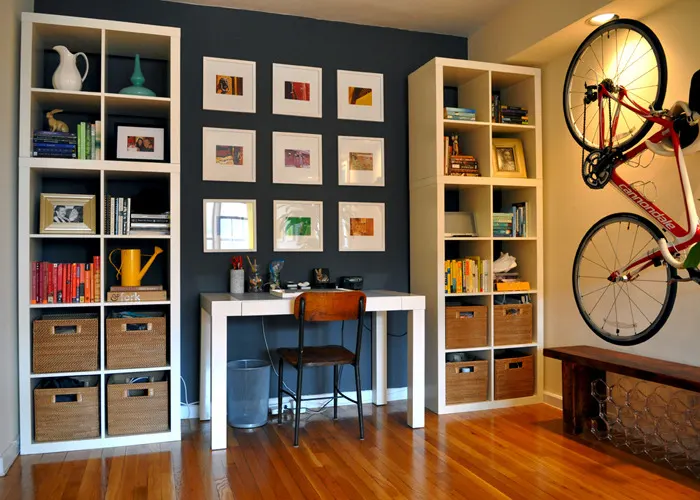
Most people consider square footage. But in a studio apartment, your walls are also priceless.
Go Tall With Shelving
Opt for tall, narrow bookshelves that extend near the ceiling rather than wide, low ones. An inexpensive IKEA Billy bookcase or something similar from Amazon or Target will hold a ton of stuff without taking up too much floor space.
Reserve the uppermost shelves for what you don’t use on a daily basis — seasonal items, extra blankets or decorative boxes.
Floating Shelves Are Your Best Friend
Floating shelves aren’t expensive, they’re easy to mount and they look good. Hang them above your desk, beside your bed or over the toilet in the bathroom. A set of three floating shelves can cost anywhere from $20 to $40, and that provides several square feet of storage space.
Pro Tip: If you’re unable to drill into the walls, use Command Strips. They hold surprising weight and do no damage.
Hack No. 2: Choose Furniture With Double (or Triple) Duty
Single-purpose furniture in a studio apartment is something of a luxury you can’t really afford.
The Sofa Bed Situation
One of the smartest investments for studio living is a sofa bed or a daybed with a trundle. This gives you seating during the day and sleeping space at night — all in one piece of furniture.
You don’t have to break the bank. Good sofa beds under $300 can be found at Wayfair, IKEA or Facebook Marketplace.
Ottoman With Storage
An ottoman that lifts up for storage is also a winner. Use it as a coffee table, extra seating and a storage bin for blankets, magazines or game controllers. A good one costs $40–$100.
Bed With Built-In Drawers
If you have a traditional bed, go for one with drawers under it. That eliminates the need for a separate dresser, which can eat up a massive chunk of floor space.
| Furniture Piece | Single Purpose | Multi-Purpose Version | Approximate Cost |
|---|---|---|---|
| Regular Bed | Sleeping only | Bed with storage drawers | $200–$500 |
| Plain Ottoman | Footrest | Ottoman with storage | $40–$100 |
| Couch | Seating | Sofa bed / futon | $150–$400 |
| Coffee Table | Surface only | Lift-top storage table | $80–$200 |
| Desk | Work only | Wall-mounted fold-down desk | $50–$150 |
Hack #3: Create Separate Rooms Without Building Walls
In a studio, one of the biggest issues is that everything is in a single open room. Your “bedroom” and “living room” occupy the same space.
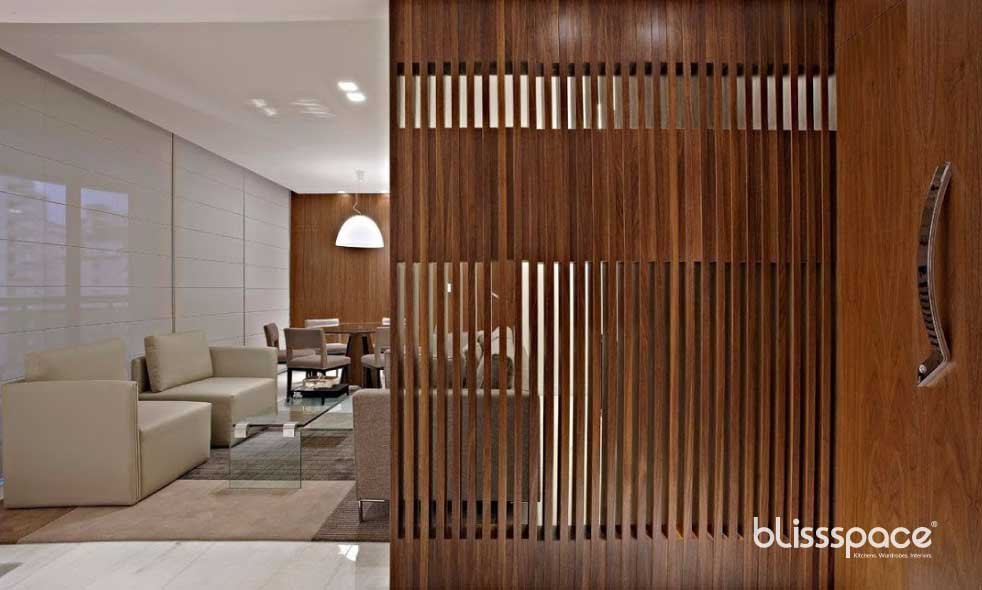
Establishing visual zones makes your brain believe you have different rooms — even if you don’t.
Use a Bookshelf as a Divider
Position a tall bookshelf perpendicular to a wall to separate your sleeping space from your living one. It establishes a natural breakpoint and provides additional storage at the same time. Opt for a bookshelf with an open back so light can still filter through.
Curtain Room Dividers
Hanging curtains from the ceiling to create separate spaces is a renter-friendly and wallet-friendly trick. A ceiling-mounted curtain rod and a few curtain panels can cost $30–$60. This is a particularly effective way to hide the bed from the rest of your apartment.
Rugs Define Zones
Put a rug under your sofa and coffee table to define the “living room zone.” Lay another rug beneath your bed to signal the “bedroom zone.” This costs very little but makes a big visual impact.
Hack No. 4: Mirrors Make Any Room Feel Twice as Big
This trick is used by interior designers in homes of all sizes — and it works every single time.
The Science Behind It
Mirrors bounce back light, generating an illusion of depth. When you view a mirror across a room, your mind interprets that as additional space. Essentially, it’s a visual cheat code.
Where to Put Them
- Prop a large floor mirror against a wall opposite a window
- Place a mirror in a dark corner to light it up
- Use mirrored closet doors if you can
- Use small mirrors on shelves to reflect light around
An oversized floor mirror can be found at stores such as HomeGoods, TJ Maxx or Amazon for as little as $30–$50. It’s one of the most high-impact, low-cost upgrades you can make.
Hack #5: Mount Your TV on the Wall
A TV stand takes up valuable floor space. Mounting your TV on the wall is a small adjustment that opens up several square feet in an instant.
What You Need
A simple TV wall mount runs about $20–$40 on Amazon. Most include all the hardware you need, and installation usually takes less than an hour with a drill.
Once the TV is on the wall, the area below becomes usable. You can put a little console table there, a plant, or nothing at all — and enjoy the open space.
Go Floating With Media Storage
Replace a bulky TV stand with a floating media console. These attach directly to the wall and store your cable box, gaming consoles and remotes. They’re sleek and keep the floor clear.
Hack No. 6: Maximize Your Kitchen With Smart Organizers
Studio kitchens are often tiny. You may have almost no counter space or cabinet space. The answer is to organize more intelligently and buy less.
Magnetic Knife Strip
Instead of a knife block sitting on your counter, install a magnetic strip on the wall. It holds your knives, keeps them within reach and clears counter space. Cost: about $15–$25.
Over-the-Door Organizers
The inside of cabinet doors is dead space in most kitchens. Use adhesive hooks or small racks to hang measuring spoons, pot lids or other small items.
Stack Everything
Use stackable containers for dry goods. They take up less space than mismatched boxes and bags, and they keep things orderly. A basic stackable container set retails for about $20–$30.
Tension Rod Hack
Set up a tension rod under the sink and hang spray bottles from it. It takes literally two minutes and costs next to nothing, doubling your under-sink storage.
Hack #7: Plan Your Lighting Intelligently
Lighting is one of the most underrated aspects of small space design. Poor lighting makes a studio look like a cave. Good lighting makes it feel buoyant and airy.
Layer Your Lighting
Don’t rely on a single overhead light. Layer your lighting by using:
- Ambient lighting — your primary ceiling light or a floor lamp
- Task lighting — a desk lamp for working, under-cabinet lights in the kitchen
- Accent lighting — string lights, LED strips behind the TV or a small table lamp
This adds depth and warmth to the room at very little cost.
Warm vs. Cool Bulbs
Warm white bulbs (about 2700K–3000K) give a space that cozy, homelike feeling. Cool white bulbs (5000K+) feel harsh and clinical. In a studio apartment, warm bulbs pretty much always look better.
A pack of LED warm white bulbs costs around $10–$15 and will make a noticeable difference.
Hack #8: Utilize Hidden and Forgotten Storage Spots
Every studio apartment has more storage potential than you could imagine. The trick is to find the spots that most people ignore.
Under the Bed
Most people don’t use this space effectively. Flat storage bins work well for shoes, out-of-season clothing or spare linens. If your bed is too low to the ground, bed risers (around $15–$20) can elevate it high enough for bins to slide underneath.
The Space Above Cabinets
The gap between your kitchen cabinets and the ceiling is prime storage real estate. Store rarely needed items up there in baskets or decorative boxes.
Behind Doors
The back of every door in your apartment is usable space. Over-the-door organizers come in all kinds of shapes and sizes — for shoes, pantry items, accessories, cleaning supplies and more. They typically cost $10–$30.
Inside the Bathroom Vanity
Use drawer organizers and small bins to maximize every inch inside your bathroom vanity. Most people simply toss things in there randomly and waste half the space to clutter.
Hack #9: Opt for a Neutral Color Palette (With Pops of Color)
Paint and decor colors have a large impact on how big or small a room feels.
Light Colors Open Up Space
White, off-white, light gray and soft beige bounce light around the room and make it feel bigger. If your studio has light-colored walls, that is already a big asset. If the walls are dark, ask your landlord if they’ll allow you to repaint.
If painting is not an option, light-colored bedding, curtains and furniture can create the same effect.
Add Color Through Accessories
A neutral base does not mean boring. Fill the room with personality through throw pillows, artwork, plants and rugs in your favorite colors. This keeps the space feeling open while still reflecting your style.
Hack #10: Go Digital and Declutter Ruthlessly
One of the best-kept secrets to making a studio feel spacious is simply having less stuff.
The One-In, One-Out Rule
Every time you bring something new into your apartment, remove something else. This prevents clutter from accumulating over time.
Go Digital Where You Can
Physical books, DVDs, magazines and paper documents take up physical space. Make the switch to e-books, streaming services and digital file storage. A Kindle can hold thousands of books in the space of a thin tablet.
Sell, Donate, or Trash
Go through your belongings a few times a year and be real with yourself. If you haven’t used something in six months, you most likely don’t need it. Selling things on sites like Facebook Marketplace or OfferUp can even put some money back in your pocket.
Hack No. 11: Bring in Plants — But Keep Them Strategic
Plants bring any space to life and give it a sense of welcome. Even in a small studio, the right plants can make the space feel more open. For more ideas on styling your studio from scratch, check out Studio Apartment Setup — a great resource for small space living tips and inspiration.
Best Plants for Small Spaces
- Pothos — pretty much unkillable, grows in low light, hangs beautifully
- Snake plant — upright and thin, takes almost no floor space
- Air plants — small, soil-less and ready for a shelf or glass globe
- Succulents — tiny, low-maintenance and look great bunched together on a windowsill
Use Plants to Soften Zones
A cluster of plants can form a gentle room divider or soften the corners of your studio. A tall plant in a corner by the window will pull the eye upward and help ceilings feel higher.
Quick Reference: Budget Breakdown for All 11 Hacks
| Hack | Estimated Cost | Impact Level |
|---|---|---|
| Vertical shelving | $20–$80 | High |
| Multi-purpose furniture | $40–$400 | Very High |
| Room dividers (curtains/rugs) | $30–$100 | High |
| Mirrors | $30–$80 | Very High |
| Wall-mounted TV | $20–$60 | Medium |
| Kitchen organizers | $15–$50 | Medium |
| Strategic lighting | $10–$40 | High |
| Hidden storage spots | $15–$50 | Medium |
| Color palette shift | $0–$30 | High |
| Decluttering | $0 | Very High |
| Plants | $5–$40 | Medium |
| Total Range | $185–$930 | — |
If they shop smart, most people can pull off all 11 hacks for under $500.
Putting It All Together: A Room-by-Room Action Plan
Rather than attempting to address everything at once, divide it up by area.
Begin With the Bedroom Zone: Purchase a bed with storage drawers, add a floating shelf for your nightstand and use under-bed bins for extra storage.
Next, Get the Living Area in Shape: Add a multi-functional ottoman, hang a big mirror, mount the TV and use a rug to define the space.
Move to the Kitchen: Use a magnetic knife strip, hang over-the-door organizers and tidy up with stackable containers.
Last, Tackle the Extras: Layer your lighting, throw in some plants and do a ruthless declutter to close it out.
According to The Spruce, using a cohesive design approach — combining smart storage, lighting and furniture choices — is the most effective way to make a small apartment feel intentional and well-designed.
FAQs About Budget-Friendly Studio Apartment Space Hacks
Q: How do I get my small studio apartment to feel larger without breaking the bank? A: The quickest and least expensive ways are to declutter, add mirrors, use light-colored decor and layer your lighting. All of these changes cost almost nothing and have a tremendous visual payoff.
Q: What’s the most essential piece of furniture for a studio apartment? A: Multi-purpose furniture is the biggest game-changer. A sofa bed or a bed with built-in storage drawers will do more for your space than almost anything else.
Q: Can I use these hacks if I’m renting and can’t drill holes? A: Yes! Many of these hacks don’t require drilling at all. Command strips, tension rods, over-the-door organizers, freestanding shelves and floor mirrors all work without leaving a lasting mark.
Q: How can I separate my bedroom from my living room in a studio? A: Use a bookshelf as a divider, hang curtains from the ceiling to create new zones or simply lay down rugs to define different areas. These techniques create the sensation of separate rooms without any construction.
Q: Which colors make a small apartment feel larger? A: Light, neutral colors such as white, soft gray and pale beige reflect more light and make a space feel open. Avoid very dark walls unless you’re going for a cozy, moody aesthetic intentionally.
Q: Is it a good idea to have plants in a studio apartment? A: Absolutely. The right plants — snake plants, pothos or succulents — don’t take up much space but make the apartment feel dramatically warmer and more alive. Just avoid large, sprawling plants that hog floor space.
Q: How often should I declutter a studio apartment? A: Most people do best with a full declutter every three to six months. The one-in, one-out rule also helps keep clutter from piling up in between.
Final Thoughts
Just because you have a studio apartment doesn’t mean you have to live cramped, cluttered and uncomfortable.
With the right budget-friendly studio apartment space hacks, you can transform even the tightest quarters into a living space that feels organized, stylish and surprisingly roomy. The trick is to be deliberate — select furniture that multitasks, take advantage of your walls and vertical space, establish visual zones and keep only what you truly need.
You do not need a larger apartment. You just need smarter systems.
Try out a few of these hacks this weekend and see the difference for yourself. Once you begin thinking this way, you’ll keep finding ever more ways to squeeze every square foot out of your space.