


When Small Doesn’t Mean Boring
A studio apartment has a bad rap.
People hear “studio” and instinctively think of a cramped, cluttered box with barely room to breathe. But that image is utterly outdated. Some of the most beautiful living spaces in the world today are studios — and they appear that way because of good, contemporary design decisions.
The reality is that small spaces are creative enablers. Imagination applied correctly creates something truly beautiful.
These 12 ultimate studio apartment space hacks for modern design aren’t just storage tips. These are big-picture design strategies that help your space feel larger, look sharper, and work better — all at once.
Whether you’ve just moved into your very first studio, or you’ve been living in one for years and want a fresh jump-start, these hacks will give you a crystal clear roadmap. You don’t need a big budget. You don’t have to break down walls. All you need are smarter ideas.
Let’s get into it.
The Versatile Modern Design That Works in Studio Apartments
Modern design and small spaces are made for each other.
Modern design is based on a handful of key principles: clean lines, minimal clutter, functional furniture, and intentionality with space. All of those principles directly address the challenges of studio living.
Clutter is the enemy of a studio apartment. Modern design eliminates it.
Large, clunky furniture makes small rooms feel claustrophobic. Sleek, proportional pieces are favored in modern design.
Dark, heavy spaces seem closed in. Modern design employs light, neutral tones and reflective surfaces to open them up.
The results are striking when you apply modern design thinking to a studio apartment. A space that used to feel chaotic starts to feel intentional. A room that felt small suddenly feels curated.
Here’s how modern design principles translate into studio apartment solutions:
| Studio Problem | Modern Design Solution |
|---|---|
| Too many layers of clutter | Minimalist approach — keep only what you actually use |
| No separation between zones | Strategically placed furniture + rugs |
| Feels dark and cramped | Light colors, mirrors, and open shelving |
| Furniture takes up too much space | Multi-functional and scaled-down pieces |
| No defining style | Cohesive color palette and consistent materials |
| Storage is always lacking | Built-in and hidden storage solutions |
Now let’s turn to the 12 hacks that put all of this into practice.
Hack #1 — Choose One Color Palette and Use It Consistently Everywhere
A unified color scheme is the quickest way to modernize a studio and make it appear larger.
In a room with too many competing colors, the eye bounces around. This creates visual noise. Visual noise creates a sense of chaos and constriction in a space.
Almost always, modern studios employ a tight palette of two to three colors. A neutral base — white, warm beige, soft gray, or greige — paired with one or two accent colors helps keep everything cohesive.
How to Build the Color Palette of Your Studio
Start with your walls. Pick a light neutral base color. It reflects natural light and helps the room feel open.
Then pick one accent color. Keep it consistent in your cushions, throws, a single piece of furniture, or wall art. Use the same style across the space.
Finally, include a texture color — usually one found in wood tones, woven textiles, or metal finishes. Wood warmed by white and a soft sage green, for example, is a timeless modern combination.
Pro tip: Use the same color as your walls on your ceiling, or just a shade lighter. This erases the distinction between wall and ceiling, visually extending the room upward.
Hack #2 — Define Separate Areas Using a Large Area Rug
The one major drawback to a studio apartment that most people ignore: there are no walls between your living room, bedroom, and dining area.
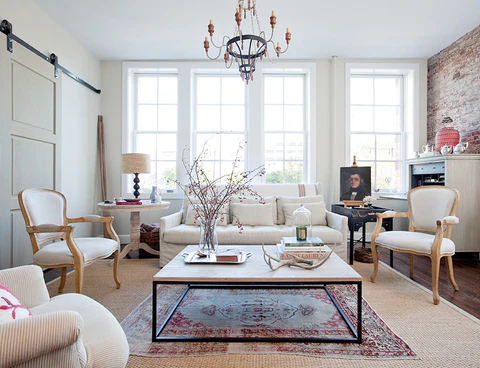
This is solved immediately with one large area rug.
By putting a rug under your sofa and coffee table, you’re visually defining a “living room zone.” The rest of the floor — despite being in the same room — has a separate atmosphere. That’s how interior designers create the illusion of separate rooms without an ounce of construction.
Rug Rules for Modern Studio Design
Size matters more than pattern. A rug that is undersized looks awkward and cheap. Go bigger than you think you need. In a living area, the front legs of your sofa and chairs should rest on the rug.
Keep patterns minimal. Stick to solid colors or very muted geometric patterns for modern design. Bold, busy patterns compete with everything else in the room.
Layer rugs for texture. A jute base rug under a smaller woven rug creates depth and warmth without visual clutter.
Hack #3 — Buy a Sofa That Can Do More Than One Thing
In a studio apartment, every item of furniture has to earn its space.
A sofa that does nothing but sit is a missed opportunity. A modern studio needs multitasking furniture — and the sofa is the best place to start.
The Best Multi-Function Sofa Options
Sleeper sofas convert into a full bed. This is great if you often have guests but don’t want a separate bed taking up your space.
Storage sofas have a hollow base with lift-up seats. You can keep blankets, pillows, books, and seasonal items inside.
Modular sectionals can be rearranged to suit different functions. They can curl into an L-shape for lounging or be separated to create individual seating areas.
Daybed sofas double as a sofa during the day and a single bed at night — perfect for studios where the actual bed is the primary sleeping space, but you’d still like some daytime seating that doesn’t scream “bedroom.”
Consider scale, too, when selecting a sofa for a modern studio. A sofa that’s too big for the room dwarfs everything. Look for sofas with slim arms, low backs, and legs that lift the furniture off the floor — these elements create a less bulky look.
Hack #4 — Mirrors Are Your Best Friend in a Small Space
There’s no single design tool that transforms a small space faster than a mirror.
A large mirror bounces light and gives the appearance of depth. It turns a wall into a window. Without making structural changes, it makes a room feel twice as big.
Mirrors have a purpose in modern design — not placed haphazardly. Placement is as important as the mirror itself.
Placement of Mirrors for Maximum Impact
Opposite a window: This reflects natural light throughout the room, making it feel brighter and more open.
At the end of a narrow hallway or entry: Adds depth and helps make the area feel less constricted.
Behind open shelving or a console table: Adds dimension and makes a display feel more purposeful.
Floor-to-ceiling mirror panels: These work great on one wall of a studio bedroom zone. They create the illusion of more ceiling height and make the room feel significantly more spacious.
Don’t place mirrors in front of messy or shabby areas. A mirror amplifies whatever is reflected in it — including chaos.
Hack #5 — Use Open or Transparent Dividers Instead of Solid Room Dividers
Many studio inhabitants attempt to carve out privacy with solid bookshelves or curtain panels serving as room dividers. This is helpful for privacy, but it also visually divides the room in half — making both sides feel smaller.
Modern design offers a smarter approach: open or transparent dividers.
Divider Ideas That Keep the Space Feeling Open
Open bookshelf dividers define zones while still letting light and sightlines pass through. A shelf only halfway filled creates visual interest without obstructing the space.
Hanging rope or macramé dividers add texture and divide space without any visual weight. They’re lightweight, inexpensive, and very on-trend in modern boho-style studios.
Glass or acrylic panels are completely transparent. They split a sleeping area from a living area while maintaining brightness and connectivity throughout the room.
Ceiling-mounted curtain track systems are flexible. Pull the curtains back for a big open space. Shut them when you want privacy. This is one of the most renter-friendly options available.
For additional inspiration on how to separate and organize studio spaces in smart ways, visit Studio Apartment Setup for practical layouts and design ideas tailored to small-space living.
Hack #6 — Let Your Furniture Get Leggy
This is a subtle but mighty modern design trick that most people have never heard of.
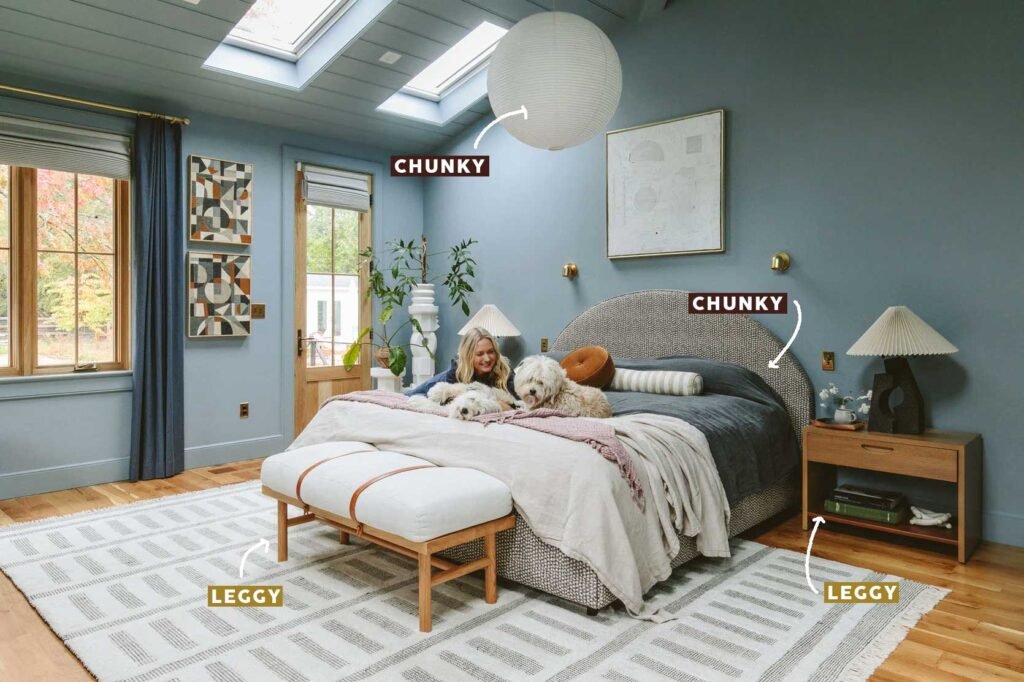
Furniture with visible legs — as opposed to pieces that sit flush on the floor — makes a space feel more open and airy. When you can see the floor beneath a sofa, bed, or chair, the room feels lighter and more spacious.
That’s because the eye interprets continuous stretches of floor space as “room.” When furniture obstructs the view of the floor, the room feels cut off and smaller.
Furniture That Benefits Most from Legs
- Sofas and chairs with tapered wooden or metal legs
- Beds raised on platform frames or legs (no box springs that rest directly on the floor)
- Sideboards and console tables with slim metal legs
- Coffee tables with hairpin legs or open bases
The height of the legs matters too. Medium-height legs (4–6 inches) typically provide the most current and proportional appearance. Very short legs barely make a difference. Very tall legs can look ungainly in a small space.
Hack #7 — Create a Kitchen That Functions Vertically and Horizontally
There is almost always a small kitchen in a studio apartment. And because it’s open to the rest of the space, it influences the overall look and feel of the entire room.
Modern studio kitchen design comes down to two things: maximized storage and visual cleanliness.
Smart Kitchen Upgrades for Studios
Open shelving instead of upper cabinets makes the kitchen feel light and open. It also compels you to stay neat, because everything is out in the open.
A rolling kitchen cart adds counter space and storage that you can move around. It functions as an island when you want it and rolls to the side when you don’t.
Magnetic knife strips and rail systems free tools from the counter in favor of the wall. This frees up workspace and looks intentional.
Under-shelf hooks and baskets utilize the underside of shelves for hanging mugs, utensils, or storing small items.
Coordinating canisters and containers on open shelves give the space a cohesive look. Even a basic pantry can look modern when all goods are stored in the same style of container.
According to Apartment Therapy, keeping countertops as clear as possible is the most effective single step toward making a small kitchen feel larger and more modern.
Hack #8 — Layer Your Lighting Like a Designer Would
Studio apartments usually come with one overhead light. Just one light in a room casts flat, harsh lighting that makes a space feel like an office — not a home.
Modern design uses layered lighting. This involves combining three categories of light sources to create depth, warmth, and flexibility.
The Three Layers of Modern Studio Lighting
Ambient light — This is your primary source of light. It could be an overhead fixture, recessed lighting, or a large floor lamp. It lights the whole room.
Task light — This is focused light for specific activities. A desk lamp for working, a reading lamp next to the bed, under-cabinet lighting in the kitchen.
Accent light — This is decorative light. String lights, LED strip lights behind shelving, a small tabletop lamp, or a candle-style wall sconce. Accent lighting brings warmth and personality.
With all three layers working together, the room has a curated and considered quality. It also enables you to set the mood — bright ambient light for daytime productivity, and warm accent lighting for evening relaxation.
Quick lighting upgrade checklist:
| Lighting Type | Best Option for Studios | Approx. Cost |
|---|---|---|
| Ambient | Arc floor lamp or pendant light | $50–$200 |
| Task (desk) | Adjustable LED desk lamp | $20–$80 |
| Task (bed) | Wall-mounted reading light | $30–$100 |
| Accent | LED strip lights or string lights | $10–$40 |
| Dimmer switch | Smart plug or inline dimmer | $15–$30 |
Hack #9 — Get a Bed Frame That Combines Storage
In most studio apartments, the bed is the biggest piece of furniture. It occupies an enormous amount of floor space. If that space isn’t working for you, you’re losing your biggest storage opportunity.
Modern platform beds with built-in storage drawers underneath are a game changer. They eliminate the need for a separate dresser and free up significant floor and wall space.
Bed Storage Options Ranked by Storage Capacity
| Bed Type | Storage Capacity | Modern Look | Price Range |
|---|---|---|---|
| Standard frame (no storage) | None | Yes | $100–$300 |
| Platform with drawers | High | Yes | $300–$800 |
| Ottoman/lift-top storage bed | Very High | Yes | $400–$1,000 |
| Loft bed with desk below | Extreme | Yes | $300–$900 |
| Murphy/wall bed | Extreme | Yes | $500–$2,000 |
If you choose a platform bed with drawers, use them for items you access often — clothes, linens, seasonal items. This removes a dresser from the equation entirely.
To achieve a fully modern look, go with a bed frame in a matte finish — dark walnut wood, upholstered linen, or matte black metal will all look great in a modern studio.
Hack #10 — Treat Your Entryway Like a Separate Room
The typical studio apartment has a tiny entryway — sometimes just a few feet separating the front door from the main living space. This spot is ignored by most people entirely. Big mistake.
Your entryway is the first thing you see when you walk in and the last thing before you leave. It sets the tone for the whole apartment.
How to Design a Micro-Entryway That Functions
A floating shelf or console table provides a surface for keys, mail, and other daily items. Pick one with a drawer or hooks underneath for added function.
Wall-mounted hooks keep bags, coats, and umbrellas tidy and off the floor.
A small mirror makes the entryway appear larger and offers a last look before you head out.
A tray or bowl on the shelf contains smaller items such as keys and cards. This one simple addition keeps the entryway from looking cluttered.
A small plant or a single piece of art injects personality. The entryway doesn’t have to be purely functional — adding some style here makes the whole apartment feel more thought-out.
Hack #11 — Floating Shelves: The Answer to Bulky Furniture
Floating shelves are one of the most useful tools in modern studio design.
They offer storage and display space with zero floor footprint. They give walls a dynamic and designed look. And they scale to fit any room — you could use one shelf or twenty, depending on what you need.
What to Put on Floating Shelves in a Modern Studio
The secret to beautiful floating shelves is curation. Don’t pack each shelf to the gills. Leave breathing room between objects. A shelf that’s 70% full looks purposeful. A shelf that’s 100% full looks jumbled.
Balance functional and decorative items. A stack of books alongside a small plant beside a simple candle looks curated. Three rows of books, all alike, looks like a library — not a home.
The rule of three is a classic design principle that works perfectly with floating shelves: arrange items in groups of three, varying the height, shape, and texture of each grouping. This adds visual interest without looking sloppy.
Hack #12 — Declutter With the “One In, One Out” Rule
This final hack isn’t about furniture or design — it’s about mindset. And it may be the most important one on this list.
Accumulation is the single biggest threat to modern studio design. Things pile up. Surfaces get covered. Floors get crowded. And then all those smart design decisions you made are buried beneath stuff.
The “one in, one out” rule is straightforward: whenever you bring a new item into your studio, an existing item must go. Buy a new throw pillow? An old one goes. Get a new book? An old one gets donated.
Why This Rule Changes Everything
Intentionality is what modern design is built on. Every object in the space should have a purpose. When you abide by the one-in, one-out rule, that intentionality is maintained over time.
That doesn’t mean your studio needs to feel stark or cold. It just means every item earns its spot. What you have left is what matters — either because it’s useful or because it genuinely brings you joy.
Creating a modern studio isn’t just about what you add. It’s equally about what you choose not to hold on to.
Bringing It All Together: The Modern Studio Design Checklist
Here’s a full at-a-glance checklist to track your studio transformation:
| Hack | Done? | Difficulty | Cost Level |
|---|---|---|---|
| Set a cohesive color palette | ☐ | Easy | Free |
| Add a large area rug per zone | ☐ | Easy | Low |
| Upgrade to a multi-function sofa | ☐ | Medium | Medium |
| Add a large statement mirror | ☐ | Easy | Low |
| Replace solid dividers with open ones | ☐ | Medium | Low–Medium |
| Switch to legged furniture | ☐ | Medium | Medium |
| Upgrade kitchen storage and display | ☐ | Medium | Low–Medium |
| Layer three types of lighting | ☐ | Easy | Low |
| Switch to a storage bed frame | ☐ | Medium | Mid–High |
| Design a functional entryway | ☐ | Easy | Low |
| Install floating shelves | ☐ | Medium | Low |
| Practice one in, one out | ☐ | Ongoing | Free |
FAQs About Studio Apartment Space Hacks for Modern Design
Q: How can I make my studio apartment feel modern on a budget? Do the free stuff first — declutter, rearrange furniture, and decide on a color palette. Then add one large mirror, a few floating shelves, and layered lighting. These four changes cost next to nothing yet yield dramatic results.
Q: Which colors will make a studio apartment look larger and more modern? Light neutrals work best — white, soft gray, warm beige, and greige. These colors bounce light and create a sense of airiness in the room. Pair them with natural wood tones and one muted accent color for a contemporary look.
Q: How can I separate my sleeping area from my living area in a studio? Place a large area rug to ground the living space. Use an open bookshelf, a curtain track, or a hanging divider to create visual separation. Turning the bed perpendicular to the main living area also establishes a natural visual break.
Q: Is it really possible for a studio apartment to look like a well-designed home? Absolutely. Many professional interior designers actually prefer designing small spaces, where every decision is amplified. A cohesive color palette, quality lighting, and multi-purpose furniture can make any studio feel intentionally designed.
Q: How do I prevent my studio from feeling like a bedroom all the time? Style your bed like a sofa or lounge space during the day. Use a clean, intentional-looking bed frame. Keep bedding tucked, throw a few pillows on top, and use a storage bed to stow linens away during the day. This shifts the focus from “bed” to “room.”
Q: What’s the best furniture layout for a studio apartment? Put your biggest piece down first — the sofa or bed — and work around it. Keep walking pathways clear. If possible, place the bed away from the main sightline of the front door. Imply separate zones with furniture placement and rugs, rather than jamming everything against the walls.
Q: Are minimalism and modern design the same thing? Not exactly. Modern design can embrace warmth, texture, and personality. It’s not about owning as little as possible — it’s about keeping only what is intentional. You can have a cozy, layered studio that’s still quite contemporary.
Your Studio Is a Design Opportunity, Not a Design Problem
How you think about your studio apartment is as important as any choice of furniture or paint color.
Every decision becomes a compromise if you view it as a limitation. But when you view it as a design challenge, each decision becomes an opportunity.
These 12 studio apartment space hacks for modern design aren’t just tips. They’re a lens for rethinking space. Color, light, furniture scale, zoning, storage, and mindset — put them all together and you have a studio that feels considered, modern, and truly comfortable.
You don’t need more square footage. You need smarter choices.
Pick one hack this week to start. Then another. Build the studio that you really want to come home to.