

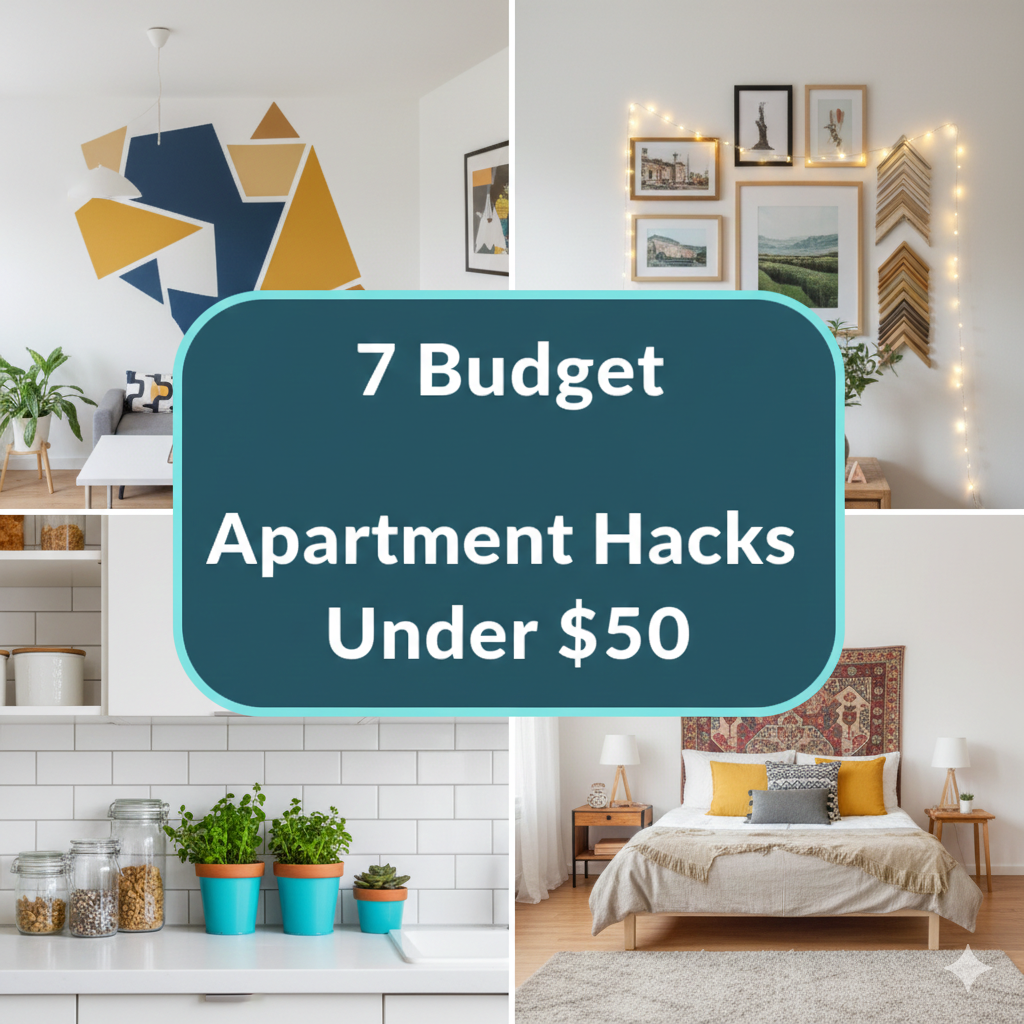
You had a studio apartment. You’re excited. Then the boxes come — and your “cozy” space suddenly resembles a storage unit with a bed.
Sound familiar?
Living in a studio apartment is a real challenge. You have one room that needs to be your bedroom, living room, dining room and sometimes even your office. That’s a lot to expect from 400 square feet.
But the good news is you don’t need a renovation budget or an interior designer to solve it. Space-saving hacks cost less than a cup of coffee a day — plus a couple of weekends of your time.
This guide explores 7 smart studio apartment space hacks, each under $50, that real people are using to make small spaces feel bigger and cleaner — and frankly a whole lot more livable.
Let’s get into it.
How Everyone Struggles With Studio Living (And Why You Shouldn’t Have to)
The most common mistake people make in studio apartments is approaching their space the same way they’d think of a big house.
In a large house, you sprawl out. In a studio, you stack up — and think smart.
The secret is not to own less stuff. It’s to find a home for everything, use your vertical space, and stop letting furniture work against you.
Here’s a brief overview of the most common problems we face in studio apartments and what actually solves them:
| Problem | Root Cause | Smart Hack That Fixes It |
|---|---|---|
| Room feels cluttered | No defined zones | Room dividers + rugs |
| No storage space | Ignoring vertical space | Wall shelves + over-door organizers |
| Furniture too bulky | Wrong-sized pieces | Multipurpose + foldable furniture |
| No natural light | Heavy curtains, dark walls | Mirrors + light-colored textiles |
| Tiny kitchen counter | No vertical kitchen storage | Tension rods + pegboards |
| Bed takes over the room | Bad bed placement | Bed risers + under-bed storage |
| No workspace | No designated area | Fold-down wall desk |
Sound like your apartment? Keep reading.
Hack #1 — Transform Your Walls Into a Storage Dynamo
Most people use only roughly 20% of their apartment. The floor.
Your walls are completely empty real estate, and they’re just sitting there doing nothing.
Floating Shelves: The $15 Game Changer
A pair of floating shelves from IKEA, Amazon, or your local hardware store will run you $10 to $30. Place them above your desk, next to your bed, or even over your doorframes.
Use them for:
- Books and planters
- Kitchen spices and jars
- Folded clothes and towels
- Decorative baskets that hide clutter
The idea is to get stuff off the floor and onto the walls. This will immediately make a room feel more expansive.
Pegboards: $20 and Endlessly Flexible
Pegboards were initially intended for garages and workshops, but they have hit full mainstream in small-space decorating — and for good reason.
One pegboard panel (which typically costs about $15–$25) can hold:
- Kitchen utensils
- Office supplies
- Headphones and cords
- Keys, hats, and bags by your entryway
The best part? You can rearrange it any time. No new holes in the wall, no commitment.
Pro tip: Paint your pegboard the same color as your wall and it will look like it was always meant to be there.
Hack #2 — Use Furniture That Pulls Double (or Triple) Duty
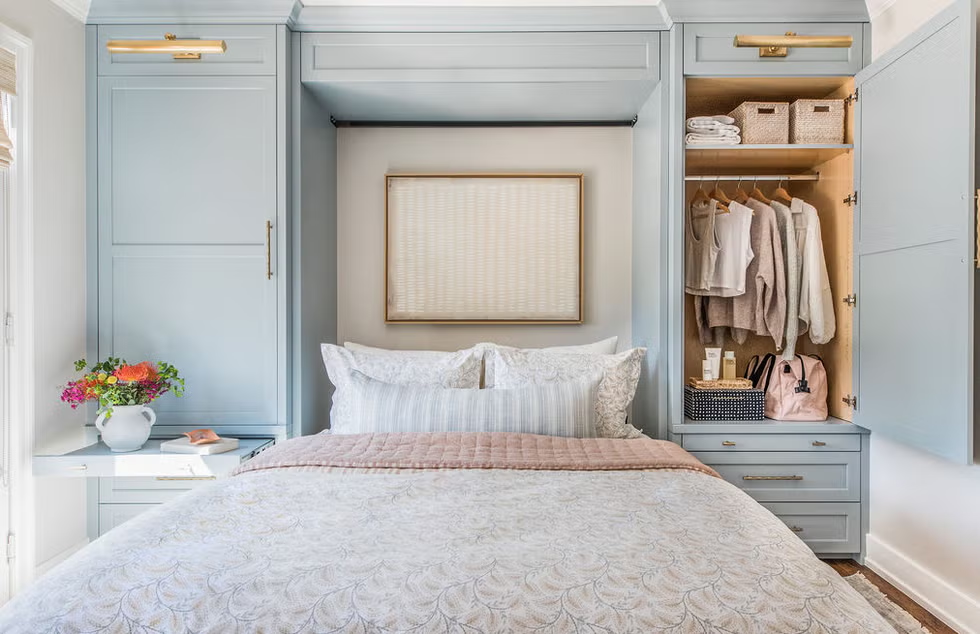
In a studio, every piece of furniture needs to earn its place. If something only does one job, it may be working against you.
The Ottoman That Does Everything
A storage ottoman is the top-value purchase you can make for a studio apartment. For around $30–$50, you get:
- A coffee table
- Extra seating for guests
- A footrest
- Hidden storage inside
Stash your spare blankets, remote controls, charging cables, or board games inside. Close the lid. Your living room immediately looks 10 times more organized.
Foldable Tables and Chairs: Store It When You Don’t Need It
A wall-mounted fold-down table mounts directly to your wall and retails for about $25–$40. Flip it down when you want a desk or dining table. When you’re finished, fold it back up.
This single item can reclaim 10–15 square feet of floor space in a studio apartment.
Pair it with a folding chair (you can get one for under $20 at most discount stores), and you have a complete dining or work setup that disappears when you want your space back.
Bed Risers: The Underrated Hero
Bed risers are tiny lifts made of plastic or metal that you place underneath your bed legs. They typically run $10–$20 for a pack of four and raise your bed 5–8 inches higher.
That gap underneath your bed? It becomes storage gold.
Slip in flat storage bins (also dirt cheap) to store:
- Seasonal clothing
- Extra bedding
- Shoes
- Books and supplies
In some apartments, under-bed storage can replace an entire dresser — saving square footage and dollars.
Hack #3 — Create Zones Without Building Walls
One of the most difficult things about studio living is that everything blurs together. Your bed is next to your couch. Your desk is right next to your kitchen. It feels chaotic — even when it’s clean.
The fix is zone definition. And you don’t need walls to do it.
Rugs: The Zone Definer That Doubles as Decor
A rug under your bed or sofa immediately tells your brain “this is the bedroom” or “this is the living room.” It creates a very effective visual border.
You can find a decent-sized area rug at discount stores, thrift shops, or on Amazon for as little as $20–$40. Look for ones with some pattern or color contrast that will help the zones feel distinct.
Curtains and Room Dividers: Flexible Walls on a Budget
A tension rod costs around $10 at any hardware store. Add a curtain panel ($10–$15), and you have a soft, movable wall that creates privacy or separates your sleeping area from the rest of the apartment.
This is particularly helpful if you work from home and want to mentally “leave” the office at the end of the day — even if that office is merely a corner of your bedroom.
You can also find folding room dividers for $30–$50 that stand on their own and add texture and personality to your space.
Bookcase Room Dividers: Storage + Structure
A tall, open bookcase (think: IKEA KALLAX or similar) placed perpendicular to a wall creates a gentle separation between spaces. It blocks sightlines, reduces visual noise, and gives you storage on both sides.
It’s a two-in-one hack that costs under $50 with an inexpensive bookcase and completely changes the layout of your entire apartment.
Hack #4 — Use Doors and Dead Spaces to Your Advantage
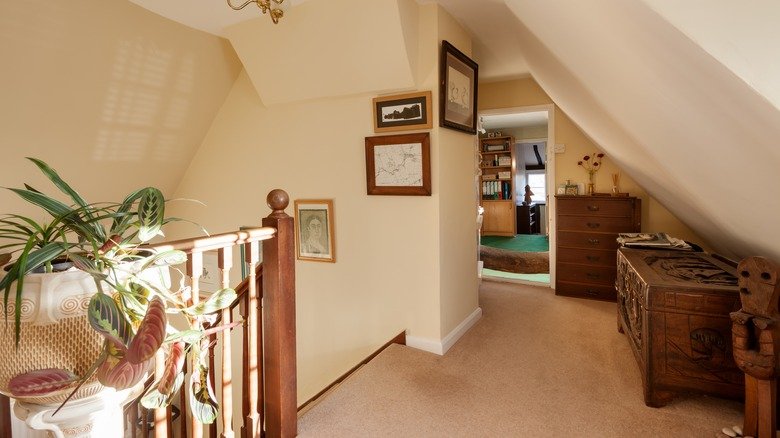
Every apartment has “dead zones” — spaces nobody thinks to use. Behind doors, above cabinets, the backs of closet doors. These are all hidden storage opportunities.
Over-the-Door Organizers: Instant Storage Anywhere
An over-the-door organizer slips right over the top of any door — no tools, no screws. They range from $10 to $25 and come in dozens of styles.
Use them on:
- Bathroom doors — for toiletries, hair tools, medications
- Closet doors — for shoes, accessories, or cleaning supplies
- Kitchen pantry doors — for spices, foil, snacks
You can store 20–30 items in a space that was previously doing absolutely nothing.
The Space Above Your Cabinets
Most kitchens have a gap between the top of the upper cabinets and the ceiling. Most people ignore it.
Put a row of decorative baskets up there. Store less-used appliances, extra paper goods, or seasonal items. It looks intentional, and it frees up precious cabinet space below.
The Entryway Wall
If your studio has even a small entryway, it’s one of the most valuable zones in your apartment. A $15 wall-mounted hook rail (or even individual adhesive hooks) can hold:
- Coats and bags
- Umbrellas
- Keys
- Reusable grocery bags
This prevents the chaos of coming-and-going from spilling into the rest of your space.
Hack #5 — Use Light and Mirrors to Make Rooms Feel Bigger
This one has nothing to do with storage — it’s about perception. A space that feels bright and open feels larger. A dark, cluttered-looking room feels suffocating.
You can completely change how your apartment feels without moving a single piece of furniture.
Mirrors: Free Square Footage (Visually)
A large mirror reflects light and makes a room feel like it has more depth. The best placement? Directly opposite a window, so it bounces natural light further into the room.
A full-length mirror costs $20–$40. Whether leaned against a wall or hung intentionally, it’s one of the highest-impact, lowest-cost changes you can make to a studio apartment.
You can also cluster smaller mirrors together for a gallery-wall effect that looks curated and expensive.
Swap Heavy Curtains for Sheer Panels
Heavy blackout curtains make a room feel smaller and darker during the day. Replace them (or layer) with sheer curtain panels that allow natural light to stream through.
Sheer panels cost $10–$20 per pair and go a long way toward making your space feel open and airy.
Stick to a Light Color Palette for Textiles
You might not be able to repaint your walls (hello, landlord rules), but you can swap your throw pillows, blankets, and curtains.
Light colors — whites, creams, soft grays, pale greens — reflect more light and make spaces feel open. Dark colors absorb light and make spaces feel cozy but smaller.
Switching your textiles to lighter tones is a $15–$30 project that visually expands your entire apartment.
Hack #6 — Tackle the Kitchen With Vertical Thinking
Studio kitchens are notoriously tiny. The counter space is minimal. The cabinets fill up fast. And every inch matters.
The answer is to stop thinking horizontally and start thinking vertically — again.
Tension Rod Under the Sink
A tension rod installed inside your under-sink cabinet creates a second “shelf.” Hang spray bottles, cleaning gloves, or small baskets from it.
Cost: under $5. The space it frees up: incredible.
Magnetic Knife Strip and Spice Rack
Instead of a knife block (which takes up counter space) or a drawer full of knives (dangerous), mount a magnetic knife strip on the wall.
Cost: $10–$20. Benefit: instant counter space recovery and a clean, intentional look.
Pair it with a wall-mounted magnetic spice rack for your most-used spices. These are $15–$25 and keep your countertops free of spice jar clutter.
Stackable Container Sets
Inside your cabinets and on open shelves, use stackable airtight containers for dry goods. This lets you use vertical height inside cabinets instead of spreading containers across the full shelf depth.
A basic set of stackable containers costs $15–$25 and makes both a visual and organizational difference immediately.
Hack #7 — Build a Capsule Wardrobe Storage System for Under $50
Closets in studio apartments are small. Sometimes laughably small. And when your closet is in shambles, that disorganization tends to spill everywhere.
The goal here isn’t to buy a fancy closet system. It’s to maximize what you’ve already got.
Double Your Hanging Space With a Closet Doubler
A closet rod doubler is a hanging bar that clips onto your existing closet rod and drops down to create a second hanging level. It costs about $10–$20 and instantly doubles how many items you can hang.
Use the upper rail for longer items (dresses, coats) and the lower bar for shorter items (shirts, jackets).
Slim Velvet Hangers: The Space Multiplier
Regular plastic hangers are bulky. Slim velvet hangers are roughly half the thickness and keep clothes from slipping.
Just switching to slim hangers can create 20–30% more hanging space in a small closet. A pack of 50 costs around $10–$15.
Shelf Dividers and Drawer Organizers
In your closet, shelf dividers keep stacked items (sweaters, jeans) from toppling over. They clip directly onto existing shelves and cost around $10 for a set.
Drawer organizers (small trays or fabric dividers inside dresser drawers) keep socks, underwear, and accessories from becoming a tangled mess. Sets start at about $8–$12.
For more layout ideas and setup inspiration, Studio Apartment Setup is a great resource to bookmark — packed with practical tips tailored specifically for studio living.
Full Budget Breakdown: All 7 Hacks for Under $50 Each
| Hack | Item(s) | Estimated Cost |
|---|---|---|
| 1. Wall storage | Floating shelves or pegboard | $15–$30 |
| 2. Multipurpose furniture | Storage ottoman or fold-down table | $25–$50 |
| 3. Zone definition | Rug + curtain + tension rod | $20–$40 |
| 4. Door & dead space | Over-door organizer + hooks | $10–$25 |
| 5. Light & mirrors | Full-length mirror + sheer curtains | $20–$40 |
| 6. Kitchen hacks | Magnetic strip + stackable containers | $20–$40 |
| 7. Closet system | Doubler + slim hangers + organizers | $20–$40 |
You don’t have to do all seven at once. Pick two or three that address your biggest pain points and start there. You’ll feel the difference immediately.
Frequently Asked Questions
Q: Can I do these hacks if I’m renting and can’t make holes in the wall?
Absolutely. The majority of these hacks are renter-friendly. Tension rods, adhesive hooks (Command brand works well), over-door organizers, and freestanding dividers all require zero drilling. For floating shelves, use heavy-duty adhesive strips rated for the weight you need.
Q: What’s the single best hack for someone starting from scratch?
Begin with storage ottomans and under-bed storage. They solve two of the biggest studio problems — not enough seating and not enough storage — with just a couple of inexpensive purchases.
Q: How do I stop my studio from feeling like just one big room?
Zone definition is the answer. Put a rug under your bed and a different one under your sofa, and use a curtain or bookcase divider between sleeping and living areas. Your brain will start reading it as separate rooms, even though nothing has been built.
Q: Are there space hacks that also look good?
Yes — all of them can look stylish with the right choices. Pegboards in coordinating colors, matching storage containers, and light textiles all look intentional rather than improvised. According to Apartment Therapy, small-space decorating works best when storage and style are treated as one, not two separate goals. Pinterest and Instagram also have endless studio apartment setups that are both functional and beautiful on a budget.
Q: What if I have too much stuff and hacks aren’t enough?
Space hacks work best when they accompany a declutter session. Go through your belongings and do an honest pass — donate, sell, or store items you haven’t used in 6+ months. Once the clutter is cleared, the hacks do the heavy lifting.
Q: Is it worth spending money on these hacks if I’m only renting short-term?
Yes, for two reasons. First, your day-to-day quality of life improves immediately. Second, most of these items are portable — your storage ottoman, mirrors, organizers, and slim hangers come with you when you move.
The Takeaway: Small Space, Big Life
A studio apartment doesn’t have to feel like a compromise.
With the right approach, it becomes a curated, efficient, surprisingly comfortable home. The trick is to stop resisting your space and start working with it.
Use your walls. Multiply your furniture’s jobs. Define your zones. Let in the light.
You don’t need $500 or a weekend renovation. These 7 smart studio apartment space hacks under $50 prove that the best solutions are often the simplest — and the most affordable.
Pick one hack to do this weekend. You’ll be reaching for the next one before the month is out.