

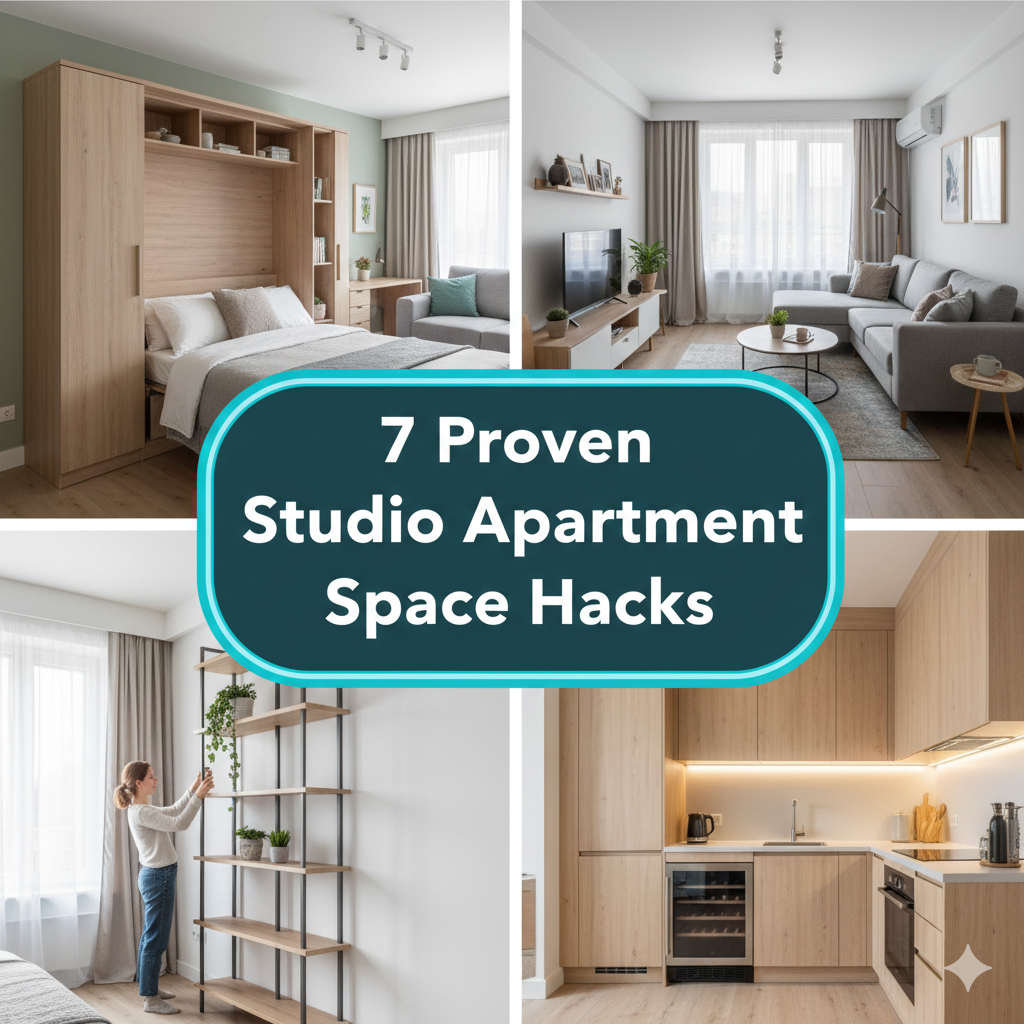
Living in a studio apartment has its perks. Lower rent. Less to clean. A small enough space, easy to manage, that’s all yours.
But one thing studio living almost never provides — privacy.
Life can feel exposed when the four walls that enclose your bedroom, living room, kitchen and workspace are one and the same. You don’t retreat to another room after a long day. There’s no distinct “work zone” and “sleep zone.” And if you live with a partner, roommate or even a bunch of friends, the lack of boundaries wears thin quickly.
The truth is you don’t need walls to create privacy. You don’t need to renovate. You don’t even need a big budget.
With a few clever studio apartment space hacks, you can instantly create defined, private zones that make your home feel larger, more organized and far more livable — beginning today.
This article outlines 7 proven, practical and affordable ways to design privacy into your studio apartment. Each hack is renter-friendly and made for actual people living in real small spaces.
Let’s build your private sanctuary.
Why Privacy Matters More Than You Think in a Studio
Before the hacks, let’s get into why it matters.
Privacy isn’t only about being hidden from people. It’s about mental and emotional health. Research has shown that designated personal space — even in smaller quarters — reduces stress, improves sleep quality and uplifts overall wellbeing.
In a space where every square foot has to do triple duty, your brain never fully switches off. Your desk is next to your bed. Your couch faces your dining table. There’s no visual distinction between “work mode” and “rest mode.”
That mental blur is exhausting.
Establishing privacy — even visual privacy — sends a message to your brain: this area is for rest, that part is for work. That division alone can make a huge difference in how you feel in your home.
The good news? It doesn’t take much to create it.
Hack #1: Room Divider Curtains — The Quickest Way to Privacy
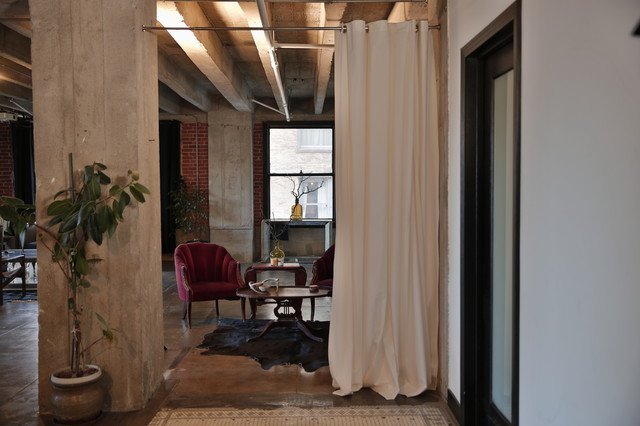
If you’re in need of quick privacy, curtains are your best friend.
A floor-to-ceiling curtain panel can divide a studio apartment in an instant. No drilling into walls (for the most part). No permanent changes. Just a curtain rod — or perhaps a ceiling-mounted track, or even a tension rod — and a full-length curtain panel that reaches the floor.
This is one of the most commonly used studio apartment space hacks because it works in literally any layout, on any budget.
How to Hang Room Divider Curtains
There are three basic options for hanging room divider curtains:
- Ceiling-mounted curtain track: The most streamlined appearance. A narrow track is screwed into the ceiling and a curtain drapes over it. Good for renters permitted small ceiling installations.
- Tension rod between walls: Excellent for narrow studios with two close walls. Zero drilling required.
- Freestanding curtain rod: A rod with weighted feet that stands alone. No installation at all. Move it wherever you need it.
What Curtains Work Best?
| Curtain Type | Best For | Privacy Level | Light Control |
|---|---|---|---|
| Blackout curtains | Bedroom zones | High | Full |
| Sheer linen panels | Living area dividers | Medium | Soft/filtered |
| Velvet or thick fabric | Sound + visual privacy | Very high | Full |
| Macramé panels | Boho look, decorative | Low | Minimal |
Pro tip: Hang curtains from ceiling to floor. This gives a sense of height and makes the division feel like a permanent wall rather than a temporary screen.
For less than $50, you could turn an open studio into a space with distinct sleeping and living zones — simply with fabric.
Hack #2: Bookshelves as Room Dividers — Function Meets Privacy
Here is a hack that works double duty: a tall bookshelf used as a room divider.
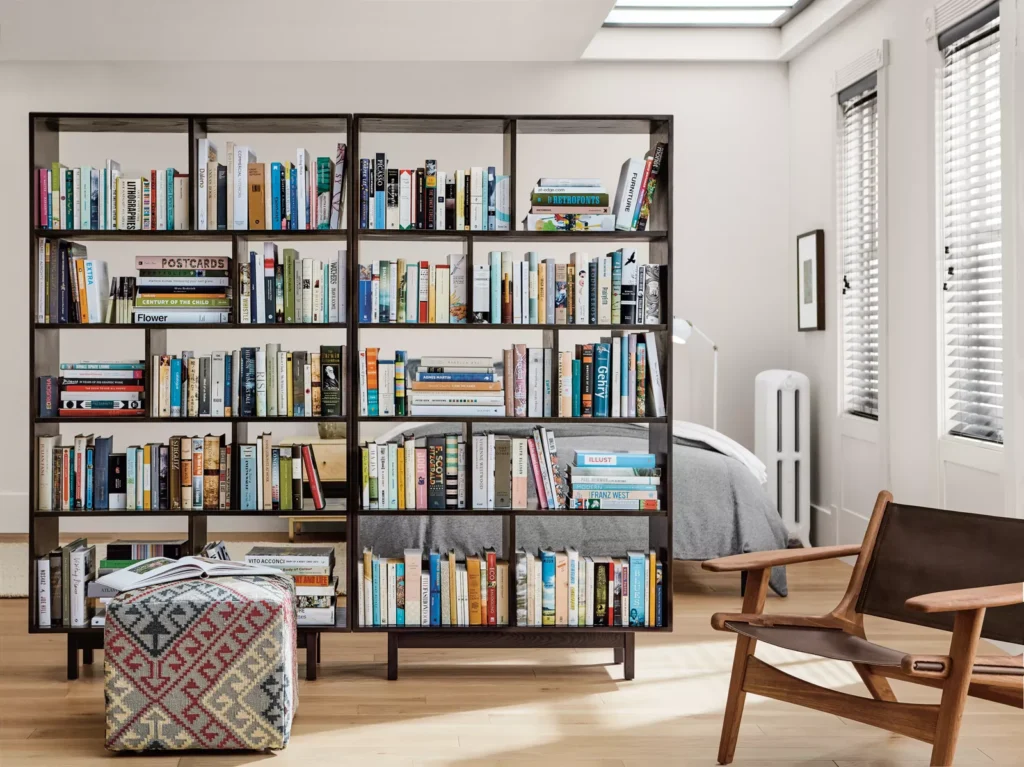
Rather than pushing all your furniture against the walls (the default instinct in small spaces), pull a tall bookshelf out from the wall and orient it perpendicular to the room. This forms a visual barrier between two zones — while also giving you storage on either side.
A 6-foot KALLAX, BILLY or other open-unit bookshelf from IKEA is perfect for this. You gain privacy AND storage for roughly $60–$150.
Why This Hack Works So Well
It’s not just about blocking the view. A bookshelf divider:
- Creates a defined sleeping area without needing to build a wall
- Adds storage on both sides for books, decor and baskets
- Keeps the space feeling open (not fully walled off)
- Costs far less than any construction solution
- Is 100% renter-friendly since it’s freestanding
Tips for Using a Bookshelf as a Room Divider
Orient it so that one side faces your bedroom zone and the other faces your living area. Style each side for its zone — books and soft decor facing the bed, functional items facing the living space.
For additional privacy, tuck fabric bins or baskets into the open cubbies. These block the line of sight while also serving as useful storage.
Worried about stability? Secure it to the wall with an anti-tip strap — cheap and renter-friendly. That keeps it safe without causing permanent damage.
Hack #3: Loft Your Bed — Elevate the Bedroom Above Everything Else
If your ceiling height allows for it, lofting your bed is one of the most transformative studio apartment space hacks out there.
When your bed is raised — even a mere 5 or 6 feet off the ground — it becomes its own zone. The sleeping space is quite literally above the rest of the apartment. Below the loft, you have a new hidden space that can become a desk area, a reading nook or a cozy lounge spot.
This vertical division creates privacy in a very different way. Your bed feels tucked away, intimate and separate from the rest of the apartment — without using any floor space for division.
Loft Bed Options by Budget
| Option | Approximate Cost | Installation | Best For |
|---|---|---|---|
| Freestanding loft bed frame | $150–$400 | Self-assembly, no drilling | Renters, flexibility |
| Built-in loft (custom) | $800–$2,500+ | Professional installation | Owners or long-term renters |
| Murphy bed with loft | $500–$1,500 | Wall-mounted | Max floor space efficiency |
| IKEA STUVA loft system | $300–$600 | Self-assembly | Budget-friendly, modular |
What to Do With the Space Below
The space beneath a loft bed is some of the most valuable real estate in a studio apartment. Use it for:
- A dedicated work-from-home desk setup
- A small sofa or reading chair
- A wardrobe or clothing storage system
- A mini library or gaming station
The result: your studio will feel like it has two floors instead of one.
Hack #4: The Japanese Shoji Screen — Elegant, Portable Privacy
For a more polished, design-forward approach, a shoji screen or folding room divider is a beautiful solution.
Shoji screens are lightweight, folding panels — traditionally made from wood frames and rice paper, though modern versions come in all kinds of materials and styles. They fold and unfold in seconds, travel with you when you move and require zero installation.
They are a staple of Japanese interior design for exactly this reason: creating defined space without permanent structure. And they work just as brilliantly in a modern studio apartment.
Shoji Screen Styles to Consider
- Traditional wood and rice paper: Clean, minimal, lets soft light through
- Metal frame with frosted panels: Modern and sleek, great for contemporary spaces
- Woven rattan or bamboo: Warm, natural texture, bohemian feel
- Mirrored panels: Helps bounce light and creates an illusion of space while dividing it
Prices start from $40 for a basic 3-panel folding divider to over $200 for a premium version. Most can be found on Amazon, Wayfair and home goods stores.
Best placement: Between the sleeping area and living area, or between a home office corner and the rest of your space.
The beauty of this hack? You can move it in 10 seconds. Hosting guests? Fold it away. Need privacy for a Zoom call? Set it right behind your chair.
Hack #5: Strategic Furniture Placement — Privacy Without Adding Anything New
This hack costs absolutely nothing.
Before you purchase a single divider or curtain, take a long look at how your furniture is currently arranged. In most studios, everything gets pushed against the walls — couch on one wall, bed on another, table by the window. This leaves the center of the room open but creates one big, undivided space with no sense of separation.
The fix? Pull your furniture away from the walls and use it to create zones.
How to Zone a Studio With Furniture Alone
Think of your sofa as a wall. Placed perpendicular to the room — with its back facing the sleeping area — it creates a visual divide between where you sleep and where you live. No curtain needed. No shelf required.
Try this arrangement:
- Sofa: Pulled into the room, back to the bed, creating a “living room wall”
- Bed: Pushed into the far corner or against the back wall
- Rug: Different rugs under each zone anchor each space visually
- Desk: Positioned at a right angle to the bed, forming its own corner
Different rugs are key here. A large area rug beneath the living furniture and a different one under the bed immediately communicate to your brain — and any guest’s brain — that these are two separate spaces.
Zone Layout Ideas
| Zone Divider | Cost | Effort | Privacy Level |
|---|---|---|---|
| Sofa placement | $0 | Low | Medium |
| Area rugs | $30–$150 | Low | Low–Medium |
| Console table behind sofa | $40–$120 | Low | Low |
| Desk angled as partition | $0 | Low | Low |
This is one of the most underrated studio apartment space hacks because it uses what you already have — and the transformation can be immediate and significant.
Hack #6: Curtained Alcoves and Bed Canopies — A Bedroom Within a Room
The goal isn’t always to split the entire apartment. Sometimes all you want is for your sleeping area to feel like its own private retreat.
Two simple hacks make this possible:
The Bed Canopy Trick
A bed canopy — fabric draped around and over your bed — creates an enclosed, cocoon-like sleeping space. It doesn’t divide the room visually in a dramatic way, but it creates a powerful sense of personal intimacy around your bed.
Hang a canopy frame above your bed, or affix ceiling hooks and let sheer fabric panels flow down on three or four sides. The result is a soft, beautiful enclosure that feels like its own room — even though it is technically the same space.
Canopy kits start at around $25–$60. Sheer white or linen fabric panels give the lightest, airiest feel. Darker fabrics lend more of a cave-like, cozy retreat vibe.
The Curtained Alcove Bedroom
If your studio features a small alcove, nook or recessed area, this is gold.
Hang a curtain rod across the entrance of that alcove and you instantly have a private bedroom. Draw the curtain and the sleeping area virtually disappears. Open it during the day and the space flows as normal.
Even if you lack a natural alcove, you can achieve the effect by placing your bed against one wall and hanging curtains on a ceiling track that form a U-shape around it — one side, another side and then the foot of the bed. Close the curtains at night and you have a bedroom. Open them during the day and it’s gone.
Hack #7: Plants as Living Privacy Walls — Natural, Beautiful and Functional
This last hack is one of the most inventive studio apartment space hacks on this list — and also one of the prettiest.
Placing tall, leafy plants strategically can act as natural dividers. They soften the boundary between zones without making the space feel divided or closed in. Instead, they make the separation feel organic, fresh and intentional.
Best Plants for Studio Privacy Walls
| Plant | Height | Light Needed | Maintenance |
|---|---|---|---|
| Fiddle Leaf Fig | 5–6 ft | Bright indirect | Moderate |
| Bird of Paradise | 4–6 ft | Bright direct | Low |
| Bamboo Palm | 4–7 ft | Low to medium | Low |
| Monstera Deliciosa | 3–5 ft | Medium indirect | Low |
| Snake Plant | 3–4 ft | Any light | Very low |
For maximum privacy, group 3–5 tall plants together in a loose line between zones. Use matching pots for a cohesive, styled look.
Add a plant shelf or tiered plant stand to go even more vertical and create a denser visual screen.
Bonus benefits: Plants improve air quality, reduce noise and add a sense of calm to any small space. They’re doing three jobs at once — dividing space, purifying air and making your apartment feel like a home.
According to The Sill’s guide to large indoor plants, tall statement plants like the Bird of Paradise and Fiddle Leaf Fig are among the best choices for creating visual impact in an indoor space.
For beginners, snake plants and pothos are nearly impossible to kill and grow large enough to serve as effective dividers.
Combining the Hacks — Building Your Ultimate Privacy Plan
These hacks don’t have to work alone. The real magic happens when you combine two or three of them.
Here are three example setups based on common studio layouts:
Setup 1: The Budget Build (Under $100)
- Strategic furniture placement (sofa as divider)
- Two different area rugs to zone the space
- A freestanding curtain panel for the sleeping area
- 2–3 tall snake plants grouped as a natural screen
Setup 2: The Mid-Range Makeover ($100–$300)
- Floor-to-ceiling curtain on a ceiling track
- IKEA KALLAX bookshelf as room divider with baskets
- Bed canopy for sleeping zone privacy
- Mixed plants for natural visual separation
Setup 3: The Full Transformation ($300+)
- Loft bed to elevate the sleeping zone entirely
- Curtained alcove below the loft for a home office
- Shoji screen between the living and office zones
- Plant wall grouping at the room entrance
| Setup | Total Cost | Privacy Level | Renter-Friendly |
|---|---|---|---|
| Budget Build | Under $100 | Medium | Yes |
| Mid-Range Makeover | $100–$300 | High | Yes |
| Full Transformation | $300–$600+ | Very High | Mostly yes |
For more inspiration on setting up and organizing every corner of your studio, visit Studio Apartment Setup — a dedicated resource for making studio living work smarter.
FAQs About Studio Apartment Space Hacks to Create Privacy
Q: What is the fastest way to add privacy in a studio apartment?
A room divider curtain on a tension rod or ceiling track is the fastest solution. It can be set up in under an hour, costs as little as $20–$50 and creates an immediate visual separation between zones. No tools, no permanent changes, no hassle.
Q: Can I create privacy in a studio apartment if I’m renting?
Absolutely. Every hack in this article is either fully renter-friendly or requires only minimal, non-permanent changes. Freestanding bookshelves, folding screens, curtain rods with adhesive hooks, tension rods and furniture rearrangement all require zero drilling and leave zero damage.
Q: How do I create a private bedroom in a studio without building walls?
A floor-to-ceiling curtain plus a loft bed or a bookshelf divider is the most effective combination. The curtain separates the view between the sleeping and living areas. The elevated loft or bookshelf barrier physically reinforces that separation. Together, they create the feeling of a separate bedroom.
Q: Will dividing my studio make it feel smaller?
Not if done correctly. The key is to use dividers that are transparent or semi-transparent (sheer curtains, open bookshelves, plants) and to keep the overall color palette light and cohesive. Visual division actually makes spaces feel larger by giving each zone a clear purpose, which reduces clutter and chaos.
Q: What’s the best room divider for a small studio apartment?
A ceiling-mounted curtain track with floor-length panels is widely considered the most effective option for small studios. It provides full visual privacy, doesn’t take up floor space, can be opened completely when not needed and looks intentional and stylish rather than temporary.
Q: How many plants do I need to use as a privacy divider?
For an effective natural screen, aim for 3–5 tall plants (4 feet or taller) grouped closely together in a line. A single plant won’t create enough visual separation. A cluster of them — especially when varied in height — creates a much more effective and beautiful divider.
Q: Can these privacy hacks also help with noise?
Yes, to a degree. Thick curtains, bookshelves filled with books and dense plant groupings all absorb and deflect sound to some extent. For more significant noise reduction, consider adding a white noise machine, thick rugs and upholstered furniture — these absorb sound and improve acoustic privacy considerably.
Your Studio, Your Rules
Privacy in a studio apartment isn’t a luxury. It’s essential for your mental health, your productivity and your quality of life.
The good news is that you don’t need to move, renovate or spend a fortune to get it. With these 7 proven studio apartment space hacks, you can create defined, private zones that make your small space feel intentional, calm and completely livable.
Start with one hack. Rearrange your furniture. Hang a curtain. Move three tall plants into a cluster. You’ll feel the shift immediately.
A studio apartment is not a limitation. It’s a design challenge — and with the right hacks, it’s one you can absolutely win.