


Your Walls Are Wasted Space: Here’s How to Change That
Storage: Most people have their eyes fixed downward. They imagine bins beneath the bed, drawers in the dresser, and cabinets all over the floor. But a studio apartment has already limited floor real estate.
The solution is over your head.
Vertical storage is the best strategy for studio-apartment living, bar none. Your walls go up from floor to ceiling — that’s 8 to 10 feet of usable space, on average. The average person uses perhaps 3 feet of it. The rest merely gathers dust and supports paint.
This post outlines 9 secret studio apartment space hacks for vertical storage that work. This isn’t generic advice you’ve read a hundred times. These are savvy, specific, and actionable ideas you can begin using this week.
Whether you’re buckling under a 300-square-foot city apartment or dealing with your small studio’s lopsided corners, these hacks will help you breathe easier, move more freely, and finally allow your home to work for you instead of the other way around.
How Vertical Storage Upends Everything in a Studio
Before we jump into the hacks, it’s useful to note why vertical storage is so important.
There are no walls between rooms in a studio apartment. Your bedroom, living room, kitchen, and sometimes even your workspace are all sharing the same square footage. That means clutter doesn’t merely look messy — it causes the entire space to feel smaller and more stressful.
By elevating storage, you also open space on the ground. Having more floor space creates an illusion of a bigger room. It also makes walking around, cleaning, and simply being home more enjoyable.
Here’s a quick comparison:
| Storage Type | Floor Space Used | Visual Impact | Max Capacity |
|---|---|---|---|
| Floor shelving units | High | Makes room feel smaller | Medium |
| Vertical wall shelves | None | Opens up the room | High |
| Built-in floor cabinets | Medium | Neutral | High |
| Ceiling-to-floor shelving | None | Statement piece | Very High |
| Furniture with hidden storage | Low | Clean look | Medium |
The numbers make it clear. Vertical storage is the winner on nearly every front.
Hack #1 — Floor-to-Ceiling Shelving That Does All the Heavy Lifting
The best vertical storage move is to put in floor-to-ceiling shelves.
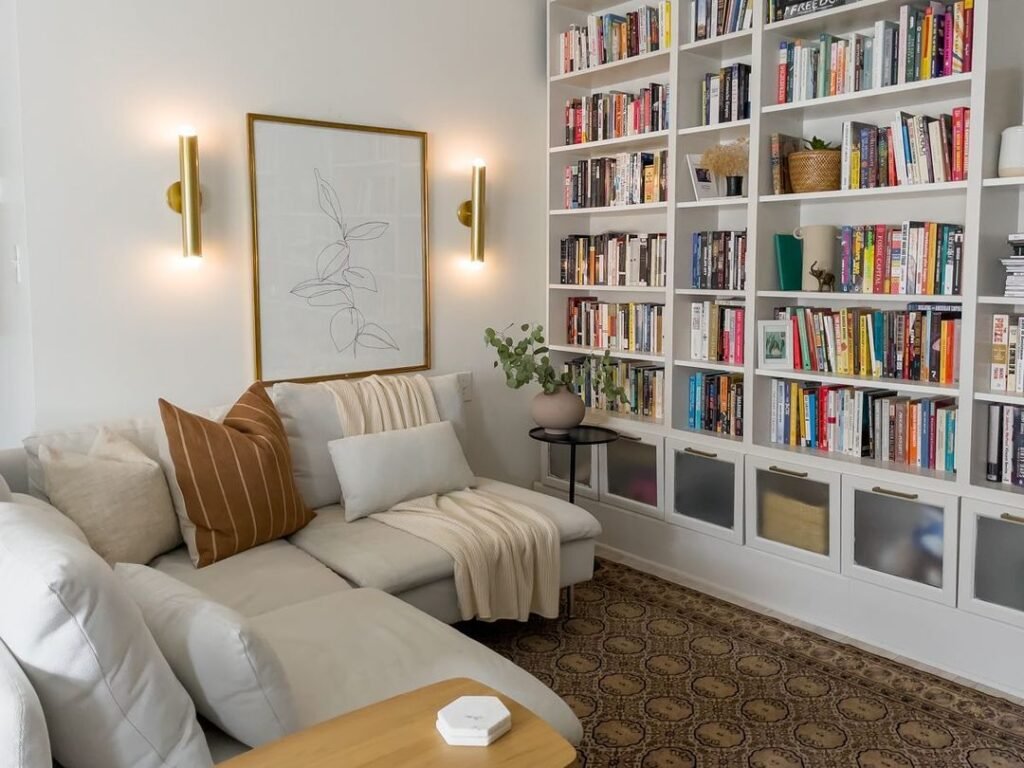
This does not mean a short IKEA bookshelf. I’m talking about shelving that starts at the floor and goes all the way to the ceiling. When done right, it can support hundreds of things — books, baskets, plants, kitchen supplies, folded clothes — while taking up zero floor space.
How to Make It Work in a Small Space
No need for a contractor. IKEA’s KALLAX units, Billy extensions, or the Elfa systems from The Container Store can all deliver customizable arrangements without permanently damaging your walls.
Put less frequently used things on the top shelves — seasonal decorations, extra blankets, old records. Mid-height shelving at eye level is best for everyday use items. Save the lower shelves for weighty items, such as book collections or storage bins.
Pro tip: House similar items in small baskets or fabric bins on each shelf. This prevents things from looking chaotic, even when you have a lot of stuff.
Hack #2 — Pegboards Aren’t Only for Garages
Pegboards have been utilized in shops and garages for decades. But interior designers have long been quietly introducing them into apartments — and for good reason.
A pegboard can transform any blank wall into a fully customizable grid of storage. You can mount hooks, shelves, baskets, containers, and holders in whatever arrangement you choose. And when your needs change, you simply shift the pegs.
Where to Use a Pegboard in Your Studio
- Kitchen wall: Hang pots, pans, utensils, and spice jars
- Desk area: Organize office supplies, headphones, cables, and notebooks
- Entryway wall: Hold keys, bags, hats, umbrellas, and mail
Pegboards are made of wood, metal, or plastic. Painted pegboards in a single shade that coordinates with your wall can look surprisingly sleek and modern. They don’t have to look industrial.
The best part? You can purchase a pegboard, hang it with only a few pieces of hardware, and have the whole thing stocked in an afternoon.
Hack #3 — Magnetic Strips and Walls That Disappear in Plain Sight
Magnets deserve more credit in the studio apartment universe.
Magnetic strips are thin, flat, and almost invisible — but they can hold a substantial amount of weight. Originally designed for knives in kitchens, they now exist in versions intended for tools, makeup, office supplies, and spice jars.
Intelligent Applications of Magnetic Storage
In the kitchen: Install a magnetic strip alongside your stove and hang your most-used knives, metal utensils, and small tools. This frees up an entire drawer.
In the bathroom: A thin magnetic strip affixed inside a medicine cabinet door will hold bobby pins, nail clippers, tweezers, and small metal containers.
At your desk: Magnetic panels or strips can hold paper clips, scissors, small memo boards, and charging cables.
Magnetic storage is especially powerful because it keeps things visible. You can see exactly what you own without searching through drawers.
Hack #4 — The Corner Shelf Secret Nobody Wants to Talk About
Corners are always the most wasted space in any apartment.
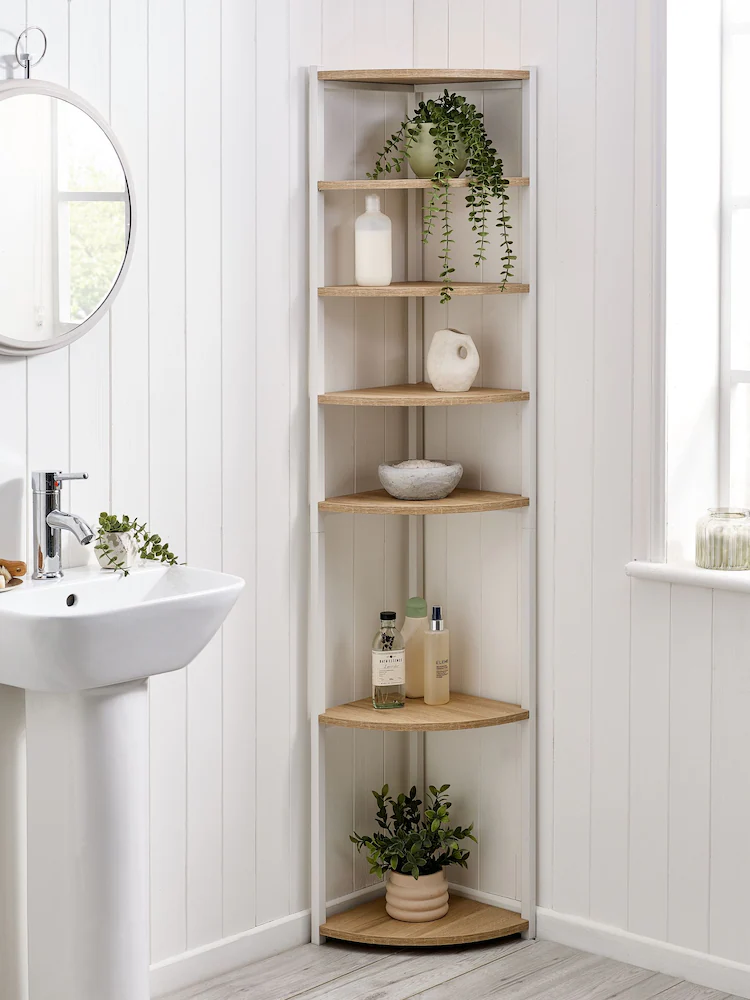
In general, people shove furniture against walls and leave corners bare — or fill them with a single stray floor lamp. But if you handle corners properly, they can offer surprisingly deep storage.
Corner Shelf Systems That Will Truly Fit
Floating corner shelves are vertically stacked using the practical angle of the corner. They’re perfect for:
- Books and small decorative items
- Plants (especially vining and trailing varieties)
- Bathroom toiletries and towels
- Kitchen dry goods in coordinated canisters
You can purchase ready-made corner shelves, or use simple L-brackets with wood cut to your specifications. A row of 5–6 corner shelves stacked from floor to ceiling gives you the equivalent of a small bookcase — without using any floor space whatsoever.
Corner ladder shelves are another great option. They angle into a corner without needing to be mounted to the wall, making them perfect for renters who can’t drill holes.
Hack #5 — Kitchen Overhead Storage That Feels Intentional
The kitchen often tends to be the tightest space in a studio apartment. Cabinets fill up fast. Counter space disappears quickly. And there is frequently a long expanse of blank wall space between the tops of cabinets and the ceiling.
That real estate is prime.
Three Ways to Make Use of Your Kitchen’s Vertical Real Estate
1. Pot racks above the counter or stove A ceiling-mounted or wall-mounted pot rack keeps your cookware within reach and off the counter. It looks intentional — like something from a cooking show.
2. Open shelving above cabinets Install one or two open shelves over your existing upper cabinets for items you don’t use as regularly: extra plates, serving bowls, small appliances, bulk dry goods.
3. Hanging rail systems A mounted horizontal rail with S-hooks allows you to hang everything from spatulas to dish towels to small baskets. IKEA’s GRUNDTAL rail system is a popular and affordable option.
These three approaches alone can reclaim 20–40% more usable kitchen storage — all without a major renovation.
Hack #6 — Raised Beds That Store Underneath
This one straddles the line between vertical and hidden storage, but it certainly deserves to be on this list.
Loft beds are the ultimate vertical hack. When you raise your sleeping space, it opens up an entirely new zone below. Depending on the ceiling height, you can fit a desk, a sofa, a closet, or even a little reading nook underneath.
Loft Beds for Various Ceiling Heights
| Ceiling Height | Loft Bed Type | What Fits Underneath |
|---|---|---|
| 8 feet | Low loft (3–4 ft clearance) | Dresser, desk, storage bins |
| 9 feet | Mid loft (4–5 ft clearance) | Desk + chair, small closet |
| 10+ feet | Full loft (5–6 ft clearance) | Sofa, full workspace, wardrobe |
If a full loft bed seems too dramatic, a raised platform bed (12–18 inches off the ground) with built-in drawers underneath is a more subtle option. The bonus zone below is lost, but you gain substantial drawer storage without the need for extra furniture.
Hack #7 — Staircase Shelving and Ladder Storage as Art
Not everything in your studio needs to look purely utilitarian. The loveliest studio apartments make storage look like a type of decor.
Ladder shelves and staircase-style shelving units are a perfect example. They lean against the wall, don’t need to be mounted, and create a visually interesting asymmetric display.
How to Style a Ladder Shelf So It Looks Intentional
The trick is combining utility with ornament. Try this layout on a 5-tier ladder shelf:
- Top tier: A single small plant or trailing vine
- Second tier: Books (sorted by color or size)
- Third tier: A basket for hidden clutter + one decorative object
- Fourth tier: Everyday items you actually need (remote, chargers, notebook)
- Bottom tier: Larger baskets, bins, or folded blankets
This method allows each item to have a home, but the shelf still feels like deliberate interior design rather than a storage dumping ground.
Ladder shelves are also very affordable. Good ones can be found between $50 and $150, and they require no tools to set up.
Hack #8 — Curtained Vertical Storage That Hides Everything
Sometimes you want a bit of privacy in your storage area. And that’s completely okay.
Open shelving looks great when it’s styled and clean. But most people’s storage is a hodgepodge of necessary items that simply aren’t beautiful — cleaning supplies, surplus toilet paper, bills, cables, random equipment.
The solution? Curtains.
Curtain Storage Hacks That Actually Work
Floor-to-ceiling curtain panels can divide an entire wall of shelving. Put up a ceiling-mounted curtain rod, create or buy shelves behind it, and fill them with all your possessions. Folded shut, it is a sleek design feature. When open, you have an entire wall of storage.
Under-shelf curtain skirts are the smaller form of the same idea. Affix a small tension rod beneath an open shelf and hang a short curtain to obscure the items stored beneath it.
Closet curtains instead of doors work especially well in studios where a closet door swings out and takes up valuable floor space. Swap it for a curtain that slides to the side — suddenly you have several square feet of usable space.
Pick curtain fabrics that complement your overall color scheme. Linen, cotton canvas, and velvet all have an upscale aesthetic while playing a purely utilitarian role.
Hack #9 — Command Hook Systems and the Wall Grid Method
This final hack is for renters who can’t drill holes, don’t want to install shelves, and need something flexible and inexpensive.
Command strips and hooks have received a bad reputation for being “temporary” or “not strong.” But newer heavy-duty versions can carry up to 7.5 pounds per strip — and when used in a strategic system, they can work miracles on a wall.
How to Create a Wall Grid System Without Drilling
Here’s how to install a functional vertical storage grid on any wall:
- Before putting up anything, map out your wall with painter’s tape
- Install heavy-duty command hooks in a grid layout (every 6–8 inches)
- Hang a wooden dowel or thin metal rod horizontally across the hooks
- Suspend lightweight items with S-hooks: bags, hats, jewelry, small plants
- Repeat the process with multiple rods to continue building upward
This creates a fully removable storage wall that looks purposeful, costs less than $30, and leaves zero damage when you move out.
You can also use command hooks to hang:
- Floating shelves on lightweight walls
- Shower caddies on bathroom walls
- Bike hooks in an entryway
- Curtain rods for the curtain storage hack above
Vertical Storage Mindset: The Quick-Reference Cheat Sheet
Here’s a fast-reference summary of all 9 hacks and what they work best for:
| Hack | Best For | Approx. Cost | Renter-Friendly? |
|---|---|---|---|
| Floor-to-ceiling shelving | Books, clothing, kitchen | $100–$400 | Yes (freestanding) |
| Pegboards | Kitchen, office, entryway | $30–$80 | Yes |
| Magnetic strips | Kitchen, bathroom, desk | $10–$40 | Yes |
| Corner shelves | Any room | $20–$100 | Yes |
| Overhead kitchen storage | Kitchen | $50–$200 | Mostly yes |
| Loft/raised beds | Bedroom zone | $200–$1,000 | Yes |
| Ladder/staircase shelves | Living area, bedroom | $50–$150 | Yes |
| Curtained storage | Anywhere with shelves | $30–$100 | Yes |
| Command hook grid | Entryway, bedroom, office | $15–$40 | Yes |
For even more ideas on setting up and organizing your studio apartment, visit Studio Apartment Setup — a dedicated resource for making the most of small-space living.
FAQs About Studio Apartment Space Hacks for Vertical Storage
Q: What is the tallest vertical shelf I can reach for in a studio apartment? Climb as high as you can safely reach. Leave the top 12–18 inches for items you rarely use. Access with a small step stool. The higher you go towards the ceiling, the more storage is unlocked.
Q: Do floor-to-ceiling shelves make a room feel smaller? Actually, the opposite. Vertical lines promote height, which gives the illusion of more space. A tall, organized shelf creates the illusion of height rather than compressing a room.
Q: How can renters who can’t drill make the most of vertical storage? Freestanding shelving units — ladder shelves or adjustable tower shelves — command hook grids, and tension rod systems are all great options. They cause no marks and require zero drilling.
Q: What can I do so vertical shelves don’t look so cluttered? Use matching baskets or bins for hidden storage. Keep your open shelves on a cohesive color palette. Pair one decorative object per shelf with functional ones. And be ruthless in your editing — if you don’t use it, don’t display it.
Q: Is it possible to use vertical storage in a small bathroom? Yes, and it’s one of the best places to try it. Shelving units that stand over the toilet, tall ladder towel racks, wall-mounted magnetic strips, and stacked corner shelves all work brilliantly in small bathrooms.
Q: Are apartment walls safe to hang heavy shelves on? Definitely — provided you hit studs or use proper drywall anchors. For very heavy loads (over 50 lbs), always anchor into a stud. For lighter shelves, heavy-duty drywall anchors rated for the weight will do.
Q: How do I decide between open shelving and closed storage? Use open shelves for things that look nice and that you access frequently. For all that is useful but not pleasing to the eye, rely on closed storage — cabinets, curtained shelves, or bins. According to The Spruce, a combination of both open and closed storage tends to work best for most small apartments.
One Wall at a Time, Your Entire Space Will Change
You should not try to implement all 9 of these hacks at once. Actually, please don’t — that’s a formula for feeling overwhelmed.
Pick one wall. Pick the hack that corresponds to your number one storage issue right now. Try it for a week and notice how the feel of your space changes.
Maybe it’s a pegboard in your kitchen. Perhaps it’s a wall of floor-to-ceiling shelves in your living room. Perhaps it’s as simple as a trio of corner shelves in an empty corner.
Vertical storage creates so much more space you will wonder why you kept everything on the floor.
Studio apartment space hacks for vertical storage are not about compromising. They’re about using what you already have — your walls — more intelligently than most people ever consider.
Go up. You’ll be surprised at what is waiting for you.