

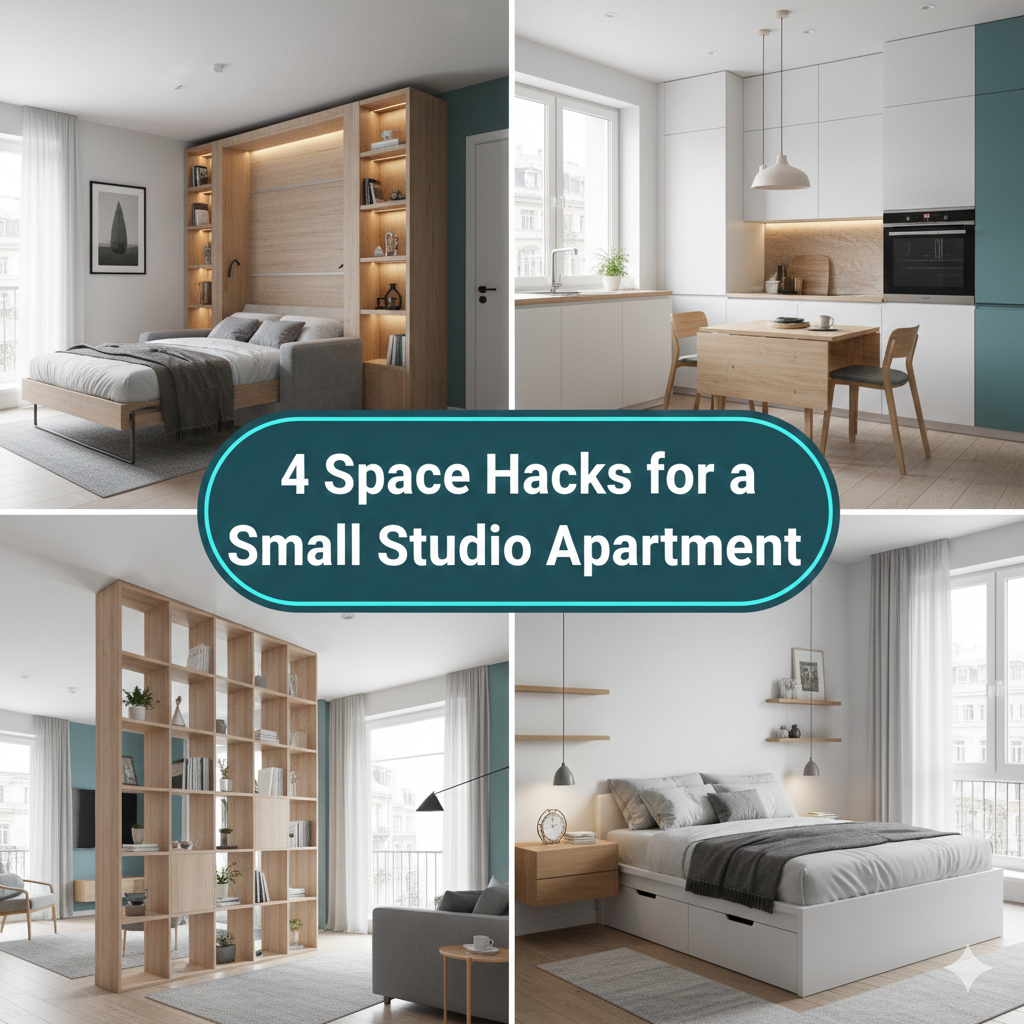
These genius, dirt-cheap hacks might totally change up your living experience in cramped quarters!
Living in a studio apartment has its perks. Lower rent. Less to clean. A cozy vibe as if it’s your own little world.
However, here’s the trouble most studio folks know only too well — space diminishes rapidly.
Your bed fills half the room. Your kitchen has two drawers. And somehow, your stuff has multiplied as if it has a life of its own.
The good news? You don’t have to spend a ton of money to correct this. You also don’t have to hire an interior designer or gut-renovate your apartment.
What you need are some good, inexpensive storage hacks that truly work in small spaces.
In this article, read about 4 fast studio apartment space hacks for cheap storage. All of them are practical, affordable, and easy to put together — even on a Saturday afternoon.
Let’s get into it.
Why Storage Feels So Impossible in Studio Apartments
Before diving into the hacks, it’s helpful to understand why studio apartments feel cramped in the first place.
Most studios range from 300 to 600 square feet. That’s about the size of a two-car garage — except you’re sleeping, cooking, working, and relaxing all in that same space.
It’s not just a question of square footage. It’s about not having dedicated rooms. There’s no bedroom closet. No laundry room. No mudroom to discard your shoes and bags.
It’s all in a single open space. And if you don’t have a savvy storage plan, everything adds up quickly.
The Hidden Cost of Clutter
Clutter doesn’t just look bad. Studies from the Princeton University Neuroscience Institute show that physical clutter competes for your attention. It leaves you feeling stressed, distracted, and mentally fatigued.
That effect is magnified in a studio apartment. You can’t just shut a door and forget about the mess. It’s always right there.
That’s why you fix your storage situation — not just for looks, but also for your mental peace.
Why Cheap Solutions Often Work Better
Here’s something nobody discusses enough — inexpensive storage solutions are often smarter than expensive ones in small apartments.
Why? Because expensive furniture is typically bulky and permanent. A $600 wardrobe unit might solve a problem, but it can block natural light and make your space feel smaller.
Budget-friendly hacks, by contrast, are flexible. You can rearrange them, stack them differently, or discard them without feeling guilty.
Now let’s dive into the actual hacks.
Hack #1 — Use the Full Height of Your Walls

Most studio apartment residents think horizontally. They assess floor space and ponder how to fit it all in.
But there’s an entire dimension that most people overlook — the vertical space above eye level.
From the floor to the ceiling, you could have 8 to 10 feet of wall space. That’s prime storage real estate going completely unused.
Floating Shelves Are Your Best Friend
Floating shelves are one of the cheapest, most effective storage tools you can have. A basic set from IKEA, Amazon, or a thrift store runs $10 to $40.
Here’s how to use them wisely:
- Above the bed: Books, candles, or small bins are great to store up here. It frees up your nightstand and keeps the floor clear.
- Over the toilet: A floating shelf here holds toiletries, towels, or extra supplies without taking up any floor space.
- In the kitchen: Place shelves above the counter to hold spices, mugs, and small appliances.
- By the door: Build a small entryway shelf system for keys, mail, and everyday items.
The key is to go as high as is comfortable for you. Don’t stop at eye level. Use upper shelves for things you don’t use daily — seasonal items, extra toilet paper, backup snacks.
Pegboards for Flexible Storage
Pegboards aren’t just for garages. In studio kitchens and small home offices, they’re incredibly useful.
A pegboard lets you hang pots, pans, utensils, headphones, charging cords, scissors, tape — pretty much anything with a hole or hook.
A basic pegboard costs less than $20 at most hardware stores. Add some hooks and a basket and you’ve created a fully customizable storage wall.
Pro tip: Paint your pegboard the same color as your walls. It becomes a design element rather than looking like an industrial afterthought.
Tension Rods — The Unsung Hack
Tension rods are inexpensive (typically $5–$15), require no drilling, and can be used in more places than most people think.
Use them to:
- Add a second hanging rod in your closet for shorter clothes
- Secure spray bottles under the kitchen sink
- Divide shelves vertically to double your stacking space
- Create a curtain-style room divider to separate your sleeping area
Going vertical doesn’t need a contractor or a big budget. It just requires looking up.
Hack #2 — Turn Every Furniture Piece Into a Storage Unit
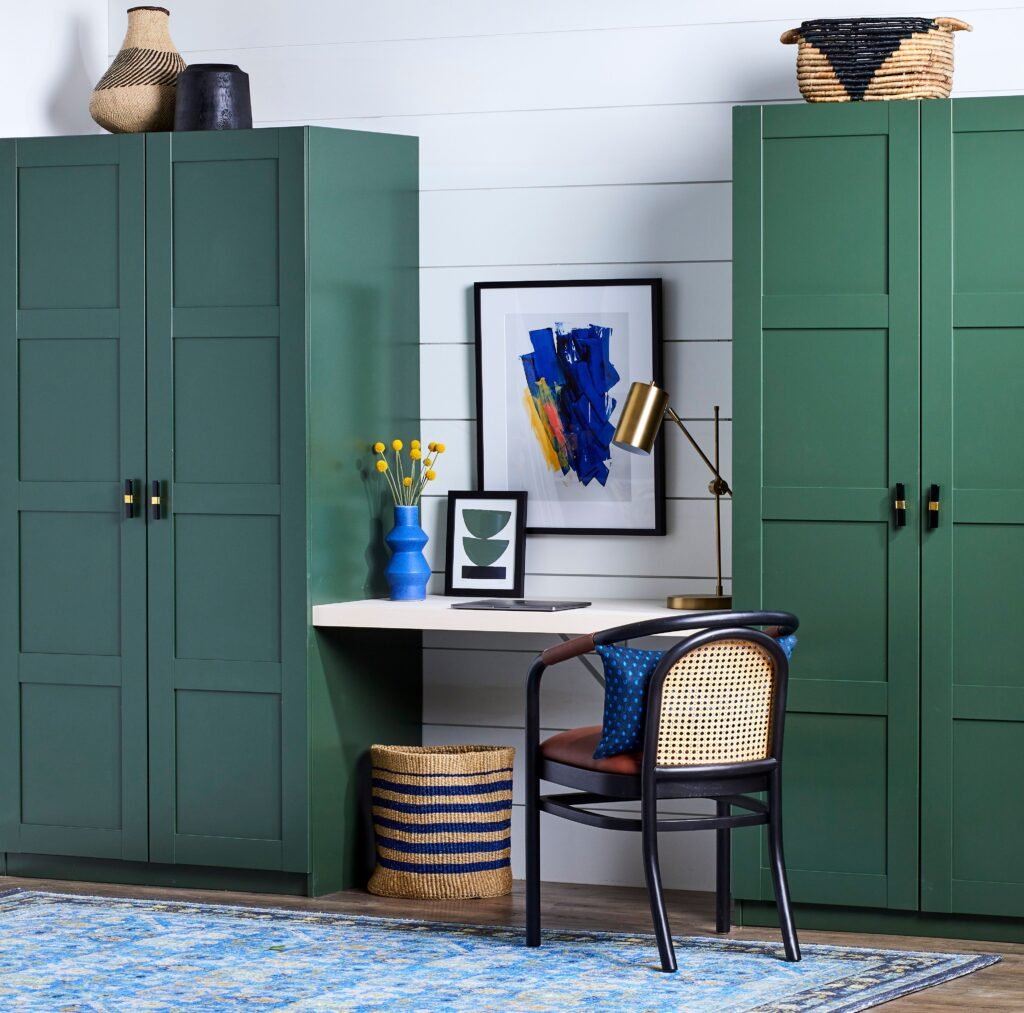
In a studio apartment, furniture that performs only one function is wasted space. Every item you bring in should earn its place by serving at least two functions.
This idea is called dual-purpose furniture, and it’s one of the most effective studio living strategies you can use. If you’re setting up your space from scratch, Studio Apartment Setup is a great resource for layout ideas and furniture guides built specifically for small spaces.
The Ottoman That Does Everything
One of the best investments you can make in a small apartment is a storage ottoman. Good ones run around $30 to $80 at stores like Target, IKEA, or HomeGoods.
Use the inside to store:
- Extra blankets and pillows
- Board games
- Seasonal clothes
- Shoes you don’t wear often
- Cables, chargers, and tech accessories
On the outside, it doubles as a coffee table, extra seating, or a footrest. Three functions. One piece of furniture. Zero extra floor space needed.
Beds With Built-In Storage
Whenever you’re shopping for a bed frame, always look for one with storage drawers underneath. The space under a standard bed is roughly the size of a large chest of drawers — and yet most people leave it entirely empty.
Platform beds with built-in drawers range from $150 to $400 — similar to what you’d pay for a regular bed frame. You’re essentially getting a free dresser with your bed.
If you already have a bed without storage, use flat storage bins that slide underneath. A pack of IKEA’s SKUBB boxes or similar options from Amazon cost roughly $10 to $20.
What to store under the bed:
| Category | Examples |
|---|---|
| Clothing | Off-season clothes, extra jeans, workout gear |
| Linens | Extra sheets, pillowcases, duvet covers |
| Shoes | Boots, heels, special occasion shoes |
| Miscellaneous | Gift-wrapping supplies, luggage, hobby materials |
Benches, Stools, and Coffee Tables With Hidden Compartments
Wherever you’d normally put regular furniture, look for a version with hidden storage inside.
- Storage entryway bench: Sit down to put on shoes, then lift the lid and store them inside.
- Nesting tables: Three tables for the footprint of one. Take them out when you need them, put them away when you don’t.
- Lift-top coffee table: The top lifts up, revealing a deep storage compartment below. Perfect for remotes, books, snacks — you name it.
The mission is simple: never bring in a single-purpose piece of furniture again.
Hack #3 — Use the Back of Every Door
Doors are the most overlooked storage surfaces in any apartment. The back of a door is a flat, open space that most people walk past every single day without ever using.
In a studio apartment, you might have 4 to 6 doors — bathroom, closet, front door, and perhaps a partition or cabinet doors. Each one is a free storage panel.
Over-the-Door Organizers
Over-the-door organizers are one of the most affordable storage wins you can get. They hang over the top of any door without drilling, and they come in dozens of styles.
Here are the best ones for studio apartments:
Shoe organizers (clear pocket style) These aren’t just for shoes. Hang one on your bathroom door and load the pockets with:
- Shampoo, conditioner, razors
- Makeup and skincare products
- Hair tools and accessories
- Cleaning supplies
A basic clear shoe organizer runs $8 to $15 and holds 24+ items that would otherwise clutter your bathroom counter.
Over-the-door spice racks Hang one on the inside of your pantry or kitchen cabinet door. You suddenly have a home for every spice, condiment packet, and small jar without sacrificing an inch of counter space.
Over-the-door hooks Simple S-hooks or over-the-door hook strips hold:
- Towels and robes
- Bags, purses, and backpacks
- Jackets and hoodies
- Umbrellas
You can get a 6-hook over-the-door set for under $10.
Inside Cabinet Doors
Don’t just think about bedroom and bathroom doors. The insides of kitchen cabinet doors are also usable space.
Stick-on hooks or small tension-mounted racks inside cabinet doors can hold:
- Pot lids
- Cutting boards
- Boxes of aluminum foil and plastic wrap
- Small cleaning brushes
This one move alone can free up an entire cabinet shelf.
Closet Door Storage
If you have a closet door, you’re sitting on gold. Add a full over-the-door organizer with shelves and hooks. Use it for:
- Folded clothes or accessories
- Scarves, belts, and hats
- Cleaning supplies
- Office supplies and stationery
A quick comparison of over-the-door organizer options:
| Type | Average Cost | Best For |
|---|---|---|
| Clear pocket shoe organizer | $8–$15 | Bathroom, small items |
| Over-the-door spice rack | $12–$25 | Kitchen, pantry |
| Hook strip (4–6 hooks) | $6–$12 | Bedroom, entryway |
| Full shelf organizer | $20–$40 | Closet, bathroom |
| Towel bar + hooks combo | $10–$20 | Bathroom, bedroom |
Hack #4 — Build a Zone System With Cheap Dividers and Bins
One of the main reasons studio apartments feel chaotic isn’t a lack of storage — it’s a lack of organization within the storage you already have.
Drawers full of random stuff. Shelves where things simply get tossed. Cabinets where items fly out when you open the door.
The solution is simple: divide everything into zones using cheap bins, baskets, and dividers.
The Zone Method Explained
A zone is simply a defined area for a specific category of items. In a big home, rooms work as zones. In a studio, you need to create your own.
Here’s a simple zone system, for example:
| Zone | Location | What to Store |
|---|---|---|
| Sleep zone | Bed area | Bedding, nightstand items, sleep accessories |
| Work zone | Desk corner | Laptop, cables, notebooks, office supplies |
| Kitchen zone | Kitchen area | Cookware, food, appliances |
| Clothing zone | Closet/wardrobe | All clothes, shoes, bags |
| Relaxation zone | Couch area | Remotes, books, throw blankets |
| Bathroom zone | Bathroom | Toiletries, towels, cleaning products |
Once you define the zones, nothing should live outside its zone. Anything that doesn’t have a zone either gets one or gets donated.
Bins and Baskets — Cheap but Powerful
Once you know your zones, bins and baskets become your best tools.
The goal is to give every single item you own a home. When everything has a designated home, putting things away takes seconds instead of minutes.
Best cheap bin options:
- Dollar Tree bins: $1.25 each. Perfect for drawer dividers, bathroom organizers, and desk supplies.
- IKEA DRONA boxes: $4–$6 each. Fit perfectly in KALLAX shelf units and come in neutral colors.
- Mesh wire baskets: $5–$15. Stackable and great for pantry or closet shelves.
- Fabric cube storage bins: $3–$8 each. Soft-sided, collapsible, and work on any shelf.
Drawer Dividers for the Win
Open the junk drawer in most studio apartments and you’ll find a jumble of batteries, rubber bands, takeout menus, and mystery items.
Drawer dividers fix this instantly. You can buy adjustable plastic dividers for under $10, or make your own with small cardboard boxes.
Divide your kitchen drawers into sections:
- Utensils
- Cooking tools
- Takeout supplies
- Batteries and small tools
Do the same for your bathroom drawers and your clothing drawers. When every drawer has clear sections, you always know where things are — and putting them back is just as easy.
Labeling Everything
This sounds simple, but it’s one of the most powerful habits for keeping a small space organized. According to The Container Store’s organization experts, labeling is one of the top habits of people who successfully maintain tidy small spaces long-term.
Label your bins. Label your baskets. Label your shelves.
You can use:
- A basic label maker ($15–$20)
- Printed labels from your computer
- Handwritten labels with a marker and masking tape
When everything is labeled, you always know where it goes. Guests can help put things away. And you never waste time hunting for something you can’t find.
Putting It All Together — A Simple Weekend Game Plan
You don’t have to do all four hacks at once. Start small, build momentum, and your studio will transform faster than you expect.
Here’s a simple weekend plan:
Saturday Morning: Walk around your apartment and identify all unused vertical wall space. Order or grab two or three floating shelves.
Saturday Afternoon: Check every door and add at least one over-the-door organizer. Start with the bathroom — you’ll notice the difference right away.
Sunday Morning: Empty out all the drawers and cabinets. Sort everything into categories. Buy bins or baskets to organize what you find.
Sunday Afternoon: Inspect your furniture. Identify one or two pieces you can swap for dual-purpose options. The storage ottoman is a great first swap.
Quick Reference — Budget Breakdown
Here’s a frank look at what these four hacks might cost:
| Hack | Items Needed | Estimated Cost |
|---|---|---|
| Go vertical | Floating shelves, pegboard, tension rods | $30–$80 |
| Dual-purpose furniture | Storage ottoman, under-bed bins | $40–$100 |
| Door storage | Over-door organizers, hooks | $25–$60 |
| Zone system with bins | Bins, baskets, drawer dividers | $20–$50 |
| Total | $115–$290 |
For less than $300 — and often far less if you shop sales or thrift stores — you can completely overhaul the storage situation in your studio apartment.
Frequently Asked Questions
Q: What’s the fastest storage hack for a studio apartment? The quickest win is adding over-the-door organizers. They can be installed in minutes with no tools required, and they immediately add storage to your bathroom, closet, or bedroom without taking up any floor space.
Q: How can I add storage in a studio apartment without drilling holes? Use tension rods, over-the-door organizers, freestanding shelves, and Command strip hooks. All are drilling-free, renter-friendly solutions.
Q: What’s the best cheap storage option for a small closet? Use a tension rod or a hanging rod extender to double your closet rod. Add an over-the-door organizer on the closet door. Use shelf dividers and stackable bins to organize what’s already inside. This can effectively double your closet storage.
Q: I have too much stuff. How do I organize a studio apartment? Start by decluttering. The simple reality is that no storage hack can salvage a space that has more stuff than it can reasonably hold. Donate, sell, or put in off-site storage anything you don’t use regularly. Then apply the zone system and bin organization method.
Q: Are storage ottomans worth it in a studio apartment? Absolutely. A storage ottoman serves in place of a coffee table, provides extra seating when guests come over, and hides a surprising amount of stuff inside. It’s one of the best ROI purchases for small space living.
Q: Are IKEA KALLAX shelves good for studio apartment storage? Yes — the IKEA KALLAX unit is a classic studio apartment storage solution for good reason. It’s modular, inexpensive, and functions as a room divider, TV stand, bookshelf, and wardrobe all in one. Pair it with DRONA fabric bins for neat, concealed storage.
Wrapping It Up
Living in a studio doesn’t mean living with clutter. It just means thinking smarter about your space.
The 4 fast studio apartment space hacks for cheap storage covered in this article — going vertical, using dual-purpose furniture, maximizing door space, and building a zone system — can truly transform how your apartment feels to live in.
You don’t need a big budget. You don’t need to move. You simply have to look at your space in a new way and take action on a few smart, inexpensive changes.
Start with one hack this weekend. See how it feels. Then build from there.
A more organized, spacious-feeling studio is closer than you think.