


If you have a studio apartment, you already know the struggle. Every square foot counts. Clutter builds up fast. Storage always runs out at the worst time.
The good news is that your bed could be the most wasted space in your entire apartment.
Most people never give a second thought to what lurks beneath it. But with the right studio apartment space hacks for under-bed storage, you can free up some serious real estate — without breaking the bank or dialing a contractor.
This guide goes over 6 powerful, practical, and low-cost strategies to convert that dusty dead zone into a smart storage system. Whether it’s a small city studio you’re in or just too much stuff, these hacks will change the way you think about space for good.
Why Under-Bed Storage Is a Game-Changer for Studio Living
Studio apartments typically range from 300 to 600 square feet. That doesn’t leave much space for a bed, a sofa, kitchen, wardrobe, and everything else life demands.
Most storage guides will tell you to make your space less cluttered. That’s fine advice. But what if you already have things you need, but there’s just no place for them?
The solution most people overlook is under-bed space.
The average queen-size bed measures around 13 to 15 inches off the ground. Multiply that by the bed’s length and width to get anywhere from 30 to 45 cubic feet of potential storage space. That’s about the size of a big closet shelf.
The trick is using it wisely.
What Works for Under-Bed Storage in a Studio
A normal house has closets, garages, cellars, and guest rooms. A studio has none of that.
So your under-bed area needs to be a real workhorse. It should hold things you reach for on a daily basis, organize those objects, and still look good when friends come to visit.
If you’re looking for more ways to make the most of a compact living space, Studio Apartment Setup is a fantastic resource packed with layout ideas, storage solutions, and décor tips built specifically for studio dwellers.
The six hacks below aim to do just that.
Hack #1 — Replace Your Bed Frame With One That Has Built-In Drawers
This is the biggest upgrade you can make for studio apartment under-bed storage.
Platform beds with built-in drawers are made for small-space living. Rather than having an empty, hard-to-reach space under your mattress, you have real drawers — typically two to four of them — that slide in and out seamlessly.
What can you store in them?
- Folded clothing (sweaters, jeans, gym clothes)
- Extra bedding and blankets
- Shoes and seasonal footwear
- Books, journals, or hobby supplies
The drawers are easy to access, protect items from dust, and appear entirely invisible when closed.
Guide to Choosing the Best Storage Bed Frame
Not all storage beds are created equal. Here’s a simple comparison to guide your decision:
| Feature | Budget Option | Mid-Range Option | Premium Option |
|---|---|---|---|
| Price Range | $150–$300 | $300–$600 | $600–$1,200+ |
| Drawer Count | 2 side drawers | 2–4 drawers | 4–6 drawers |
| Weight Capacity | Up to 500 lbs | Up to 800 lbs | 1,000+ lbs |
| Material | Particleboard | Solid wood/MDF | Solid hardwood |
| Best For | Renters on a budget | Most studio dwellers | Long-term investment |
Look for frames with smooth drawer glides, a center support beam, and slats included (so you won’t need a box spring).
Hack #2 — Use Flat, Wheeled Storage Bins for Easy Access
You don’t need to buy a new bed to make use of the space beneath it.
Flat, low-profile storage bins on wheels are one of the cheapest and most flexible studio apartment space hacks going. They slip beneath most standard bed frames and roll out in seconds.
Why wheels matter: Without wheels, you’re crawling on your knees under the bed every time you need something. With wheels, you just slide the bin out like a drawer. It takes three seconds.
Look for bins that are:
- 3 to 6 inches tall (to fit under low frames)
- Made from clear plastic (so you can see contents at a glance)
- Equipped with lids (to keep out dust)
You can find these at IKEA, The Container Store, Amazon, or dollar stores. A four-piece set typically runs under $40.
Label Everything — Seriously
This may sound obvious, but the majority of people skip it. Then they spend 10 minutes digging through bins to find one item.
Get a label maker, use chalk labels, or even masking tape and a marker. Label each bin by category:
- Winter clothes
- Extra sheets
- Craft supplies
- Shoes
You’ll be thankful to yourself every time you need anything.
Hack #3 — Store Seasonal Items With Vacuum Bags
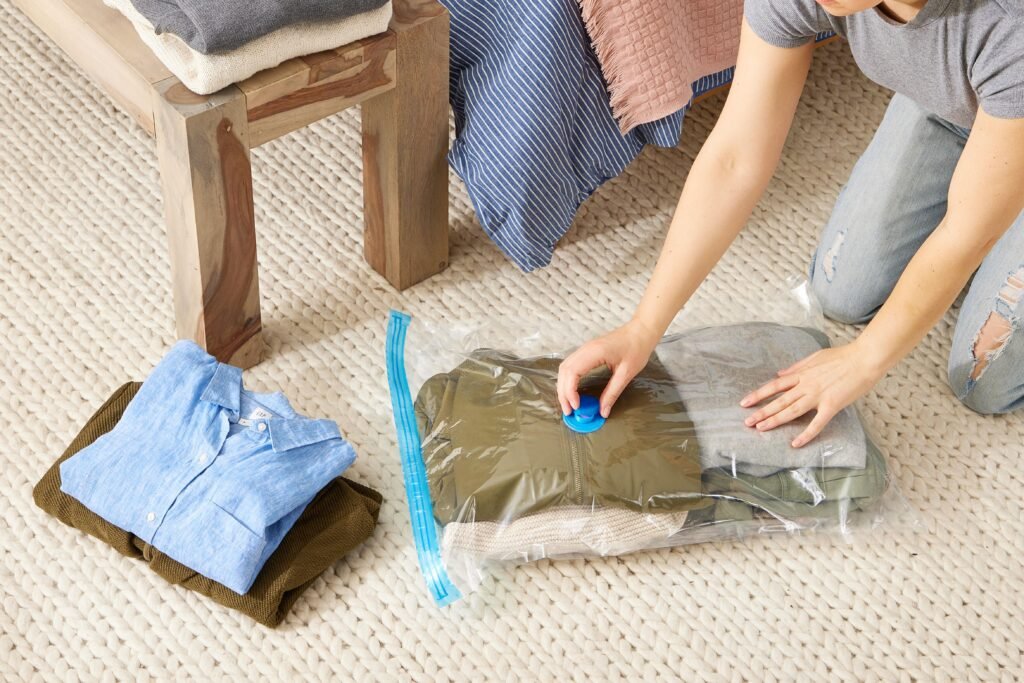
Pillows, comforters, winter coats, and thick sweaters — these are space hogs that congest closets and shelves in a studio apartment.
Vacuum storage bags are the answer to this problem almost entirely.
Here’s how they work: pack bulky items inside the bag, seal it up, and then use a vacuum cleaner to suck the air out. The bag condenses to a small fraction of its original size. A fluffy winter comforter that usually takes up half a shelf squishes down to approximately 2 inches flat.
Then you tuck it underneath the bed. Done.
Vacuum Bag Storage — Size Guide
| Item | Normal Size | Compressed Size | Space Saved |
|---|---|---|---|
| Queen comforter | ~12″ thick | 2–3″ flat | 75–80% |
| 2 winter coats | Closet rod space | 4″ flat bag | ~70% |
| 6 thick sweaters | Full shelf | 3″ flat bag | ~65% |
| 4 pillows | Bulky pile | 2″ flat bag | ~80% |
These bags are reusable and generally cost between $10–$25 for a pack of six to ten bags. Brands including SpaceSaver, Ziploc, and VACPAK all offer dependable options.
Pro tip: Use seasonal rotation. During spring, vacuum-seal your winter clothes. In fall, swap it out. You only ever store what you aren’t currently using, which helps keep clutter in check all year long.
Hack #4 — Use Risers to Open Up More Space Under Your Bed
Sometimes the simplest hack is the best hack.
Bed risers are small blocks — typically 3 to 8 inches high — that fit beneath each leg of your bed frame. They raise the whole bed higher off the ground, providing significantly more vertical clearance underneath.
More clearance means more options.
With 8-inch risers, you can now fit:
- Larger storage bins
- Small rolling carts
- Stacked boxes
- Even a flat suitcase or two
What to Consider Before Purchasing Bed Risers
Not all risers work with every bed frame. Here’s what to check:
Frame leg style: Risers work best for beds that have separate legs, as opposed to a solid base or platform that rests flush on the floor.
Weight limit: Always pay attention to the riser’s weight capacity. Look for risers rated for at least 1,000 lbs total. Less expensive sets may only handle 500 lbs, which might not be enough when you factor in your mattress, frame, bedding, and your own body weight.
Material: Plastic risers are inexpensive but may crack over time. Solid wood or heavy-duty plastic with metal cores last far longer.
Aesthetics: If your bed is on full view across the studio, mismatched risers can look messy. Choose ones that match your frame color, or conceal the legs with bed skirts.
Risers usually run from $10 to $30 for a set of four or eight. They are one of the least expensive studio apartment space hacks on this entire list.
Hack #5 — Add a Bed Skirt to Conceal Storage and Keep Everything Neat
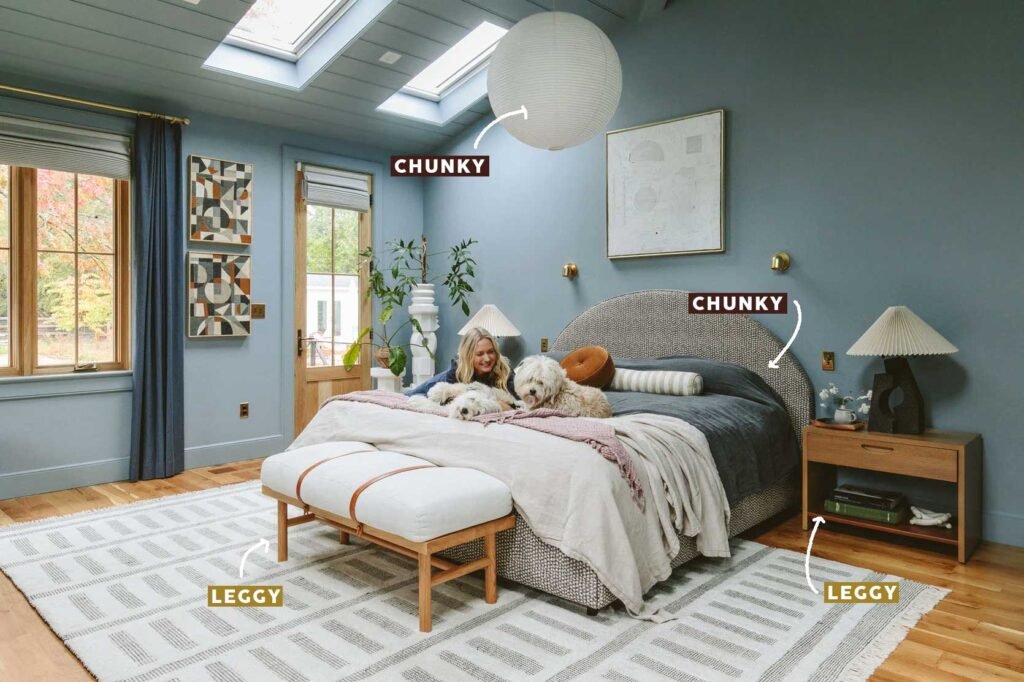
Here’s one that very few people think about: visual clutter is just as exhausting as physical clutter.
If your under-bed area looks chaotic, your entire studio will feel messy — even if everything is theoretically organized.
A bed skirt conceals everything underneath and gives your space an instantly polished look. It’s not just decorative. It’s a psychological hack that makes your studio feel more calm and relaxed.
How to Choose the Best Bed Skirt for a Storage Setup
Here’s what to look for:
Drop length: This is the distance between the top of the box spring (or platform) and the floor. Measure carefully. You want the skirt to barely graze the floor — not puddle and not float above it.
Split corner vs. wrap-around: Split corner skirts are easier to put on and take off, which is a big plus if you’re frequently accessing under-bed storage. Wrap-around styles look cleaner but are trickier to work with.
Fabric: Linen, cotton, and microfiber all do the trick. Avoid anything too sheer — you want total coverage so nothing shows through.
Color: In a small studio, lighter tones (white, cream, or light grey) create an illusion of more space. Dark colors can make things feel constricted.
Bed skirts cost between $15 and $60 depending on brand and material.
Pair Your Bed Skirt With a Color-Coded Storage System
As you organize beneath the bed, take it a step further. Assign a color to every bin or category of storage. For example:
- Blue bins = clothing
- Clear bins = shoes
- Red bins = seasonal items
It seems like a small addition, but it speeds up finding things so much. And with the skirt covering everything, no one knows it’s there but you.
Hack #6 — Use Modular Drawer Organizers and Stackable Trays Inside Your Storage Zones
This last hack is all about maximizing the storage you’ve already built.
Once you’ve set up bins, bags, or drawers under the bed, it can be all too easy to simply toss things in and call it done. But that defeats the purpose. Things get jumbled, you forget what’s where, and soon enough the under-bed zone becomes yet another junk zone.
Modular organizers fix this.
What Are Modular Organizers?
These are small trays, dividers, and inserts that sit inside your bins or drawers. Rather than one big open space, you get several small compartments — each dedicated to a specific item or category.
Think of it like a silverware drawer in a kitchen. Without dividers, forks, spoons, and knives jumble together. With dividers, everything has its place.
Great uses for modular organizers in under-bed storage:
- Jewelry, watches, and accessories
- Phone chargers and cables
- Small tools and batteries
- Sewing kits and craft supplies
- Medications and first aid items
For modular trays, check out IKEA (the SKUBB and KUGGIS systems are excellent), The Container Store, and Amazon. A starter set ranges from $8 to $30.
Stack Vertically When You Can
If your clearance permits — for example, you’ve added risers and now have 12+ inches of space — consider stacking two thin bins or trays on top of each other. This effectively doubles your usable surface area without occupying more floor space.
Just make sure the bottom bin is sturdy enough to support weight, and that the stack doesn’t become too heavy to pull out easily.
Putting It All Together — A Simple Under-Bed Storage Plan
Here’s how you could combine several of these hacks into one organized system:
Step 1: Add bed risers to create more clearance (Hack #4)
Step 2: Replace with a storage bed frame if budget allows, OR invest in high-quality wheeled bins (Hack #1 or Hack #2)
Step 3: Vacuum-pack seasonal items and push them to the back of the under-bed space (Hack #3)
Step 4: Use modular organizers inside your bins for smaller items (Hack #6)
Step 5: Add a bed skirt to hide everything and keep the room looking tidy (Hack #5)
Step 6: Label every bin, tray, and vacuum bag (part of Hack #2)
The result? A fully functional, completely hidden storage system that adds a closet’s worth of storage to your studio apartment.
Common Mistakes to Avoid With Under-Bed Storage
Even with the best hacks, old habits are easy to fall back into. Here are the biggest pitfalls and how to avoid them altogether.
Storing things you never use: Under-bed storage is prime real estate. Don’t cram it with stuff you haven’t touched in two years. Those items need to be donated or thrown out.
Skipping labels: You will forget which bin has what. Label everything as you put it away.
Ignoring dust: Dust collects even with lids and skirts. Every 3–4 months, take everything out to wipe down the area.
Overpacking bins: A heavy bin is difficult to pull out and easy to break. Keep bins light enough to slide in and out without straining.
Not measuring first: Always measure the clearance under your current bed before buying bins, risers, or frames. Measure twice, buy once.
Frequently Asked Questions
Q: What is the minimum clearance I’ll need to fit storage bins under my bed?
Most flat storage bins require 4 to 7 inches of clearance. Standard bed frames provide 7 to 14 inches. Never buy anything before measuring with a tape measure.
Q: Are vacuum storage bags safe for all fabrics?
Most fabrics are fine — cotton, wool, polyester, and fleece all compress well. Do not use vacuum bags for down feathers, leather, fur, or anything that needs to breathe. Check the bag packaging for a complete list.
Q: Can I use under-bed storage if I have a platform bed with no legs?
If your platform bed rests flat on the floor, there is no clearance underneath. The two best options are: (1) replace it with a bed that has legs or built-in drawers, or (2) invest in a platform bed with built-in lift-up storage (the mattress lifts on hinges to expose the area below).
Q: What’s the best way to store shoes under the bed?
Use a flat, clear bin with a lid — so you can see what’s inside and dust won’t settle. Alternatively, opt for a dedicated under-bed shoe organizer that fits 8 to 12 pairs in separate compartments.
Q: How do I keep things organized long-term and avoid it getting messy again?
Tip number one: everything needs a home. By always putting the same items back in the same bin, the system stays organized. Add a regular 10-minute “reset” to your monthly routine to check bins and put anything that’s drifted back in its place.
Q: Is under-bed storage hygienic? What about bugs or allergens?
Yes, it can be extremely hygienic — as long as you use sealed, lidded bins and vacuum-pack seasonal items. Do not store food or anything organic. If you have allergies, use a bin liner that is resistant to dust mites. It also helps to clean the area every 3–4 months.
Q: Do bed risers damage hardwood floors?
Hard plastic risers can scratch floors. Choose risers that have rubber feet or felt pads on the base. You can also place a felt furniture pad between the riser and the floor for additional protection. According to Good Housekeeping’s guide to protecting hardwood floors, using felt pads and rubber-based protectors is one of the most effective ways to prevent furniture from causing scratches over time.
The Bottom Line
Just because you live in a studio apartment doesn’t mean you have to live with clutter.
Your bed is occupying a massive chunk of your floor space. It might as well pay for itself.
These six studio apartment space hacks for under-bed storage are practical, affordable, and genuinely effective. You do not need to be a designer or have special tools. You just need to start.
Choose one hack from this list and put it into action by the end of this weekend. Then add another. Over time, you’ll build a storage system that makes your studio feel twice as spacious — without relocating somewhere larger.
Living in a small space is all about maximizing what you already have. And now you know exactly where to start.