


One bedroom living can be fun. You have your own space. You make your own rules.
But then you go into your closet — and reality strikes.
Shoes tumbling out. Shirts crammed together. You know, that shelf you can never quite reach. Sound familiar?
Small closets are some of the biggest annoyances of studio apartment living. When your bedroom, living room and kitchen share the same four walls, every square foot counts. Your closet is more than a closet — it’s your entire storage system.
The good news? You don’t need to move. You don’t have to sink thousands into a renovation. And you absolutely do not need to part ways with all of your belongings (though maybe some).
The best studio apartment space hacks for small closets can help you turn that around, doubling — or even tripling — the usable space in your closet. These tips are practical, inexpensive and easy to implement, even if you’ve never used a power tool in your life.
If you’re just getting started with your setup, Studio Apartment Setup is a great resource for layout ideas, furniture tips, and making the most of every square inch of your space.
Let’s get into it.
Why Do Small Closets Seem Smaller Than They Are?
Solutions are often desired, but it pays to understand the problem beforehand.
The closets in most studio apartments are constructed as an afterthought. Builders understand that tenants will be using them, but often do not design them with real life in mind. One rod, a shelf above it and perhaps a tiny section on the floor — this is the standard arrangement.
The result? You are piling things atop each other. You’re shoving bags into corners. You forget what you even own.
The problem isn’t simply a lack of space. It’s lack of organization. A 4-foot-wide closet can hold more than a 6-foot-wide closet if used intelligently. That is the entire concept of these hacks.
Hack #1 — Double Your Hanging Space With a Second Rod
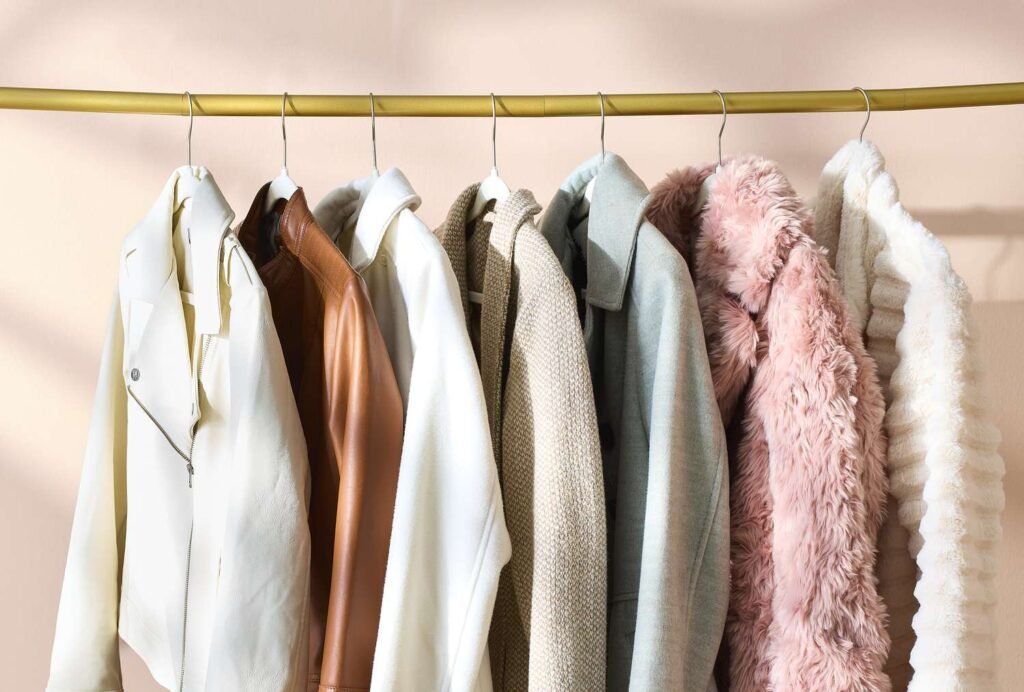
This is literally the easiest win of all time in a tiny closet.
Closets typically have only one hanging rod. But if you’re not storing full-length gowns or coats every day, you don’t likely need that full drop. The majority of everyday clothes — T-shirts, jackets, hung pants, blazers — hang only about 40 inches long.
That leaves a big chunk of empty space beneath the rod. Wasted space.
How to Add a Second Rod
Get a closet rod doubler from any home goods store. These are low cost (typically $10–$25), hang from your current rod, and establish a second level of hanging space underneath.
Now you’ve effectively stacked two rows of clothing in the same vertical footprint.
Pro tip: Use the top rod for longer items, like dresses and dress pants. The lower rod is for shirts, folded trousers, and jackets. This helps keep things visually contained and within easy reach.
What You’ll Need
| Item | Approximate Cost | Where to Find |
|---|---|---|
| Closet rod doubler | $10 – $25 | IKEA, Amazon, Target |
| Slim velvet hangers | $10 – $15 for 30 pcs | Amazon, Dollar stores |
| S-hooks (optional add-on) | $5 – $8 | Hardware stores |
Just switching to slim velvet hangers can free up 2–3 extra inches of rod space. That’s a little more room for one or two additional items — and it adds up quickly.
Hack #2 — Go Vertical: Use the Space Between the Floor and Ceiling
The majority of people only use the middle zone of their closet — in and around their personal zone of reach and vision. Everything above and below? Ignored.
This is a huge lost opportunity.
Vertical space is your best friend in a studio apartment. Walls go all the way to the ceiling. Your closet does too. Use it.
Stack Shelves High
If your closet includes a single shelf toward the top, get more. There are adjustable shelving systems that either attach directly to the wall or rest free-standing within the closet, meaning no drilling. Freestanding shelving towers are a great option too — no installation needed.
Put seasonal items, bags and boxes you don’t access every day on the highest shelves. Store everyday items at eye level and lower.
Don’t Forget the Floor
The floor of your closet is prime real estate. A compact shoe rack or a few stackable bins can turn a messy floor pile into something orderly.
Ideal floor-level storage ideas:
- Shoe racks (ensure shoes are always in pairs, visible, and easy to grab)
- Wicker or fabric bins to store gym gear, bags, or accessories
- A little rolling cart that pulls in and out
Hack #3 — The Back of the Door Is Untapped Real Estate
Here’s a truth that no one really thinks about: the inside of your closet door is essentially blank. And blank = wasted.
An over-the-door organizer can fit a surprising amount of things. Shoes, accessories, cleaning supplies, bags, scarves — these hang right over the door. No screws. No tools. No damage to walls or doors.
The Best Things to Store on the Back of a Door
- Shoes (clear pocket organizers offer a glimpse of each pair at a glance)
- Scarves, belts and ties (use hooks or a slim rack)
- Handbags or totes (rig sturdy over-door hooks)
- Jewelry and accessories (small fabric organizers with pockets work great)
- Cleaning products (if it’s a utility closet)
Choosing the Right Organizer
Search for organizers designed to match your door width. Most standard over-door products fit doors that are up to 1.5 inches thick. Measure yours before buying.
Transparent pockets are especially handy — you can easily see what’s inside without rummaging around.
Hack #4 — Save Space With Vacuum-Seal Bags
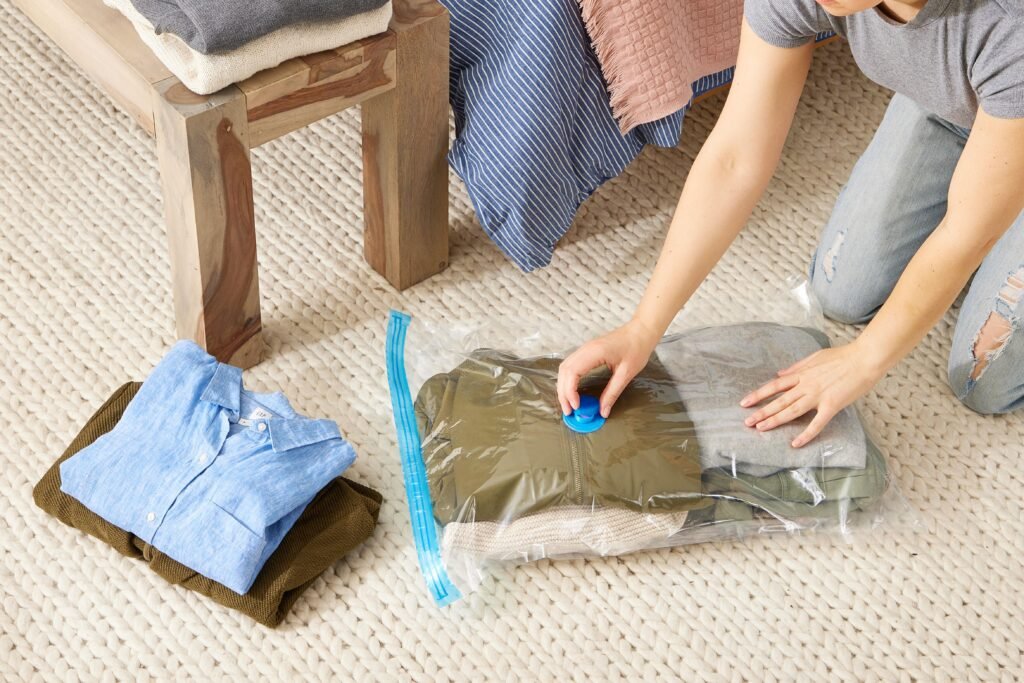
Bulky items are closet killers.
Winter coats. Extra blankets. Sleeping bags. Thick sweaters. These items take up a lot of real estate — especially in a small closet, where every inch counts.
One of the best studio apartment space hacks for small closets is vacuum-seal storage bags, and they’re pretty underrated.
How Vacuum-Seal Bags Work
You throw the bulky things into the bag. You seal it shut. You then vacuum all the air out with a vacuum cleaner. The bag compresses down to a small fraction of its original size.
A heavy winter coat that usually requires two feet of hanging space? Vacuum-seal it, and it might take up less than four inches stacked flat on a shelf.
Best Items for Vacuum Sealing
| Great Candidates | Not Recommended |
|---|---|
| Winter coats and jackets | Down-filled clothing (can ruin fill) |
| Extra blankets and comforters | Delicate fabrics like silk |
| Heavy sweaters and hoodies | Items you need constant access to |
| Sleeping bags | Anything with foam padding |
| Out-of-season clothes | Leather or faux leather |
You can purchase vacuum-seal bags at most home goods stores, between $15–$30 for a set. They’re reusable, which makes them a smart long-term investment.
Hack #5 — Kill the Clutter With Shelf Dividers and Stackable Bins
Open shelving is beautiful — until it’s not.
Without structure, shelves become catch-all places. Piles form. Things slide. You forget what you own. Then you over-acquire things you already have. (We’ve all been there.)
Shelf dividers and stackable bins are easy solutions that make a big difference.
What Shelf Dividers Do
Shelf dividers are clips or panels that attach to your shelves and create distinct sections. Rather than one big pile of sweaters that will eventually collapse, you get neat columns.
This works especially well for:
- Folded sweaters and t-shirts
- Jeans and pants
- Towels and linens
- Purses and bags
Stackable Bins and Baskets
Transparent stackable bins show you what’s inside. Label them if you want. Stack them two or three high. All of a sudden, your shelves are doing triple duty.
Best bin categories for studio closets:
- One bin for gym clothes
- One for accessories (scarves, hats, gloves)
- One for things you use weekly but not daily
- One for “donate” items (more on that in the next section)
Before & After: A Quick Visual of Shelf Organization
Before: A pile of sweaters mixed in with random bags, shoes sharing space with accessories — total chaos.
After: Folded sweaters arranged in separate columns, bags standing upright with dividers, shoes on a lower rack and accessories in labeled clear bins.
Same shelf. Same closet. Completely different experience.
Hack #6 — Edit Your Possessions (Less Stuff = More Space)
This one doesn’t require a single purchase.
It just requires honesty.
If your closet is overflowing, part of the issue may simply be that you own too much for the space you have. And that’s alright — it can be fixed.
The “Earn Its Place” Rule
Every piece in your closet should have to earn its place. Consider three questions for each item:
- Have I worn this in the last 6–12 months?
- Does it fit me right now?
- Would I buy this again today?
If it’s a no on all three, that piece doesn’t deserve its spot. Give it away, sell it or throw it out.
The Seasonal Rotation Method
You don’t need both summer and winter clothes in your closet simultaneously. Rotate seasonally.
Store any off-season garments in vacuum-seal bags (see Hack #4) or storage bins beneath your bed. Only display what is appropriate for the current season. This alone frees up 30–50% of your closet space overnight.
A Simple Declutter Checklist
- [ ] Clothes that no longer fit
- [ ] Clothes not worn in 12+ months
- [ ] Duplicates (do you really need four black t-shirts?)
- [ ] Worn-out pieces of clothing or accessories
- [ ] Impulse purchases you never liked
- [ ] Gifts kept out of guilt
Being ruthless here rewards you more than any organizer you can purchase.
Hack #7 — Think Outside the Closet (Expand Your Storage Beyond the Closet Door)
Sometimes the best studio apartment space hack for small closets involves accepting that the closet cannot contain everything — and building a smarter storage ecosystem around it.
That’s particularly true for studio apartments, where you have to make the most of limited real estate overall.
Under-Bed Storage
The space under your bed is one of the most wasted storage areas in any small apartment. Low-profile storage bins slide directly beneath a standard bed frame.
Use this space for:
- Seasonal clothing
- Extra shoes
- Luggage
- Books and magazines
- Spare bedding
If your bed frame has little clearance, try bed risers. These raise your bed several inches higher, creating a whole lot more storage space underneath.
Wall-Mounted Hooks and Pegboards
Put up a couple of hooks on the wall next to your closet or inside your entryway. These take care of the common items you reach for all the time — jackets, bags, keys, umbrellas.
By keeping these items outside the closet, you’re minimizing your daily in-and-out closet traffic, which means your wardrobe stays a lot more organized over time.
A pegboard on a wall can serve as a mini accessory station — hooks for bags, small shelves for folded items, even a mirror attached to it.
Over-the-Door Hooks on Your Bedroom or Bathroom Doors
Over-door solutions don’t just have to be for your closet. Bedroom doors, bathroom doors and pantry doors all have room for organizers or hooks.
Divide your storage needs over several doors and you’ll be amazed how much weight you take off your main closet.
According to The Spruce’s guide to small space organization, spreading storage across multiple zones — walls, doors, and under-bed areas — is one of the most effective strategies for small living spaces.
Putting It All Together: An Easy Action Plan
Here are all 7 hacks in a logical, manageable order:
Step 1: Declutter first (Hack #6). Don’t organize clutter — get rid of it.
Step 2: Evaluate your vertical space. Plan where extra shelves or bins can go (Hack #2).
Step 3: Install a second hanging rod (Hack #1). This is your fastest big win.
Step 4: Utilize the back of your door (Hack #3). No tools, instant results.
Step 5: Vacuum-seal your bulky seasonal items (Hack #4). Free up tons of shelf and floor space.
Step 6: Use dividers and bins on your shelves (Hack #5). Bring order to open shelving.
Step 7: Create storage outside the closet — under the bed, on walls and other doors (Hack #7).
Cost Breakdown: How Much Is This Going to Cost?
The good news is you don’t have to do it all at once. Begin with what fits your budget.
| Hack | Estimated Cost | Impact Level |
|---|---|---|
| Second hanging rod | $10 – $25 | ⭐⭐⭐⭐⭐ |
| Slim velvet hangers | $10 – $15 | ⭐⭐⭐⭐ |
| Over-door organizer | $15 – $35 | ⭐⭐⭐⭐⭐ |
| Vacuum-seal bags | $15 – $30 | ⭐⭐⭐⭐⭐ |
| Shelf dividers | $8 – $20 | ⭐⭐⭐⭐ |
| Stackable bins | $15 – $40 | ⭐⭐⭐⭐ |
| Under-bed storage bins | $20 – $45 | ⭐⭐⭐⭐ |
| Decluttering | Free | ⭐⭐⭐⭐⭐ |
Total estimated cost (all hacks): $93 – $210 Minimum budget starter pack (rod doubler + door organizer + declutter): ~$25–$60
Common Mistakes to Avoid
Closet organization can go sideways even with the best intentions. Here are the most frequent traps:
Buying organizers before decluttering. This is the #1 mistake. If you tidy up clutter, you simply have organized clutter. Always declutter first.
Choosing style over function. Cute wicker baskets look great on Pinterest. But if they’re awkward to access or too small for the stuff you actually have, they won’t get used. Function first.
Forgetting to measure. Before you buy any shelving unit, rod or bin, measure your closet. Width, depth, height. Know your numbers.
Ignoring vertical space. Most people use only two-thirds of their closet height. The top zone alone can hold a surprising amount when used intentionally.
Going all-in on one big system. Modular solutions adapt far better than one-size-fits-all closet systems. Combine and adjust based on your real needs.
Frequently Asked Questions
Q: What is the single best studio apartment space hack for a small closet?
A: The largest return for the least amount of money and effort is adding a second hanging rod. It instantly doubles the amount you can hang without any tools or permanent modifications.
Q: What’s the best way to organize a small closet that has no shelves?
A: Install a freestanding shelving unit that fits inside the closet. Combine it with an over-door organizer and a floor shoe rack. You can assemble a complete closet system without screwing in a single screw.
Q: Can I do these hacks in a rented apartment without losing my deposit?
A: Yes! Most of these hacks are totally renter-friendly. Over-door organizers, freestanding shelves, vacuum bags, slim hangers and under-bed storage need absolutely zero installation. Even tension-rod-based shelving systems don’t leave marks.
Q: How frequently should I declutter my studio apartment closet?
A: A quick seasonal review every 3 months works well. Each season, swap out the clothing you won’t be using and store off-season items. An annual deep declutter also helps prevent clutter from slowly building up.
Q: Are vacuum-seal bags safe for all clothing types?
A: Most clothing is fine. But skip vacuum bags for down-filled jackets (it can ruin the insulation), delicate fabrics such as silk or cashmere, and leather items. Use breathable fabric storage bags for those instead.
Q: What’s the best way to store shoes in a tiny closet?
A: A vertical shoe rack on the closet floor is space-efficient and ensures pairs stay together. Transparent over-door shoe pockets are great too — they use door space rather than floor or shelf space, and you can see every pair at a glance.
Q: What are best practices for maintaining a small closet long-term?
A: The trick is making organization easy to maintain. Give everything a specific home. Use labeled bins. Run a quick 5-minute tidy every couple of weeks. And follow the “one in, one out” rule — when a new item comes in, an old one goes out.
Wrapping It Up
A small closet doesn’t need to equal a stressful life.
With the best studio apartment space hacks for small closets, even the smallest closet can become a highly functional, well-organized part of your home. You don’t have to break the bank. You don’t need special skills. It just takes a plan and the willingness to use your space more wisely.
Start with decluttering. Add a second rod. Use your door. Go vertical. Your future self — the one who can actually find things in the morning — will appreciate it.
Small space, big possibilities. That’s the studio apartment mindset.