

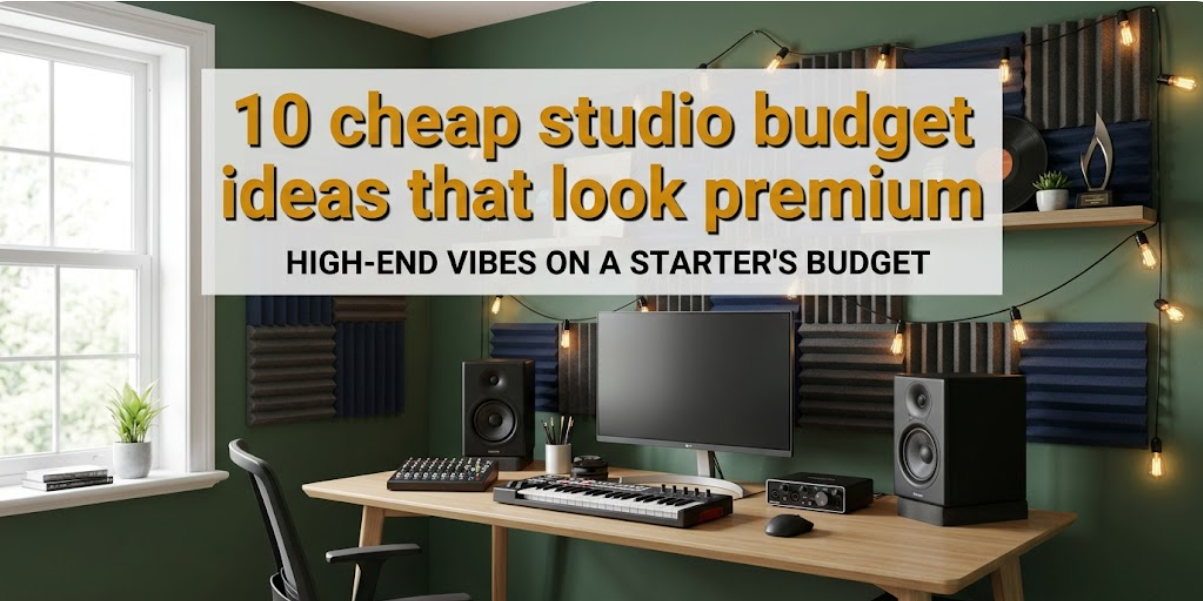
There’s a quiet satisfaction in walking into a studio apartment that feels far more expensive than it actually is. It’s not about square footage or designer labels. It’s about intention—how space is used, how light moves, how textures layer, and how small decisions add up to a cohesive whole. Many people assume a “premium” look demands a premium budget. That assumption falls apart quickly when you start paying attention to how well-designed spaces are actually put together.
In reality, most high-end interiors rely on a handful of repeatable principles: consistency, contrast, proportion, and restraint. Once you understand these, you can recreate the same effect using budget-friendly alternatives. This article explores ten practical, low-cost ideas that can transform a modest studio into something that looks carefully curated and refined.
Along the way, you’ll also find tables and structured comparisons to help you make smarter decisions without guesswork.
idea 1: use a limited color palette for visual cohesion
A premium-looking space rarely tries to do too much with color. Instead, it sticks to two or three tones and explores them deeply.
In a small studio, this matters even more. Too many colors fragment the space visually, making it feel cluttered and smaller than it is.
A simple approach:
- Choose one base color (white, beige, soft gray)
- Add one secondary tone (warm wood, muted green, charcoal)
- Use a subtle accent (gold, black, or brass)
This creates harmony without requiring expensive materials.
table: sample color palette combinations
| Base Color | Secondary Tone | Accent Color | Overall Feel |
|---|---|---|---|
| Soft White | Light Oak | Matte Black | Modern & airy |
| Warm Beige | Olive Green | Brass | Cozy & natural |
| Cool Gray | Walnut Brown | Chrome | Sleek & urban |
| Cream | Dusty Blue | Gold | Soft & elegant |
The key is repetition. When the same tones appear across furniture, textiles, and decor, the space feels intentional rather than accidental.
idea 2: upgrade lighting strategically, not expensively
Lighting is one of the fastest ways to make a space look expensive—or cheap.
Overhead fluorescent or harsh white lighting instantly flattens a room. Meanwhile, layered lighting creates depth and warmth.
Instead of buying costly fixtures, focus on placement and temperature.
budget-friendly lighting strategy:
- Use warm bulbs (2700K–3000K)
- Add at least two light sources (floor lamp + table lamp)
- Use indirect lighting where possible
chart: lighting impact on room perception
| Lighting Type | Cost Range | Visual Impact | Perceived Luxury Level |
|---|---|---|---|
| Single overhead | Low | Flat | Low |
| Warm layered light | Low–Mid | Soft depth | High |
| Accent lighting | Low | Highlights | Medium–High |
| LED strips hidden | Low | Ambient glow | High |
A $20 lamp placed correctly can outperform a $200 fixture used poorly.
idea 3: invest in one statement piece, keep the rest minimal
Trying to make everything stand out often leads to nothing standing out.
Instead, choose one item that becomes the focal point:
- A bold rug
- A textured headboard
- A large framed artwork
Everything else should support it quietly.
This approach mimics high-end interiors, where a single dominant element anchors the space.
table: statement piece ideas by budget
| Budget Level | Statement Piece Option | Why It Works |
|---|---|---|
| Very Low | Large poster print | Scale creates impact |
| Low | Area rug | Grounds the space |
| Medium | Accent chair | Adds personality |
| Mid–High | Oversized art | Gallery-like effect |
The trick isn’t spending more—it’s choosing wisely.
idea 4: use mirrors to expand space and light
Mirrors are a classic interior design trick for a reason: they work.
In a studio, a well-placed mirror can:
- Reflect natural light
- Make the room feel larger
- Add a subtle decorative element
Placement matters more than size.
best placements:
- Opposite a window
- Behind a light source
- Near the entry to create depth
chart: mirror placement benefits
| Placement Area | Effect on Space |
|---|---|
| Opposite window | Doubles natural light |
| Near corner | Softens tight angles |
| Behind furniture | Adds dimension |
| Entryway | Expands first impression |
Even a simple frameless mirror can look premium if positioned thoughtfully.
idea 5: conceal clutter with smart storage solutions
Nothing destroys a premium look faster than visible clutter.
But hiding clutter doesn’t require expensive built-ins.
low-cost solutions:
- Storage baskets
- Under-bed containers
- Multi-purpose furniture (ottomans with storage)
- Wall-mounted shelves
table: storage vs visual impact
| Storage Type | Cost | Effectiveness | Visual Appeal |
|---|---|---|---|
| Open shelves | Low | Medium | Depends on styling |
| Closed bins | Low | High | Clean look |
| Hidden storage | Mid | Very High | Premium feel |
| Multi-use furniture | Mid | High | Space-saving |
The goal is to reduce visual noise. The fewer items visible, the more curated the space feels.
idea 6: layer textures instead of adding more items
Luxury spaces often feel rich—not because they have more things, but because they have more texture.
Instead of adding new decor, mix materials:
- Linen curtains
- Wool throws
- Wood surfaces
- Metal accents
This creates depth without clutter.
chart: texture layering combinations
| Base Texture | Added Texture | Result |
|---|---|---|
| Cotton | Wool | Cozy contrast |
| Wood | Metal | Modern balance |
| Glass | Fabric | Softens sharpness |
| Leather | Linen | Elegant mix |
Texture tricks the eye into seeing complexity, even in minimal setups.
idea 7: elevate basics with small upgrades
Sometimes, the difference between cheap and premium is a tiny detail.
Examples:
- Swap plastic handles for metal ones
- Upgrade pillow covers
- Replace shower curtains with fabric versions
- Use matching hangers
table: small upgrades, big impact
| Item | Cost | Upgrade Option | Visual Upgrade |
|---|---|---|---|
| Cabinet knobs | Low | Brass/black metal | High |
| Pillow covers | Low | Textured fabrics | Medium–High |
| Curtains | Low | Floor-length style | High |
| Hangers | Low | Matching wood/black | Medium |
These changes are subtle individually but powerful together.
idea 8: create zones within your studio
A studio becomes premium when it feels organized—even if it’s small.
Instead of one open space, divide it visually:
- Sleeping area
- Living area
- Work corner
You don’t need walls. Use:
- Rugs
- Lighting changes
- Furniture placement
chart: zoning techniques
| Method | Cost | Effectiveness |
|---|---|---|
| Area rugs | Low | High |
| Room dividers | Mid | Medium |
| Furniture layout | Free | Very High |
| Lighting zones | Low | High |
Zoning creates the illusion of multiple rooms, which feels inherently more luxurious.
idea 9: incorporate greenery for a natural touch
Plants instantly elevate a space. They add life, color, and softness.
You don’t need exotic plants. Even simple ones work:
- Snake plant
- Pothos
- Small succulents
table: beginner-friendly plants
| Plant Type | Maintenance Level | Visual Impact |
|---|---|---|
| Snake plant | Very low | Bold & modern |
| Pothos | Low | Soft & flowing |
| Succulents | Very low | Minimalist |
| ZZ plant | Low | Structured |
If real plants aren’t practical, high-quality faux plants can still deliver a similar effect.
idea 10: keep surfaces intentionally styled, not empty or crowded
Empty surfaces can feel unfinished. Overcrowded ones feel chaotic.
The goal is balance.
use the “rule of three”:
- One tall item (lamp or vase)
- One medium item (book stack)
- One small item (decor piece)
chart: surface styling formula
| Element Type | Example | Purpose |
|---|---|---|
| Tall | Lamp/vase | Adds height |
| Medium | Books | Grounds the setup |
| Small | Candle/object | Adds detail |
This simple structure mimics professional styling without requiring expensive decor.
pulling it all together
When you combine these ideas, something interesting happens. The space stops looking like a collection of budget items and starts feeling like a deliberate design.
Let’s look at how multiple ideas interact:
table: combined impact example
| Idea Applied | Resulting Effect |
|---|---|
| Neutral palette + textures | Calm but rich atmosphere |
| Lighting + mirrors | Bright, open feel |
| Storage + zoning | Organized and spacious |
| Statement piece + minimal decor | Focused, intentional look |
The real transformation comes not from any single change, but from how they reinforce each other.
frequently asked questions
- how can i make a small studio look expensive on a very tight budget?
Focus on lighting, decluttering, and color consistency first. These three changes cost very little but dramatically improve how the space feels. Avoid buying too many decorative items—simplicity often looks more premium.
- is it better to buy cheap furniture or save for one expensive piece?
In most cases, it’s smarter to invest in one standout piece and keep everything else simple. A single high-impact item creates a focal point, which makes the entire room feel more intentional.
- do mirrors really make a difference in small spaces?
Yes, especially when placed opposite windows or light sources. They amplify light and create the illusion of depth, which can make even a tiny studio feel more open.
- how do i avoid my studio looking cluttered?
Use hidden storage whenever possible and limit visible items. Keep surfaces styled but not overcrowded, and stick to a consistent color palette to reduce visual noise.
- are fake plants a good alternative to real ones?
They can be, as long as they’re high quality. Cheap-looking artificial plants can have the opposite effect, so it’s better to have fewer good ones than many poor-quality ones.
- what’s the biggest mistake people make when decorating a studio on a budget?
Trying to do too much at once. Mixing too many styles, colors, and items often leads to a cluttered and inconsistent look. Restraint is what gives a space that premium feel.
In the end, making a studio look premium isn’t about pretending it’s something it’s not. It’s about understanding how design works and using that knowledge to make smarter choices. When you strip away unnecessary elements and focus on what truly matters—light, balance, texture, and cohesion—you can create a space that feels far more valuable than the sum of its parts.