

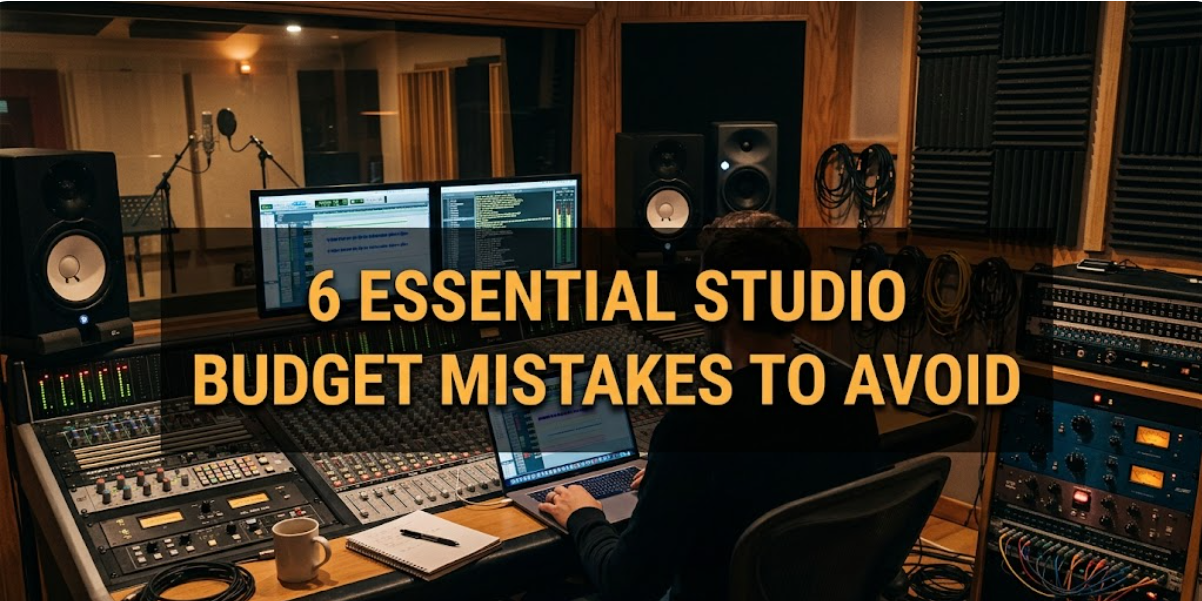
Setting up or managing a studio—whether it’s for music, art, photography, or content creation—can feel like walking a financial tightrope. One wrong step and you’re either overspending on things that don’t matter or underinvesting in what actually shapes your output. The tricky part is that most budget mistakes don’t look like mistakes in the moment. They feel justified, even necessary.
This article takes a grounded, experience-driven look at six of the most common studio budgeting mistakes people make, why they happen, and how to avoid them. You’ll also find practical tables, breakdowns, and examples to make the ideas tangible rather than abstract.
mistake 1: overspending on gear before defining your needs
This is easily the most common—and expensive—mistake. Many studio owners fall into the trap of buying high-end equipment before they’ve clearly defined what they’re actually going to produce.
It often starts with inspiration: watching studio tours, reading gear reviews, or seeing professionals using advanced setups. The assumption quietly creeps in: “If I have that gear, I’ll produce that quality.”
But in reality, the workflow defines the gear—not the other way around.
why this happens
- Emotional buying driven by excitement
- Influence from professionals with very different needs
- Lack of clarity about actual output goals
what goes wrong
You end up with:
- Underused equipment
- Compatibility issues
- A budget that’s already stretched before real work begins
example comparison table
| Scenario | Beginner Studio (Smart) | Beginner Studio (Mistake) |
|---|---|---|
| Audio Interface | Mid-range, 2 inputs | High-end, 16 inputs |
| Microphone | Versatile condenser | Multiple niche mics |
| Monitors | Entry-level reliable | Premium reference pair |
| Total Cost | $800–$1200 | $4000–$7000 |
| Actual Usage Efficiency | 80–90% | 30–40% |
how to avoid it
Start with a clear use-case statement. For example:
“I need to record vocals and mix tracks in a small untreated room.”
That single sentence filters out unnecessary purchases immediately.
Then follow a staged buying approach:
- Phase 1: essentials only
- Phase 2: workflow upgrades
- Phase 3: quality enhancements
mistake 2: ignoring acoustic treatment (or any workspace optimization)
Many people allocate most of their budget to visible gear and ignore the environment where that gear is used. This is particularly damaging in audio studios but applies equally to visual and creative spaces.
You can have expensive monitors or cameras, but if your room introduces distortion, echo, poor lighting, or clutter, your results suffer.
why this happens
- Acoustic treatment is less “exciting” than gear
- Misunderstanding its impact
- Belief that it can be “fixed later”
impact comparison chart
| Investment Area | Cost Range | Impact on Output Quality |
|---|---|---|
| Acoustic Treatment | Low–Mid | Very High |
| High-End Gear | High | Medium (if untreated) |
| Accessories | Low | Low |
practical example
A $300 acoustic treatment setup can improve monitoring accuracy more than upgrading from $500 monitors to $1500 monitors in an untreated room.
simple treatment budget breakdown
| Item | Estimated Cost |
|---|---|
| Acoustic Panels (DIY) | $100–$200 |
| Bass Traps | $100–$250 |
| Rugs / Curtains | $50–$150 |
| Total | $250–$600 |
how to avoid it
Allocate at least 20–30% of your initial budget to your environment:
- Sound treatment (audio)
- Lighting (video/photo)
- Ergonomic layout (all studios)
mistake 3: underestimating recurring costs
A studio budget isn’t just about setup—it’s about sustainability. Many people calculate only upfront costs and forget ongoing expenses.
These recurring costs quietly drain finances over time and can become overwhelming if unplanned.
common recurring costs
- Software subscriptions
- Equipment maintenance
- Utilities (electricity, internet)
- Storage (cloud or physical)
- Replacement parts (cables, drives)
monthly cost projection table
| Expense Type | Monthly Estimate | Annual Total |
|---|---|---|
| Software Subscriptions | $20–$100 | $240–$1200 |
| Electricity | $30–$150 | $360–$1800 |
| Storage/Cloud | $10–$50 | $120–$600 |
| Maintenance | $10–$40 | $120–$480 |
| Total | $70–$340 | $840–$4080 |
why this matters
A studio that costs $2000 to build but $300/month to run is actually a much larger financial commitment than it appears.
how to avoid it
- Calculate at least 12 months of recurring costs before building
- Choose one-time purchase software where possible
- Build a “maintenance buffer” (10–15% of your total budget)
mistake 4: neglecting workflow efficiency
A surprising budget mistake isn’t about spending too much—it’s about spending inefficiently.
You might save money on individual items, but if your workflow becomes slow, frustrating, or fragmented, the long-term cost is time—and time is expensive.
signs of poor workflow budgeting
- Constant switching between tools
- Cluttered workspace
- Lack of proper storage or organization
- Repeating simple tasks manually
workflow efficiency comparison
| Setup Type | Initial Cost | Time Efficiency | Long-Term Cost |
|---|---|---|---|
| Cheap but scattered | Low | Low | High |
| Balanced setup | Medium | High | Low |
example
Buying cheaper cables, stands, or storage solutions often leads to:
- Frequent replacements
- Setup instability
- Time wasted fixing issues
how to avoid it
Focus on:
- Cable management
- Organized storage
- Multi-purpose tools
- Ergonomic layout
A small investment in organization can reduce friction dramatically.
mistake 5: failing to prioritize upgrades strategically
Many studio owners upgrade randomly instead of strategically. They buy what feels like the next “cool” improvement rather than what actually addresses bottlenecks.
why this happens
- Influence from trends or reviews
- Lack of performance tracking
- No clear upgrade roadmap
upgrade priority framework
Instead of asking:
“What should I buy next?”
Ask:
“What is currently limiting my output the most?”
upgrade decision table
| Limitation Identified | Recommended Upgrade |
|---|---|
| Poor audio clarity | Acoustic treatment |
| Noise in recordings | Better mic / interface |
| Slow editing | Faster computer / software |
| Visual inconsistency | Lighting setup improvements |
example of misaligned upgrade
Buying a new microphone when:
- The room is untreated
- Background noise is unresolved
Result: minimal improvement despite spending more.
how to avoid it
Use a simple upgrade scoring system:
| Factor | Score (1–5) |
|---|---|
| Impact on quality | |
| Frequency of issue | |
| Cost efficiency |
Upgrade the item with the highest combined score.
mistake 6: not setting a clear budget ceiling
This one is subtle but dangerous. Without a defined spending limit, studio costs tend to expand indefinitely.
There’s always:
- One more plugin
- One better cable
- One upgrade “worth considering”
Without a ceiling, your budget becomes fluid—and unpredictable.
why this happens
- Incremental spending feels small
- Justifications accumulate over time
- No accountability system
budget creep illustration
| Stage | Planned Cost | Actual Cost |
|---|---|---|
| Initial Setup | $1500 | $1500 |
| “Small Additions” | $0 | $500 |
| Upgrades | $0 | $1000 |
| Total | $1500 | $3000 |
how to avoid it
Set three numbers:
- Ideal budget
- Maximum budget (hard limit)
- Emergency buffer (10–15%)
Once you hit the maximum budget, you pause—no exceptions.
practical budgeting template
| Category | Budget Allocation (%) |
|---|---|
| Core Equipment | 40–50% |
| Environment Setup | 20–30% |
| Software | 10–15% |
| Accessories | 5–10% |
| Buffer | 10–15% |
real-world budget scenario
Let’s say you have $2000:
| Category | Allocation | Amount |
|---|---|---|
| Core Equipment | 45% | $900 |
| Environment Setup | 25% | $500 |
| Software | 10% | $200 |
| Accessories | 5% | $100 |
| Buffer | 15% | $300 |
This structure prevents overspending in one area while neglecting others.
final thoughts
Studio budgeting isn’t about spending less—it’s about spending intentionally. Most mistakes happen when decisions are reactive rather than planned.
If you take away anything from this, let it be this:
- Define your needs before buying
- Treat your environment as part of your gear
- Plan for long-term costs
- Optimize for workflow, not just price
- Upgrade based on limitations, not trends
- Set a firm budget boundary
A well-planned modest studio will outperform a poorly planned expensive one almost every time.
frequently asked questions
- how much should a beginner spend on a studio setup?
It depends on your purpose, but a well-balanced beginner setup typically ranges between $800 and $2500. The key is not the amount, but how it’s allocated across essentials, environment, and workflow.
- is it better to buy cheap gear first or invest in quality immediately?
Neither extreme works well. Start with reliable mid-range gear that covers your needs. Upgrade later based on actual limitations rather than assumptions.
- how important is acoustic treatment compared to gear?
In many cases, it’s more important. Even basic acoustic improvements can significantly enhance the performance of your existing equipment.
- what’s the biggest hidden cost in a studio?
Recurring expenses—especially subscriptions, electricity, and maintenance—are often underestimated and can exceed initial setup costs over time.
- how often should I upgrade my studio equipment?
Only when a clear limitation affects your output. Avoid upgrading on a fixed timeline or due to trends.
- can I build a good studio on a tight budget?
Yes. Many effective studios are built on limited budgets by prioritizing essentials, optimizing the environment, and avoiding unnecessary purchases. Thoughtful planning matters far more than total spending.