

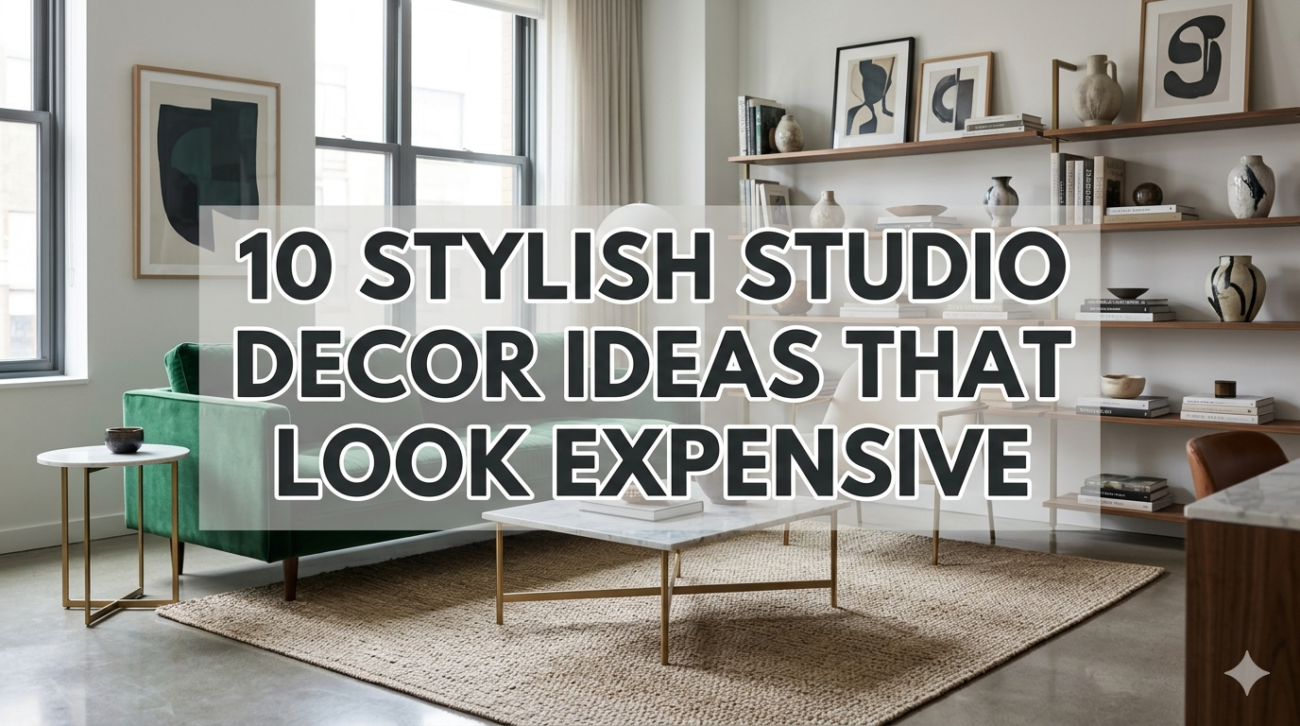
There’s something quietly satisfying about walking into a studio apartment that feels like it belongs in a design magazine. The lighting is soft but intentional, the furniture seems curated rather than collected, and every corner looks considered. The surprising part? Most of these spaces aren’t actually expensive—they’re just designed smartly.
Creating a high-end look in a studio isn’t about buying luxury items. It’s about understanding proportion, texture, layering, and restraint. Small spaces magnify every choice, which means even modest upgrades can completely transform how the space feels.
Below are ten studio decor ideas that consistently deliver that polished, expensive look—without requiring a designer budget.
- use a limited color palette with depth
One of the quickest ways to make a studio look expensive is to limit your color palette. Too many colors make a small space feel chaotic. A refined palette, on the other hand, creates calm and cohesion.
The trick is not to go plain—but to go layered.
Instead of using five different colors, choose two or three and vary their tones and textures. For example, beige can become warm sand, creamy ivory, and soft taupe.
Example palette breakdown:
| Base Color | Accent Tone | Texture Variation |
|---|---|---|
| Warm White | Soft Beige | Linen, Matte Paint |
| Charcoal | Light Gray | Wool, Velvet |
| Olive Green | Muted Sage | Cotton, Ceramic |
This approach adds visual interest without overwhelming the eye. High-end interiors almost always feel “edited,” not crowded.
- invest in lighting that feels intentional
Lighting is one of the most overlooked design elements, yet it’s often what separates an average room from a stunning one.
Relying only on overhead lighting makes a space feel flat. Expensive-looking studios layer light sources.
Use three types of lighting:
- ambient (overall light)
- task (focused light for reading or working)
- accent (decorative light for mood)
Simple lighting setup example:
| Area | Lighting Type | Suggested Fixture |
|---|---|---|
| Main Room | Ambient | Soft ceiling light |
| Sofa Corner | Task | Floor lamp |
| Shelf/Wall | Accent | LED strip or small lamp |
Warm light bulbs (2700K–3000K) instantly make a space feel richer and more inviting.
- add oversized art instead of many small pieces
Many small frames can make a studio feel cluttered. One large piece of art creates impact and feels intentional.
Oversized artwork:
- draws the eye upward
- anchors the room
- creates a focal point
If original art is out of budget, large-scale prints or even framed fabric panels can achieve the same effect.
Placement tip:
Hang art so the center is at eye level (about 57–60 inches from the floor). This subtle detail makes a space feel professionally styled.
- use mirrors strategically to expand the space
Mirrors don’t just reflect your image—they reflect light, making your studio appear larger and brighter.
To make them feel expensive:
- choose large mirrors over small ones
- lean them against a wall instead of always hanging
- use thin or metallic frames
Mirror placement ideas:
| Location | Effect |
|---|---|
| Opposite window | Maximizes natural light |
| Behind sofa | Adds depth |
| Near entry | Creates openness |
A well-placed mirror can visually double your space without adding any clutter.
- upgrade textiles for instant luxury
Textiles are where budget spaces often look cheap—but they’re also the easiest to fix.
Focus on:
- heavier curtains
- textured cushions
- layered rugs
High-end feel comes from tactile contrast.
Textile upgrade comparison:
| Item | Basic Version | Elevated Version |
|---|---|---|
| Curtains | Thin polyester | Thick linen blend |
| Cushions | Flat cotton | Velvet or boucle |
| Rug | Small, plain | Large, layered rug |
Tip: Always go bigger with rugs. A rug that’s too small instantly makes a room feel less refined.
- conceal clutter with smart storage
Nothing ruins an expensive look faster than visible clutter.
In a studio, storage needs to be both functional and invisible.
Use:
- closed cabinets
- baskets with lids
- multi-purpose furniture (like storage ottomans)
Storage strategy example:
| Item Type | Storage Solution |
|---|---|
| Books | Closed shelves or uniform stacking |
| Daily items | Decorative trays |
| Extra linens | Under-bed storage |
The goal isn’t minimalism—it’s control. Everything should feel like it has a place.
- incorporate metallic accents subtly
Metallic finishes add a sense of sophistication—but too much can feel flashy.
The key is restraint.
Stick to one tone:
- brass for warmth
- chrome for modern feel
- black metal for contrast
Where to use metallics:
| Item | Suggestion |
|---|---|
| Lamp base | Brushed brass |
| Handles | Matte black |
| Decor items | Small trays or frames |
A few well-placed metallic accents create a quiet sense of luxury.
- define zones within the studio
A studio apartment becomes instantly more elegant when it feels like multiple spaces rather than one open room.
Create zones for:
- sleeping
- living
- working
Ways to define zones:
- rugs
- lighting changes
- furniture placement
- open shelving dividers
Simple zoning example:
| Zone | Divider Method |
|---|---|
| Bed area | Curtain or screen |
| Living | Rug + sofa placement |
| Work desk | Wall corner setup |
When each area has a purpose, the whole space feels more intentional.
- bring in natural elements
Nature softens a space and adds a premium feel—especially when done subtly.
You don’t need a jungle of plants. A few well-placed elements work better.
Options:
- one tall plant
- a small cluster of pots
- natural materials like wood and stone
Natural element ideas:
| Element | Effect |
|---|---|
| Wooden tray | Warmth |
| Indoor plant | Freshness |
| Stone decor | Texture |
Even a single well-chosen plant can elevate the entire room.
- pay attention to small details
The difference between a basic space and a high-end one often lies in the details.
Small upgrades that matter:
- matching hangers in the closet
- coordinated containers in the kitchen
- aligned furniture edges
- consistent finishes
Detail checklist:
| Area | Upgrade |
|---|---|
| Kitchen | Uniform jars |
| Bathroom | Refillable dispensers |
| Closet | Matching hangers |
| Desk | Minimal accessories |
These changes don’t cost much—but they create visual harmony, which is what people associate with luxury.
visual summary chart: what makes a studio look expensive
| Element | Cheap Look | Expensive Look |
|---|---|---|
| Color | Too many shades | Limited, layered tones |
| Lighting | Single overhead | Multiple light sources |
| Decor | Many small items | Few statement pieces |
| Textiles | Thin, flat | Thick, textured |
| Storage | Visible clutter | Hidden organization |
| Layout | Undefined | Zoned spaces |
final thoughts
Designing a studio that looks expensive isn’t about chasing trends or spending heavily. It’s about editing your space with intention.
Think of your studio as a composition rather than a collection. Each item should either serve a purpose or add to the visual story. When you remove the unnecessary and elevate the essentials, the entire space transforms.
Luxury, in small spaces, is less about what you add—and more about what you choose to keep.
frequently asked questions
- how can i make a small studio look bigger without renovation?
Use mirrors, light colors, and multi-functional furniture. Keeping the floor visible and minimizing clutter also helps create the illusion of space. - what is the best color scheme for a stylish studio?
Neutral palettes like white, beige, gray, or muted greens work best. Add depth through textures rather than multiple colors. - how do i decorate a studio on a tight budget?
Focus on high-impact items like lighting, textiles, and one statement art piece. Thrift stores and DIY options can also create a high-end look. - should i use dark colors in a studio apartment?
Yes, but sparingly. Dark tones can add depth and contrast when balanced with lighter elements and good lighting. - how many decorative items are too many in a studio?
If surfaces feel crowded or visually busy, it’s too much. Aim for a curated look with fewer, more meaningful pieces. - what type of furniture works best in studios?
Choose compact, multi-purpose furniture with clean lines. Pieces that offer storage or can serve multiple functions are ideal.