

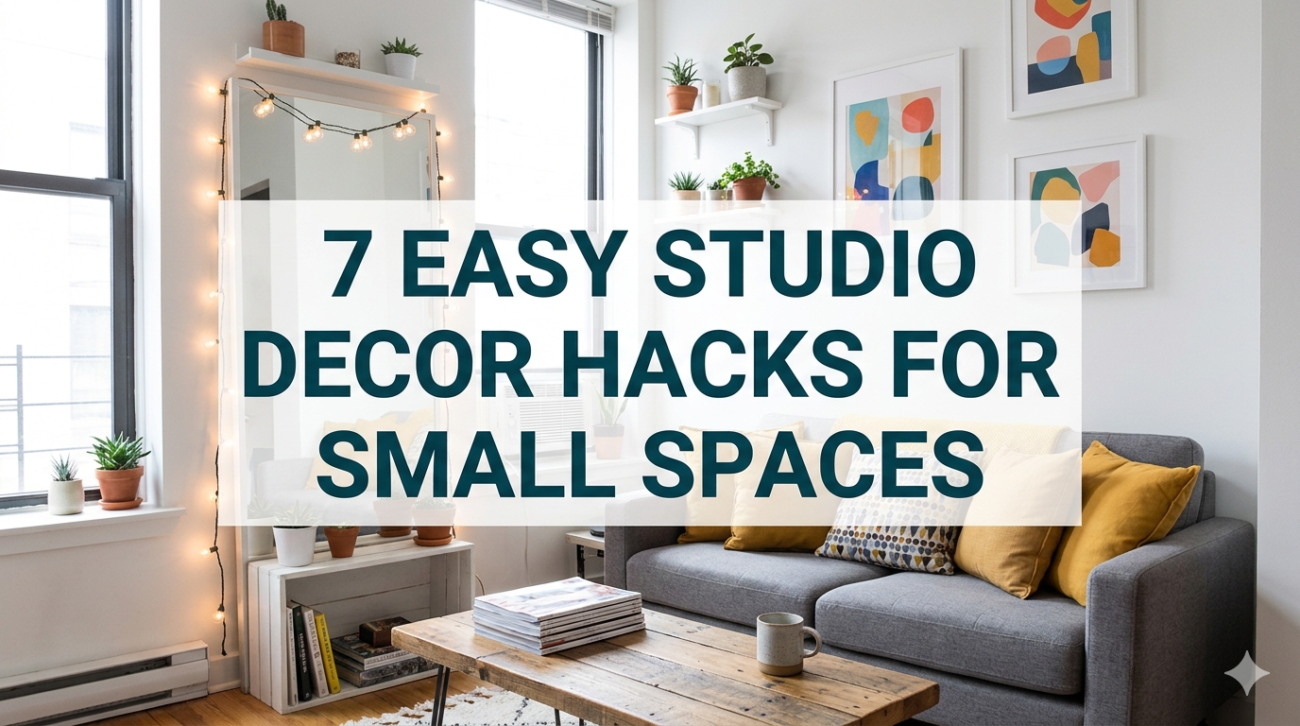
Living in a small studio often feels like solving a puzzle that keeps changing shape. One day your room looks cozy and functional; the next, it feels cramped and chaotic. The truth is, small spaces don’t need more square footage—they need smarter thinking. With a few intentional tweaks, you can turn even the tiniest studio into a place that feels open, stylish, and uniquely yours.
This article explores seven practical, easy-to-apply decor hacks that go beyond surface-level styling. Each idea is grounded in real-life usability, not just aesthetics. Along the way, you’ll find tables, layout suggestions, and practical comparisons to help you make better decisions for your space.
hack 1: use vertical space like a pro
Most people decorate their studios horizontally—furniture on the floor, art at eye level, storage tucked under things. That approach wastes one of your biggest assets: height.
When you start thinking vertically, your studio instantly gains “invisible space.”
Instead of squeezing everything into your floor plan, move upward:
- Install floating shelves above desks and sofas
- Use tall bookcases instead of wide ones
- Hang plants from ceiling hooks
- Stack storage boxes neatly instead of spreading them out
Here’s a quick comparison:
| Storage Type | Space Used (Floor) | Storage Capacity | Visual Impact |
|---|---|---|---|
| Low cabinet | High | Medium | Heavy |
| Floating shelves | None | Medium | Light |
| Tall bookshelf | Low | High | Balanced |
A vertical approach doesn’t just save space—it also creates the illusion of taller ceilings. When your eyes are drawn upward, the room feels bigger than it is.
Practical tip: Leave small gaps between shelves instead of packing them tightly. It keeps the setup breathable rather than cluttered.
hack 2: embrace multi-functional furniture
In a studio, every piece of furniture should earn its place. If something only serves one purpose, it’s taking up more space than it deserves.
Multi-functional furniture is not just trendy—it’s essential.
Think of items like:
- A bed with built-in drawers
- A foldable desk that doubles as a dining table
- An ottoman that opens for storage
- A sofa bed for guests
Here’s a useful breakdown:
| Furniture Piece | Primary Function | Secondary Function | Space Efficiency |
|---|---|---|---|
| Sofa bed | Seating | Sleeping | High |
| Storage ottoman | Seating | Hidden storage | High |
| Foldable table | Dining | Work desk | Very high |
| Bed with drawers | Sleeping | Storage | High |
The goal is to reduce the number of objects in your studio without sacrificing comfort or usability.
Real-life insight: When you reduce visual clutter, your brain also feels less overwhelmed. A studio isn’t just a physical space—it’s a mental one too.
hack 3: use mirrors to create depth
Mirrors are one of the oldest tricks in interior design, and for good reason—they work.
A well-placed mirror can:
- Reflect light
- Double the visual space
- Make dark corners brighter
- Add a decorative focal point
But placement matters.
Best mirror placements:
| Location | Effect |
|---|---|
| Opposite window | Maximizes natural light |
| Behind a sofa | Adds depth to living area |
| Near entryway | Makes entrance feel open |
| Full-length on wall | Expands vertical perception |
Avoid placing mirrors where they reflect clutter. That defeats the purpose.
Pro tip: Instead of one large mirror, try a cluster of smaller mirrors. It adds texture and personality while still expanding the space visually.
hack 4: define zones without walls
One of the biggest challenges in a studio is that everything happens in one room—sleeping, working, eating, relaxing. Without boundaries, it can feel messy and unfocused.
The solution isn’t building walls. It’s creating zones.
Ways to define zones:
- Rugs: Use different rugs for sleeping and living areas
- Lighting: Warm light for relaxation, bright light for work
- Furniture placement: A sofa can act as a divider
- Curtains or screens: Lightweight and flexible
Example zoning layout:
| Zone | Key Item | Purpose |
|---|---|---|
| Sleeping | Bed + rug | Rest and relaxation |
| Work | Desk + lamp | Focus and productivity |
| Living | Sofa + table | Socializing and leisure |
| Dining | Small table | Meals and casual work |
This approach creates structure without closing off your space.
Psychological benefit: When your brain associates specific areas with specific tasks, you feel more organized and less stressed.
hack 5: keep a light and cohesive color palette
Color plays a bigger role than most people realize. In small spaces, it can either open things up or make everything feel boxed in.
Lighter tones reflect light, making your studio feel airy. Dark colors, while stylish, can shrink the perceived size of a room if overused.
Best color strategies:
| Color Type | Effect on Space | Recommended Use |
|---|---|---|
| White | Expands space | Walls, ceilings |
| Soft neutrals | Keeps calm aesthetic | Furniture, rugs |
| Pastels | Adds subtle interest | Decor accents |
| Dark tones | Adds depth | Small details only |
A cohesive palette doesn’t mean boring. It means intentional.
Try this approach:
- Base color (60%)
- Secondary color (30%)
- Accent color (10%)
This keeps everything balanced without feeling chaotic.
hack 6: declutter with smart storage systems
No decor hack works if your space is cluttered. Even the most beautifully designed studio will feel cramped if things don’t have a place.
The trick is not just “less stuff”—it’s smarter storage.
Types of smart storage:
| Storage Type | Best For | Benefit |
|---|---|---|
| Under-bed storage | Seasonal items | Hidden, efficient |
| Wall hooks | Bags, jackets | Easy access, saves space |
| Drawer organizers | Small items | Keeps things tidy |
| Stackable bins | Miscellaneous storage | Flexible and modular |
Adopt the “one in, one out” rule: every time you bring something new into your studio, something old should go.
Minimalism isn’t about emptiness—it’s about clarity.
hack 7: add personality without overcrowding
A studio should feel like you, not a catalog page. But there’s a fine line between personality and clutter.
The key is curated decor.
Instead of many small items, choose a few meaningful ones:
- A statement artwork
- A textured throw blanket
- A couple of plants
- A unique lamp
Here’s a comparison:
| Approach | Result |
|---|---|
| Many small items | Cluttered, busy look |
| Few statement items | Clean, intentional aesthetic |
Plants deserve a special mention. Even one or two can transform the feel of a space by adding life and softness.
Quick styling formula:
- 1 large focal piece
- 2–3 supporting items
- Open space around them
Empty space is not wasted space—it’s what allows your decor to breathe.
bonus: sample layout for a small studio
Below is a simple example of how you might combine all seven hacks into one layout:
| Area | Setup Description |
|---|---|
| Entry | Wall hooks + small mirror |
| Living | Sofa bed + rug + wall shelves |
| Work | Foldable desk near window + task lighting |
| Sleeping | Bed with storage drawers + soft lighting |
| Storage | Vertical shelving + under-bed bins |
| Decor | 2 plants + 1 artwork + neutral color palette |
This kind of arrangement balances function, style, and openness.
closing thoughts
Small studio living isn’t about limitation—it’s about creativity. When every inch matters, every decision becomes more intentional. These seven hacks are not just about making your space look better; they’re about making it work better for your life.
A well-designed studio doesn’t feel small. It feels efficient, calm, and personal.
You don’t need a bigger home. You need a smarter one.
frequently asked questions
- how can i make my studio apartment look bigger without spending much money?
Focus on rearranging what you already have. Move furniture away from walls slightly, use mirrors to reflect light, and declutter aggressively. Even small changes in layout can make a noticeable difference. - what is the best furniture for very small studio apartments?
Multi-functional furniture works best. Items like sofa beds, foldable tables, and storage ottomans reduce the need for extra pieces while maximizing usability. - how do i separate my sleeping area in a studio?
You can use rugs, curtains, or even a bookshelf as a divider. Lighting changes also help signal different zones without physically closing off the space. - are dark colors always bad for small spaces?
Not necessarily. Dark colors can add depth if used sparingly. The key is balance—use lighter tones as the base and darker shades as accents. - how many decor items should i have in a small studio?
There’s no fixed number, but fewer is better. Choose a handful of meaningful, visually impactful items instead of many small decorations. - what’s the biggest mistake people make when decorating small spaces?
Trying to fit too much into the space. Overcrowding with furniture or decor makes the room feel smaller and less functional. Prioritize essentials and keep things simple.