

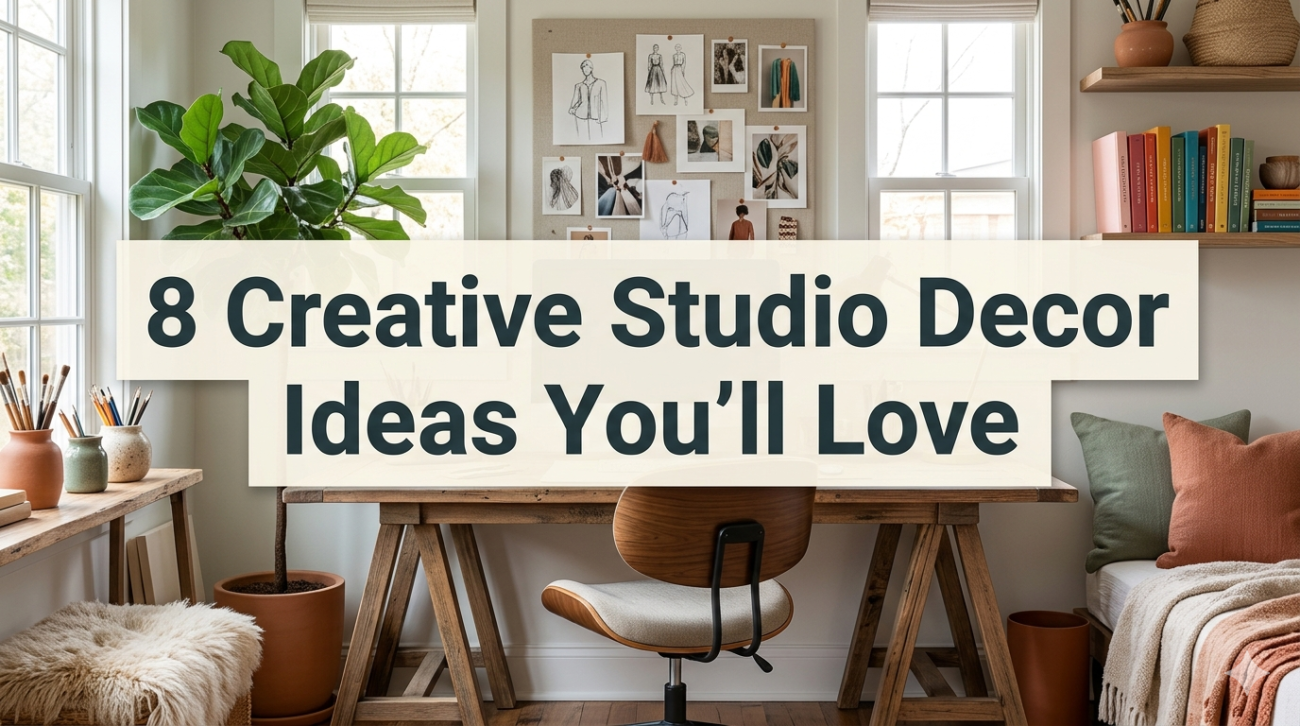
There’s something quietly powerful about a well-decorated studio. It’s not just a space—it becomes a mood, a rhythm, a reflection of how you think and create. Whether it’s a compact city apartment, a creative workspace, or a multi-purpose room, the way you design a studio can completely transform how it feels to live or work in it.
The challenge is that studios often come with limitations: small square footage, awkward layouts, limited natural light, or a lack of defined zones. But these constraints can actually inspire creativity. With the right approach, even the simplest studio can feel layered, intentional, and surprisingly spacious.
This article explores eight creative studio decor ideas that don’t just improve aesthetics—they reshape how the space functions. Along the way, you’ll find practical insights, comparison tables, and visual-style breakdowns to help you make decisions that suit your own space and personality.
idea 1: zoning without walls
In a studio, everything shares one room—sleeping, working, relaxing, sometimes even cooking. Without separation, the space can feel chaotic. But adding walls isn’t always practical. The smarter solution is to create zones visually.
Rugs are one of the simplest tools. A soft rug under the bed signals rest, while a different texture under a desk marks productivity. Lighting also helps—warm lighting for relaxation zones and cooler tones for work areas.
Furniture placement is another quiet but effective trick. A sofa facing away from the bed can act as a natural divider, creating a “living room” feel even in a single space.
Here’s a quick comparison of zoning tools:
| Zoning Method | Cost Level | Flexibility | Visual Impact | Best Use Case |
|---|---|---|---|---|
| Rugs | Low | High | Medium | Small studios, rentals |
| Open Shelving | Medium | Medium | High | Storage + separation |
| Curtains | Low | High | Medium | Temporary partitions |
| Lighting Variation | Low | High | Subtle | Mood-based zoning |
| Furniture Layout | Free | Medium | High | Functional separation |
The key is subtlety. You’re not building rooms—you’re suggesting them.
idea 2: vertical thinking
When floor space is limited, the walls become your best friend. Many people underuse vertical space, leaving walls blank or only partially utilized.
Floating shelves can hold books, decor, or plants without crowding the floor. Tall cabinets draw the eye upward, making the room feel taller. Even hanging planters or wall-mounted lighting can free up valuable surface area.
Think of your studio as a 3D space, not just a flat layout.
Here’s a simple visualization of vertical usage:
| Height Level | Suggested Use |
|---|---|
| Floor Level | Essential furniture |
| Mid Level | Frequently used items |
| Eye Level | Decorative focal points |
| Above Eye Line | Storage or hanging decor |
This layered approach keeps things organized while adding visual interest.
idea 3: mirrors as space multipliers
Mirrors are often recommended for small spaces, but their real impact goes beyond just “making a room look bigger.” They reflect light, create depth, and can even become design statements.
A large mirror leaning against a wall adds a relaxed, modern feel. Multiple smaller mirrors arranged in a pattern can act like artwork. Placing a mirror opposite a window doubles natural light instantly.
Strategic mirror placement guide:
| Placement Area | Effect Created |
|---|---|
| Opposite window | Amplifies natural light |
| Behind furniture | Adds depth |
| Entry area | Creates openness |
| Near plants | Enhances greenery effect |
Used thoughtfully, mirrors blur boundaries and soften the limitations of a studio.
idea 4: multi-functional furniture
In a studio, every piece of furniture should earn its place. The best items serve more than one purpose.
A bed with storage underneath eliminates the need for extra drawers. A foldable desk can disappear when not in use. An ottoman can act as seating, storage, and even a small table.
Here’s a comparison of multifunctional pieces:
| Furniture Type | Primary Function | Secondary Function |
|---|---|---|
| Sofa bed | Seating | Sleeping |
| Storage bed | Sleeping | Storage |
| Foldable desk | Workspace | Space-saving |
| Ottoman | Seating | Storage/table |
| Nesting tables | Surface | Compact storage |
The goal isn’t to cram more into the space—it’s to reduce the number of items needed.
idea 5: texture layering for depth
A studio can feel flat if everything is uniform. Adding layers of texture brings warmth and dimension without taking up space.
Think of combining materials: a soft rug, a woven throw, a wooden table, and metal accents. Even subtle contrasts—matte vs. glossy surfaces—can make a difference.
Texture layering cheat sheet:
| Texture Type | Example Items | Effect |
|---|---|---|
| Soft | Rugs, cushions, blankets | Comfort and warmth |
| Hard | Wood, metal, glass | Structure and contrast |
| Natural | Plants, linen, jute | Calm and organic feel |
| Reflective | Mirrors, polished surfaces | Light and openness |
The trick is balance. Too many textures can feel cluttered, while too few feel sterile.
idea 6: color zoning
Color can subtly define different areas of a studio without physical barriers. A slightly darker shade behind a bed can create a cozy sleeping zone, while lighter tones around a workspace keep it energizing.
Even within a neutral palette, small variations can guide the eye.
Example color zoning plan:
| Zone | Suggested Color Tone | Purpose |
|---|---|---|
| Sleeping area | Warm, muted tones | Relaxation |
| Work area | Light, neutral tones | Focus and clarity |
| Living area | Balanced, inviting tones | Social comfort |
Accent colors—like cushions or artwork—can reinforce each zone without overwhelming the space.
idea 7: personal storytelling decor
A studio feels most alive when it reflects the person living in it. Instead of generic decor, incorporate items with meaning—travel souvenirs, handmade pieces, or photographs.
Gallery walls are a great way to tell a story visually. Mixing frame styles and sizes creates a lived-in, evolving look.
Personal decor doesn’t have to be expensive. Even everyday objects can become meaningful when displayed thoughtfully.
Here’s a simple storytelling framework:
| Element Type | Example | Emotional Impact |
|---|---|---|
| Photos | Travel or family moments | Nostalgia |
| Objects | Souvenirs, books | Personality |
| Art | Prints or handmade pieces | Inspiration |
| Textiles | Cultural fabrics | Warmth and identity |
The idea is not perfection—it’s authenticity.
idea 8: lighting as design
Lighting is often treated as an afterthought, but in a studio, it can define the entire atmosphere.
Layered lighting works best: ambient lighting for overall brightness, task lighting for specific activities, and accent lighting for mood.
Lighting breakdown:
| Lighting Type | Purpose | Example |
|---|---|---|
| Ambient | General illumination | Ceiling lights |
| Task | Focused activity | Desk lamp |
| Accent | Mood and highlights | LED strips, wall lights |
Warm lighting creates a cozy environment, while cooler tones improve focus. Using dimmable lights gives flexibility throughout the day.
visual flow chart: designing your studio
Here’s a simplified flow to guide your decisions:
Start
  ↓
Assess space size and layout
  ↓
Define primary functions (sleep, work, relax)
  ↓
Create zones (visual or physical)
  ↓
Select multifunctional furniture
  ↓
Add vertical storage
  ↓
Layer textures and colors
  ↓
Incorporate personal decor
  ↓
Adjust lighting for mood
  ↓
Refine and simplify
This process keeps you focused on both function and aesthetics without feeling overwhelmed.
common mistakes to avoid
Even with great ideas, certain mistakes can limit the effectiveness of studio decor.
| Mistake | Why It’s a Problem | Better Approach |
|---|---|---|
| Overcrowding | Makes space feel smaller | Prioritize essentials |
| Ignoring lighting | Creates dull atmosphere | Use layered lighting |
| Lack of storage | Leads to clutter | Use hidden storage solutions |
| Uniform color palette | Feels flat | Add subtle contrast |
| Oversized furniture | Reduces usable space | Choose scale-appropriate items |
Avoiding these pitfalls can make even simple designs feel intentional and polished.
final thoughts
Designing a studio is less about square footage and more about perspective. With the right mix of creativity and practicality, a small space can feel expansive, functional, and deeply personal.
Each of these ideas—zoning, vertical thinking, mirrors, multifunctional furniture, textures, color, storytelling, and lighting—works best when combined thoughtfully. There’s no single formula. The beauty of a studio lies in its flexibility, its ability to adapt to your lifestyle and evolve over time.
Instead of trying to achieve perfection, focus on creating a space that feels right to you. That’s where design truly succeeds.
frequently asked questions
- how do i make a small studio look bigger without renovating?
Use mirrors, light colors, and vertical storage. Keep furniture minimal and avoid blocking natural light. Visual zoning also helps maintain openness. - what is the best furniture for a studio apartment?
Multifunctional furniture like sofa beds, storage beds, and foldable desks are ideal because they maximize utility without taking extra space. - how can i separate my sleeping area in a studio?
You can use rugs, curtains, shelving units, or even lighting changes to visually separate the sleeping zone without building walls. - is it better to use light or dark colors in a studio?
Light colors generally make a space feel larger, but adding small areas of darker tones can create depth and balance. - how much decor is too much for a studio?
If the space starts to feel crowded or cluttered, it’s too much. Focus on meaningful pieces and leave some areas open to maintain breathing room. - what lighting works best for studio apartments?
Layered lighting works best—combine ambient, task, and accent lighting to create flexibility for different moods and activities.