

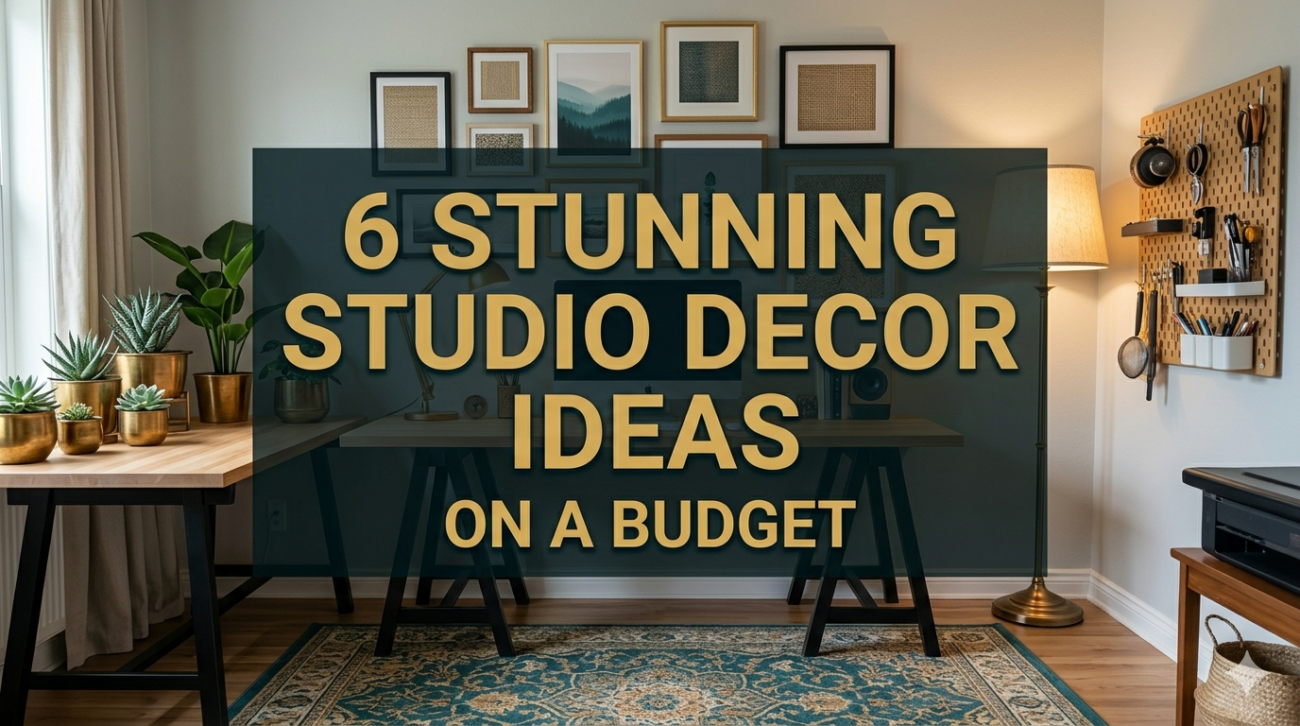
Living in a studio apartment often comes with a mix of excitement and challenge. On one hand, it’s a compact, efficient space that forces you to simplify your lifestyle. On the other, it demands creativity because every square foot must serve multiple purposes. The biggest misconception is that decorating a studio beautifully requires a large budget. In reality, some of the most impressive transformations come from smart planning, repurposing, and a bit of imagination rather than expensive furniture or luxury decor pieces.
A budget-friendly studio makeover is less about what you buy and more about how you use what you already have, how you organize space, and how you visually manipulate the environment to feel larger, brighter, and more intentional. This article explores six practical and visually impactful studio decor ideas that can transform even the smallest apartment into a stylish, comfortable, and highly functional home.
We’ll also break down cost comparisons, layout strategies, and visual planning methods so you can apply each idea without guesswork.
understanding budget studio decor before you start
Before jumping into the ideas, it’s important to understand what “budget decor” actually means in a studio context. It’s not just about cheap furniture. It’s about maximizing value per square foot.
In studio apartments, three things matter most:
- Functionality (does the space work for daily life?)
- Visual balance (does it feel open or cluttered?)
- Flexibility (can the space adapt easily?)
table: budget vs expensive studio decor approach
| aspect | budget approach | expensive approach |
|---|---|---|
| furniture | multi-use, second-hand, modular | custom, designer pieces |
| decor | DIY, thrifted, minimal | curated luxury items |
| layout planning | optimized manually | interior designer assisted |
| lighting | layered affordable lamps | built-in lighting systems |
| storage | creative hidden solutions | custom cabinetry |
The key takeaway is simple: budget decor relies on intelligence, not cost.
idea 1: create zones using low-cost visual dividers
One of the most effective ways to transform a studio is to divide it into functional zones. Without physical separation, everything blends together, making the space feel chaotic and smaller than it is.
But here’s the good news—you don’t need walls or expensive partitions.
Instead, use visual dividers:
- Curtains
- Rugs
- Bookshelves
- Plants
- Lighting shifts
how zoning changes perception
When your brain sees defined areas, it interprets the space as larger and more organized. A sleeping zone, a working zone, and a living zone—even if they overlap physically—create psychological order.
table: budget zoning tools comparison
| zoning tool | cost level | effectiveness | space impact | flexibility |
|---|---|---|---|---|
| rug | low | high | medium | high |
| curtain | low | high | high | high |
| bookshelf | medium | very high | high | medium |
| plant divider | low | medium | medium | high |
| lighting | low | high | subtle | very high |
practical setup example
Place a rug under your bed to define the sleeping area. Use a curtain rod from ceiling to floor to separate it visually from the living area. Add a small open shelf behind the sofa to act as a soft divider between work and relaxation zones.
This instantly makes the studio feel like multiple rooms without construction costs.
idea 2: use thrifted and repurposed furniture creatively
One of the biggest budget mistakes people make is buying everything new. Second-hand furniture is not just cheaper—it often has more character and durability than modern mass-produced items.
Repurposing is where creativity comes in.
examples of repurposed studio furniture:
- wooden crates turned into shelves
- old dining table used as desk
- ladder used as towel rack or plant stand
- suitcase used as storage coffee table
table: cost savings from repurposing
| furniture item | new cost estimate | thrift/repurpose cost | savings |
|---|---|---|---|
| desk | high | low-medium | 50–80% |
| coffee table | medium-high | very low | 60–90% |
| storage shelves | medium | low | 40–70% |
| side tables | medium | low | 50–80% |
design strategy
The goal is not to make everything match perfectly. Instead, aim for cohesion through color or material. For example, if you have mismatched wooden pieces, unify them with a single paint tone or stain.
Even budget furniture can look intentional when grouped thoughtfully.
idea 3: master lighting layering for expensive visual impact
Lighting is one of the cheapest ways to make a studio look high-end. Poor lighting flattens a space, while layered lighting creates depth and warmth.
Most studios rely only on a ceiling bulb, which makes the room feel harsh and small.
Instead, use a three-layer lighting system:
- ambient lighting (general brightness)
- task lighting (focused activities)
- accent lighting (mood and aesthetics)
chart: lighting impact on studio atmosphere
| lighting setup | mood quality | perceived space size | comfort level |
|---|---|---|---|
| single overhead light | low | small | low |
| dual lighting | medium | moderate | medium |
| layered lighting | high | spacious | high |
budget lighting combinations
- warm desk lamp + ceiling light
- LED strip behind bed frame
- floor lamp in corner
- clip-on reading light
visual trick
Place a warm light source behind furniture edges (like behind a sofa or headboard). This creates depth shadows that make walls feel farther away.
idea 4: use vertical space like a design asset
In a studio apartment, walls are your hidden storage goldmine. Most people underuse vertical space, leaving valuable room unused.
When floor space is limited, the only direction left is up.
budget vertical upgrades:
- floating shelves
- wall hooks
- pegboards
- tall slim cabinets
- hanging baskets
table: vertical vs horizontal storage efficiency
| storage type | space usage | accessibility | visual clutter |
|---|---|---|---|
| floor storage | high | high | high |
| vertical | low | medium-high | low |
| mixed system | balanced | high | medium |
smart vertical strategy
Instead of placing items across surfaces, stack them upward. For example, place a desk under floating shelves so your workspace expands vertically instead of horizontally.
design bonus
Vertical alignment naturally draws the eye upward, making ceilings feel higher than they are.
idea 5: adopt a minimal color palette for visual unity
Color plays a major role in how expensive or cluttered a studio feels. Too many colors create chaos, while a controlled palette creates harmony.
Budget-friendly design thrives on limitation.
recommended palette structure:
- 1 dominant color (walls/furniture base)
- 1 secondary color (textiles/decor)
- 1 accent color (small highlights)
table: color impact comparison
| palette type | visual clarity | space perception | maintenance |
|---|---|---|---|
| multi-color chaos | low | small | difficult |
| dual-tone | medium | moderate | easy |
| controlled palette | high | large | easy |
budget-friendly palette examples:
- white + beige + green plants
- grey + wood + black accents
- cream + terracotta + gold highlights
application strategy
Keep large surfaces neutral. Add personality through small elements like cushions, artwork, or rugs.
This allows easy updates without repainting or replacing furniture.
idea 6: create multi-functional furniture zones
In a studio, every object should ideally serve more than one purpose. This is where budget decor becomes extremely efficient.
Instead of buying more furniture, make each piece do more.
examples of multi-functional setups:
- bed with storage drawers underneath
- ottoman that works as seating + storage
- foldable dining table that becomes desk
- sofa that doubles as guest bed
table: functionality expansion comparison
| furniture type | single-use design | multi-use design | efficiency gain |
|---|---|---|---|
| bed | sleep only | sleep + storage | high |
| table | dining only | dining + work | high |
| seating | sit only | sit + storage | medium-high |
layout optimization tip
Group multi-functional furniture near each other to reduce movement waste. For example, place your work desk near natural light and adjacent to storage units.
This reduces clutter and improves workflow.
overall budget impact summary
When all six ideas are combined, the transformation is significant without requiring major spending.
chart: overall improvement impact
| area improved | low effort only | with full strategy |
|---|---|---|
| space perception | low | very high |
| organization | medium | very high |
| visual appeal | medium | high |
| functionality | medium | very high |
key takeaway
A well-designed studio is not about how much you spend, but how intelligently you use your constraints. Budget decor actually encourages better design thinking because it forces you to prioritize what truly matters.
Instead of filling the space, you shape it.
faqs
- how can i decorate my studio apartment with almost no budget?
Focus on rearranging existing furniture, using DIY decor, and maximizing lighting. Even small changes like repositioning furniture and adding rugs can make a big difference. - what is the most important area to focus on in a studio?
Zoning is the most important. Separating sleeping, working, and living areas visually makes the entire space feel more organized and spacious. - can a studio look luxurious on a budget?
Yes, by using a consistent color palette, layered lighting, and minimal clutter. Luxury feel comes more from design cohesion than expensive items. - what are the cheapest ways to make a studio look bigger?
Use mirrors, light colors, vertical storage, and avoid overcrowding furniture. Proper lighting also dramatically increases perceived space. - how do i avoid clutter in a small studio?
Use multi-functional furniture, closed storage solutions, and follow a “one in, one out” rule for decor items. - what type of furniture is best for budget studio apartments?
Compact, modular, and multi-use furniture such as storage beds, foldable tables, and lightweight seating works best.