

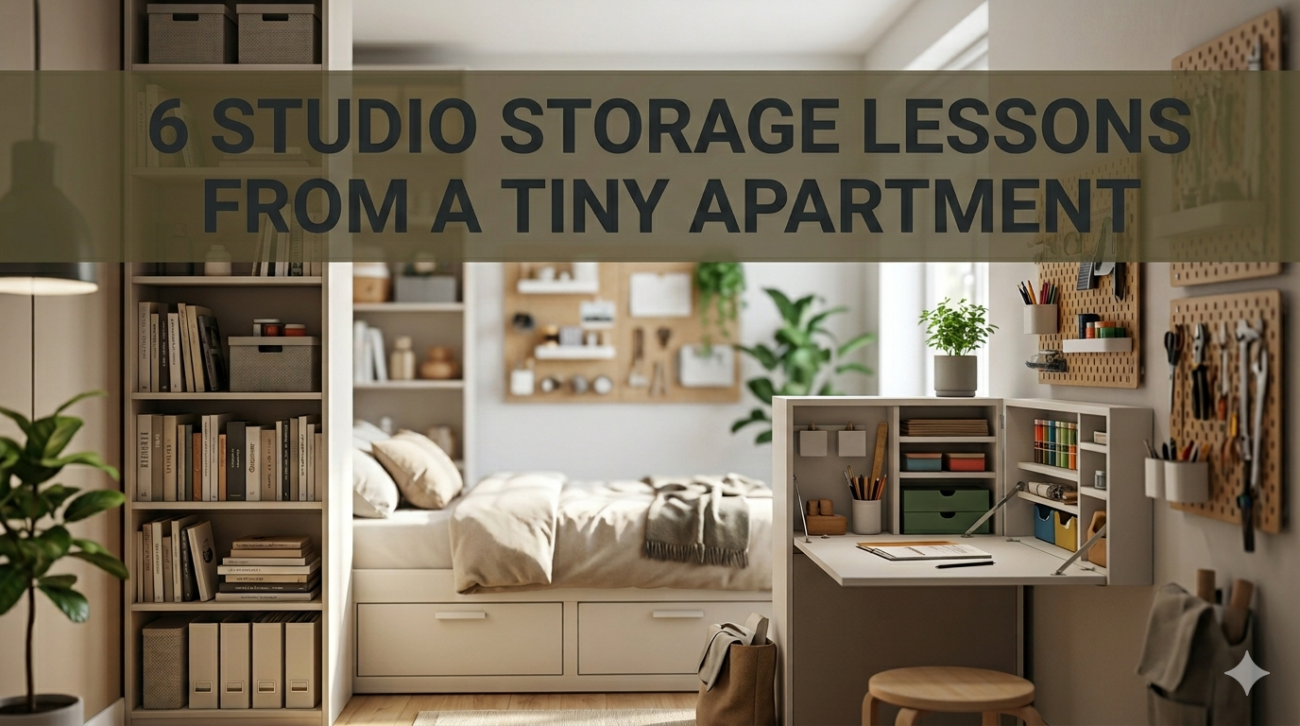
Living in a tiny studio apartment changes the way you think about space. At first, storage feels like a constant problem—there is never enough of it, and everything seems to end up in the wrong place. But over time, small adjustments teach you more than any interior design guide ever could.
These six lessons came from trial, error, frustration, and gradual improvement. None of them required a big budget, but each one changed how the apartment functioned in a noticeable way.
lesson 1: vertical space is more valuable than floor space
The first mistake I made was treating storage as something that happens at ground level. Drawers, boxes, and low cabinets filled up quickly, and then the apartment felt cluttered even when it wasn’t that full.
The real breakthrough came when I started using vertical space properly.
Instead of thinking “where can I put this on the floor,” I started asking “where can this go on the wall?”
I added:
- tall shelving units
- wall-mounted racks
- hanging organizers behind doors
- stackable storage boxes
The difference was immediate.
storage efficiency comparison:
| storage type | space usage | storage capacity | accessibility | clutter impact |
|---|---|---|---|---|
| floor-based bins | high | medium | easy | increases clutter |
| vertical shelving | low | high | moderate | reduces clutter |
| wall-mounted hooks | very low | medium | very easy | minimal clutter |
| under-bed storage | hidden | high | moderate | no visual clutter |
The biggest realization: floor space is for living, not storing.
lesson 2: hidden storage is more powerful than visible storage
At first, I thought storage needed to be visible so I could “stay organized.” In reality, visible storage often created visual noise.
Once I started using hidden storage properly, the entire apartment felt calmer.
Examples of hidden storage I introduced:
- storage boxes under the bed
- ottoman with internal storage
- kitchen items stored behind cabinet doors instead of counters
- vacuum bags for seasonal clothing
hidden storage effectiveness chart:
| method | visual impact | storage volume | daily convenience |
|---|---|---|---|
| open shelves | high clutter | medium | high |
| closed cabinets | clean look | medium-high | high |
| under-bed storage | invisible | high | moderate |
| multi-purpose furniture | invisible | high | very high |
The key insight here: if you don’t see clutter, you don’t feel clutter.
lesson 3: multi-purpose furniture solves more problems than it creates
In a tiny studio, every piece of furniture must justify its existence. If something only does one job, it often becomes inefficient.
I started replacing single-use furniture with multi-use pieces.
Changes I made:
- bed frame with storage drawers
- foldable dining table that doubles as a desk
- storage ottoman used for seating + storage
- wall-mounted desk instead of a bulky table
multi-purpose furniture comparison:
| item type | single-use version | multi-use version | efficiency gain |
|---|---|---|---|
| bed | sleeping only | bed + storage drawers | high |
| table | dining only | foldable desk/dining combo | very high |
| seating | chair only | ottoman with storage | medium-high |
| desk | fixed desk | wall-mounted foldable desk | high |
What I learned is that in small spaces, flexibility is more important than specialization.
lesson 4: categorization matters more than container quantity
At one point, I made the mistake of buying too many storage boxes. Instead of solving the problem, it made it worse because I wasn’t organizing items logically.
The real improvement came when I focused on categories first, containers second.
I started grouping items like this:
- daily essentials
- weekly-use items
- seasonal items
- rarely used items
Once categories were clear, choosing storage became easier.
storage organization structure:
| category | storage location | access frequency | priority level |
|---|---|---|---|
| daily items | desk / open shelves | very high | top |
| weekly items | drawers | medium | medium |
| seasonal items | under-bed boxes | low | low |
| rare items | top shelves | very low | lowest |
This reduced decision fatigue and made cleaning faster.
lesson 5: negative space is part of storage design
One of the most overlooked ideas in small apartments is that empty space is not wasted space.
At first, I tried to fill every corner. The apartment felt smaller, heavier, and harder to move through.
When I started intentionally leaving empty areas, everything improved.
Examples:
- leaving one wall completely bare
- keeping floor space clear near walking paths
- avoiding overfilling shelves
space balance comparison:
| approach | result |
|---|---|
| fully filled space | crowded, stressful |
| partially open | balanced, breathable |
| intentionally empty | calm, spacious feel |
Negative space actually makes storage systems function better because it reduces overload.
lesson 6: daily-use placement determines long-term organization
The final lesson was the most practical: where you place items matters more than how you store them.
Even the best storage system fails if frequently used items are hard to reach.
I redesigned my apartment based on usage frequency:
- everyday items at arm level
- weekly items slightly higher or lower
- rarely used items placed out of immediate reach
placement efficiency chart:
| item frequency | storage height level | accessibility rating |
|---|---|---|
| daily use | waist to eye level | very high |
| weekly use | above or below main zone | medium |
| monthly use | high shelves / hidden | low |
| rarely used | deep storage areas | very low |
This reduced unnecessary movement and made the space feel more intuitive.
combined impact of all six lessons
When all six lessons came together, the transformation wasn’t just visual—it was functional.
overall improvement table:
| area | before changes | after changes |
|---|---|---|
| clutter level | high | low |
| storage access | inconsistent | intuitive |
| usable space | limited | optimized |
| cleaning time | long | short |
| stress level | moderate-high | low |
The biggest change was psychological: the apartment stopped feeling like it was “overflowing.”
Instead, it felt controlled and predictable.
key insights learned from living in a tiny studio
- storage is a system, not a collection of containers
- visibility creates mental clutter
- flexibility is more valuable than size
- organization begins with categorization, not buying boxes
- empty space improves functionality
- accessibility determines usability
faq section
- what is the most effective storage solution for a tiny studio
Vertical storage combined with multi-purpose furniture tends to be the most effective because it maximizes space without adding clutter. - how do I stop my small apartment from feeling cluttered
Focus on hidden storage, reduce visible items, and leave intentional empty space to avoid visual overload. - is under-bed storage actually useful
Yes, it is one of the highest-capacity hidden storage areas and works especially well for seasonal or rarely used items. - how many storage boxes should I use in a small apartment
Fewer than most people think. It’s better to organize by category first and then choose the minimum number of containers needed. - what is the biggest mistake people make in small studio storage
Filling every available space without considering accessibility or usage frequency. - how can I make storage look more organized visually
Use consistent container styles, stick to a limited color palette, and avoid mixing too many different storage systems in one area.