
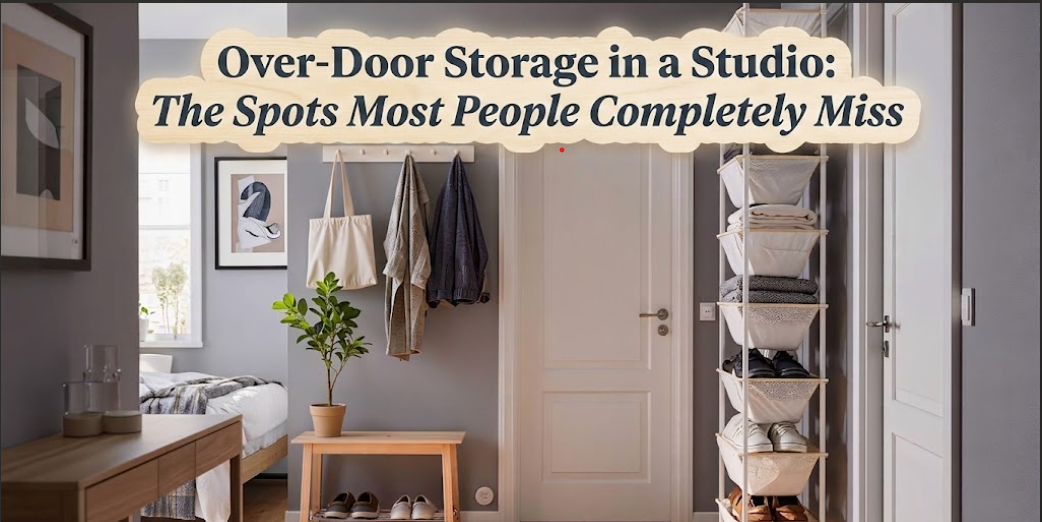
Everyone puts a shoe pocket on the back of their closet door and considers the job done.
That single move has become the universal symbol of over-door storage, and it is fine, it works, but it is also just one door out of four or five in a typical studio. The other doors are sitting there completely bare, and each one of them is real estate you are not charging rent on.
In my work designing small spaces, and I have done a lot of small spaces — condos, lofts, studios with floorplans that would make most people nervous — the over-door opportunity is almost always the most underutilized vertical surface in the apartment. Not the walls. Not the ceiling. The doors. Because people look at a door and see a door instead of seeing fifty square inches of flat, accessible, commitment-free storage.
Here are the spots that get missed, and what to actually do with them.
1. The Back of Your Entry Door Is the Most Valuable Surface You Are Not Using
Walk to your front door right now and look at the back of it.
Nothing there, right? Maybe one hook you tossed up six months ago, currently holding a tote bag that has become the unofficial home for random things you cannot categorize. Or it is entirely empty, just a flat painted surface that nobody thinks about.
That panel is where your studio’s entry system should live. Not on a shelf. Not on a table by the door, which takes up floor space. On the door itself.
A slim over-door panel organizer, one of those multi-pocket styles with clear slots or shallow fabric compartments, can handle your mail, your sunglasses, your dog leash, reusable grocery bags, an umbrella hook near the bottom, and a few other daily-rotation items that currently have no designated home. Everything you grab when you walk out or drop when you walk in. One system, one location, zero floor space sacrificed.
The thing about the entry door specifically is that whatever you mount there has to earn it daily. This is not a seasonal storage spot. It is for items you physically touch on the way in or out, every single day. The moment you start storing rarely-used things here, the whole thing becomes visual clutter instead of a functional system. Why Your Studio Feels Chaotic and the One Fix That Changes It gets into this pattern in detail, including why people buy the right storage products and then fill them with the wrong things.
A mirror on the back of the entry door is worth considering too. Not just for obvious reasons, but because a full-length mirror here means you are not buying a freestanding one that eats floor space, and you are getting a last-minute outfit check before you leave. Two functions, one surface, one door.
2. The Bathroom Door: One Towel Hook Is Not a Storage Strategy
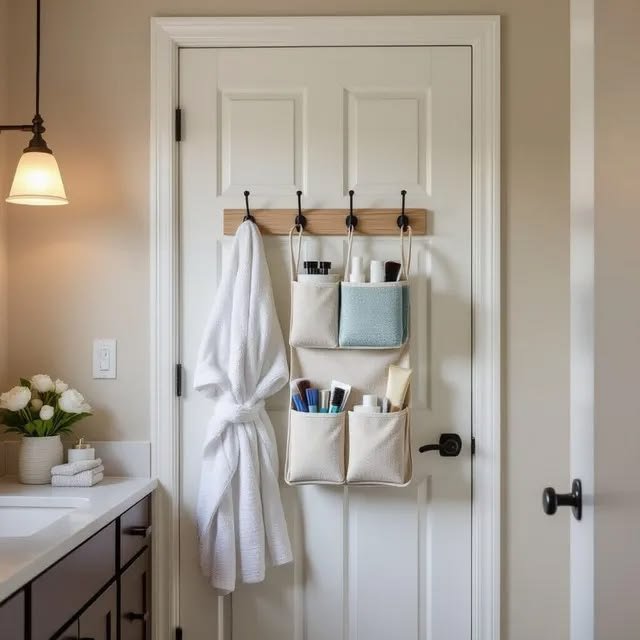
Almost every studio bathroom door I have seen has one hook. Sometimes two. The towel hangs. The job feels done.
But that door panel can carry a significantly smarter system than a single towel hook, and the bathroom is one of the rooms where over-door storage has the most immediate impact on your daily life.
A multi-tiered over-door rack in a bathroom can reorganize your entire counter and under-sink situation. Skincare organized by morning and evening routine in clear-lidded pockets. Dry shampoo, cotton rounds, razors, nail polish, hair ties — all of it visible, all of it accessible, none of it living in the dark under the sink where things go to be forgotten. It is one of those changes that takes twenty minutes and somehow makes the bathroom feel like a completely different room.
The towel situation itself deserves a rethink too. A three-bar or four-bar over-door towel rack means your bath towel, hand towel, and gym towel hang separately. They actually dry. In a studio without a proper laundry room or airing space, that matters more than it sounds. Towels that do not dry properly between uses become a problem quickly. A little distance between them solves it.
One thing to avoid in the bathroom: glass bottles or anything heavy that could fall. Keep the door-mounted storage for lighter items. Your full-size shampoo should stay in the shower. For deeper bathroom storage layering ideas, 7 Studio Apartment Storage Hacks That Cost Under $50 covers a few approaches I rarely see people try, including magnetic strip applications that work surprisingly well in a small bathroom.
And honestly, a clear organizer in the bathroom door is also just more hygienic. Things are visible, things get used, things get replaced. Versus the under-sink cabinet where products pile up, get buried, get forgotten, and quietly expire.
3. Your Closet Door: There Is More Door Than There Is Organizer
The classic shoe pocket covers maybe two-thirds of the closet door. Maybe. That top third? Usually completely empty. The gap between the organizer’s bottom edge and the door’s lower clearance? Also usually wasted.
Which means the closet door, the one most people consider the “done” door, still has untapped space on it.
Layering is the solution here. One organizer dedicated to shoes and folded small items in the lower half, a second shallower-pocket organizer above it for accessories: belts rolled individually, scarves folded by color, sunglasses in their own clear slots. Stack vertically, use the full door length, and suddenly your accessories have a proper home that is not a tangled drawer or a pile on the shelf.
The door frame edge is a spot almost nobody thinks about. A few command hooks or small over-door hooks mounted at the edge of the closet door frame, not the door itself but the frame where the door rests against, can hold the current week’s workout gear, a jacket in rotation, a bag you reach for daily. It does not look cluttered if you limit it to three or four items and keep to things actually in use that week.
There is a habit that undermines closet door storage more than anything else: storing rarely-used items in the most accessible spots. The back of the closet door should hold things you reach for regularly. Not the clutch you wore to one wedding in 2022. Not the seasonal accessories. Not the “just in case” items that belong in a higher shelf bin somewhere. The door is for daily and weekly rotation. Anything else needs a different address.
4. Kitchen Cabinet Doors: The Interior You Have Never Thought About
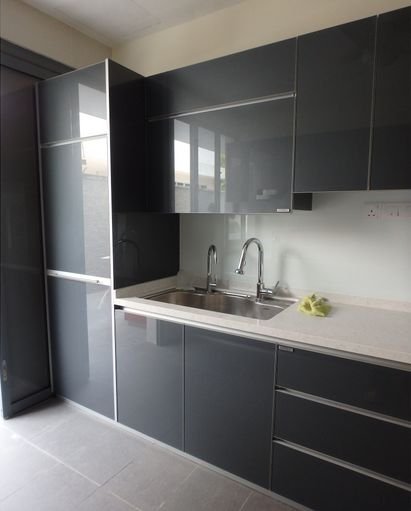
Open a kitchen cabinet right now and look at the inside of the door.
Empty, yes? A little dusty maybe. Possibly some old sticky residue from a hook that did not make it.
That surface is small but it is functional, and in a studio kitchen where every shelf inch counts, the inside of cabinet doors is storage space you are technically already paying rent on but not using.
Adhesive-backed organizer strips on the inside of a cabinet door can hold pot lids standing upright, which solves one of the more maddening small-kitchen problems: lids that stack wrong and clatter every time you touch them. A narrow mounted rack holds spice jars at eye level on the inside of a pantry cabinet door, which means they are visible and you actually use them instead of buying duplicates because you forgot you already had cumin. A few small hooks on the inside of the door below the sink hold cleaning gloves, small brushes, whatever you want off the cabinet floor.
The tension rod trick is worth knowing specifically. Run a tension rod horizontally across the inside of the under-sink cabinet. Hang spray bottles from it by their trigger handles. You have just created a second “shelf” without drilling a single hole, and the space below the rod is now free for other items. It costs almost nothing and changes how the cabinet functions entirely. Studio Apartment Storage: How to Use Vertical Space the Right Way covers a version of this alongside a few other low-cost moves that consistently get underestimated.
Two things to keep in mind with cabinet doors: stick to lightweight items only, because adhesive products have weight limits and cabinet doors flex when opened and closed. And inspect adhesive hooks every few months because repeated motion loosens the bond over time. A dropped spice jar at midnight is the kind of thing that makes you regret not checking.
At-a-Glance: Missed Door Storage Spots and What Goes There
DOOR LOCATION          | WHAT TO INSTALL               | BEST FOR                         | SKIP THESE
-----------------------|-------------------------------|----------------------------------|---------------------------
Entry / front door     | Slim panel organizer, mirror  | Mail, keys, bags, sunglasses     | Seasonal items, heavy gear
Bathroom door          | Multi-pocket rack, towel bars | Skincare, hair tools, towels     | Full shampoo bottles, glass
Closet door (full)     | Layered organizers + hooks    | Shoes, accessories, daily jacket | Rarely worn items, archives
Kitchen cabinet doors  | Adhesive hooks, spice racks   | Pot lids, spices, foil and wrap  | Heavy pans, wet items
Under-sink cabinet     | Tension rod, small hooks      | Spray bottles, cleaning gloves   | Anything you forget about
5. The One Pattern That Breaks Every Over-Door Setup
You put the wrong things on it.
This is the universal over-door storage problem. The organizer goes up, looks great for three days, and then gradually fills with items that have no logical connection to that door or that room. The entry door becomes a dumping spot for chargers and expired coupons. The bathroom door starts holding things from the bedroom. The whole system quietly collapses under the weight of misplaced items and the setup gets blamed when the real issue is placement logic.
Over-door storage only works when it holds things that actually belong near that specific door, things you reach for regularly because of where you are standing and what you are doing. The bathroom door holds bathroom things. The entry door holds leave-the-house things. The closet door holds getting-dressed things. The rule sounds obvious. It gets violated constantly.
Before installing anything, ask yourself: what are the three things I physically pick up or put down at this exact door, every single day? Those three things get the prime spots. Everything else needs to earn its place or find a different home.
Rearranged My Studio Every Month for a Year: Here Is What the Data Showed makes a strong case for habit-based placement, which is the same logic applied across the whole studio. Storage that aligns with how you actually move through your space functions. Storage that aligns with how you wish you moved through it sits empty and gets disorganized within a week.
The four or five doors in your studio are doing maybe ten percent of what they could be doing. That is not a small gap. It is the difference between a space that feels organized and one that constantly feels like it is one item away from chaos.
Start with the bathroom door. It is the fastest win because the items that belong there are already nearby and the problem they solve, the counter clutter, is visible every morning. Get that working, live with it for a week, and then look at your entry door. The changes are not expensive. Some of them cost nothing but a tension rod and twenty minutes.
The Studio Apartment Setup perspective is always the same: the goal is not to buy more storage. It is to use what already exists. And behind your doors, there is more than most people have ever noticed.
Frequently Asked Questions
Do over-door organizers damage the door or the door frame? Standard over-door hook organizers simply rest on the top edge of the door. They do not require drilling and do not damage the door itself as long as the load stays reasonable and the door can close without forcing. Some doors with thick weather stripping at the top need a slightly wider hook profile to accommodate the gap. For cabinet interiors, adhesive hooks remove cleanly if you follow the manufacturer’s removal instructions, typically slow peeling at a low angle rather than pulling straight off.
What weight limit should I stay under for over-door organizers? Most over-door panel organizers with standard hook hardware are rated for 20 to 25 pounds total. For individual adhesive hooks on cabinet doors, weight limits are usually 3 to 5 pounds per hook, so keep it lightweight — spice jars, foil boxes, small tools. Anything heavier than that belongs on a wall-mounted solution with proper anchor hardware.
Can over-door storage work in a rental without losing the security deposit? Yes, most of it. Over-door hook organizers attach to nothing, they just rest on the door. Command-style adhesive hooks on cabinet interiors come off without damage when removed as directed. The exception is if you are tempted to use screw-in hardware on anything you cannot drill — stick to no-drill solutions and you will have no deposit issues.
My bathroom door swings outward into the room rather than inward. Does that change things? Not really. An outward-swinging door actually gives you easier visual access to whatever is on the back panel since the full surface faces you when the door is open. The main thing to account for is organizer depth. If the door swings into a narrow hallway or close to other furniture, pick a shallower-profile organizer so the door’s swing path stays clear.
How do I keep the cabinet door storage from becoming disorganized again in two weeks? The items on cabinet door organizers need to be things you actually use frequently. Spice jars you reach for while cooking, pot lids you need during meal prep, cleaning supplies you grab weekly. If the items rotate out often or are used irregularly, they will not make it back to their spot reliably. Assign that door space only to high-frequency items, and the system maintains itself with almost no effort.