
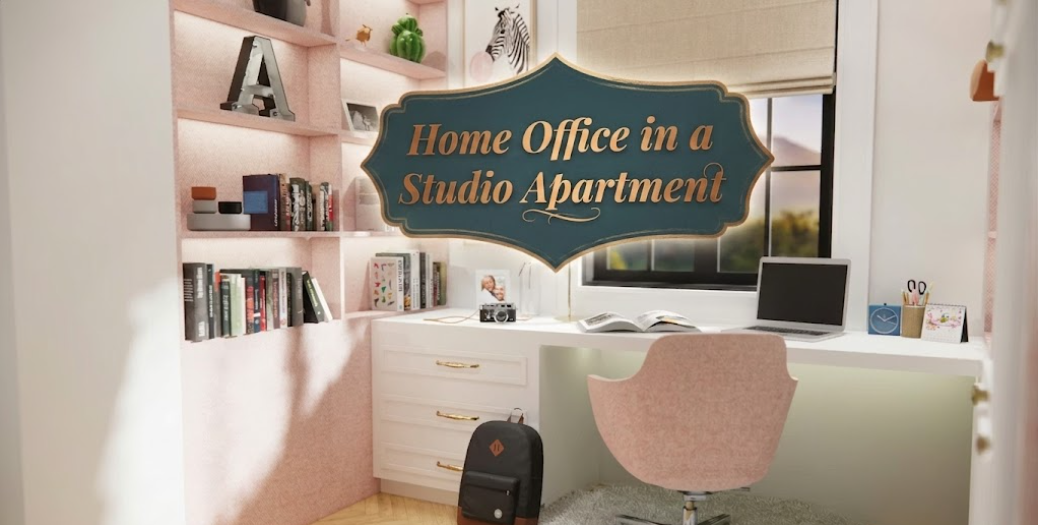
The closet is already wasted. That’s the honest starting point.
Walk through most studio apartments and you’ll find it: a full cavity built into the wall, doing almost nothing. A few wire hangers. An old coat from two winters back. A box that survived the last three moves unopened. And then, across the room, the same person who owns all of it is hunching over a laptop at the kitchen counter, or worse, balanced on the edge of the bed, pretending that’s a functional work setup.
It isn’t. And the solution is literally already built into your apartment.
The closet home office is not a new idea, designers and space planners have been converting reach-ins to work zones in condos for years. What’s new is how rarely anyone discusses it specifically for studio apartments, where the constraints are tighter, the tradeoffs more visible, and the impact on daily life more significant. When your bedroom, living room, kitchen, and dining area all share the same 400 square feet, your work zone doesn’t just affect productivity. It affects how the entire space feels, every single day.
1. Why Studio Workspaces Keep Failing

The desk-in-the-corner approach is the default. It sounds reasonable. Buy a small desk, find a corner that seems least disruptive, add a chair, and carry on.
The problem is that an open desk in a studio never fully becomes a workspace. Visually, it bleeds into everything. You’re eating breakfast three feet from your inbox. You’re trying to unwind at ten at night and the monitor is right there, in your sightline, lit up. The psychological boundary between work and rest doesn’t happen by accident. It has to be designed.
There’s a second issue too. Most studio furniture decisions are reactive. You buy a desk because you need a surface, not because you’ve mapped out how it integrates with the sleep zone, the living zone, and the areas where you actually decompress. The desk ends up an orphan piece, with no visual logic and no relationship to the rest of the space. And after a few weeks it becomes the surface where everything just accumulates.
This is something Studio Apartment Setup has addressed in the context of studio apartment zones specifically. Creating separation without physical walls requires strategy, not just furniture placement. The closet office is one of the clearest expressions of that principle in practice.
A work zone behind closed doors, invisible when you don’t need it. That’s not a workaround. That’s design.
2. The Closet Case: Why This Space Actually Works
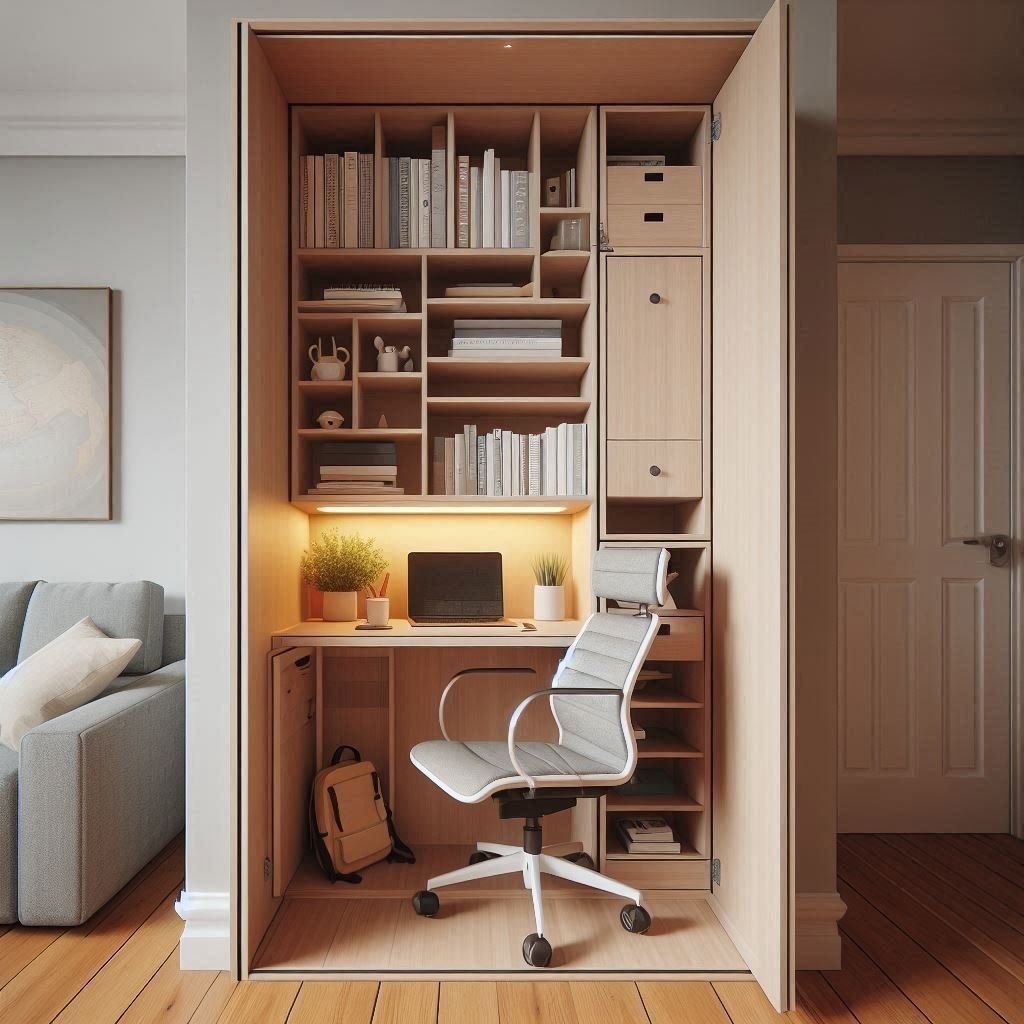
Standard reach-in closets in most studio apartments run between 24 and 30 inches deep. A functional desk surface needs about 20 to 24 inches of depth. That alignment is not a coincidence, it’s just geometry doing you a favor.
The standard closet rod sits roughly 66 to 72 inches off the floor. Remove it, or relocate it higher, and you free up a clean vertical column that can hold floating shelves, a monitor at eye level, and a task light positioned properly. The existing shell of the space gives you the infrastructure. You don’t need to frame a single thing.
And once you close the doors, the desk doesn’t exist. The room has no office in it. That visual separation is more powerful than most people expect until they’ve actually experienced it. The psychological shift is real, clients tell me this consistently, the ability to close the work away at the end of the day changes how the rest of the studio feels.
What you do need to do is think through the setup before buying anything. The piece on why your studio closet feels impossible covers the default configuration problems in detail, and it’s worth understanding those before committing to a conversion. The standard closet layout, rod plus single shelf above, was never designed for how people actually use small spaces.
The desk surface itself doesn’t need to be complicated. A piece of 3/4-inch plywood or MDF cut to the width of the closet, supported by wall-mounted brackets rated for the load, works as well as anything you’d find at a furniture store. It can be painted, veneered, or wrapped in contact paper with a clean edge treatment, and it reads as built-in rather than improvised. I’ve done this in condos across Toronto and the result, every time, looks intentional.
Above the desk is where most people underinvest. From the desk surface to the ceiling you typically have 36 to 48 inches of vertical wall. Floating shelves in that zone handle documents, reference books, small equipment, and the visual anchors, a small plant, a framed object, something that makes the space feel curated rather than functional-only. A monitor arm brings the screen to proper eye level and reclaims the desk surface beneath it.
3. Building It Right: The Actual Setup
Before getting into specific components, here’s a comparison that helps clarify the core decision between two approaches:
| Floating Desk (Custom Surface + Brackets) | Compact Off-the-Shelf Desk Inside Closet | |
|---|---|---|
| Cost | $40 to $120 (board + brackets) | $80 to $250 |
| Fit | Cut to exact closet width | May not fit, gaps common |
| Appearance | Clean, built-in look | Furniture-in-a-box read |
| Installation | Requires drilling into studs | No drilling needed |
| Best for | Permanent or long-term setups | Renters who cannot drill |
| Weakness | Not for no-drill rentals | Width constraints can ruin it |
If you’re renting with a no-modification lease, the off-the-shelf approach is workable, but measure everything before you order. The number of times I’ve seen a compact desk arrive and fail to clear the closet door frame, or sit awkwardly wide with gaps on both sides, is frankly embarrassing given how easily it’s avoided.
The desk height should land between 28 and 30 inches from the floor. This is standard desk ergonomics and it doesn’t change because the desk lives inside a closet.
The monitor should sit at roughly eye level when seated, which typically means 18 to 24 inches above the desk surface. An adjustable monitor arm handles this cleanly and also frees the desk of the monitor base entirely. Desk surface becomes usable again.
Cable management is the place where these setups either look polished or look like someone gave up. Mount a power strip along the back wall at desk height, fix it with strong adhesive clips, and route all cords down to a single floor outlet. A few command hooks keep everything tidy. The difference between a closet office that looks like a designed feature and one that looks like a temporary fix is almost always the wiring.
Lighting requires a dedicated solution. The room’s overhead fixture won’t reach the inside of a closet effectively, and working under that kind of indirect, low light leads to eye strain quickly. An LED task lamp positioned to the upper left of the monitor (for right-handed setups) handles the immediate work surface. For ambient depth, a small LED strip along the top shelf or the back wall adds warmth without adding hardware complexity. Studio Apartment Setup’s piece on why one overhead light ruins everything goes deep on this, but for the closet specifically the takeaway is simple: layer it.
The chair lives outside the closet when you’re not working. A slim stool that tucks fully under the desk is one option. A standard office chair that rolls over from elsewhere in the studio when needed is another. What doesn’t work is a chair that sits permanently in front of closed closet doors, announcing the presence of a home office from across the room and blocking access to a space that’s supposed to be invisible when not in use.
4. Where This Setup Goes Wrong
The single most common mistake is skipping the measurement stage entirely. A reach-in closet in a studio apartment can be anywhere from 36 to 72 inches wide. That difference determines whether a standard desk fits, whether you need a custom-cut surface, how many shelves are possible vertically, and whether there’s room for a small set of drawers on one side. Before a single thing is purchased, measure the closet width at the door frame, the depth from back wall to the face of the doors, and the floor-to-ceiling height. Write it down.
The second mistake is overpacking the shelves. Yes, the vertical space is there. No, you don’t need to fill all of it immediately. A cluttered closet office is worse than no closet office, it becomes the most visually dense corner of the apartment and works against the psychological separation you’re trying to create. Three or four well-chosen objects on the shelves look better than twenty. It’s the same principle that applies everywhere in small-space design: density reads as chaos unless it’s curated.
The third mistake, and I see this constantly, is treating the closet office as a design problem that’s separate from the rest of the studio. It isn’t. The desk surface finish, the shelf material, the hardware finishes, all of it should connect to the visual language of the surrounding room. If the studio has warm oak tones and soft textiles, the closet setup should carry that. If the space is clean white walls with black metal accents, bring that into the work zone. A closet that looks like it belongs to a different apartment, even when open, always reads as an afterthought.
Vertical thinking applies here in the same way it does for the rest of the apartment. If you haven’t thought through your broader storage strategy, the guide on using vertical space the right way is worth reading before you start drilling brackets into closet walls. The principles overlap directly.
One more thing worth saying, even though it’s a bit of a side note. Acoustic separation is a real issue with closet offices, not for noise you’re creating, but for concentration. Closets naturally reduce ambient sound from the rest of the apartment because of their recessed position. That’s a benefit. But if you’re on video calls frequently, the closet back wall can create a slight reverb, particularly in a plaster or drywall-finished space. A small acoustic panel on the back wall, or even just a few inches of fabric pinboard, solves it and doubles as a place to pin reference materials.
The closet office won’t work for everyone. If your studio has exactly one closet and you genuinely need every inch of it for clothing and household storage, this isn’t your answer. But for the person sitting on a reach-in that’s half-empty or poorly configured, this conversion takes a weekend and changes how the apartment functions on a permanent basis.
The best studio setups are the ones where nothing is accidental, where every square foot has been thought through and assigned a purpose that fits the actual life being lived in it. A work zone that disappears when the day is done, that doesn’t leak into your sleep space or your evening, that’s not a compromise. That’s what good design is supposed to do.
Frequently Asked Questions
Can I convert a closet into a home office if I’m renting?
Yes, with adjustments based on what your lease allows. The main restriction in most rentals is wall drilling, which rules out bracket-mounted desk surfaces. In that case, a freestanding compact desk that fits cleanly inside the closet opening works well, provided you’ve measured the opening width and depth first. Adhesive cable management hooks and command strips handle everything else without damaging walls.
What’s the minimum closet depth for this to work?
Twenty inches is the practical floor. Standard laptop use requires about 18 to 20 inches of desk depth, and adding a keyboard and mouse comfortably brings that to 20 to 22 inches. Most reach-in closets are 24 inches or deeper, so depth usually isn’t the constraint. The width and the height of the existing rod are the first things to assess.
How do I handle video calls from inside a closet?
Position your chair so the camera frames the room behind you, not the inside of the closet. A ring light or LED panel at desk level in front of you provides even, professional-looking light without needing daylight from a window. If the closet back wall is neutral, it can actually work as a clean backdrop, particularly with one well-organized shelf visible rather than bare drywall.
Will two monitors fit in a closet setup?
That depends entirely on the closet width. Dual monitors require a desk surface of at least 48 to 54 inches. A 36-inch closet won’t accommodate this without awkward overlap. A 60-inch or wider closet handles dual screens comfortably. If the width isn’t there, a single ultrawide monitor is a significantly better solution than squeezing two standard displays into a space that wasn’t built for them.
Does the closet get too warm for equipment?
For most single-laptop or standard desktop setups, no. Working with the closet doors open during the day provides adequate airflow. If you’re running high-performance machines or multiple devices that generate meaningful heat, a small USB desk fan directed at the equipment rather than at yourself is sufficient. No permanent modifications needed.