

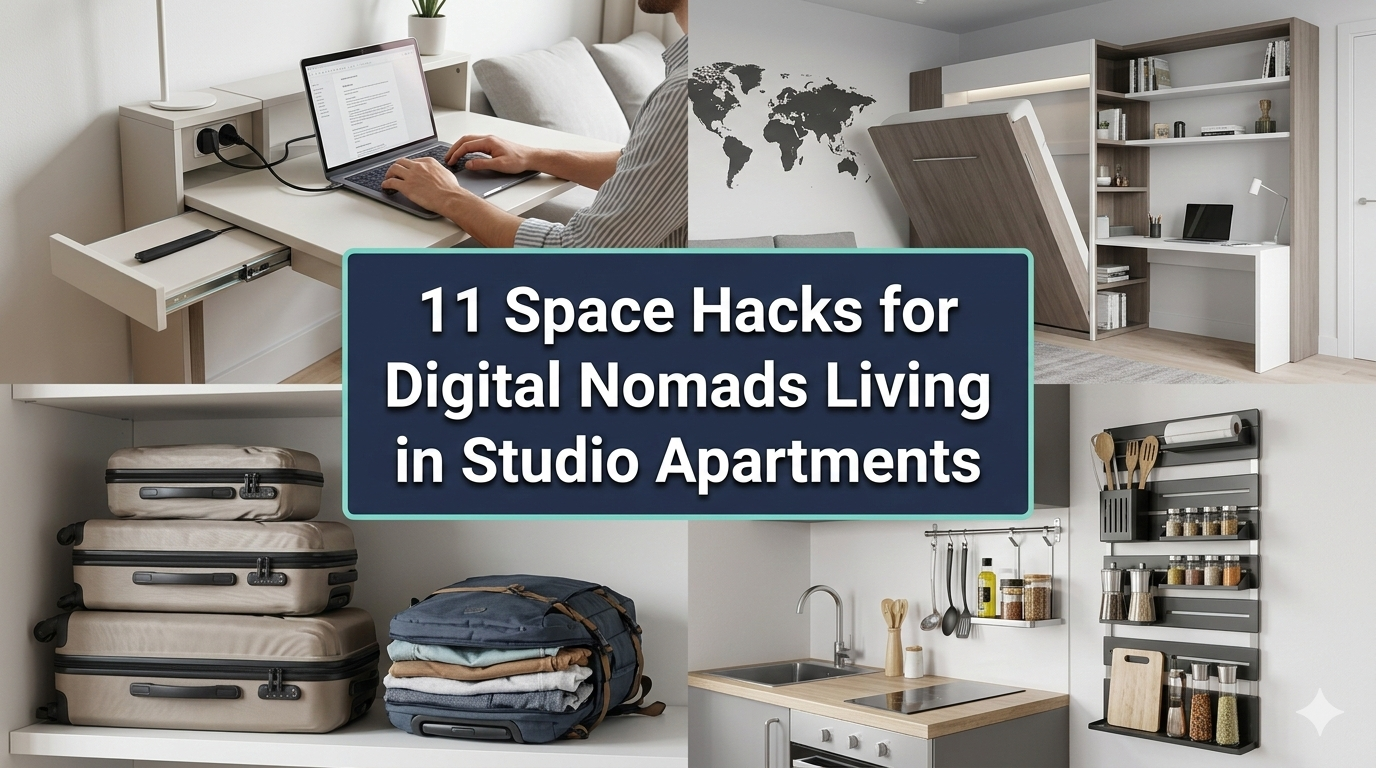
You Don’t Need More Space. You Need Smarter Space.
As a digital nomad, you live in a studio apartment like someone who pieces together a puzzle day after day.
You need a bed. A desk. Storage. A kitchen. A place to relax. And somehow all of that has to be accommodated in one room — and still feel like a livable, productive space.
The good news? Thousands of digital nomads are doing it right. And they’re doing it on purpose. They’re employing smart, intentional space hacks that render even a 300-square-foot studio open, functional, and comfortable.
In this guide, we’ll cover 11 of the best studio apartment space hacks made for a digital nomad. So whether you’re logging two months or two years in one location, these suggestions will make the time spent working better, sleeping better — and actually enjoying your small space.
Studio Living Is Ideal for Digital Nomads (When Executed Properly)
Before we dive into the hacks, let’s take a moment to chat about why studio apartments actually pair quite nicely with the nomadic lifestyle.
They’re cheaper. They’re easier to clean. They’re faster to organize. And they are available in almost every city on earth.
The problem isn’t the studio itself — it’s the setup. Most people just pile in with no system, no intent, and no design thinking.
That’s where these hacks come in and change everything.
| Studio Apartment Challenge | Smart Hack Solution |
|---|---|
| No separate office space | Zone-based desk setup |
| Limited storage | Vertical and under-furniture storage |
| Small kitchen | Foldable and stackable kitchen gear |
| No room separation | Room dividers |
| Cable & tech clutter | Minimal cable distribution and wall-mounted hardware |
| Poor lighting | Layered lighting system |
Hack #1 — Transform One Corner Into a High-Performance Work Zone
You don’t need a whole room to have your workspace. It needs a corner.
Choose a corner of your studio and make it an all-work zone. This is your “office zone.” Everything in that corner should support your work needs — laptop, monitor, headphones, notebook, chargers.
Why Zoning Is Good for Your Brain
When you work in the same place every day, your brain begins to associate that space with focus. It’s a psychological trick known as “environmental cueing.” As soon as you sit down at your work zone, your mind gears into working mode.
A small L-shaped desk, or a wall-mounted fold-down desk, can mark this off without crushing the footprint.
Quick reminders for your work zone:
- Face a wall (or window) to lessen distractions
- Add a small shelf atop the desk for books and supplies
- Invest in a decent chair — your back will appreciate it later
- Always keep the zone clutter-free
A fold-down desk is particularly clever. You fold it up when work is over for the day and the zone vanishes. That divide between “work mode” and “off mode” is huge for mental health in a place where you live and work in one room.
Hack #2 — Store Vertically

Storage is one of those things most people think about horizontally. They think floor space.
However, in a studio apartment your walls are your best friend.
Go vertical. Stack up. Build upward.
Wall Storage Ideas That Don’t Look Terrible
Install floating shelves from floor to ceiling on one wall. This provides you with gigantic storage without occupying one square foot of floor space. Put them to use for books, plants, decorative storage boxes, tech gear, and whatever else typically ends up on the floor or countertops.
Pegboards are another underrated option. Mount one in your kitchen or work space and hook tools, utensils, or accessories straight to the wall. IKEA’s SKÅDIS pegboard system is a favorite among minimalist nomads.
Ideas for vertical storage by zone:
| Zone | Vertical Storage Option |
|---|---|
| Work corner | Floating shelves above desk |
| Kitchen | Wall-mounted magnetic knife strip, hanging pot rack |
| Entryway | Tall coat rack, wall hooks |
| Bathroom | Over-door shelf organizer |
| Bedroom | Tall wardrobe, shelf above bed |
View your walls as an empty canvas waiting to be filled.
Hack #3 — Buy Furniture That Multi-Tasks (or Even Triple-Tasks)
Every piece of furniture has to earn its place in a small space.
A couch that’s just a couch? Wasteful. A bed that’s just a bed? Missed opportunity.
Multi-Functional Furniture Picks for Nomads
Ottoman with storage — A coffee table, extra seating, and covert storage all in one. Ideal for stashing extra linens, tech cables, or out-of-season clothing.
Murphy bed (wall bed) — Folds up into the wall during the day to convert your sleeping area into a living or working space. This one hack could double your usable floor space.
Sofa bed or daybed — Good if you rent furnished apartments and can’t add a Murphy bed. A sofa by day, a bed at night.
Nesting tables — They take up almost no room when stacked but provide you with additional surface area in a pinch for food, drinks, or work overflow.
Dining table with drop leaves — Open it up when you’re eating, fold it down when you’re working or lounging.
The aim is simple: purchase less, yet purchase better. One good multi-use piece trumps three single-use pieces all day long.
Hack #4 — Design Visual Separation Without Walls
The biggest problem in a studio apartment is that everything runs into everything else. Your bedroom is adjacent to your kitchen, which borders your office.
That absence of separation makes it hard to relax — and hard to be productive.
The solution isn’t walls. It’s visual boundaries.
Simple Ways to Create Zones Without Building Anything
Rugs — Put various rugs in the different spaces of your studio. A rug placed under your desk delineates the work zone. A rug beneath your bed delineates the sleeping area. It’s a neat little trick that is surprisingly effective.
Curtains or room dividers — Hang a curtain from the ceiling to separate your bed from the rest of the suite. Close the curtain at night and your bedroom becomes a private, cozy sanctuary.
Bookshelf dividers — An open bookshelf placed perpendicular to the wall serves as a partial wall. It separates the space while allowing light to still flow through.
Color and lighting — Use warm lights for your bedroom zone and cooler, brighter lights for your work zone. This trains your brain to associate the energy of each area.
Zones help your studio feel bigger — not smaller. When every area has a specific purpose, the entire apartment seems more organized and purposeful.
Hack #5 — The Secret to Disguised Storage
Clutter is the nemesis of small spaces.
The most effective way to deal with clutter is to conceal it.
Hidden storage is literally about utilizing every possible gap, nook, and underused surface to store things out of sight.
Where to Find Hidden Storage in Any Studio
Under the bed — This is prime real estate. Use flat storage bins or vacuum bags to store clothes, gear, or documents under your bed. If your bed is not elevated, lift it with bed risers.
Inside ottomans and benches — As noted previously, hollow furniture is your best friend.
Behind doors — Over-the-door organizers can store shoes, cleaning supplies, toiletries, and more.
Inside stairs — If your studio has stairs to a loft, the steps can generally be converted into pull-out drawers.
Above kitchen cabinets — That dusty space above your kitchen cabinets is ideal for infrequently used items packed in labeled boxes.
Inside suitcases — If you are a nomad, you probably travel with luggage. Stow things in your suitcases when you’re not traveling. Use them as storage units.
The more you can tuck away, the cleaner and more peaceful your space will feel.
Hack #6 — Build a Distraction-Free Digital Workstation
As a digital nomad, your tech setup is just as important as your physical setup.
A messy, chaotic workspace decreases productivity. A neat, tidy one can change how much you accomplish in a given day.
Creating a Small, Clean Tech Setup
Start with cable management. There is nothing more unkempt looking in a small workspace than cables everywhere. Cable clips, velcro ties, or a cable management box will help keep it neat.
Consider going wireless wherever possible. Wireless keyboard, wireless mouse, wireless chargers. Fewer cables = cleaner desk = clearer mind.
Recommended compact tech setup for nomads:
| Item | Why It Matters |
|---|---|
| Laptop stand | Improves posture, saves desk space |
| External monitor (portable) | Extra screen real estate without the bulk |
| Wireless keyboard + mouse | Eliminates cable clutter |
| USB hub | One port for everything |
| Cable management box | Hides power strips and cords |
| Noise-canceling headphones | Blocks distractions in shared spaces |
Mount your monitor on a monitor arm instead of a stand. This clears desk surface and lets you position the screen angle easily. If you’re a nomad in a studio apartment, a monitor arm is one of the best investments you can make. For more ideas on building a productive small space setup, check out Studio Apartment Setup — a great resource dedicated to helping you design a functional studio from scratch.
Hack #7 — Use Light to Create an Illusion of Space
One of the most powerful space hacks is also one of the most overlooked: lighting.
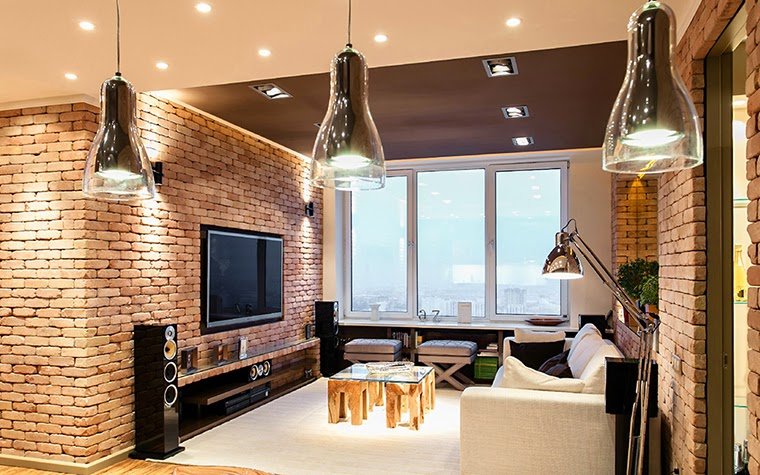
Good lighting can make a studio apartment feel twice as large. Wrong lighting can make it feel like a closet.
A Three-Layer Lighting Strategy
Layer 1 — Ambient light: This is your primary room light. Pick ceiling lights or track lighting that disperses light throughout the space. Avoid dim, single-bulb fixtures.
Layer 2 — Task light: This is focused light for your work zone. A good desk lamp with adjustable brightness is a must-have for long work sessions and late-night projects.
Layer 3 — Accent light: These are the lights that bring mood and personality. LED strips beneath shelves, fairy lights by the bed, or a small table lamp in the corner. These make the space feel warm and intentional.
Pro tip: Use mirrors strategically. A big mirror on one wall bounces light around the room and creates the illusion of depth. It actually makes the room look larger.
Natural light is always the best option. If your studio has windows, don’t put furniture in front of them. Position your desk close to a window to take advantage of daylight during work hours.
Hack #8 — Digitize Everything You Can
Physical stuff takes up physical space. Simple rule.
As a digital nomad, you’re already aware of the importance of traveling light. Apply that same mentality to your living space.
Going Paperless and Clutter-Free
Digitize all your vital records and save them to the cloud. Keep everything organized digitally using apps like Google Drive, Dropbox, or Notion.
Things you can digitize or get rid of:
- Books → E-reader or digital library
- Notebooks → Digital notes apps (Notion, Obsidian, GoodNotes)
- Magazines → Digital subscriptions
- Paper files → Scanned PDFs in cloud storage
- CDs/DVDs → Streaming services
- Business cards → CamCard or LinkedIn
The less paper and physical media you have, the more breathing room you create. Every item you remove is space you reclaim.
This is key when you’re moving between cities or countries. A lean, digital-first approach allows you to pack up and leave in hours — not days.
Hack #9 — Optimize Your Kitchen for Minimal Footprint
Kitchen clutter is a fact of life, and in a studio apartment, a messy kitchen affects your entire living and working environment.
Not every kitchen gadget in existence is a must-have. You want a streamlined, purposeful kitchen setup.
The Minimalist Nomad Kitchen Setup
Look for versatile tools that do more than one job. A good cast iron pan can sear, bake, and fry. An Instant Pot can replace a slow cooker, rice cooker, and pressure cooker all in one.
Stackable and foldable kitchen essentials:
| Item | Space-Saving Feature |
|---|---|
| Collapsible colander | Folds flat for easy storage |
| Nesting bowl set | Stacks into one compact unit |
| Foldable cutting board | Hangs on wall or stores flat |
| Compact coffee maker | Takes up minimal counter space |
| Magnetic spice rack | Mounts on fridge or wall |
Use your vertical wall space in the kitchen too. A magnetic knife strip mounted on the wall eliminates the need for a knife block on the counter. Hooks beneath cabinets can hold mugs or utensils.
Keep counters as clear as possible. An uncluttered counter opens up a small kitchen considerably.
Hack #10 — Build a Morning and Evening Reset Routine
This one isn’t about furniture or tech. It’s about habits.
The ultimate space hack is keeping your space organized every single day.
The 10-Minute Reset That Can Change Everything
Take 10 minutes at the end of each work day to reset your studio. Organize items and return them to where they belong. Clear your desk. Fold your blanket. Wash the dishes.
It sounds simple. But when you live and work in the same space, this reset serves as a mental division between your working hours and your personal time.
Morning reset (5 minutes):
- Make the bed
- Clear the kitchen counter
- Open the curtains
- Put away anything left out from the night before
Evening reset (10 minutes):
- Clear and wipe down your desk
- Put all tech gear in its designated space
- Tidy the kitchen
- Lay out whatever you’ll need for the next morning
This routine keeps your studio feeling intentional rather than chaotic. It’s the difference between a space that drains you and one that revives you.
Hack #11 — Make Your Mark (Even If It’s Temporary)
This is the hack most digital nomads miss — and it’s a mistake.
When you know you’ll be somewhere for only a few months, it’s easy to skip making your space feel like home. But a space that feels like yours is a space where you’ll do your best work and get your best rest.
How to Turn a Rental Into a Home Without Damaging It
You don’t have to hammer holes in the wall or invest in expensive furniture. All you need is a little personality.
Renter-friendly personalization ideas:
- Command strips — Hang pictures, artwork, or a whiteboard without damaging walls
- Plants — Two small potted plants will instantly add life and warmth
- A thoughtful scent — A candle or diffuser makes the space feel intentional
- Your own pillow and blanket — Familiar textures help your brain relax
- One piece of meaningful art — Even a printed photo in a clip frame makes a difference
- String lights — Warm, cozy, and completely removable
According to research from the University of Exeter, people are significantly more productive and satisfied in spaces they feel personally connected to and have some control over.
You’re not just passing through. This is your home — for now. Treat it that way.
How These Hacks Work Together
No one hack here is going to transform your studio. But stack multiple ones together, and the effect is dramatic.
Here is a quick visual of what a complete smart studio setup might look like:
| Zone | Key Hacks Applied |
|---|---|
| Work corner | Fold-down desk, monitor arm, cable management, task lighting |
| Sleeping area | Murphy bed or daybed, under-bed storage, blackout curtain divider |
| Kitchen | Vertical storage, minimal tools, clear counters |
| Living area | Multi-use ottoman, nesting tables, accent lighting, plants |
| Entryway | Over-door organizer, wall hooks, small mirror |
When each zone is intentional, the entire apartment functions like an exquisitely engineered machine.
Studio Apartment Space Hacks for Digital Nomads: FAQs
Q: How can I make a distinction between work and sleep in a studio apartment? Use physical or visual dividers such as curtains, bookshelves, or rugs. Set specific zones for work and sleep, and hold to them. Even a fold-down desk that’s folded away at the end of the day contributes to this mental separation.
Q: What’s the most important piece of furniture for a studio apartment? What makes the most difference is a multi-functional bed setup — something like a Murphy bed, daybed, or a bed with under-storage. It’s the biggest item in the room, so optimized, it frees up the most space.
Q: How can I make a studio apartment feel larger without renovating? Absolutely. Use mirrors, light colors, vertical storage, and minimal floor furniture. Simply adding great lighting and clear counters can make a huge visual difference with no renovations at all.
Q: How can digital nomads keep their studio apartments organized during long stays? The single greatest tool is the 10-minute daily reset routine. Coupled with specific spots for each item (“a place for everything and everything in its place”), it stops clutter from accumulating over time.
Q: What’s the ideal desk setup for working in a studio apartment? Consider a wall-mounted fold-down desk or a small L-shaped desk in the corner. Add a monitor arm, wireless peripherals, and solid cable management for a clean, productive workspace.
Q: Are these hacks only useful for small apartments? Not at all. Many of these hacks work in any size space. But they’re particularly impactful in studios, where every square inch of efficiency has a larger visible return.
The Bottom Line: Big Life in a Small Space
Living in a studio apartment as a digital nomad isn’t settling. Done right, it’s a superpower.
You learn to appreciate quality over quantity. You eliminate the things that slow you down. You build systems that help you live your life more fluidly.
These 11 studio apartment space hacks aren’t just about stuffing more things into a small room. They’re about creating a space that supports how you really live and work.
Start with one or two hacks. See how they feel. Then layer in more over time. You do not have to change everything overnight.
Your studio is your headquarters. Make it count.