

A few years ago I walked into a studio apartment in a midrise building near King West in Toronto, and my first thought was: this person has done everything right and the room still feels wrong.
New sofa. Good rug. Decent lighting. The bed was made. There was art on the walls, not a lot, but some. The kitchen was clean. From a checklist perspective, nothing was missing. And yet standing in the doorway, I had the specific sensation of being in a hotel room. A nice hotel room, but a hotel room. Temporary. Unmemorable. A space that existed to be occupied rather than to be lived in.
The person who lived there had been in the apartment for almost two years.
I’ve thought about that visit more than once since then, because it crystallized something I’d been noticing across a lot of small-space projects: the hotel room problem isn’t really about what’s in a studio, it’s about what’s missing. And what’s missing is almost never furniture.
1. The Surface Problem Nobody Names Directly
Hotels are designed to be interchangeable. The whole point is that the room works for anyone who checks in, which means it works in a specific, neutral, personality-free way. Clean lines, no clutter, cohesive palette, no personal objects, everything wiped down and reset. That formula is good hospitality design. It’s the opposite of home design.
When a studio feels like a hotel, it’s usually because the person living there applied the same logic without realizing it. They edited out the clutter, which is correct and good. But they also edited out the personality, the specificity, the evidence that a particular human being with particular tastes and a particular life actually lives there.
The surfaces are the first tell. A hotel room has a nightstand with a lamp, a phone charging pad, and maybe a branded notepad. Nothing else. A home has a nightstand with a lamp, a half-read novel, a glass of water, the charger for the thing you’re actively using, and probably one item that makes no logical sense being there but has always just been there. The randomness isn’t disorder, it’s habitation. It’s the physical residue of a person moving through their day.
I’m not recommending clutter. Clutter in a studio is a real problem, and Studio Apartment Setup has covered the organizing side of that well. What I’m pointing at is the difference between an organized surface and a sterile one. An organized surface has things on it. A sterile surface has been emptied of everything that might reveal who you are.
2. Why the Furniture-First Approach Creates This Feeling
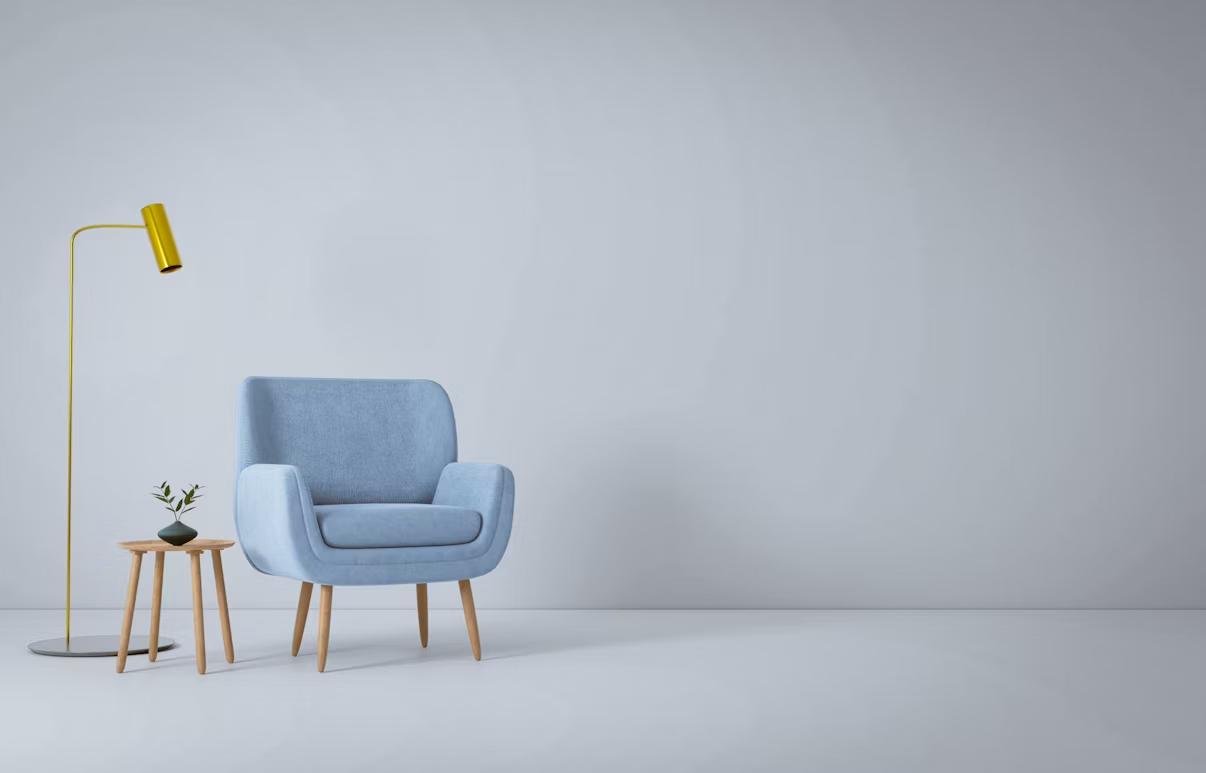
Most people set up a studio the same way. They start with the large pieces: bed, sofa, maybe a dining table. They find a rug. They add lighting. They hang some art. And then they stop, because it looks put-together, and they move on with their lives.
That sequence prioritizes furniture because furniture is the obvious, expensive, visible part of the project. And it’s not wrong to start there. But it ends too early.
The pieces that make a space feel inhabited rather than staged come after the furniture. They’re the things that take time to accumulate: the stack of cookbooks that actually gets used, the ceramic bowl near the front door that collects keys and coins and a lip balm, the plant that’s been in the same corner for eight months and has grown in a direction toward the light, the framed photo that’s slightly crooked because it always ends up slightly crooked. None of these things are design purchases. They arrive through living.
The problem is that in a small space, people suppress this accumulation. They’re worried about clutter, they’re worried about things feeling cramped, they’ve read enough minimalism content to feel guilty about objects with no “purpose.” So they curate aggressively and end up with a room that looks designed but doesn’t feel lived in.
There’s a specific version of this I see a lot in studios where the person has taken real care with the aesthetic: every object is considered, everything is in its place, the palette is cohesive, and the room looks like it was photographed for a website. Which is to say: it looks like a photograph of a room, not a room. There’s no room for the slightly wrong thing, the imperfect placement, the thing that’s there because it’s always been there rather than because it was chosen.
3. What Hotels Actually Do That You Shouldn’t Copy
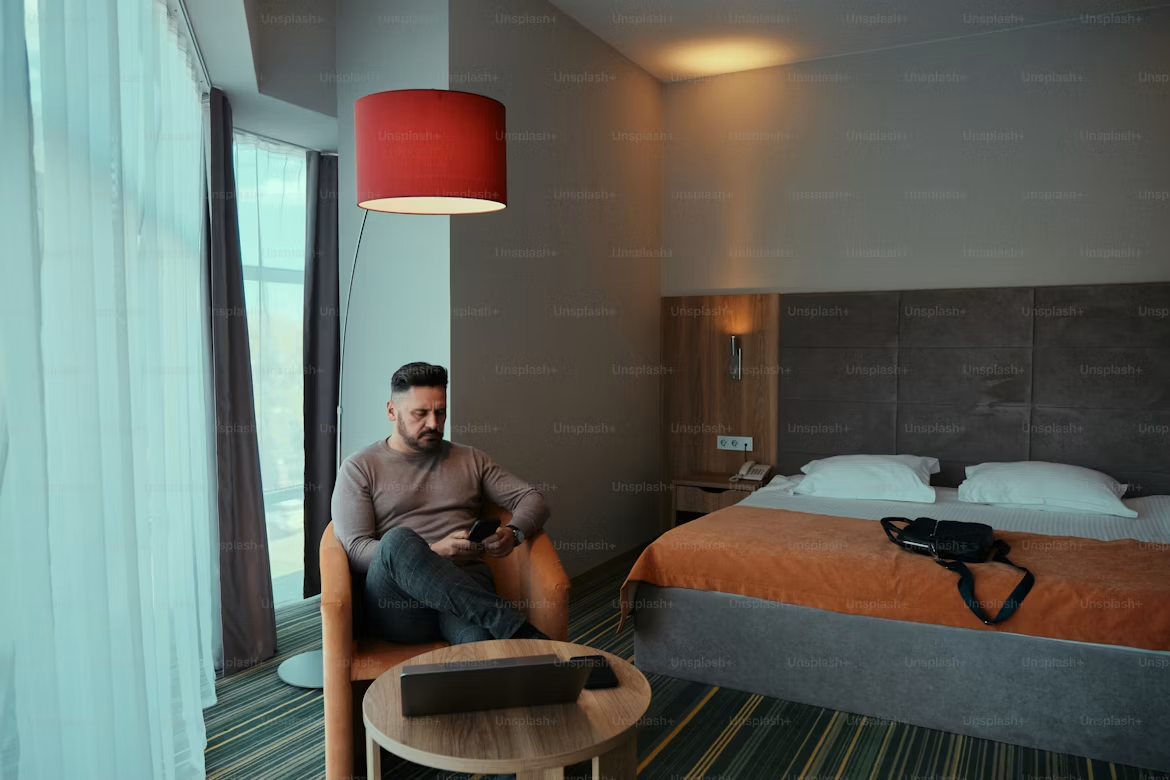
It’s worth being precise about what hotel design does well and what it doesn’t, because there’s a version of this conversation that concludes with “just make your studio look less like a hotel” without explaining what to actually change.
Hotels optimize for first impression and maintenance simplicity. A hotel room is designed to look its best in the first thirty seconds after someone opens the door. Everything after that is just functionality. The crisp bed, the empty surfaces, the matching lamps, the cohesive neutrals: all of that is first-impression design, engineered to photograph well and require minimal maintenance between occupants.
Home design, especially in a studio, has to optimize for something completely different. The thirty-second impression matters less than the three-hour impression, the feeling of being in the space for an evening, cooking, reading, unwinding, and having the room support that rather than resist it. Homes need to feel comfortable on a Tuesday night in February when you’ve been there all day and you’re going to be there all evening. Hotel rooms aren’t built for that. They’re built for arrival.
The specific hotel elements that migrate into studios and create the problem:
Quick-Reference: Hotel Habits vs. Home Habits in a Studio
| Hotel Room Logic | What It Creates in a Studio |
|---|---|
| All-neutral palette, no strong color | Calm but characterless; reads as unfinished |
| Surfaces completely empty | Feels staged, not lived in |
| Matching everything (lamps, pillows, frames) | Coordinated but impersonal |
| Art chosen to offend nobody | Forgettable; doesn’t reflect the resident |
| No books, plants, or personal objects visible | Visually correct but emotionally cold |
| Lighting functional only (overhead) | Flat and clinical, especially in evening |
| Bed as centerpiece with no personality | Dominant but not warm |
Any of those rows feel familiar?
The matching-everything trap is one I watch people fall into consistently. There’s nothing technically wrong with matching lamps on matching nightstands with matching frames on the wall above. It looks finished. But it looks finished in the same way a hotel suite looks finished, which is to say: ready for anyone, personal to no one. A mix of a ceramic table lamp on one side and a wall-mounted sconce on the other, in different shapes but a shared warm tone, reads as curated rather than purchased-as-a-set. That distinction matters more than it probably should.
4. The Specific Things That Make a Studio Feel Like Yours
I want to be concrete here because this conversation can dissolve into vague advice about “adding personality” that doesn’t actually help anyone decide what to do on a Saturday afternoon.
The objects that most reliably shift a studio from hotel-room to home-room are the ones that have a visible relationship to how the person in that space actually spends their time. A person who cooks a lot, really cooks, has a visible knife block or a wall-mounted magnetic strip, a few ceramic bowls that get used rather than displayed, a well-worn cookbook open somewhere. A person who reads has books in actual use somewhere, not just styled on a shelf. A person who makes things, whether that’s drawing or embroidery or building models, has some evidence of the making somewhere in the space.
None of this is decorating in the traditional sense. It’s closer to permission. Permission to let your space reflect that you do specific things in it, not just sleep and sit and look at screens.
Lighting is the other major factor and it’s consistently underestimated. Hotel rooms have switched overhead lighting because it’s functional and cheap to maintain. Real living requires layered light: a task lamp at the desk or beside the chair where you read, an ambient floor lamp for evenings, something warm and low near the bed. That layering is what changes the feel of a studio from eight in the morning (bright, functional, overhead fine) to nine at night (warm, contained, the overhead lights off and the lamps doing the work).
And here’s something small that makes a real difference: scent. Hotels have a scent. It’s usually clean and generic and faintly chemical. Your home should smell like you live there, like the food you make, the candles you burn, the plants you keep, the detergent you use. Scent is underused in studio setup conversations because it’s not visual, but it’s one of the fastest ways to shift how a space feels when you walk in.
For anyone working on the organizational side of making their studio feel less staged and more lived-in, the organizing section at Studio Apartment Setup is worth a read, particularly the pieces on visible surface management.
5. The Decor Mistake That Keeps Studios Feeling Generic
This one is specific, and it’s the one I have the strongest opinion about.
Mass-produced wall art from the same three online sources, the kind that shows up in approximately thirty percent of all studio apartments currently occupied by people under forty, is the single biggest contributor to the hotel room problem. Not because art from online retailers is inherently bad. But because the most popular options are popular precisely because they’re inoffensive to everyone, which means they’re personally meaningful to almost no one.
A large-format abstract in muted tones. A line-art print of a face or a figure. A typographic piece with a word or phrase. I’ve seen these in so many apartments, always in the same places, always in the same frames, that they’ve essentially become wallpaper. They read as “someone put art here” rather than “someone who cares about this particular thing lives here.”
The studios that feel most like homes are the ones where at least some of the art or objects on the walls are things the resident has a specific relationship to. A print from a gallery they visited. A poster from a show they went to. A photograph they took or had taken. Something framed from a trip. Even something handmade and imperfect. These things don’t have to be expensive or even particularly beautiful. They just have to be true.
The same principle applies to decorative objects. A mass-produced ceramic vase styled exactly the way the product photography shows it, next to a mass-produced tray arranged exactly as the styling suggests, next to a mass-produced candle in the recommended grouping, produces a space that looks correct and feels like a display at a home goods store. Mixing one of those with something old from a flea market and something personal from a trip produces a vignette that actually holds your eye.
For ideas on sourcing objects with character for a studio that doesn’t have a huge budget for decor, Studio Apartment Setup has some useful material on building a collected look without starting from scratch.
6. The Honest Reason This Happens and What to Actually Do About It
Most people who end up with a hotel-room studio aren’t making design mistakes. They’re making an understandable psychological move.
Moving into a studio, especially for the first time, can feel precarious. The space is small. The lease might be short. You might not know how long you’ll stay. So you hold back. You don’t fully commit. You buy the safe things, hang the safe art, keep the surfaces cleared, and keep the whole setup reversible because you haven’t decided yet whether this is really home or just somewhere you’re staying for now.
That ambivalence is what you’re seeing when a studio feels like a hotel. It’s not a design failure. It’s a commitment failure, and it’s completely understandable.
The resolution is just making a decision. Hang the thing you actually like, not the thing that goes with everything. Put the books where you’ll see them. Let the nightstand be a little full. Get the plant that needs tending. Cook something that makes the whole apartment smell like dinner.
The studio I visited near King West, I actually went back about four months later for a second project consultation and the same person had clearly shifted something in that time. The sofa was in the same place. Same rug. But there were books on the coffee table and a small cluster of plants near the window and a framed print above the bed that was clearly from somewhere specific, not from a grid of similar prints on a website. The room felt different. Not more expensive, not more decorated. Just more inhabited.
That’s the whole shift, honestly. Inhabited versus occupied. It doesn’t cost much. It mostly just requires deciding you’re actually home.
For more on how layout decisions affect how lived-in a studio feels, the layout guides over at Studio Apartment Setup approach the spatial side of the same problem.
FAQs
My studio is furnished (landlord’s furniture). Is there anything I can actually do to make it feel less generic? More than you’d think. Layered lighting is the fastest change: a floor lamp and a table lamp at different heights, both warm-toned, transform how a room feels in the evenings regardless of what furniture is in it. Textiles are next: a throw blanket on the sofa, bedding with texture and personality, a rug that’s yours rather than the landlord’s. Art and personal objects on the walls and surfaces do the rest. The underlying furniture matters less than what surrounds it.
I keep buying things to make my studio feel homier and it’s still not working. What am I missing? Buying things is usually the wrong diagnosis. Studios that feel like hotel rooms aren’t missing more objects, they’re missing the right objects: specifically, things that have a real connection to the person who lives there. More purchased decor in the same register as what’s already there won’t shift the feeling. One thing that’s genuinely yours, a print from a place you’ve been, an object with a story, a plant you’ve kept alive for six months, does more than a full cart of styled items.
Does paint color make a real difference for this hotel-room feeling? Yes, significantly. White and off-white walls are the default in most rental studios because they’re neutral and photograph well, which is the hotel logic applied to rental management. A warm paint color, even on just one wall, changes how the space feels in evening light and creates a sense of a specific, chosen environment rather than a generic one. If you can’t paint, warm-toned textiles, amber-bulb lamps, and wood-toned furniture do similar work.
How do I make a studio feel personal without it looking cluttered? The distinction is between meaningful objects and random accumulation. A studio can have a lot of things in it and feel curated if those things have a visual and personal logic. The things to edit out are the ones that are neither useful nor meaningful: the decorative items bought without thought, the duplicates, the things kept out of guilt. The things to keep visible are whatever reflects your actual life. Curated and personal aren’t opposites of each other. The hotel room is what happens when you optimize for only one.
I’ve lived here two years and it still feels temporary. Is that normal? It’s common, and it usually points to the commitment issue I wrote about above. Two years in and still treating the space as provisional is a real pattern, and it shows up in small choices: not drilling the holes for the art, not buying the rug because you’re not sure, keeping the boxes in the closet because you might need to move quickly. The space picks that up and reflects it back. The fix is a decision, not a purchase. Decide you live there. The room tends to follow.

3 thoughts on “The Real Reason Your Studio Feels Like a Hotel Room”