

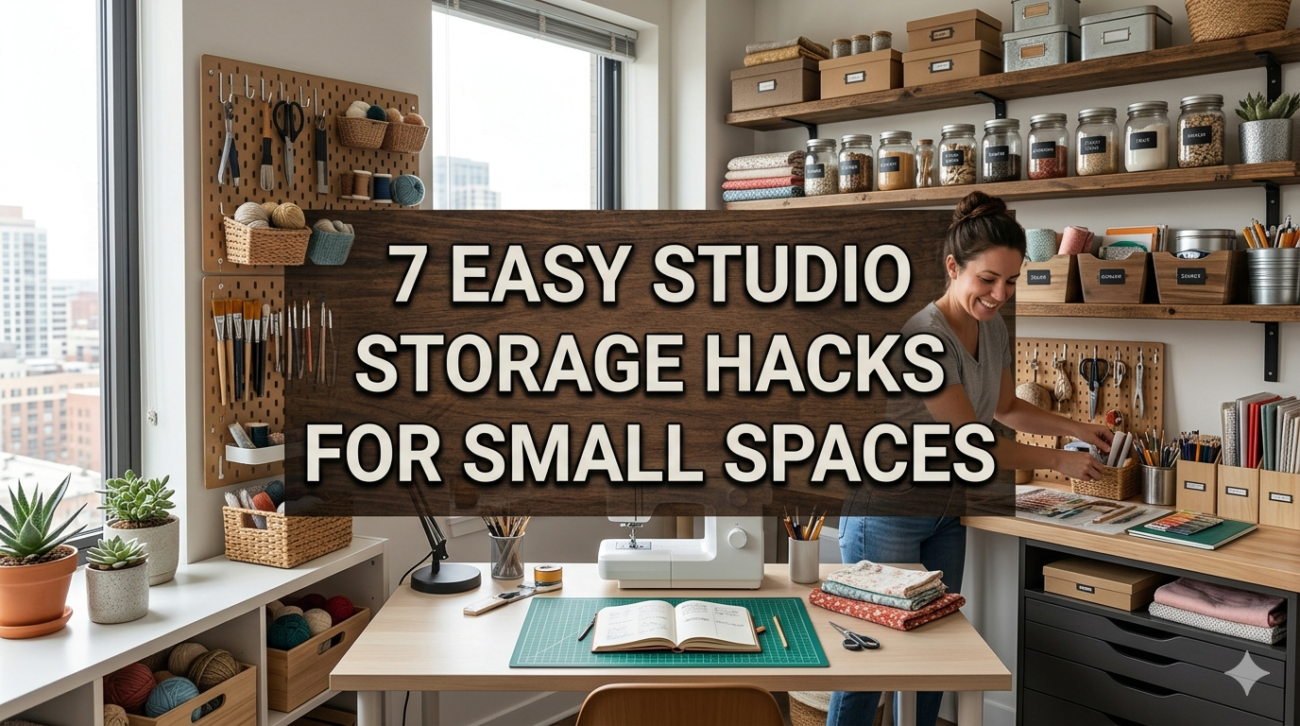
Small studio apartments have a reputation for one thing: not enough storage. But in reality, the issue is rarely the amount of space—it’s how that space is used. Most people treat storage as an afterthought, something to “fit in” after decorating. In small homes, it needs to be the foundation of everything.
Good storage doesn’t just hide clutter. It changes how your space feels, how you move through it, and even how relaxed your mind is when you’re at home. When everything has a place, your studio stops feeling chaotic and starts feeling intentional.
This guide breaks down seven practical storage hacks that actually work in real small studios. Not decorative ideas. Not unrealistic Pinterest setups. Just usable systems, supported with tables, comparisons, and real-life structure.
hack 1: think in vertical layers, not floor space
Most storage problems in studios come from ignoring vertical space. People tend to “fill the floor” first and only later realize they’ve run out of room. The solution is simple but powerful: build upward instead of outward.
Walls are often underused storage real estate.
Vertical storage options:
- tall shelving units
- wall-mounted shelves
- hanging organizers
- pegboards
- over-the-door storage systems
Here’s how vertical storage compares to traditional floor storage:
| Storage Type | Floor Space Used | Storage Capacity | Accessibility | Visual Impact |
|---|---|---|---|---|
| Low cabinets | High | Medium | Easy | Heavy |
| Tall shelving | Low | High | Medium | Balanced |
| Wall shelves | None | Medium | Easy | Light |
| Stackable storage | Low | High | Medium | Organized |
A vertical system works best when you divide your wall into “storage zones”:
| Wall Zone Height | Suggested Use |
|---|---|
| Floor–3 ft | Heavy items, bins |
| 3–6 ft | Daily use items |
| 6 ft and above | Seasonal or decorative storage |
One mistake people make is overloading shelves at eye level. That creates visual stress. Instead, mix functional storage with empty breathing space.
Simple rule: store upward, but decorate lightly.
hack 2: under-bed storage is your hidden inventory
If you’re not using the space under your bed, you’re ignoring one of the largest storage areas in your studio. In most small apartments, this single zone can hold up to 30–40% of your unused belongings.
But under-bed storage only works if it’s organized—not just shoved items.
Types of under-bed storage:
| Storage Type | Best For | Visibility | Efficiency |
|---|---|---|---|
| Rolling drawers | Clothes, linens | Hidden | High |
| Storage bins | Seasonal items | Hidden | Medium |
| Vacuum bags | Bulky clothing | Hidden | Very high |
| Bed with drawers | Everyday essentials | Semi-open | Very high |
A useful organization method is category zoning under the bed:
| Section | Contents |
|---|---|
| Head side | Daily clothing |
| Middle | Seasonal clothes |
| Foot side | Extra bedding / linens |
Another smart trick: label everything clearly. If you can’t see it, you should still know what it is instantly.
Common mistake: dumping random items under the bed without grouping. That turns hidden storage into lost storage.
hack 3: multifunctional furniture is storage disguised as design
In small studios, furniture should never have just one purpose. If it does, it’s wasting space. Multifunctional furniture turns everyday items into hidden storage systems.
Examples include:
- beds with drawers
- sofas with internal storage
- ottomans that open
- coffee tables with compartments
- benches with hidden bins
Here’s a comparison:
| Furniture Type | Storage Function | Seating/Use Function | Space Efficiency |
|---|---|---|---|
| Regular sofa | None | Yes | Low |
| Storage sofa | Internal storage | Yes | High |
| Standard bed | None | Sleeping | Low |
| Storage bed | Drawers below | Sleeping | Very high |
Best use cases:
| Furniture Item | Ideal Storage Use |
|---|---|
| Ottoman | Blankets, books |
| Coffee table | Remotes, chargers |
| Bed frame | Clothing, bedding |
| Sofa | Seasonal items |
The key idea: every large object should hide smaller objects.
This reduces visible clutter dramatically, even if your total belongings stay the same.
hack 4: use “zones inside zones” for micro-organization
Most people think of storage in big categories like “kitchen,” “bedroom,” or “living area.” But in a studio, that’s not enough. You need micro-zones inside each area.
Think of it like nesting boxes: big space → smaller zones → even smaller containers.
Example breakdown:
| Main Area | Micro-Zone | Storage Purpose |
|---|---|---|
| Living space | Sofa side | Daily essentials |
| Living space | Coffee table | Small items |
| Work desk | Drawer section | Office supplies |
| Kitchen corner | Counter tray | Frequently used items |
Visual structure example:
Living Area
├── Sofa zone
│ ├── Blanket storage
│ ├── Book basket
├── Table zone
│ ├── Remote tray
│ ├── Charging dock
This structure reduces mental clutter as well. You stop “searching the room” and start knowing exactly where things belong.
Common mistake: treating all storage equally. Not everything needs equal accessibility.
Rule of thumb:
- daily items = easy access
- weekly items = medium access
- seasonal items = hidden storage
hack 5: wall hooks and rails instead of bulky furniture
One of the most underrated storage solutions in small studios is wall-mounted hooks and rails. They replace entire pieces of furniture in many cases.
Hooks are flexible, cheap, and highly efficient.
What you can hang:
- bags
- jackets
- kitchen utensils
- headphones
- accessories
- towels
Comparison:
| Storage Method | Space Used | Flexibility | Cost | Accessibility |
|---|---|---|---|---|
| Closet system | High | Low | High | Medium |
| Wall hooks | None | Very high | Low | Very high |
| Shelf system | Medium | Medium | Medium | High |
Best placement strategy:
| Location | Hook Use Case |
|---|---|
| Entryway | Bags, keys, jackets |
| Kitchen wall | Utensils, pans |
| Bedside wall | Accessories, headphones |
| Bathroom | Towels, toiletries |
A rail system adds even more flexibility. You can move hooks, baskets, and holders depending on your needs.
Common mistake: overcrowding hooks. They should create order, not visual chaos.
hack 6: storage furniture that blends into walls
In small studios, visual space matters just as much as physical space. Bulky storage furniture can make a room feel smaller even if it is technically organized.
The solution is blending storage into walls and surfaces.
Examples:
- floating cabinets
- built-in shelves
- wall-integrated desks
- hidden storage panels
Here’s a comparison of visual impact:
| Storage Type | Visual Weight | Space Efficiency | Aesthetic Feel |
|---|---|---|---|
| Freestanding unit | Heavy | Medium | Busy |
| Wall-mounted unit | Light | High | Clean |
| Built-in storage | Very light | Very high | Seamless |
A well-designed wall storage system creates “invisible organization.”
Example layout:
| Wall Section | Storage Type |
|---|---|
| Upper wall | Floating shelves |
| Middle section | Mounted cabinets |
| Lower section | Hidden drawers |
This method works especially well in studio living rooms where visual calmness matters.
hack 7: declutter through “rotation storage”
One of the biggest problems in small studios is not storage—it’s too many active items at once. Rotation storage solves this by limiting what is visible or accessible at any given time.
Instead of keeping everything out, you rotate items based on use.
How it works:
- store off-season items separately
- rotate clothes monthly/seasonally
- rotate decor items every few weeks
- rotate kitchen tools based on usage
Rotation system example:
| Category | Active Items | Stored Items |
|---|---|---|
| Clothing | 30–40% | 60–70% |
| Kitchen tools | 50% | 50% |
| Decor items | 60% | 40% |
Storage cycle chart:
Month Cycle:
Week 1 → active setup
Week 2 → minor rotation
Week 3 → storage swap
Week 4 → declutter review
Benefits:
- reduces visible clutter
- keeps space feeling fresh
- prevents over-accumulation
Common mistake: treating storage as permanent dumping. Rotation keeps things intentional.
bonus: full studio storage structure example
Here’s how all seven hacks combine into one system:
| Area | Storage Strategy Applied |
|---|---|
| Bedroom | Under-bed + vertical shelving |
| Living room | Multifunction furniture + wall hooks |
| Kitchen | Rail system + micro-zones |
| Entryway | Hooks + compact vertical cabinet |
| Entire home | Rotation storage system |
Overall storage balance:
| Storage Type | Percentage of System |
|---|---|
| Hidden storage | 40% |
| Vertical storage | 25% |
| Furniture storage | 20% |
| Wall storage | 15% |
closing thoughts
Small studio storage is not about squeezing things into tight corners. It’s about designing systems that reduce friction in daily life. When storage is intentional, your home feels larger, calmer, and easier to live in.
The goal isn’t to hide everything—it’s to make everything make sense.
Once your storage starts working for you instead of against you, even a small studio can feel surprisingly spacious.
frequently asked questions
- what is the most effective storage hack for very small studios?
Under-bed storage combined with vertical shelving is usually the most impactful because it uses otherwise wasted space. - how do i avoid clutter in a small studio?
Use categories, limit visible items, and rotate belongings regularly instead of keeping everything out at once. - are storage furniture pieces worth it?
Yes, especially multifunctional ones like beds with drawers or sofas with storage. They reduce the need for extra furniture. - how can i store things without making my studio look crowded?
Use hidden storage, wall-mounted solutions, and neutral-colored storage boxes that blend into the environment. - how often should i declutter a studio apartment?
A light declutter once a month and a deeper review every season works best for maintaining balance. - what’s the biggest storage mistake in small spaces?
Not categorizing items properly. Random storage leads to “lost space” where items exist but cannot be efficiently accessed.