

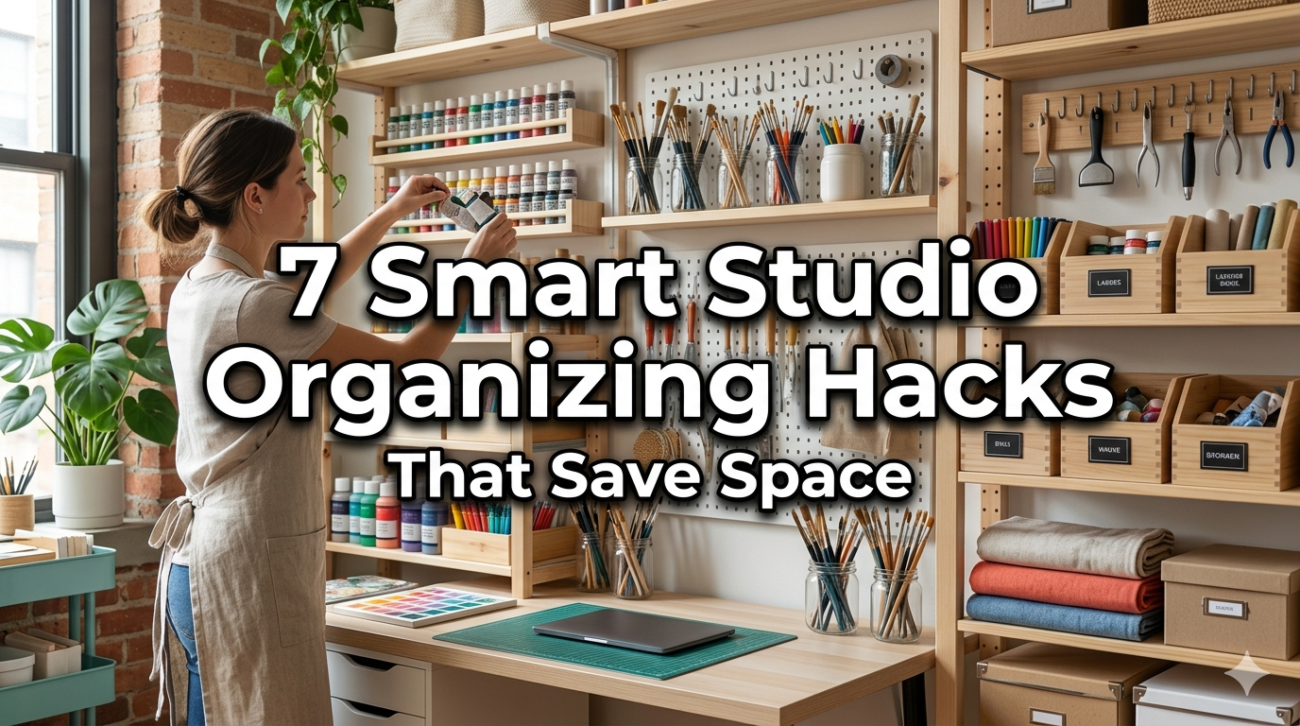
Small studio living has a certain charm—everything you need is within arm’s reach, and every corner has potential. But the reality is often less romantic: limited floor space, overflowing storage, and the constant feeling that things are closing in on you.
The good news is that a well-organized studio doesn’t require more space—it requires smarter use of the space you already have. With the right strategies, even the tiniest apartment can feel open, functional, and surprisingly luxurious.
This guide breaks down seven practical, realistic studio organizing hacks that actually save space without making your home feel sterile or over-minimal.
Quick Overview: Space-Saving Strategy Map
| Hack No. | Strategy | Primary Benefit | Difficulty Level |
|---|---|---|---|
| 1 | Vertical Storage Expansion | Maximizes wall space | Easy |
| 2 | Multi-Functional Furniture | Reduces item count | Medium |
| 3 | Hidden Storage Zones | Eliminates visible clutter | Medium |
| 4 | Zone-Based Layout System | Improves flow & usability | Medium |
| 5 | Foldable & Collapsible Items | Frees floor space | Easy |
| 6 | Underutilized Space Optimization | Unlocks “dead zones” | Hard |
| 7 | Daily Reset System | Maintains long-term order | Easy |
1. Vertical Storage Expansion: Think Up, Not Out
One of the most common mistakes in studio apartments is ignoring vertical space. Most people organize only at eye level and below, leaving entire walls underused.
Vertical storage transforms walls into functional storage zones.
Practical Applications:
- Tall shelving units instead of wide ones
- Wall-mounted baskets in kitchens and bathrooms
- Hanging organizers behind doors
- Pegboards for flexible storage
Vertical Storage Impact Chart
| Storage Type | Floor Space Used | Storage Capacity | Efficiency Score |
|---|---|---|---|
| Floor Cabinets | High | Medium | 6/10 |
| Wall Shelves | None | High | 9/10 |
| Pegboards | None | Adjustable | 10/10 |
| Hanging Racks | None | Medium | 8/10 |
Key Insight:
Vertical storage doesn’t just add space—it changes your perception of what “storage” even is.
2. Multi-Functional Furniture: One Item, Many Roles
In a studio, every object should earn its place. Multi-functional furniture reduces clutter by combining several uses into one item.
Examples:
- Sofa beds that double as guest sleeping space
- Coffee tables with storage compartments
- Ottomans that open for hidden storage
- Fold-out desks mounted on walls
Furniture Efficiency Table
| Furniture Type | Function 1 | Function 2 | Space Saved |
|---|---|---|---|
| Sofa Bed | Seating | Sleeping | High |
| Storage Ottoman | Seating | Storage | Medium |
| Wall Desk | Work surface | Fold-away storage | High |
| Extendable Table | Dining | Workspace | Medium |
Key Insight:
The fewer “single-purpose” items you own, the more breathable your space becomes.
3. Hidden Storage Zones: Use What You Don’t See
Hidden storage is about turning overlooked or unused areas into functional space.
Common Hidden Storage Areas:
- Under the bed
- Inside stairs (if lofted studio)
- Above cabinets
- Behind mirrors or wall panels
- Inside benches
Hidden Storage Effectiveness Chart
Under Bed         ██████████ 90%
Above Cabinets    ████████   80%
Behind Doors      ███████     70%
Furniture Base    ██████      60%
Wall Panels       ████████    85%
Tips:
- Use vacuum storage bags for seasonal items
- Install sliding drawers under beds
- Add storage boxes labeled by category
Key Insight:
If you can’t see it, you don’t have to manage it daily—this reduces visual stress significantly.
4. Zone-Based Layout System: Create Invisible Boundaries
Even in a single-room studio, you can create “zones” that help your space feel structured.
Typical Studio Zones:
- Sleeping zone
- Work zone
- Cooking zone
- Relaxation zone
Example Studio Layout Table
| Zone | Key Furniture | Storage Type | Priority Level |
|---|---|---|---|
| Sleep | Bed / Sofa bed | Under-bed bins | High |
| Work | Desk / chair | Wall shelves | High |
| Kitchen | Counter space | Cabinet organizers | High |
| Living | Rug / seating | Hidden storage | Medium |
Visual Flow Concept:
[ Sleep Area ] ---- [ Work Area ]
       |                 |
[ Storage Wall ] -- [ Kitchen Zone ]
Key Insight:
Zones reduce mental clutter because your brain associates areas with specific activities.
5. Foldable & Collapsible Items: Space That Appears When Needed
Foldable items are one of the most powerful space-saving tools because they disappear when not in use.
Examples:
- Folding chairs
- Collapsible dining tables
- Retractable drying racks
- Wall-mounted ironing boards
Foldable Item Efficiency Table
| Item | When Expanded | When Stored | Space Gain |
|---|---|---|---|
| Folding Table | Dining/work | Flat against wall | High |
| Folding Chair | Seating | Stackable | Medium |
| Drying Rack | Laundry use | Folded | High |
| Wall Desk | Work surface | Hidden panel | Very High |
Key Insight:
If something is only used occasionally, it should not permanently occupy space.
6. Optimize “Dead Spaces”: The Forgotten Corners
Dead spaces are areas that exist physically but serve no function.
Common Dead Spaces:
- Corners behind doors
- Narrow gaps between furniture
- Above refrigerator
- Under sinks
Optimization Chart
| Dead Space | Best Use | Storage Type |
|---|---|---|
| Corner gaps | Slim shelves | Vertical racks |
| Above fridge | Pantry storage | Bins |
| Under sink | Cleaning supplies | Dividers |
| Behind doors | Hanging storage | Hooks |
Example Improvement Flow:
Before:
- Empty corners
- Cluttered counters
After:
- Slim shelving units in corners
- Hanging organizers on doors
Key Insight:
Small unused spaces add up to large storage potential when combined.
7. Daily Reset System: The Real Secret to Long-Term Order
Even the best-organized studio fails without maintenance. The daily reset system keeps clutter from accumulating.
10-Minute Reset Routine:
- Put items back in assigned zones
- Clear surfaces
- Reset kitchen counters
- Fold and store visible fabrics
- Quick floor sweep
Weekly Reset Add-On:
- Rearrange misplaced items
- Check hidden storage bins
- Re-evaluate clutter hotspots
Habit Impact Chart
| Habit Type | Time Needed | Clutter Reduction |
|---|---|---|
| Daily Reset | 10 min | 70% |
| Weekly Reset | 30 min | 90% |
| Monthly Declutter | 2 hours | 100% refresh |
Key Insight:
Organization is not a one-time project—it’s a small daily system.
Combined Studio Space Optimization Score
Here’s how each hack contributes to overall space efficiency:
Vertical Storage        ██████████ 95%
Multi-Functional Furn.  █████████  90%
Hidden Storage          █████████  88%
Zone System             ████████   85%
Foldable Items          █████████  90%
Dead Space Use          ████████   82%
Daily Reset System      ██████████ 96%
Final Thoughts
A well-organized studio isn’t about perfection—it’s about intention. Every square foot should either serve a purpose or support a purpose indirectly.
When you combine vertical thinking, hidden storage, flexible furniture, and daily maintenance, even the smallest apartment can feel open, calm, and highly functional.
Space isn’t just physical—it’s mental. And organizing your studio is ultimately about giving yourself room to breathe.
FAQs
1. What is the best first step in organizing a studio apartment?
Start by decluttering and identifying your “zones.” Without reducing excess items first, no system will fully work.
2. How do I make a small studio look bigger?
Use vertical storage, light colors, mirrors, and multi-functional furniture to reduce visual clutter.
3. What furniture should I avoid in a studio?
Avoid oversized, single-purpose furniture like large entertainment units or bulky dining sets.
4. How often should I reorganize my studio?
A quick daily reset and a deeper weekly organization check are ideal for maintaining order.
5. Where should I store seasonal items?
Use under-bed storage, vacuum-sealed bags, or high wall cabinets for items not needed daily.
6. Is minimalism necessary for studio living?
Not strictly, but reducing unnecessary items makes organization significantly easier and improves space efficiency.