

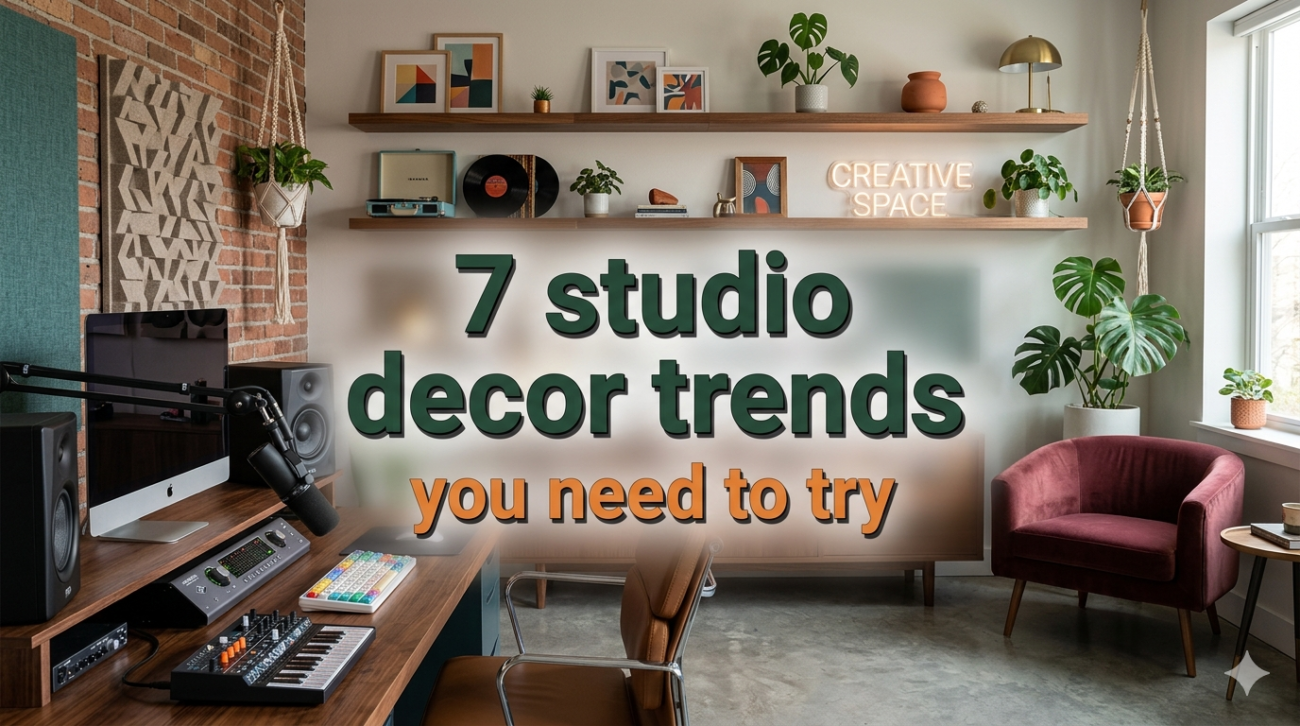
Studio living has changed a lot in recent years. What used to be seen as a “temporary small space” has become a design playground where creativity matters more than square footage. Designers and renters alike are rethinking how compact homes can feel stylish, functional, and personal without requiring major renovations.
The interesting shift is this: studio decor is no longer about making a small space “work.” It’s about making it feel intentional. Every corner has a purpose, every object contributes to mood, and every design choice influences how large, calm, or dynamic the space feels.
Below are seven powerful studio decor trends that are shaping modern small-space living. These are not fleeting aesthetics—they’re practical approaches that can transform how a studio functions and feels.
- warm minimalism with soft neutrals
Minimalism is still alive, but it has softened. The stark white, ultra-empty aesthetic has evolved into something warmer, more livable, and emotionally grounded. This trend is often called warm minimalism.
Instead of sterile white walls and sharp contrasts, you’ll see beige, sand, clay, soft taupe, and muted earth tones. The idea is to keep simplicity while removing emotional coldness.
why it works in studios
Small spaces can feel harsh when over-simplified. Warm minimalism avoids that by introducing subtle texture and tonal variation while still keeping clutter under control.
key features of warm minimalism
- soft neutral color palettes
- natural materials like wood and linen
- low-contrast decor
- uncluttered surfaces
- gentle lighting instead of harsh brightness
color palette guide
| Color Type | Shades Used | Emotional Effect |
|---|---|---|
| Base tones | Beige, ivory, cream | Calm and spacious |
| Accent tones | Terracotta, olive, sand | Warmth and grounding |
| Contrast tones | Soft black, charcoal | Structure and depth |
how to apply it instantly
Replace pure white bedding with off-white linen. Add a wooden side table instead of metal. Introduce a textured rug in soft beige tones. The goal is subtle warmth, not color overload.
instant impact
The space immediately feels more “inhabitable” and less like a blank box. It becomes emotionally softer while still visually clean.
- biophilic studio design (bringing nature indoors)
Biophilic design is the integration of natural elements into indoor spaces. In studios, it has become one of the strongest trends because it improves both aesthetics and mental well-being.
This isn’t just about adding plants—it’s about creating a connection to natural systems.
core elements of biophilic decor
- indoor plants of different heights
- natural textures (wood, stone, rattan)
- organic shapes
- daylight optimization
- nature-inspired patterns
plant placement strategy
| Studio Area | Plant Type | Purpose |
|---|---|---|
| Corner space | Tall plant | Vertical balance |
| Desk | Small succulent | Focus and freshness |
| Shelf | Hanging plant | Soft visual layering |
| Window area | Sun-loving plants | Light enhancement |
why it transforms studios quickly
Plants introduce movement, color variation, and softness. In a small room, even two or three well-placed plants can change how the entire space feels.
extra layer: natural materials
Swap plastic or synthetic decor with woven baskets, stone trays, or wooden organizers. This reinforces the natural theme without overcrowding the space.
- multifunctional furniture design
In studio living, furniture cannot be passive. Every piece must earn its place. That’s why multifunctional furniture is not just a trend—it’s a necessity that has evolved into a design philosophy.
Modern multifunctional pieces are also more stylish than before. They don’t look like compromises anymore.
popular multifunctional pieces
- sofa beds with storage
- foldable dining tables
- ottomans with hidden compartments
- wall-mounted desks
- nesting tables
functionality breakdown chart
| Furniture Type | Primary Function | Secondary Function | Space Benefit |
|---|---|---|---|
| Sofa bed | Seating | Sleeping | Saves bedroom space |
| Storage ottoman | Seating | Storage | Reduces clutter |
| Foldable table | Dining | Work surface | Flexible layout |
| Wall desk | Workspace | Fold-away storage | Frees floor space |
design principle
The goal is not to reduce furniture—it’s to increase utility per item.
how to apply this trend
Replace at least one single-purpose item with a dual-purpose one. Even a storage bench at the foot of the bed can dramatically improve organization.
instant impact
The room feels less crowded without actually removing much. Space “appears” to expand because functions are layered instead of separated.
- textured layering for depth
Flat spaces feel small. Even if a studio is organized, it can still feel visually lifeless without texture. That’s why textured layering has become a major decor trend.
It focuses on combining different tactile surfaces to create depth and richness.
key texture categories
- soft textures (fabric, cushions, rugs)
- rough textures (stone, brick, jute)
- smooth textures (glass, polished wood)
- matte vs glossy contrasts
texture layering map
| Layer Level | Materials Used | Purpose |
|---|---|---|
| Base layer | Rug, flooring | Foundation comfort |
| Middle | Sofa, curtains | Soft structure |
| Top layer | Cushions, throws | Detail and warmth |
| Accent | Metal, glass decor | Visual contrast |
how it changes perception
When textures vary, the eye moves more naturally across the room. This reduces visual fatigue and makes the space feel more “designed” rather than flat.
simple implementation tips
Add a woven rug over plain flooring. Mix linen cushions with velvet ones. Place a ceramic vase next to a wooden tray. These contrasts matter more than adding new furniture.
instant impact
The studio feels richer, even if nothing new is added—just layered differently.
- bold color zoning and accents
While minimalism dominates studios, color is making a controlled comeback. Instead of painting entire rooms in bold shades, designers are using color zoning and accent strategies.
This trend is about precision, not excess.
how color zoning works
Color is assigned to specific zones rather than the whole room. For example, a reading corner might have a deep green wall, while the sleeping area remains neutral.
color zoning strategy table
| Zone | Suggested Color | Effect |
|---|---|---|
| Sleeping area | Soft neutrals | Calm and restful |
| Work area | Muted blue/grey | Focus and clarity |
| Relax zone | Olive, terracotta | Warmth and comfort |
| Accent wall | Deep green/navy | Depth and identity |
accent use principles
- use one bold color per zone
- keep surrounding tones neutral
- repeat accent color in small decor items
why it works in studios
Color helps define space without physical walls. It creates psychological separation between functions.
instant impact
The studio suddenly feels structured and intentional rather than visually flat.
- vintage-modern fusion styling
One of the most interesting shifts in studio decor is the return of vintage pieces blended with modern design. This mix creates personality, warmth, and uniqueness.
Instead of matching everything, the trend embraces contrast.
core idea
A modern sofa paired with a vintage wooden table. A sleek lamp next to an old ceramic vase. The contrast tells a story.
mixing guideline chart
| Modern Element | Vintage Pairing | Result |
|---|---|---|
| Minimal sofa | Antique coffee table | Balanced contrast |
| Glass decor | Rustic wood shelf | Warm industrial feel |
| LED lighting | Retro lamp | Character layering |
why it works emotionally
Modern design can feel impersonal. Vintage pieces add history and identity, making the space feel lived-in rather than staged.
how to apply it
Start with one vintage piece. Let it stand out. Build modern elements around it, not the other way around.
instant impact
The studio gains personality immediately. It feels curated instead of purchased as a set.
- curved and soft-edge furniture design
Sharp edges are slowly disappearing from modern studio interiors. Curved furniture has become a dominant trend because it makes small spaces feel more fluid and less rigid.
Curves guide movement naturally and reduce visual tension.
common curved elements
- rounded sofas
- circular coffee tables
- arched mirrors
- oval rugs
- curved lighting fixtures
shape impact comparison
| Shape Type | Visual Effect | Spatial Feeling |
|---|---|---|
| Sharp edges | Structured, rigid | More compact feel |
| Curved shapes | Soft, flowing | More open feel |
why curves matter in small spaces
In tight layouts, sharp edges can feel restrictive. Curves create smoother visual flow, making it easier for the eye to move around the room.
design tip
Pair curved furniture with soft lighting to amplify the fluid effect.
instant impact
The studio feels less boxy and more organic, even if the layout hasn’t changed.
integrated studio trend comparison chart
| Trend | Main Benefit | Effort Level | Visual Impact |
|---|---|---|---|
| Warm minimalism | Calm atmosphere | Low | High |
| Biophilic design | Natural freshness | Medium | High |
| Multifunctional furniture | Space efficiency | Medium | Very High |
| Textured layering | Visual depth | Low | High |
| Color zoning | Spatial definition | Medium | High |
| Vintage-modern fusion | Personality | Low–Medium | Very High |
| Curved furniture | Visual flow | Medium | High |
how to combine all 7 trends without overwhelming the space
The key is not to apply everything at once in equal measure. Instead, think of one dominant direction and supporting layers.
balanced approach model
- choose 1 primary trend (e.g., warm minimalism)
- add 2 secondary trends (e.g., textures + curves)
- use remaining trends in small accents
priority framework
| Priority Level | Design Elements |
|---|---|
| Primary | Color palette + layout |
| Secondary | Furniture + textures |
| Supporting | Plants, decor accents |
final thoughts
Studio decor is no longer about limitation—it’s about precision. These seven trends show that even the smallest space can feel layered, intentional, and expressive.
What matters most is not how many things are added, but how thoughtfully each element interacts with the rest. A studio becomes memorable not because it is full, but because it feels balanced.
FAQs
- which studio decor trend is easiest to start with
Warm minimalism is the easiest starting point because it only requires changing colors and simplifying decor. - how can I make a small studio look more expensive
Use layered lighting, statement pieces, and textured materials like linen, wood, and stone. - are plants necessary for studio decor trends
Not necessary, but highly effective. Even a few plants can significantly improve visual balance and mood. - what is the biggest mistake in studio decorating
Overcrowding the space with too many small decor items instead of using fewer impactful pieces. - can I mix multiple decor trends together
Yes, but keep one dominant style and use others as supporting layers to avoid visual confusion. - how often should I update studio decor
Minor updates can be seasonal, but major changes are typically needed only when your lifestyle or needs change.