

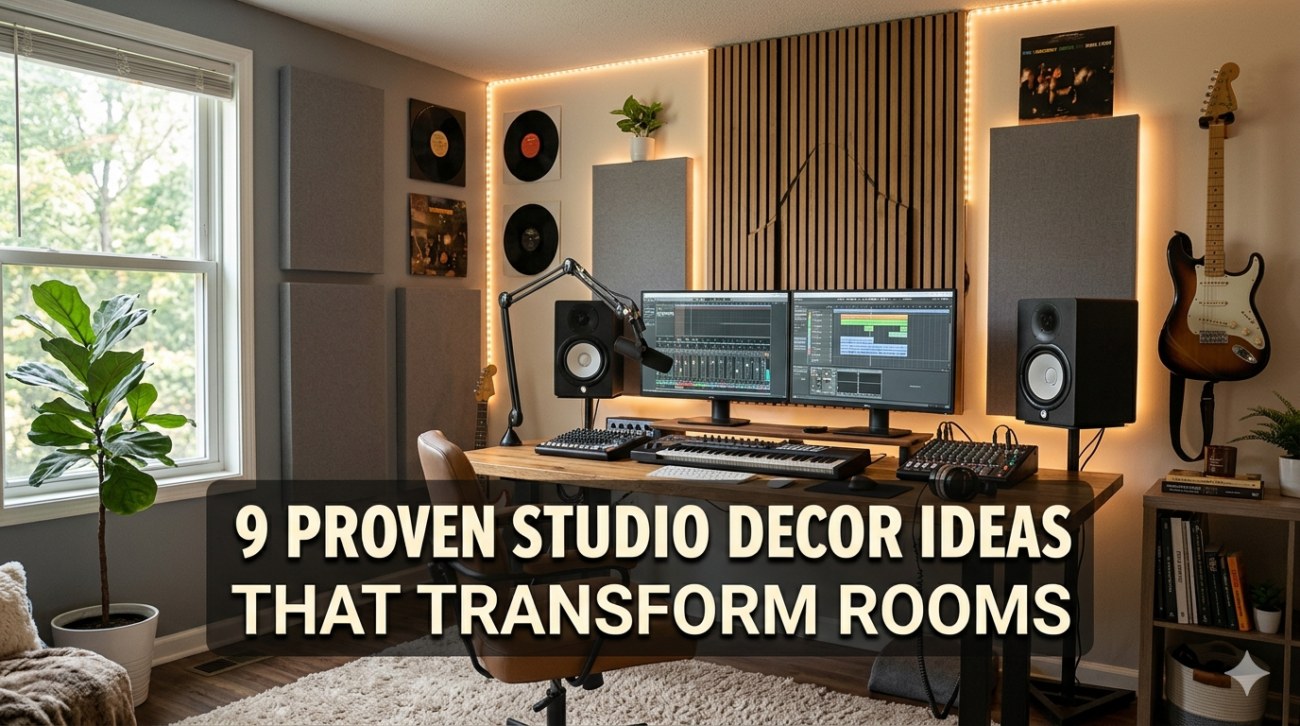
Studio apartments can feel challenging at first—limited space, open layouts, and multifunctional needs often create clutter or visual imbalance. But with intentional design choices, a studio can feel spacious, stylish, and deeply personal.
The key is not more space, but smarter use of what you already have.
Below are 9 proven studio decor ideas that consistently transform small rooms into functional, beautiful living spaces.
Idea 1: Create Zones Without Walls
One of the biggest studio design mistakes is treating the space as one large undefined room. Instead, divide it into functional zones.
Common zones include:
- Sleeping area
- Living area
- Work/study corner
- Dining space
You can define these zones using rugs, furniture placement, lighting, or curtains instead of physical walls.
Table: Zone Division Methods
| Method | Cost Level | Effectiveness | Flexibility |
|---|---|---|---|
| Rugs | Low | High | High |
| Curtains | Low-Med | Very High | Medium |
| Shelving | Medium | High | Low |
| Lighting | Low | Medium | High |
| Furniture | Medium | Very High | Medium |
Insight: Rugs are the most underrated zoning tool—they visually “anchor” each section without closing off space.
Idea 2: Use Vertical Space Strategically
In small studios, floor space is precious. Vertical space is your hidden advantage.
Instead of expanding outward, build upward:
- Tall shelving units
- Wall-mounted storage
- Hanging plants
- Over-the-door organizers
Vertical Design Impact Chart:
Low vertical usage ███░░░░░░░ (cluttered floor feel)
Moderate usage ██████░░░░ (balanced)
High usage █████████░ (spacious & organized)
Tip: Keep heavier storage at the bottom and lighter décor above for stability and visual balance.
Idea 3: Choose Multi-Functional Furniture
Every item in a studio should ideally serve more than one purpose.
Examples:
- Sofa bed
- Storage ottoman
- Foldable dining table
- Desk with drawers
- Bed with storage underneath
Table: Multi-Functional Furniture Value
| Furniture Type | Functions Provided | Space Saved |
|---|---|---|
| Sofa bed | Seating + Sleeping | High |
| Storage ottoman | Seating + Storage | Medium |
| Wall desk | Work + Fold-away surface | High |
| Storage bed | Sleeping + Organization | Very High |
Insight: Investing in fewer but smarter pieces often improves both aesthetics and comfort.
Idea 4: Stick to a Cohesive Color Palette
Color can make or break a studio apartment. Too many contrasting shades create visual chaos, while a unified palette expands perceived space.
Recommended palettes:
- Soft neutrals (beige, white, light gray)
- Earth tones (brown, olive, sand)
- Monochrome base with accent color
Color Impact Table:
| Palette Type | Space Effect | Mood Created |
|---|---|---|
| Light neutrals | Expansive | Calm & airy |
| Dark tones | Compact but cozy | Dramatic & warm |
| Mixed bold | Busy | Energetic but risky |
Tip: Use 60-30-10 rule:
- 60% dominant color
- 30% secondary
- 10% accent
Idea 5: Add Mirrors to Expand Visual Space
Mirrors are one of the most effective studio transformation tools. They reflect light and create depth illusions.
Best placements:
- Opposite windows
- Behind sofas
- Along narrow walls
- Near dining areas
Mirror Effect Comparison:
Without mirrors:
Perceived space: ██████░░░░
With mirrors:
Perceived space: ██████████
Insight: Large mirrors outperform multiple small mirrors in creating openness.
Idea 6: Use Smart Lighting Layers
Lighting is often overlooked but has massive impact on mood and perceived space.
Use three layers:
- Ambient lighting (general illumination)
- Task lighting (reading, work)
- Accent lighting (decor highlights)
Lighting Layer Table:
| Layer Type | Purpose | Example |
|---|---|---|
| Ambient | Overall brightness | Ceiling lights |
| Task | Focused activities | Desk lamp |
| Accent | Visual appeal | LED strips |
Tip: Warm light creates coziness, while cool light enhances focus.
Idea 7: Keep Furniture Low Profile
Low-profile furniture makes ceilings appear higher and rooms feel larger.
Best choices:
- Low sofas
- Platform beds
- Short coffee tables
- Minimalist chairs
Height Perception Chart:
High furniture ██████████ (compressed feel)
Medium ███████░░░
Low profile █████░░░░░ (open & airy)
Insight: Even lowering just one major furniture piece can shift the entire room perception.
Idea 8: Introduce Smart Storage Systems
Clutter is the biggest enemy of studio living. Smart storage keeps everything visually clean.
Options include:
- Under-bed boxes
- Wall hooks
- Floating shelves
- Modular cabinets
- Hidden storage furniture
Storage Efficiency Table:
| Storage Type | Visibility | Capacity | Space Efficiency |
|---|---|---|---|
| Under-bed | Hidden | High | Very High |
| Floating shelves | Visible | Medium | High |
| Closed cabinets | Hidden | High | Medium |
| Hooks | Visible | Low | High |
Tip: Hidden storage should handle 70% of your belongings.
Idea 9: Add Personal Decor Without Overcrowding
Personal style is important, but in studios, moderation is key.
Good additions:
- One large artwork instead of many small frames
- A statement plant
- A signature rug
- Minimal shelf styling
Decor Balance Chart:
Too little decor ███░░░░░░
Balanced decor ████████░░
Overdecorated ██████████ (clutter risk)
Insight: “One statement piece per zone” is a reliable rule.
Final Summary Table: Transformation Impact
| Idea | Impact Level | Effort Required |
|---|---|---|
| Zoning spaces | Very High | Medium |
| Vertical storage | High | Medium |
| Multi-functional furniture | Very High | High |
| Color palette control | High | Low |
| Mirrors | Very High | Low |
| Layered lighting | High | Medium |
| Low-profile furniture | Medium | Low |
| Smart storage | Very High | High |
| Minimal decor strategy | High | Low |
FAQs
Q1: What is the most important studio decor rule?
The most important rule is maximizing function per square foot. Every item should either save space or serve multiple purposes.
Q2: How do I make a studio look bigger instantly?
Use mirrors, light colors, and low-profile furniture. These three elements significantly expand visual perception.
Q3: What colors are best for small studio apartments?
Light neutrals like white, beige, and soft gray are ideal. They reflect light and create openness.
Q4: How can I separate bed and living space in a studio?
Use rugs, curtains, shelving units, or lighting differences to visually separate areas without building walls.
Q5: What furniture should I avoid in a studio?
Avoid bulky sectional sofas, oversized dining tables, and tall dark cabinets that visually compress space.
Q6: How do I decorate without making the space feel cluttered?
Use minimal but meaningful decor—prefer large statement pieces over many small items.