

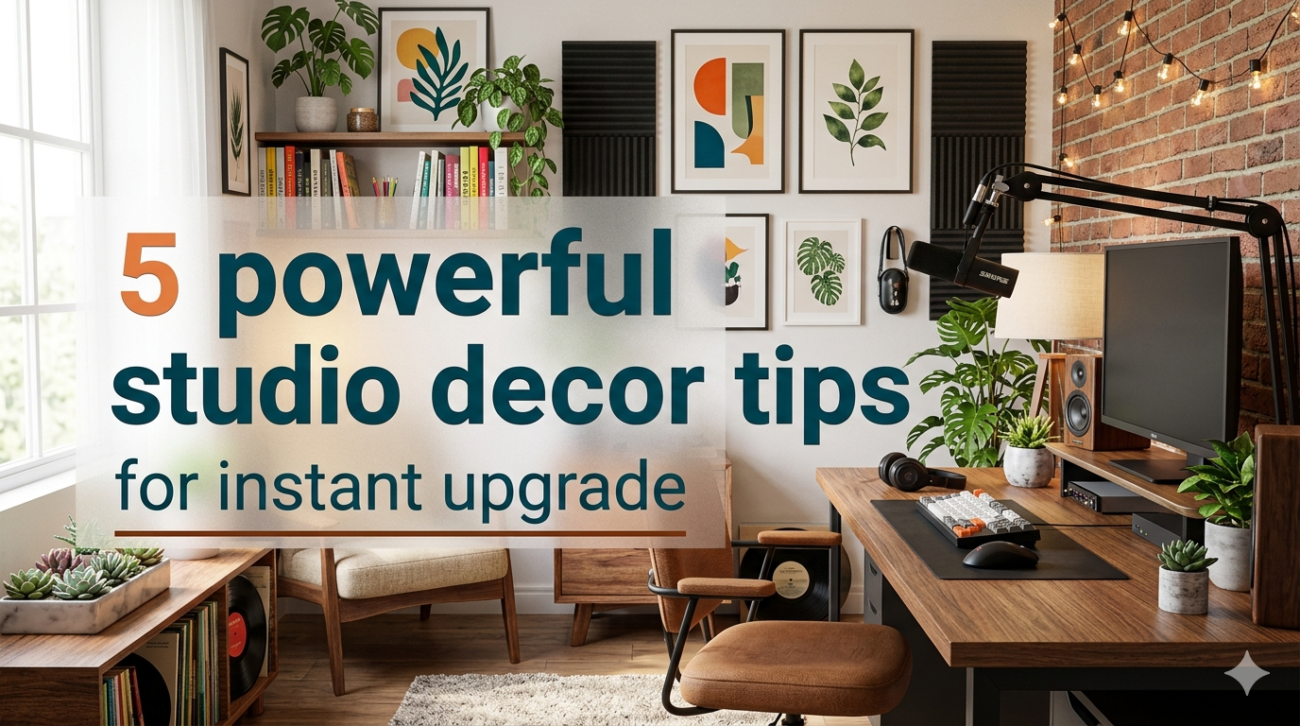
There’s something quietly transformative about walking into a studio that feels complete. Not expensive, not oversized, not overly styled—just balanced. The kind of space where everything seems to belong, where even a small footprint feels intentional. The good news is that creating that kind of environment doesn’t require a massive budget or a full renovation. Often, it comes down to a few carefully chosen decisions that reshape how the space looks, feels, and functions.
This guide explores five powerful decor tips that can elevate a studio instantly. Not gradually over months, but in a way that feels immediate and noticeable. Along the way, you’ll also find tables, planning charts, and practical frameworks that help turn ideas into action.
- redefine the space with visual zoning
A studio is, by definition, one open room. That’s both its biggest advantage and its biggest challenge. Without walls, everything competes for attention. The trick is to create invisible boundaries—zones that suggest purpose without physically dividing the room.
Visual zoning is about perception. It tells your brain where one function ends and another begins.
how to create zones effectively
Start by identifying your core activities: sleeping, working, relaxing, eating. Even in the smallest studio, these roles exist. The goal is to assign each a “territory.”
Use rugs as anchors. A rug under your bed creates a sleeping zone. Another under a small sofa defines the living area. Even a narrow runner can separate a workspace.
Lighting also plays a role. Warm lighting in the sleeping area, cooler light near a desk—these subtle shifts signal different uses.
Furniture orientation matters more than size. A sofa facing away from the bed creates a natural divider. A bookshelf placed sideways can act as a semi-open partition.
visual zoning layout example
| Zone | Key Element | Visual Separator | Lighting Type |
|---|---|---|---|
| Sleeping | Bed + side table | Area rug | Warm, soft light |
| Living | Sofa/chair | Rug or coffee table | Ambient light |
| Work | Desk | Narrow shelf/plant | Cool task light |
| Dining | Small table | Pendant light | Focused light |
why it works instantly
The moment you define zones, clutter loses its power. The room feels structured. Even if nothing new is added, the reorganization alone creates a sense of upgrade.
- elevate with layered lighting
Most studios rely on a single overhead light. It’s functional, but flat. Lighting is one of the fastest ways to change the mood of a space without changing anything else.
Layered lighting introduces depth.
the three essential layers
Ambient lighting is your base layer. It fills the room. This could be a ceiling fixture or a large floor lamp.
Task lighting is focused. Think desk lamps, reading lights, or under-shelf lighting.
Accent lighting highlights specific features—plants, artwork, or textured walls.
lighting combination chart
| Layer | Purpose | Examples | Placement Tip |
|---|---|---|---|
| Ambient | General illumination | Ceiling light, floor lamp | Center or corner of room |
| Task | Functional lighting | Desk lamp, reading lamp | Near activity zones |
| Accent | Decorative highlight | LED strips, spotlights | Behind objects or shelves |
quick upgrade ideas
Replace harsh white bulbs with warm tones. Add a floor lamp in a dark corner. Install LED strips behind a desk or bed frame. Even a single additional light source can change the entire atmosphere.
why lighting matters so much
Lighting doesn’t just reveal a space—it shapes it. Shadows add dimension. Warm tones create comfort. Cooler tones improve focus. When layered correctly, lighting makes a studio feel larger and more intentional.
- use vertical space intelligently
When floor space is limited, the only direction left is up. Many studio dwellers underestimate how much unused vertical space they have.
Walls are not just boundaries; they are opportunities.
practical vertical strategies
Install floating shelves above eye level. Use them for books, plants, or decorative items. This draws the eye upward, making the room feel taller.
Hang curtains closer to the ceiling rather than just above the window. This creates the illusion of height.
Use tall furniture sparingly but strategically. A single tall bookshelf can act as both storage and a visual anchor.
vertical space utilization table
| Area | Opportunity | Suggested Solution |
|---|---|---|
| Above bed | Storage/decor | Floating shelves |
| Above desk | Organization | Wall-mounted organizers |
| Near ceiling | Visual height | High curtain placement |
| Empty corners | Vertical interest | Tall plants or lamps |
common mistake to avoid
Overcrowding walls. Vertical space works best when balanced. Leave breathing room between elements.
instant impact factor
The eye naturally scans upward. When vertical elements are introduced, the room feels expanded. It’s one of the fastest ways to make a small studio feel less confined.
- invest in statement pieces, not many pieces
A common instinct is to fill a studio with multiple small decor items. The result often feels cluttered rather than styled.
A better approach is to choose one or two statement pieces that define the room.
what qualifies as a statement piece
A bold rug. A large piece of art. A uniquely shaped chair. A striking mirror. These items don’t just sit in the room—they shape its identity.
statement piece selection guide
| Type | Impact Level | Best Placement | Effect on Room |
|---|---|---|---|
| Large artwork | High | Above bed/sofa | Adds personality |
| Bold rug | High | Center of zone | Grounds the space |
| Unique chair | Medium | Corner/living area | Creates focal point |
| Oversized mirror | High | Opposite window | Expands visual space |
how to choose wisely
Pick something that contrasts slightly with the rest of your decor. If your studio is neutral, add a bold color. If it’s minimal, add texture.
why fewer is better
A single strong element draws attention and gives the room a clear identity. Too many competing elements dilute the effect.
instant upgrade effect
When someone enters the room, their eye lands on the statement piece. It creates a sense of design intention, even if the rest of the space is simple.
- refine with textures and fabrics
Texture is often overlooked, yet it plays a crucial role in how a space feels. Two rooms with identical layouts can feel completely different depending on texture.
In a studio, where everything is visible at once, texture adds depth without adding clutter.
ways to introduce texture
Layer textiles. A soft throw on a sofa, a textured rug underfoot, linen curtains—these small additions create richness.
Mix materials. Combine wood, metal, fabric, and glass. The contrast keeps the space visually interesting.
use texture layering framework
| Element | Material Type | Purpose |
|---|---|---|
| Sofa | Fabric | Comfort and softness |
| Rug | Wool/jute | Grounding and warmth |
| Curtains | Linen/cotton | Light diffusion |
| Decor accents | Metal/ceramic | Contrast and detail |
quick texture upgrades
Add cushions with different fabrics. Swap out a plain rug for something woven. Introduce a wooden tray or ceramic vase.
why texture works instantly
Texture engages more than just sight—it affects how a space feels emotionally. Soft textures create comfort. Rough textures add character. The mix creates balance.
integrated studio upgrade plan
To bring all five tips together, here’s a simple execution chart:
| Step | Action | Time Required | Budget Level |
|---|---|---|---|
| 1 | Define zones | 1–2 hours | Low |
| 2 | Add layered lighting | 1 hour | Medium |
| 3 | Install vertical elements | 2–3 hours | Low–Medium |
| 4 | Introduce statement piece | Varies | Medium |
| 5 | Layer textures | 1–2 hours | Low |
final thoughts
Upgrading a studio doesn’t require starting over. It’s more about rethinking what’s already there and making deliberate choices. A rug repositioned, a lamp added, a wall utilized—these small actions compound into something noticeable.
The real shift happens when the space begins to reflect intention rather than limitation. When each corner has a purpose, when light and texture work together, when there’s a focal point that ties everything together—that’s when a studio stops feeling temporary and starts feeling complete.
FAQs
- how can I make my studio look bigger without renovating
Use mirrors, light colors, and vertical design elements. Keeping furniture low and using consistent flooring also helps create a sense of openness. - what is the most budget-friendly decor upgrade
Rearranging furniture and adding lighting are the most cost-effective changes. Even swapping out bulbs for warmer tones can make a noticeable difference. - how many zones should a studio have
Ideally three to four: sleeping, living, working, and optionally dining. The exact number depends on your lifestyle. - are dark colors bad for small studios
Not necessarily. Dark colors can add depth if used strategically, especially as accent walls or in decor pieces. - how do I avoid clutter while decorating
Focus on fewer, larger items instead of many small ones. Use hidden storage and keep surfaces partially clear. - can plants improve studio decor
Yes, plants add texture, color, and life. Even one or two well-placed plants can make a space feel more inviting and balanced.