

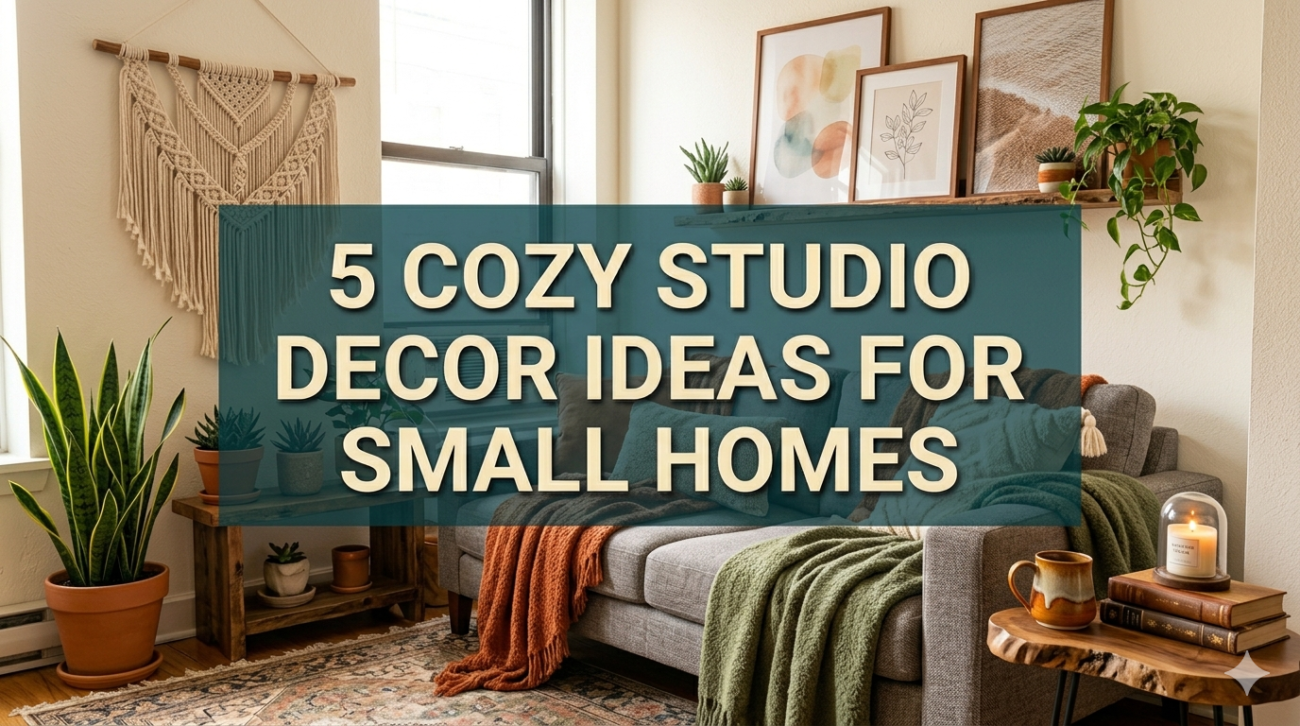
Living in a small studio doesn’t mean you have to compromise on comfort or warmth. In fact, some of the coziest homes are the smallest ones, where every corner is thoughtfully designed and every item has a purpose. A cozy studio is not about filling space—it’s about shaping atmosphere. It’s the feeling of softness, warmth, calmness, and personal touch all blended into a compact layout.
This guide explores five deeply practical and visually rich decor ideas that can transform a small studio into a warm, inviting home. Each idea is built around real design principles, supported with tables, comparison charts, and layout strategies so you can actually apply them, not just admire them.
idea 1: layered lighting for warmth and mood control
Lighting is one of the most powerful tools in creating coziness. A single overhead bulb makes a space functional, but not inviting. Cozy studios rely on layers of light that work together to create mood, depth, and flexibility.
There are three main types of lighting you should combine:
- ambient lighting (general illumination)
- task lighting (focused work areas)
- accent lighting (decorative warmth)
Here’s how they compare:
| Lighting Type | Purpose | Best Sources | Cozy Effect Level |
|---|---|---|---|
| Ambient | Overall brightness | Ceiling lights, LEDs | Medium |
| Task | Work or reading | Desk lamps, floor lamps | Medium-High |
| Accent | Atmosphere & warmth | Fairy lights, candles, sconces | Very High |
The secret to coziness is not brightness—it’s balance. A studio that is evenly lit feels flat. A studio with layered lighting feels alive.
Practical setup example:
| Area | Lighting Choice | Mood Created |
|---|---|---|
| Living area | Warm floor lamp + string lights | Relaxed & soft |
| Bed area | Bedside lamp + dim LED strip | Calm & restful |
| Work area | Adjustable desk lamp | Focused but warm |
| Entryway | Small wall sconce | Welcoming glow |
A key trick: use warm color temperature bulbs (2700K–3000K). Cool white light tends to feel sterile, while warm light creates a comforting atmosphere.
When done right, lighting becomes invisible decor—it shapes how your space feels without taking up any physical space.
idea 2: soft textiles that define comfort zones
If lighting sets the mood, textiles define the feeling. Soft materials are what make a studio feel like a home rather than a temporary space.
Think beyond just curtains and bedsheets. Cozy studios rely on layers of fabric everywhere:
- rugs underfoot
- throws on sofas
- cushions on seating
- fabric wall hangings
Textiles also help divide space visually without walls.
Here’s a breakdown of textile impact:
| Textile Element | Function | Cozy Contribution | Space Impact |
|---|---|---|---|
| Rugs | Zone definition | High warmth | Medium |
| Throw blankets | Comfort + layering | Very high coziness | Low |
| Cushions | Seating comfort | High softness | Low |
| Curtains | Light control | Medium-high softness | Medium |
A layered textile approach works best when you follow this rule:
Start with a base layer → add medium textures → finish with soft accents.
Example layering plan:
| Layer Level | Material Type | Example |
|---|---|---|
| Base | Neutral rug | Jute or cotton rug |
| Middle | Furniture textiles | Sofa upholstery |
| Top | Decorative softness | Cushions + throws |
Color matters too. Soft neutrals like beige, cream, muted grey, and dusty pastels help maintain visual calmness while still feeling warm.
Avoid overly bold patterns in small studios—they can visually overwhelm the space.
idea 3: smart zoning for emotional comfort
One of the biggest challenges in studio living is that everything happens in one room. Sleeping, eating, working—it all blends together. Without boundaries, the space can feel mentally chaotic even if it looks organized.
Zoning solves this problem by assigning emotional meaning to areas without building physical walls.
There are three main zoning tools:
- furniture placement
- rugs
- lighting shifts
Here’s how zoning typically works:
| Zone | Purpose | Key Elements | Emotional Feeling |
|---|---|---|---|
| Sleep zone | Rest | Bed, soft lighting | Calm & private |
| Work zone | Focus | Desk, task lamp | Productive |
| Living zone | Relax/social | Sofa, rug, warm lights | Comfortable |
| Dining zone | Meals | Small table, chair | Grounded |
The trick is to make each zone feel distinct without blocking flow.
Simple zoning layout example:
| Technique | How it’s used | Result |
|---|---|---|
| Rugs | Different rugs per zone | Visual separation |
| Lighting shift | Warm vs bright light | Mood distinction |
| Furniture angle | Sofa facing inward | Natural boundaries |
| Curtains | Light fabric dividers | Soft separation |
A cozy studio feels organized not because it has more space—but because each area has purpose.
Psychological benefit: when your brain associates areas with specific activities, stress decreases and comfort increases.
idea 4: nature-inspired decor for calm energy
Adding natural elements is one of the easiest ways to make a studio feel warm and alive. Nature has a calming psychological effect, and even small touches can significantly change how a room feels.
There are three main natural decor categories:
- plants
- natural materials
- organic textures
Here’s a breakdown:
| Element Type | Examples | Effect on Space |
|---|---|---|
| Plants | Pothos, snake plant | Freshness & life |
| Natural wood | Shelves, tables | Warmth & grounding |
| Stone/ceramic | Vases, pots | Stability & texture |
Plants are especially powerful in small studios because they don’t take much space but dramatically improve atmosphere.
Placement strategy:
| Location | Plant Type Suggestion | Benefit |
|---|---|---|
| Window sill | Small succulents | Bright, decorative |
| Corner floor | Tall leafy plant | Fills empty space |
| Shelves | Hanging plants | Vertical softness |
| Desk | Compact plant | Focus enhancement |
Natural materials also matter. A wooden table or woven basket instantly adds warmth compared to plastic or metal surfaces.
The goal is not to turn your studio into a jungle—it’s to introduce subtle life into the space.
idea 5: intentional minimalism with personality
Minimalism is often misunderstood as emptiness. In reality, cozy minimalism is about intentional selection—choosing fewer items, but making each one meaningful.
A cozy studio should never feel empty or overly decorated. It should feel balanced.
The key is selective personality:
- one statement artwork
- one or two meaningful objects
- a few curated textures
Here’s a comparison of approaches:
| Style Approach | Result | Emotional Effect |
|---|---|---|
| Over-decorated | Visual clutter | Stressful |
| Empty minimalism | Cold and sterile | Detached |
| Cozy minimalism | Balanced and warm | Peaceful |
A useful rule:
Instead of filling space, frame space.
Example decor balance:
| Item Category | Quantity Recommendation | Purpose |
|---|---|---|
| Wall art | 1–2 pieces | Identity expression |
| Decorative items | 3–5 total | Personal touch |
| Textiles | Multiple layers | Comfort |
| Plants | 1–3 plants | Natural warmth |
Negative space is just as important as objects. Empty areas allow the eye to rest, making the entire studio feel more breathable.
bonus section: cozy studio layout blueprint
Here’s how all five ideas combine into a functional studio setup:
| Area | Design Strategy Applied |
|---|---|
| Living area | Soft rug + layered lighting + sofa with throws |
| Sleeping | Warm lighting + minimal decor + soft bedding |
| Work zone | Task lighting + small plant + clean desk setup |
| Walls | Minimal art + floating shelves |
| Corners | Plants + ambient lighting |
When combined, these elements create a studio that feels larger emotionally, even if not physically.
comparison chart: cozy vs standard studio design
| Feature | Standard Studio | Cozy Studio |
|---|---|---|
| Lighting | Single overhead light | Layered warm lighting |
| Decor | Random objects | Curated meaningful items |
| Textiles | Minimal | Layered and soft |
| Zoning | None | Clearly defined |
| Plants | Rare | Integrated naturally |
closing thoughts
A cozy studio isn’t built through expensive furniture or large spaces. It is built through intention. Every light, every fabric, every object contributes to how your home feels.
Small homes have an advantage: they force clarity. You don’t decorate endlessly—you decide carefully. And that is what creates true coziness.
When your studio reflects comfort, balance, and personality, it stops feeling like a small space and starts feeling like your space.
frequently asked questions
- how do i make my small studio feel cozy without overcrowding it?
Focus on layering instead of adding more items. Use soft lighting, textiles, and a few meaningful decor pieces rather than filling every surface. - what colors make a studio feel more cozy?
Warm neutrals like beige, cream, soft brown, and muted earth tones create the most comfortable atmosphere. Avoid overly harsh contrasts. - can plants really make a small studio feel better?
Yes, even one or two plants can significantly improve the mood by adding freshness, color, and a sense of calm. - what is the biggest mistake in decorating small studios?
Using too many small decorative items instead of a few intentional pieces. This creates visual clutter and reduces coziness. - how important is lighting for coziness?
Very important. Lighting affects mood more than furniture. Layered warm lighting is one of the fastest ways to make a studio feel cozy. - how do i create separation in a studio without walls?
Use rugs, lighting changes, furniture placement, and curtains to define zones without physically dividing the space.