

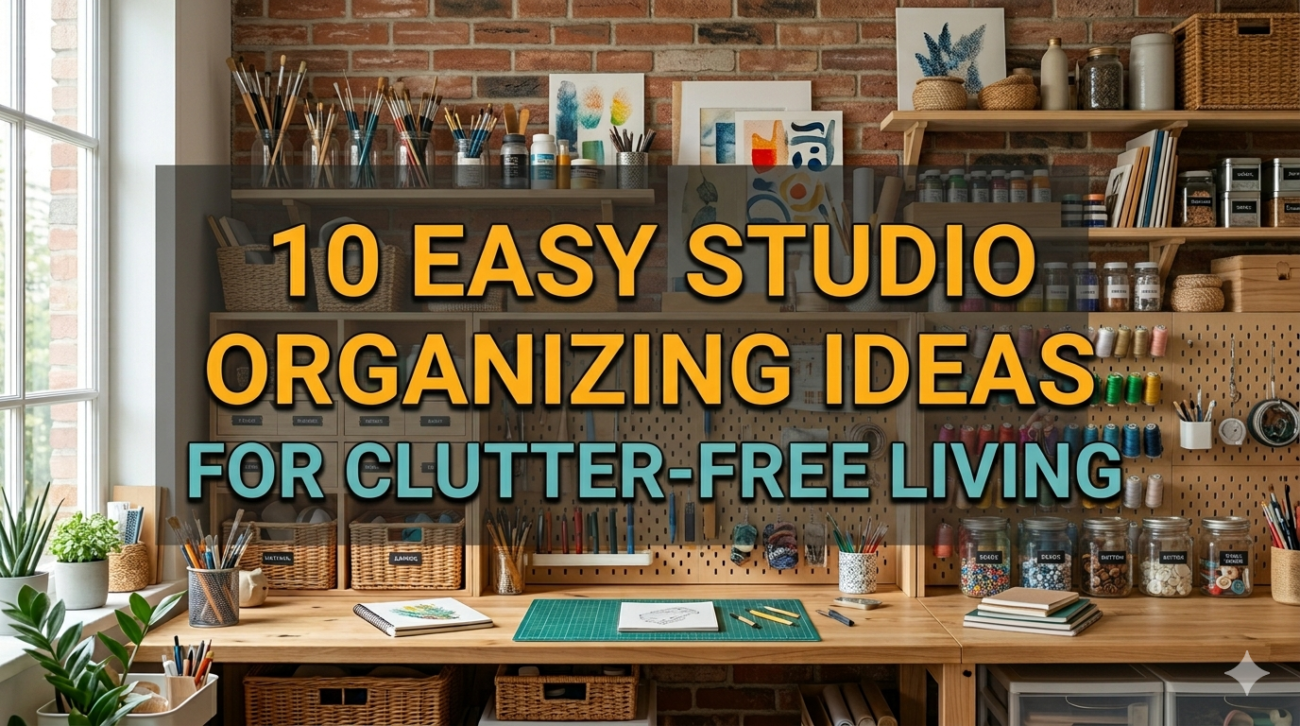
Living in a studio apartment can feel like a constant balancing act between comfort, functionality, and chaos control. When every square foot matters, organization isn’t just a design choice—it’s a lifestyle strategy. The good news is that even the smallest spaces can feel open, calm, and efficient with the right systems in place.
This guide explores 10 practical studio organizing ideas that help reduce clutter, improve flow, and create a visually peaceful home without requiring a big budget or major renovation.
1. Use Vertical Space Like a Pro
When floor space is limited, the only way is up. Vertical storage transforms empty walls into functional zones.
Think floating shelves, tall cabinets, wall hooks, and pegboards. These tools free up valuable floor area while keeping essentials accessible.
Table: Vertical Storage Ideas vs. Best Use Cases
| Vertical Solution | Best Used For | Benefit |
|---|---|---|
| Floating shelves | Books, décor | Decorative + functional |
| Wall hooks | Bags, coats | Saves closet space |
| Pegboards | Tools, accessories | Highly customizable |
| Tall cabinets | Pantry, clothing | Maximizes storage height |
A well-planned wall can replace an entire storage unit.
2. Choose Multi-Functional Furniture
In a studio, every item should ideally do more than one job. Multi-functional furniture reduces clutter by combining storage and usability.
Examples include beds with drawers, foldable tables, and ottomans with hidden storage.
Chart: Furniture Efficiency Comparison
| Furniture Type | Function 1 | Function 2 | Space Saved |
|---|---|---|---|
| Storage bed | Sleeping | Under-bed storage | High |
| Sofa bed | Seating | Guest bed | High |
| Storage ottoman | Seating | Storage | Medium |
| Drop-leaf table | Dining | Workspace | High |
This type of furniture is especially useful when your living room doubles as a bedroom and office.
3. Create Defined Zones in One Room
Even in an open studio layout, defining zones helps your brain perceive order. You don’t need walls—just structure.
Use rugs, lighting, or furniture placement to separate sleeping, dining, and working areas.
Example Zone Setup
| Zone | Elements Used | Purpose |
|---|---|---|
| Sleeping area | Rug + bed frame | Rest and relaxation |
| Work area | Desk + lamp | Productivity |
| Living area | Sofa + coffee table | Social + leisure |
When each activity has its own “space,” clutter naturally decreases.
4. Use Under-Bed Storage Efficiently
The space under your bed is often underutilized real estate. With proper containers or drawers, it becomes a hidden storage powerhouse.
Store seasonal clothing, shoes, bedding, or even documents.
Storage Categories for Under-Bed Space
- Vacuum-sealed clothing bags
- Rolling storage boxes
- Flat plastic bins
- Drawer systems built into bed frames
This single adjustment can eliminate visible closet overflow instantly.
5. Adopt a “One In, One Out” Rule
Clutter builds up quietly. One of the most effective habits is simple: whenever you bring something new in, something else must leave.
This prevents accumulation without requiring constant decluttering sessions.
Impact Table: Habit Over 3 Months
| Week | Items Added | Items Removed | Clutter Level |
|---|---|---|---|
| 1 | 5 | 5 | Stable |
| 4 | 20 | 20 | Controlled |
| 12 | 60 | 60 | Balanced |
This method keeps your space from slowly overflowing over time.
6. Maximize Closet Organization Systems
Closets in studios often become overstuffed quickly. The solution isn’t necessarily more space—it’s better structure.
Use shelf dividers, hanging organizers, and double rods.
Closet Optimization Breakdown
| Tool | Purpose | Effect |
|---|---|---|
| Double hanging rod | Separate long/short clothes | Doubles space |
| Shelf dividers | Prevent stacking collapse | Better visibility |
| Hanging organizers | Shoes/accessories | Saves floor space |
| Slim hangers | Reduce width usage | +30% capacity |
A well-organized closet can often hold twice as much as a chaotic one.
7. Use Transparent or Labeled Storage Boxes
If you can’t see what you own, you’ll likely forget it—and buy duplicates. Transparent or clearly labeled boxes fix this issue instantly.
This system works especially well for kitchens, wardrobes, and bathroom items.
Storage Visibility Comparison
| Storage Type | Visibility | Convenience |
|---|---|---|
| Clear boxes | High | Very easy |
| Labeled bins | Medium | Easy |
| Opaque boxes | Low | Often confusing |
The more visible your storage, the less mental clutter you carry.
8. Keep Surfaces Mostly Clear
Flat surfaces attract clutter faster than anything else. Coffee tables, desks, and countertops should remain mostly empty.
Only keep daily essentials visible and store the rest.
Surface Clutter Rule
- 70% empty space = visually calm
- 30% functional items = practical use
Even small changes here dramatically improve the feeling of space.
9. Rotate Seasonal Items
Not everything needs to be accessible year-round. Rotating items based on season reduces unnecessary storage pressure.
Store winter clothes during summer and vice versa.
Seasonal Rotation Plan
| Season | Store Away | Keep Accessible |
|---|---|---|
| Summer | Heavy jackets | Light clothing |
| Winter | Shorts/t-shirts | Coats/sweaters |
| Spring | Heavy bedding | Medium layers |
| Fall | Summer décor | Warm textiles |
This keeps your immediate environment lean and manageable.
10. Build a Daily Reset Routine
Organization isn’t a one-time task—it’s maintenance. A 10–15 minute daily reset keeps clutter from piling up.
This includes:
- Returning items to their place
- Clearing surfaces
- Folding blankets
- Sorting small messes
Daily Reset Checklist
| Task | Time Needed | Impact |
|---|---|---|
| Dish cleanup | 3–5 min | High |
| Surface clearing | 3 min | High |
| Item reset | 5 min | Medium |
| Floor check | 2 min | Medium |
Consistency is what keeps a studio feeling spacious long-term.
Bonus Insight: The Psychology of Clutter
Clutter doesn’t just occupy physical space—it also affects mental clarity. Studies in environmental psychology show that disorganized environments can increase stress and reduce focus.
A well-organized studio supports:
- Better sleep
- Improved productivity
- Reduced anxiety
- Faster daily routines
Final Thoughts
Organizing a studio apartment is less about size and more about systems. With vertical storage, multifunctional furniture, zoning, and simple habits, even the smallest space can feel open and intentional.
You don’t need perfection—you need consistency.
FAQs
1. What is the fastest way to reduce clutter in a studio?
Start with visible surfaces like tables and countertops. Clearing them immediately creates a noticeable difference.
2. How do I make a small studio look bigger?
Use vertical storage, light colors, mirrors, and minimal surface clutter to create visual openness.
3. What furniture is best for studio apartments?
Multi-functional pieces like storage beds, sofa beds, and foldable tables are ideal.
4. How often should I declutter my studio?
A quick daily reset plus a deeper declutter once a month works best for most people.
5. How do I store clothes in a small studio?
Use seasonal rotation, under-bed storage, and vertical closet organizers.
6. What is the biggest mistake in studio organization?
Overfilling horizontal surfaces instead of using vertical and hidden storage effectively.