

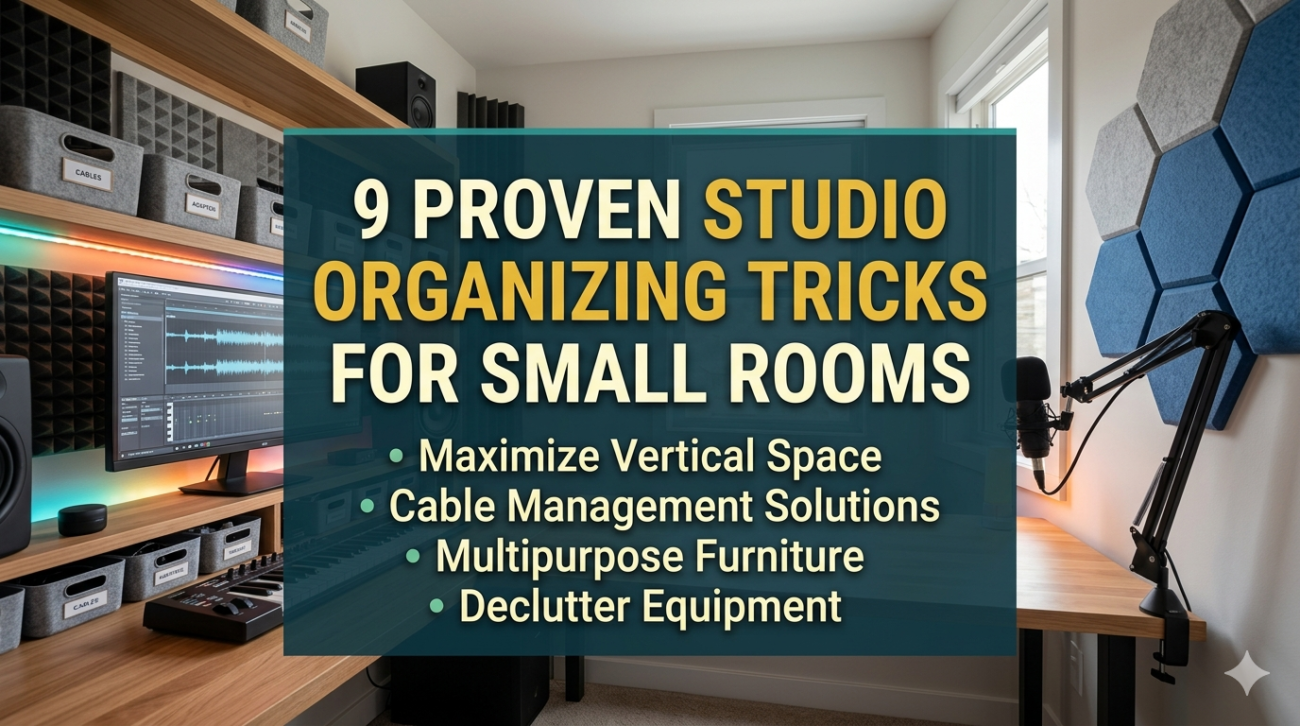
Small studio apartments can feel like a constant puzzle—every item needs a place, and every inch matters. The challenge isn’t just fitting things in, but creating a space that feels open, functional, and comfortable without clutter taking over.
The good news is that smart organization can completely transform even the tiniest studio into a livable, stylish home. Below are nine proven organizing tricks that consistently work in real small-room living situations, backed by practical setups, not theory.
1. Zone Your Studio Like a Mini House
One of the biggest mistakes in studio living is treating the entire space as one big room. Instead, divide it into functional “zones.”
Common zones include:
- Sleeping area
- Living area
- Work/study area
- Dining nook
- Storage corner
Even without walls, you can create separation using rugs, furniture placement, or shelving units.
Zone Setup Comparison
| Method | Cost | Space Efficiency | Visual Separation | Difficulty |
|---|---|---|---|---|
| Rugs | Low | High | Medium | Easy |
| Bookshelves | Medium | High | High | Medium |
| Curtains | Low | Medium | High | Easy |
| Folding screens | Medium | Medium | High | Easy |
A rug under your bed and another under your sofa instantly tells your brain: “these are different spaces.”
2. Use Vertical Space Aggressively
In small rooms, floor space is limited—but walls are underused real estate.
Think vertically:
- Tall shelving units
- Wall-mounted hooks
- Hanging storage baskets
- Floating desks
- Over-door organizers
Vertical Storage Efficiency Chart
| Storage Type | Floor Space Used | Storage Capacity | Best Use |
|---|---|---|---|
| Floating shelves | None | Medium | Decor + books |
| Tall cabinet | Small footprint | High | Clothes, pantry |
| Wall hooks | None | Low-Medium | Bags, coats |
| Pegboards | None | Medium | Tools, accessories |
The goal is simple: if it can go on a wall, it shouldn’t sit on the floor.
3. Invest in Multi-Functional Furniture
In studios, every piece of furniture should ideally serve more than one purpose.
Examples:
- Sofa bed (seating + sleeping)
- Storage ottoman (seat + storage)
- Foldable dining table (dining + workspace)
- Bed with drawers (sleeping + storage)
Multi-Functional Furniture Impact
| Furniture Type | Functions | Space Saved |
|---|---|---|
| Sofa bed | 2 | High |
| Storage bed | 2 | Very High |
| Foldable table | 2–3 | High |
| Nesting tables | 2+ | Medium |
A single multifunctional piece can replace two or three bulky items, instantly freeing up space.
4. Declutter Ruthlessly Every 2–4 Weeks
No organizing system works if clutter keeps building up.
Adopt a rotation rule:
- Every 2 weeks: quick declutter (10–15 minutes)
- Every month: deeper review
- Every season: full reset
Declutter Decision Chart
Ask yourself:
- Have I used this in the last 30 days?
- Do I own something that does the same job better?
- Would I buy this again today?
If “no” dominates your answers, it’s time to let it go.
| Category | Keep Rule | Remove Rule |
|---|---|---|
| Clothes | Worn within 1 month | Not worn in 3–6 months |
| Kitchen items | Used weekly/monthly | Duplicates |
| Decor | Adds function/aesthetic | Just “filler” items |
5. Use Hidden Storage Spaces
Hidden storage is a game-changer in studios.
Look for unused areas like:
- Under the bed
- Inside sofas
- Behind doors
- Above cabinets
- Inside storage benches
Hidden Storage Potential
| Area | Storage Type | Capacity |
|---|---|---|
| Under bed | Boxes, drawers | Very High |
| Sofa base | Bins | Medium |
| Door back | Hooks, racks | Low-Medium |
| Ceiling shelves | Rare items | Medium |
A well-used under-bed system alone can replace an entire wardrobe in small studios.
6. Keep Surfaces Almost Empty
Countertops and tables fill up fast—and visually shrink your space.
A good rule:
If it’s not used daily, it doesn’t belong on the surface.
Keep only essentials like:
- Lamp
- One decorative item
- Daily-use tools
Everything else should have a designated storage place.
Surface Clutter Impact
| Surface Level | Room Feeling |
|---|---|
| Fully cluttered | Stressful, smaller |
| Moderately clear | Balanced |
| Minimal | Spacious, calm |
Even removing 50% of surface clutter can make a studio feel 30% larger visually.
7. Use Clear Storage Systems
Clear containers help you:
- See everything instantly
- Avoid buying duplicates
- Maintain order effortlessly
Opaque boxes often become “black holes” where things disappear.
Storage Type Comparison
| Type | Visibility | Organization Level | Best For |
|---|---|---|---|
| Clear bins | High | High | Pantry, clothes |
| Opaque bins | Low | Medium | Misc storage |
| Drawer dividers | Medium | High | Small items |
Labeling clear containers increases efficiency even more.
8. Create “Drop Zones” for Daily Chaos
Every studio needs controlled chaos zones—places where daily items land temporarily.
Examples:
- Entry tray for keys/wallet
- Basket for mail
- Hook for bag
- Small dish for accessories
Drop Zone System
| Item Type | Drop Zone Solution |
|---|---|
| Keys | Tray near door |
| Vertical holder | |
| Bags | Wall hook |
| Tech gadgets | Charging station |
Without drop zones, clutter spreads randomly across the room.
9. Rotate Seasonal Items Instead of Storing Everything at Once
One of the most overlooked strategies is rotation storage.
Instead of keeping everything accessible year-round:
- Store off-season clothes
- Rotate décor items
- Switch bedding seasonally
Seasonal Storage System
| Season | Stored Items |
|---|---|
| Summer | Winter clothes, heavy blankets |
| Winter | Light clothing, fans |
| Spring/Fall | Mixed rotation |
This prevents overcrowding and makes your space feel refreshed regularly.
Combined Studio Organization Strategy Overview
| Trick | Impact on Space | Effort Level | Long-Term Benefit |
|---|---|---|---|
| Zoning | High | Medium | High |
| Vertical storage | Very High | Medium | Very High |
| Multi-functional furniture | Very High | High | Very High |
| Decluttering | High | Medium | Very High |
| Hidden storage | High | Medium | High |
| Clear surfaces | Medium | Easy | High |
| Clear containers | Medium | Easy | High |
| Drop zones | Medium | Easy | Medium |
| Seasonal rotation | High | Medium | High |
Final Thoughts
Organizing a small studio isn’t about perfection—it’s about systems that reduce effort and maximize usable space. The most successful small rooms don’t rely on size, but on smart design choices repeated consistently.
When each item has a purpose, a place, and a limit, even the smallest studio can feel open, calm, and surprisingly spacious.
FAQs
1. What is the most important organizing trick for a studio?
Zoning the space is usually the most impactful because it creates structure without walls.
2. How often should I declutter a small apartment?
A quick declutter every 2 weeks and a deeper clean monthly works best.
3. What furniture is best for studio apartments?
Multi-functional furniture like sofa beds, storage beds, and foldable tables.
4. How do I make a studio look bigger instantly?
Keep surfaces clear, use light colors, and rely on vertical storage.
5. Is under-bed storage really effective?
Yes, it’s one of the highest-capacity hidden storage areas in small rooms.
6. What’s the biggest mistake in studio organization?
Letting clutter spread without defined drop zones or storage systems.