
I thought for years that the answer was simply yes. Small space, smaller mood. Compact apartment, compressed emotional state. That assumption shaped the advice I gave clients early in my career, and looking back, I was only getting part of it right.
What changed my thinking wasn’t a seminar or a journal article. It was a specific client, a woman in her mid-thirties living in a 380-square-foot studio in Toronto’s west end. She’d called me because she said the apartment was making her depressed. Those were her words. And when I arrived, the space was immaculate. Properly furnished, decent natural light, nothing obviously wrong by any design standard I’d apply on a walkthrough.
We talked for about an hour. By the end, what became clear was that the apartment itself wasn’t causing anything. The way the apartment had been arranged, how it was asking her to live inside it, that was the problem. The bed faced the desk. The desk faced the television. Everything was visible from everywhere, all the time, and her brain had no signal for when to switch modes. She couldn’t rest because the visual cues for work were always present. She couldn’t focus because the visual cues for rest were equally present. The space wasn’t small. It was undifferentiated.
That distinction matters more than almost anything else I’ll say here.
1. The Space Isn’t the Problem. The Design Usually Is.
The research on small living spaces and mental health does land on real conclusions. Overcrowded, under-resourced housing is linked to elevated stress hormones, disrupted sleep, and impaired focus. Those findings are legitimate. But most of the studies cited in the popular press conflate “small apartment” with “overcrowded apartment” or “apartment with no natural light” or “apartment in a dense building with paper-thin walls.”
Those are infrastructure and design problems. Not square footage problems.
I’ve worked in studios as small as 290 square feet that felt calm and genuinely livable. I’ve walked into 900-square-foot apartments that felt claustrophobic in a way that had nothing to do with the floor plan and everything to do with how the space had been set up. Size is not the driver. The quality of the environment is. And in a studio, that quality is almost entirely determined by intentional design choices.
Environmental psychology uses the term “restorative environment” to describe spaces that allow the attentional system to recover rather than stay on high alert. Natural features, quiet, coherent visual fields, some sense of refuge. A well-designed studio can offer all of those things. Most studios don’t, because nobody thought to design them that way.
That’s not a small distinction. It’s the whole point. Because if the size were the problem, you couldn’t fix it without moving. If the design is the problem, you can actually do something.
2. Where the Real Pressure Comes From
The mood stressors in a studio apartment aren’t random. They follow predictable patterns, and once you recognize them you’ll see them in almost every studio that feels difficult to live in.
The first is cognitive spillover from work into rest. When the laptop sits two feet from the pillow and the same surface that holds your morning coffee also holds your afternoon work calls, the brain never receives a clear signal that the day is over. Sleep research supports this: the visual presence of work materials in the sleeping area raises baseline alertness, even when the materials aren’t in use. In a one-bedroom apartment you close a door. In a studio, there’s no door to close, and most people never design a substitute for it.
The second is visual clutter amplified by proximity. A pile of unopened mail on a kitchen counter in a 1,400-square-foot house is a minor visual note you might not even register from the sofa. That same pile in a studio is visible from the bed, from the desk, from the chair. It registers on every sightline you have. Researchers describe what happens as “attentional fatigue”: the brain continuously pulled toward unfinished tasks and disorder, never getting a clean visual break. Small spaces don’t create clutter. But they make its psychological weight considerably louder.
The third is the absence of transition space. This one gets underestimated. In a larger home, you move between rooms and the movement itself signals a change in mental state. You walk through a hallway and arrive in the kitchen. You go upstairs and arrive in the bedroom. Those transitions are functional, not decorative. They tell the brain which mode to enter. A studio has none of them by default. You open the front door and you’re immediately inside everything. And that means every activity happens in the same visual context with no signal of shift.
Here’s a plain-text overview of the specific conditions most likely to affect mood, and what counteracts them:
| Design Condition That Creates Pressure | What Actually Counteracts It |
|---|---|
| Bed in direct sightline of work desk | Physical or visual barrier separating zones |
| Single overhead light for the entire room | Layered lighting anchored to each activity zone |
| No entry transition moment | Minimal entry shelf, mirror, or hook station |
| Visual clutter visible from all angles | Contained off-surface storage, not just tidying |
| Work materials near sleeping area | Dedicated work corner, ideally with a curtain |
| Cold, flat color throughout the space | Warm accent palette concentrated in sleeping zone |
| No separation between activity zones | Zoned layout using rug, furniture backs, and light |
The Studio Apartment Zones guide on Studio Apartment Setup goes into the mechanics of this in specific detail, covering how rugs, furniture positioning, and layered lighting can create the psychological separation that studio architecture can’t provide on its own.
3. What Light Actually Does to Your Mood
This has hard neurological backing, and it’s worth stating plainly.
Natural light exposure regulates circadian rhythm, which governs sleep quality, mood stability, and energy levels throughout the day. Inadequate natural light, or artificial lighting that doesn’t account for time of day, disrupts cortisol production in ways that are measurable and, in some studies, clinically significant for mood. This isn’t soft wellness language. It’s fairly well-established biology.
Studios are specifically vulnerable here. A smaller footprint often means fewer windows relative to total floor area. And the single window a studio does have might flood the corner nearest to it with excellent light while leaving the far wall in relative shadow even on a bright afternoon. I’ve stood in studios where the bed was against the wall farthest from the only window, receiving almost no natural light because nobody had considered the layout from a light-access perspective. The person sleeping there was waking up in perpetual shade.
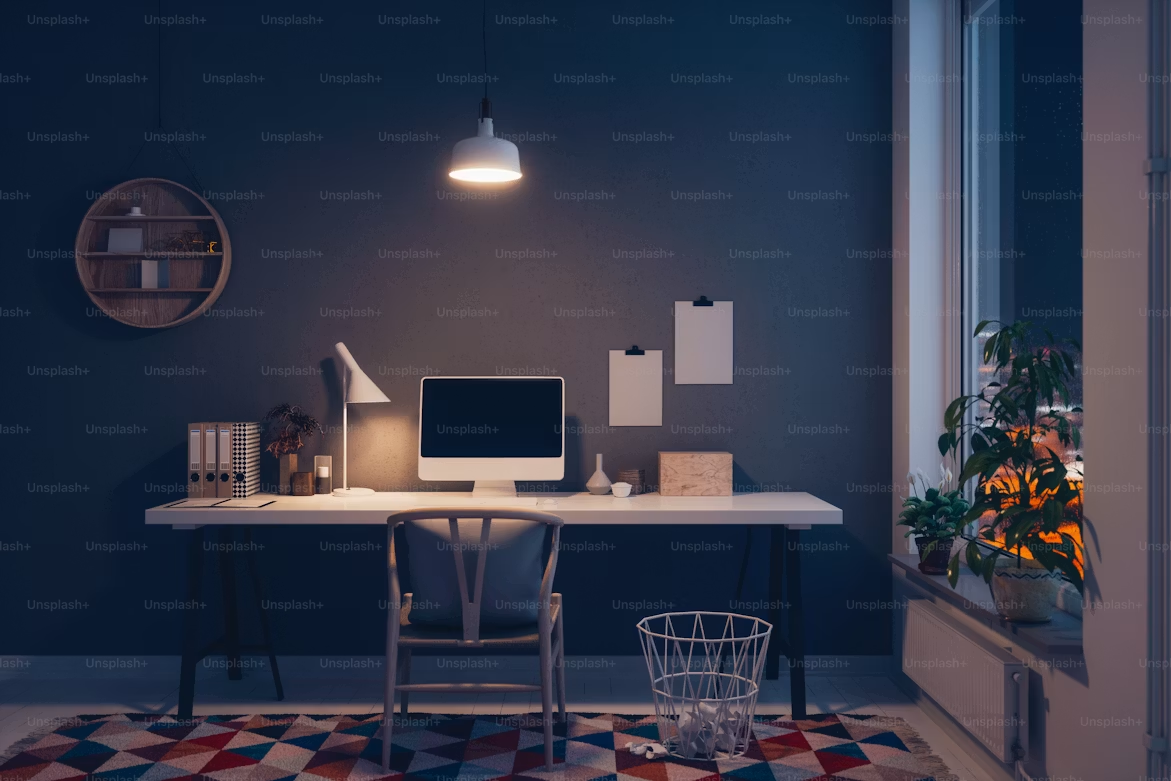
Artificial lighting compounds this when it’s handled badly, and it almost always is. A single overhead fixture illuminates everything at the same flat intensity. There’s no variation, no warmth, no signal of evening or transition. An apartment that feels emotionally hollow after dark is one of the subtle but real contributors to persistent low mood in people who spend significant time at home, and the culprit is often just the light.
The Studio Apartment Setup piece on lighting makes this argument clearly: layered lighting, by zone and by time of day, does something no piece of furniture can accomplish. It changes the perceived quality of the space and signals to the nervous system what kind of activity is appropriate right now. A warm-toned floor lamp near the sofa at 9 PM communicates rest. That same corner lit by a flat overhead communicates nothing, and keeps you slightly alert and restless for reasons you probably won’t trace back to the bulb above your head.
4. The Mistake That Keeps Most People Stuck
People who feel persistently low in their studio almost universally conclude the apartment is the problem. Too small. Too confining. They start thinking about moving, which generates financial anxiety on top of whatever was already there. Or they resign themselves, which is worse, and the discomfort becomes background noise they stop even noticing until it’s accumulated into something harder.
I want to push back on this, because I’ve watched it happen enough times to see the pattern clearly.
The feeling that the studio is making you miserable is real. But tracing that feeling back to the square footage is almost always the wrong diagnosis. It’s the kind of wrong diagnosis that feels logical because “small space” and “uncomfortable” seem causally connected. They’re not, or at least not in the way most people assume.
The Real Reason Your Studio Feels Like a Hotel Room addresses the impermanence problem specifically, and it’s relevant here. A space that doesn’t feel claimed or personal activates low-grade anxiety that’s hard to name. It reads as general unhappiness, or as something wrong with the living situation, when what’s actually missing is the sense that the apartment has been designed for a person rather than just occupied by one.
Color is part of this. Not in a superficial way. Warm, intentional palette choices in a sleeping zone lower visual alertness in ways that cooler, more neutral palettes don’t. The Studio Apartment Color Palette piece on Studio Apartment Setup works through the specifics of what serves small spaces and why, which is more considered than the usual “go light and neutral” advice. And it’s worth reading because color temperature choices have a real effect on how a space feels to live in after dark, which is when mood tends to dip in an uncomfortable studio.
5. What a Mood-Supporting Studio Actually Looks Like
I’ll be specific, because the abstract version of this conversation is everywhere and it doesn’t move anything.
A studio that actively supports mood has a few consistent elements. The sleeping area has some form of visual enclosure, even a minimal one. A ceiling curtain track, a substantial headboard, a low bookcase angled as a soft visual break. The bed is not in direct sightline of the work surface. There’s a floor or table lamp near the living zone that can replace the overhead fixture in the evening. Natural light reaches the area where the most waking hours are spent.
There’s an entry moment. Small is fine. A narrow shelf near the door, a mirror, somewhere to land keys and a bag. The function isn’t aesthetic, it’s psychological. You cross from outside to inside and there’s a brief beat that registers as arrival. Without it, re-entry into the apartment feels like continuation of whatever was happening before, not like coming home.
The palette in the sleeping zone has something warm and quieting about it. Linen, muted wool, a lamp with a warm-temperature bulb. It doesn’t need to match the rest of the apartment exactly, and in fact slight tonal variation between zones serves a purpose. The visual difference tells the brain it’s a different environment, even though the room is technically continuous.
And there’s a dedicated, contained spot for work. A desk with a clear surface is meaningfully better than a sofa with a laptop. A curtain that pulls closed over the desk each evening is better still. The goal is a visual off switch, and it’s one of the highest-return changes available in a studio being used for remote work.
None of this requires a renovation. Most of it is layout, light, and a few deliberate choices about zone anchoring. That keeps coming back to me, years into this work. The studios that feel good to live in were thought about. That’s the main difference. The ones that don’t, mostly weren’t.
Frequently Asked Questions
Is living in a studio apartment actually bad for mental health?
Not inherently. The research linking small spaces to negative mental health outcomes is largely studying overcrowded or under-resourced housing, not solo studio living as a category. A well-designed studio with adequate natural light, clear activity zones, and intentional organization can support mental wellbeing as effectively as a much larger home. The problems are specific and, in most cases, addressable through design.
Why does my studio feel anxious even when it’s clean?
Clean and well-designed are not the same condition. An apartment can be spotless but have no psychological separation between activities, only flat overhead light, no entry moment, and a cold uninviting palette, and it will still feel wrong in a way that’s difficult to explain. The anxiety most people feel in a small space that they can’t quite account for is almost always a zoning and lighting issue, not a cleanliness issue.
Does apartment color actually affect mood, or is that just decorating industry talk?
There’s genuine substance behind it. Color temperature and saturation have documented effects on perceived alertness, warmth, and psychological safety. Warm neutrals in sleeping zones reduce visual stimulation in a way that cooler, brighter palettes don’t. This doesn’t mean every studio needs beige walls. It means the specific colors chosen in specific zones have a real effect on how those zones feel to occupy, particularly in the evening hours when the brain is winding down.
Can working from home in a studio cause low mood over time?
It can. A studio with no design separation between the work zone and the rest of the living space creates a condition where the brain is never fully off duty at home. Over weeks and months, that persistent activation, the inability to decompress in the same environment where work happened all day, accumulates into fatigue, restlessness, and a persistent low-grade flatness that gets misidentified as something more serious. The structural fix is a designated work area with a visual boundary and a consistent end-of-day ritual that turns it off.
What single design change has the most impact on mood in a studio?
Lighting, without much question. Not just adding a lamp, but shifting from a single overhead fixture to multiple light sources positioned by zone, and switching to warm-toned bulbs in the living and sleeping areas. The effect on perceived comfort and emotional tone after 6 PM is immediate. It’s the change I recommend before any furniture purchase, any paint color, before anything else, because nothing else delivers the same shift for the same investment.
The studios that feel genuinely good to live in share one quality. Not size. Not rent price. Not the view. They were designed with the person in mind, and that design created the conditions for the brain to actually rest there. When you start looking at your apartment through that lens, the mood problem usually becomes a lot more solvable than it seemed.