
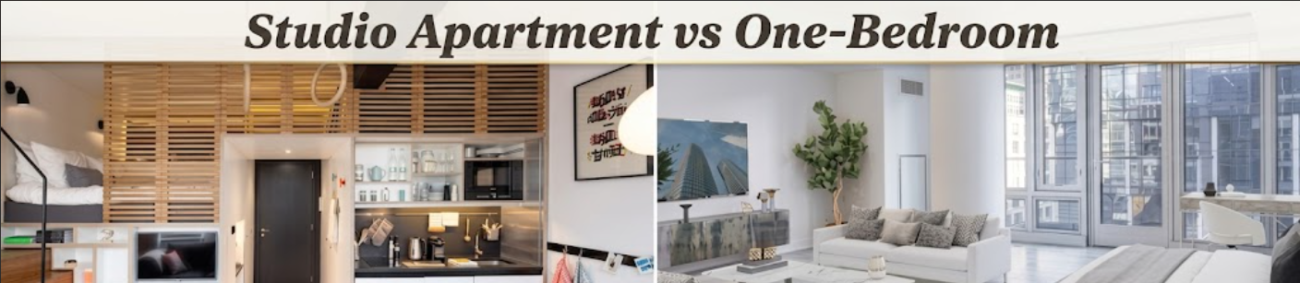
Early in my career, I made a call I’ve thought about many times since. A client, a young professional relocating to Toronto, asked me which was worth it for her budget: a 480-square-foot studio at $1,850 a month, or a 620-square-foot one-bedroom for $2,200. I told her to take the one-bedroom, almost reflexively. More space, separate bedroom, she’d thank herself later.
She signed the lease, moved in, and called me four months later. The bedroom felt isolating. The layout was awkward. She worked from home three days a week, and the one room that was supposed to give her privacy from her sleeping space had become the place she ate, worked, and watched television. She felt like she lived in a hallway with a door on it.
She was paying $350 more a month for a worse daily experience.
That conversation rewired how I think about this question. Because the honest answer isn’t about square footage. It’s about how you actually use a space, and which layout fits the life you’re living right now.
1. The Real Difference Between the Two
Most people frame this as a size question. Studios are smaller. One-bedrooms are bigger. Pay more, get more. But that framing misses the more important variable: how the space is divided.
A studio is a single open room where your sleeping area, living area, and kitchen exist in the same visual and physical space. No walls between functions. The entire footprint is usable from every angle.
A one-bedroom physically separates sleep from everything else. That door matters a lot, depending on your situation, and almost not at all in others.
The price gap between the two varies dramatically by city. In many major urban markets, the difference runs anywhere from $200 to $600 a month for comparable neighbourhoods. Over a 12-month lease, that’s between $2,400 and $7,200 — money that could go toward furniture, a renovation fund, or simply savings.
That number deserves to be taken seriously before you default to “bigger is better.”
2. When a Studio Wins
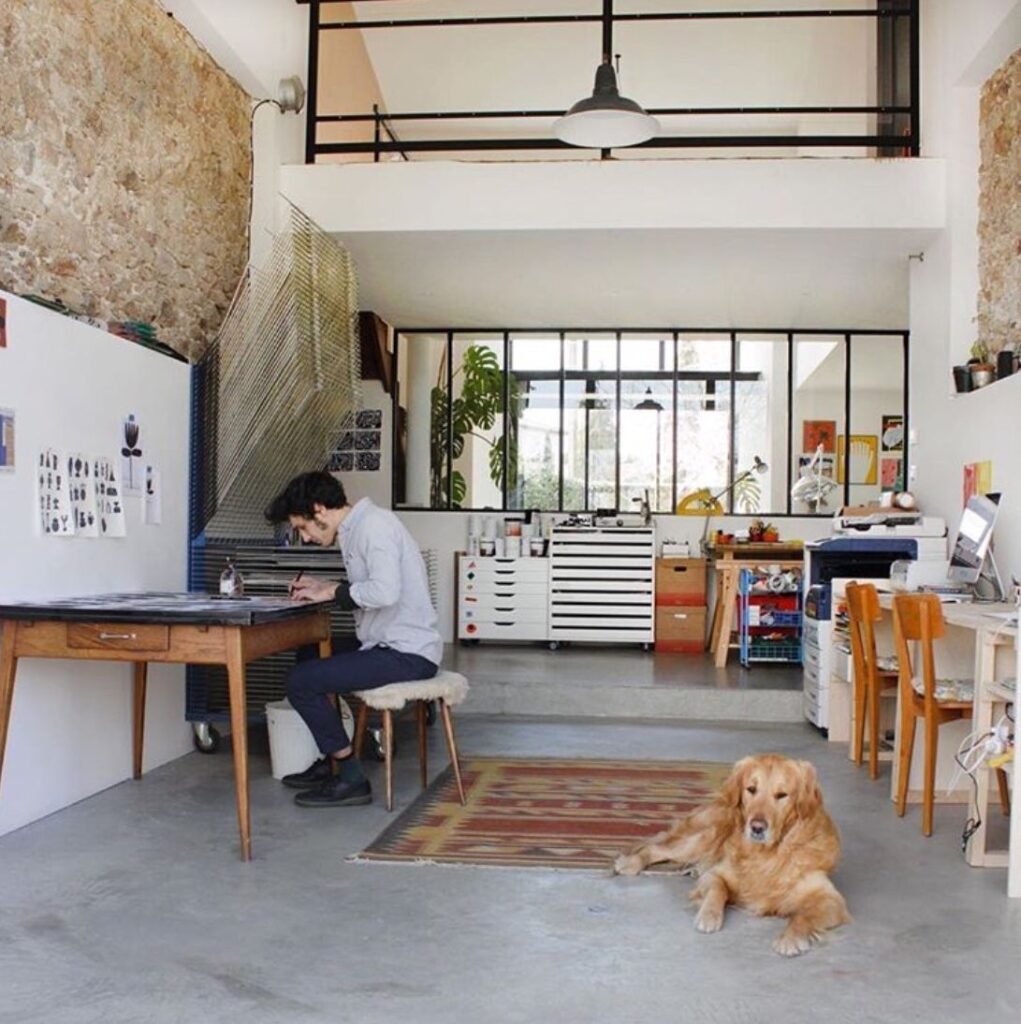
The studio gets dismissed unfairly, often by people who’ve never actually lived in a well-designed one. A thoughtfully set-up studio can feel larger, more functional, and genuinely more enjoyable than a poorly configured one-bedroom twice its size.
Studios work exceptionally well for people who spend most of their time outside the apartment — someone who travels frequently, works long hours, or uses the space primarily for sleeping and quick meals. When you’re home for eight hours and six of them are spent in bed, paying a premium for a separate living room you barely use doesn’t serve you.
They also work beautifully for single occupants who enjoy open living. The visibility of the whole space at once creates a certain energy that some people find calming and others find freeing. Everything is accessible. Nothing is hidden behind a door you have to remember to open.
The furniture situation in a studio often gets better as a result of constraint, too. When every piece has to earn its place, you end up with smarter, more intentional choices. An ottoman with storage. A bed frame with drawers. A wall-mounted fold-down desk. The kind of multi-functional thinking that Studio Apartment Setup covers extensively, and that genuinely transforms how a compact space operates.
From a budget standpoint, the studio wins clearly. Lower rent, lower utilities (one undivided space is easier to heat and cool), and often lower insurance costs. For someone in their first few years of building financial stability, that margin adds up to real money.
3. When a One-Bedroom Wins
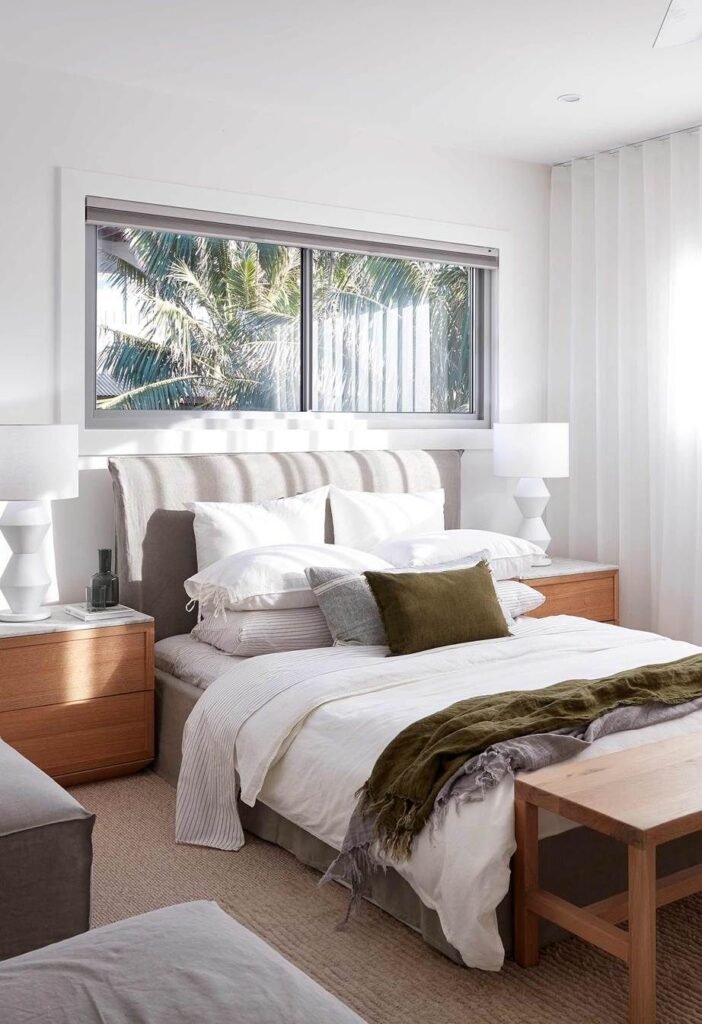
There are situations where the one-bedroom is not just preferable but genuinely necessary, and it has nothing to do with wanting more space to show off.
If you work from home consistently, the ability to close a door and separate your work environment from your sleeping space is worth real money. Research on sleep quality consistently points to association — if your brain connects your bed with work stress or laptop screens, the quality of rest suffers. A studio requires considerable discipline and specific furniture arrangements to create that psychological separation. A one-bedroom gives it to you structurally.
Couples who move in together almost always benefit from the one-bedroom. Not because the studio can’t accommodate two people physically, but because two adults with different schedules, different sleep patterns, and different social needs will eventually collide in a way that a door could have prevented. One person wants to read at midnight, the other needs total silence. In a studio, that’s a negotiation every single night.
If you frequently host overnight guests, the one-bedroom also handles that more gracefully. A studio requires someone to sleep in the living area, which works occasionally but becomes awkward as a regular arrangement.
And then there’s resale value, or in rental terms, desirability over time. One-bedrooms tend to hold rental demand more consistently because they serve a broader range of tenants. If you’re planning to sublet or if flexibility matters, the one-bedroom carries more future optionality.
4. The Side-by-Side Breakdown
This is where the decision usually gets clearer. Here’s an honest comparison across the factors that matter most.
| Factor | Studio | One-Bedroom |
|---|---|---|
| Monthly cost | Lower, typically $200-$600 less | Higher rent, utilities, often renter’s insurance |
| Usable space | All square footage is accessible | Some lost to hallways, closets, transitional areas |
| Work-from-home | Requires intentional zoning | Natural separation built in |
| For couples | Workable but requires compromise | Significantly better for different schedules |
| For solo renters | Often ideal, especially budget-conscious ones | More space than daily life may require |
| Entertaining guests | Compact, intimate — works for small gatherings | More flexible, separate sleeping space for overnight |
| Furniture flexibility | Benefits from multi-functional pieces | More room for conventional furniture layouts |
| Long-term lease comfort | Can feel small over a 2+ year lease | Easier to live in for extended periods |
| Design potential | High — constraint produces creative solutions | More straightforward but less forced ingenuity |
The one thing this table can’t capture is personal tolerance for open-plan living. Some people genuinely thrive in it. Others, no matter how beautiful the setup, find that living and sleeping in the same visual space slowly wears them down. That’s not a design problem. It’s a personality variable.
Be honest with yourself about which one you are before signing anything.
5. Where People Get This Wrong
The biggest mistake I see is choosing based on what the space looks like unfurnished rather than how it will function once you’re actually living in it.
A studio with nine-foot ceilings and good natural light photographs beautifully. It feels open on the tour. But if the layout puts the kitchen along the same wall as the closet and gives you nowhere natural to anchor a bed, those nine-foot ceilings won’t save you. You’ll spend the first six months rearranging furniture and blaming the apartment.
Conversely, a one-bedroom that photographs as generous can have a bedroom barely large enough for a queen bed and a dresser, leaving you with a “living room” that functions as an oversized corridor.
Before signing either lease, I’d strongly recommend sketching the floor plan to scale on paper, or using a basic room planner app, and placing your actual furniture in it. Not imaginary furniture. Your couch. Your bed. The desk you need for work. See what the flow looks like with everything in.
If you’re in a studio and the layout feels tight, the answer is almost always smarter furniture choices and vertical storage, not a bigger apartment. The Studio Apartment Setup approach to this is exactly right — working with the space you have by eliminating single-purpose pieces and thinking about the room in three dimensions rather than two.
People also make the mistake of choosing a one-bedroom and then furnishing it like a studio. They put a small sectional and a tiny dining table in a large open layout, and the room looks underfurnished and cold. A one-bedroom benefits from furniture scaled correctly to the room. That usually means spending more on fewer, better pieces rather than filling space with multiple small ones.
6. A Practical Decision Framework
Ask yourself these five questions before you decide.
How many hours a day am I realistically home and awake? If the answer is less than four on workdays, the one-bedroom may be a luxury you’re paying for and not using.
Do I work from home more than twice a week? If yes, the one-bedroom earns its premium pretty quickly in terms of mental health and productivity.
Am I living alone? Solo renters, especially those in their 20s or early 30s, often find studios genuinely freeing rather than limiting once they approach the layout with intention.
What would I do with the extra $300 a month? This is not a rhetorical question. If that money would sit in a savings account and compound, that’s a real argument for the studio. If it would disappear into expenses anyway, the calculus shifts.
How long am I planning to stay? Short lease, maybe 12 months, the studio is easier to make work even if it’s imperfect. Two or three years, the space you live in starts to matter more to your daily quality of life.
None of these questions have universal answers. That’s the point. This is a personal decision that a generic ranking can’t make for you.
FAQs
Can a studio apartment feel as comfortable as a one-bedroom? Yes, with the right approach to layout and furniture. The key is treating zones intentionally — a distinct sleeping area, a clear work or living zone, and storage solutions that keep visual clutter low. Studios designed well often feel more cohesive than poorly planned one-bedrooms. The resources at Studio Apartment Setup are genuinely useful for this kind of thinking.
Is a studio apartment a good idea for a couple? It depends heavily on the couple’s schedules and sleep habits. If both people keep roughly the same hours and have similar sleep needs, a well-sized studio (450 square feet or more) can work fine. If one partner works nights, travels frequently, or has a very different routine, the bedroom door becomes worth the extra monthly cost.
How much smaller is a studio than a one-bedroom? On average, studios run between 300 and 600 square feet, while one-bedrooms typically range from 550 to 900 square feet. The overlap is real. A larger studio can be meaningfully more spacious than a smaller one-bedroom, so always compare actual square footage rather than just the category.
Does a one-bedroom hold its value better as a rental over time? In most markets, yes. One-bedrooms serve a broader renter demographic — solo professionals, couples, and people with occasional guests — which tends to keep demand more stable. Studios skew toward younger, more transient renters, which can create higher turnover.
What’s the single most important thing to check before renting a studio? The layout of the sleeping area relative to the kitchen and windows. If the only logical spot for a bed is directly beside the kitchen or facing a wall with no natural light, the studio will feel constraining no matter what you do with it. Good light and a sleeping zone that feels even slightly separated from the cooking zone makes an enormous difference in how livable the space is day to day.