

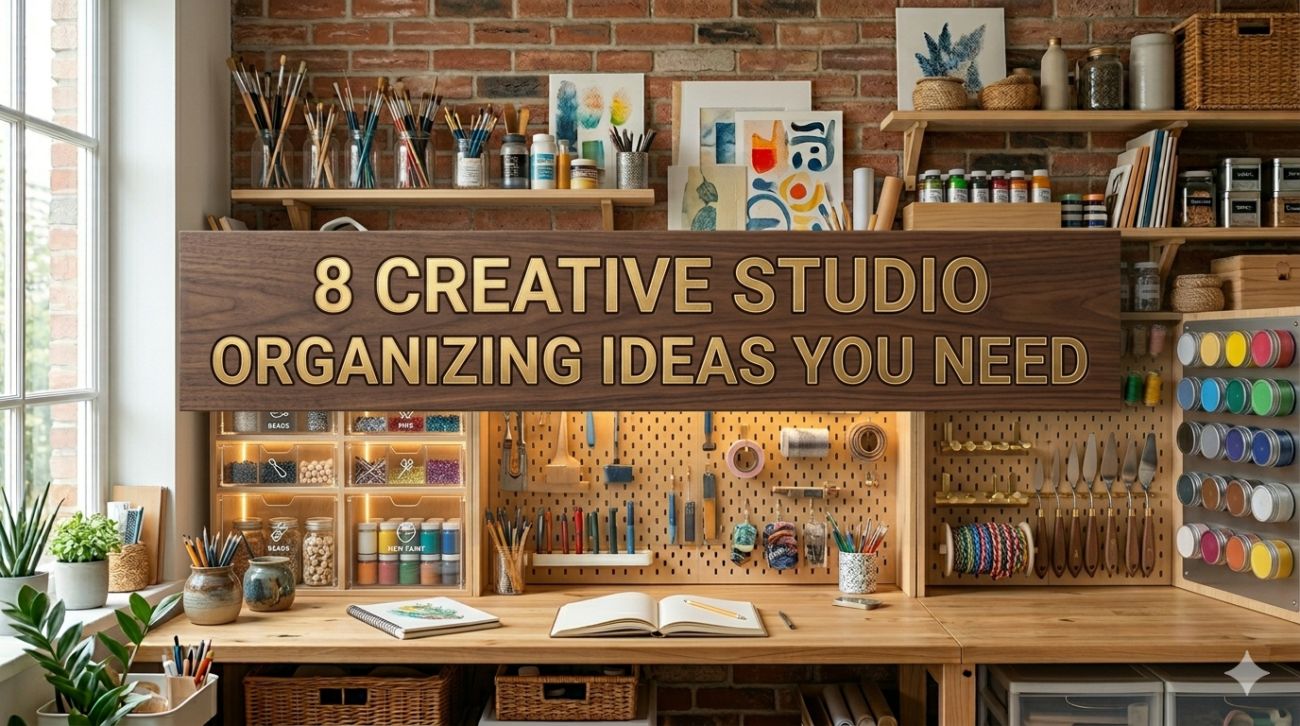
A studio space can be one of the most rewarding yet challenging places to live or work in. Whether you’re in a small apartment studio, a creative workspace, or a hybrid home-office setup, the biggest issue is almost always the same: space disappears faster than you expect.
The good news is that organizing a studio isn’t about having more space—it’s about using space smarter. Below are eight creative, practical, and visually structured organizing ideas that can completely transform how your studio feels and functions.
- Vertical zoning instead of floor clutter
One of the most overlooked studio organizing strategies is thinking vertically instead of horizontally. Most people try to organize by spreading things across the floor, but in a studio, your walls are your best asset.
Vertical zoning means dividing your space into “height layers”:
- Floor zone: storage bins, drawers, rolling carts
- Mid zone: desks, seating, daily-use shelves
- Upper zone: cabinets, hooks, hanging storage
Simple vertical zone layout:
| Zone Level | Purpose | Examples |
|---|---|---|
| Upper Wall | Rare-use items | Seasonal decor, archives |
| Eye Level | Daily access | Books, tools, kitchen items |
| Floor | Heavy storage | Boxes, appliances |
Why it works:
- Frees up walking space
- Reduces visual clutter
- Makes small studios feel taller
A common mistake is ignoring wall height above eye level. That space is usually wasted but can store at least 30–40% of rarely used items.
- Modular furniture that adapts to your day
In a studio, every piece of furniture should earn its place. Modular furniture is designed to shift roles depending on your needs.
Examples:
- Sofa beds
- Foldable desks
- Expandable dining tables
- Stackable stools
Function shift chart:
| Furniture Type | Day Use | Night Use | Storage Benefit |
|---|---|---|---|
| Sofa bed | Seating | Sleeping | Removes bed frame clutter |
| Folding desk | Work | Fold away | Creates open floor space |
| Nesting tables | Surface | Stackable | Saves corner space |
Why this matters:
Instead of assigning one function per item, you multiply usability per square foot.
A studio with modular furniture can feel up to 30% larger simply because it constantly “reconfigures” itself.
- Hidden storage zones you’re not using
Hidden storage is one of the most powerful studio organization tricks because it uses space that already exists but is often ignored.
Common hidden storage areas:
- Under bed frames
- Behind doors
- Inside ottomans
- Under seating benches
- Above kitchen cabinets
Hidden storage efficiency table:
| Hidden Area | Storage Capacity | Best For |
|---|---|---|
| Under bed | High | Clothes, boxes |
| Door backs | Medium | Hooks, small tools |
| Ottoman interior | Medium | Blankets, cables |
| Above cabinets | High | Seasonal items |
Why it works:
You’re not adding furniture—you’re activating unused space.
Tip: Use uniform storage boxes so hidden areas don’t become chaotic dumping grounds.
- The “3-layer visibility rule”
A visually clean studio depends on how much your brain can see at once. The 3-layer visibility rule helps reduce mental clutter.
Layers:
- Layer 1: visible essentials (daily use)
- Layer 2: semi-visible storage (weekly use)
- Layer 3: hidden storage (rare use)
Visibility breakdown:
| Layer | Visibility | Access Frequency | Examples |
|---|---|---|---|
| 1 | Fully visible | Daily | Phone chargers, mugs |
| 2 | Partially visible | Weekly | Books, accessories |
| 3 | Hidden | Monthly | Seasonal items |
Why it matters:
Clutter isn’t just physical—it’s visual overload. This system reduces decision fatigue.
- Floating storage systems for walls
Floating systems are essential in studios because they lift storage off the floor, creating instant openness.
Options include:
- Floating shelves
- Wall-mounted rails
- Pegboards
- Hanging baskets
Wall storage effectiveness chart:
| System Type | Flexibility | Load Capacity | Best Use |
|---|---|---|---|
| Floating shelves | Medium | High | Books, decor |
| Pegboards | High | Medium | Tools, accessories |
| Wall rails | High | High | Kitchen, office |
| Hanging baskets | Medium | Low | Light items |
Why it works:
Floor space is the most valuable real estate in a studio. Every item lifted off the ground increases perceived space.
- Multi-zone flooring strategy
Instead of dividing walls, you can divide the floor visually using rugs, furniture placement, or lighting.
A studio can effectively have:
- Sleeping zone
- Working zone
- Relaxation zone
- Storage zone
Even without walls, the brain interprets separation.
Floor zoning layout:
| Zone | Definition Tool | Purpose |
|---|---|---|
| Sleep | Rug + bed placement | Rest |
| Work | Desk lighting | Focus |
| Lounge | Sofa + rug | Relax |
| Storage | Shelving unit | Organization |
Why it works:
It creates psychological structure in open spaces.
- Rotation-based decluttering system
Instead of constantly organizing, you rotate items in and out based on usage cycles.
This system is simple:
- Keep only what you use in the last 30–60 days visible
- Store or remove the rest
- Rotate seasonally or monthly
Rotation efficiency table:
| Category | Keep Visible | Store Away |
|---|---|---|
| Clothing | Seasonal set | Off-season |
| Kitchen tools | Daily tools | Specialty tools |
| Decor | Current theme | Backup decor |
Why it works:
It prevents accumulation without requiring constant cleaning.
- Smart labeling and visual memory system
Labels are often underestimated, but they drastically reduce time spent searching and reorganizing.
Types of labeling systems:
- Color coding
- Icon-based labels
- Transparent storage bins
- Digital inventory lists
Label effectiveness chart:
| System Type | Speed Improvement | Clarity Level |
|---|---|---|
| Color coding | High | Medium |
| Icons | Medium | High |
| Transparent bins | High | Very High |
| Digital lists | Very High | High |
Why it works:
Your brain remembers visuals faster than text. A structured labeling system reduces chaos instantly.
Summary table: Combined studio efficiency strategy
| Strategy | Impact on Space | Impact on Organization |
|---|---|---|
| Vertical zoning | High | High |
| Modular furniture | Very High | High |
| Hidden storage | High | Medium |
| Visibility rule | Medium | Very High |
| Floating storage | High | Medium |
| Floor zoning | Medium | High |
| Rotation system | Medium | Very High |
| Smart labeling | Low | Very High |
Frequently Asked Questions (FAQs)
- What is the best way to organize a very small studio?
Start with vertical storage and modular furniture. These two changes alone create the biggest improvement in usable space without renovation. - How do I make my studio look less cluttered quickly?
Apply the 3-layer visibility rule: hide anything not used daily, and keep only essentials visible. - Is expensive furniture necessary for good studio organization?
No. Many effective solutions like pegboards, storage boxes, and labeling systems are inexpensive but highly effective. - How often should I reorganize a studio space?
A light reorganization every 2–4 weeks and a full seasonal reset every 3–4 months works well for most studios. - What is the biggest mistake people make in studio organization?
Overfilling horizontal space instead of using vertical space. Floors should stay as open as possible. - Can a studio really feel spacious without changing its size?
Yes. Through zoning, vertical storage, and visual reduction techniques, a studio can feel significantly larger without physical expansion.