

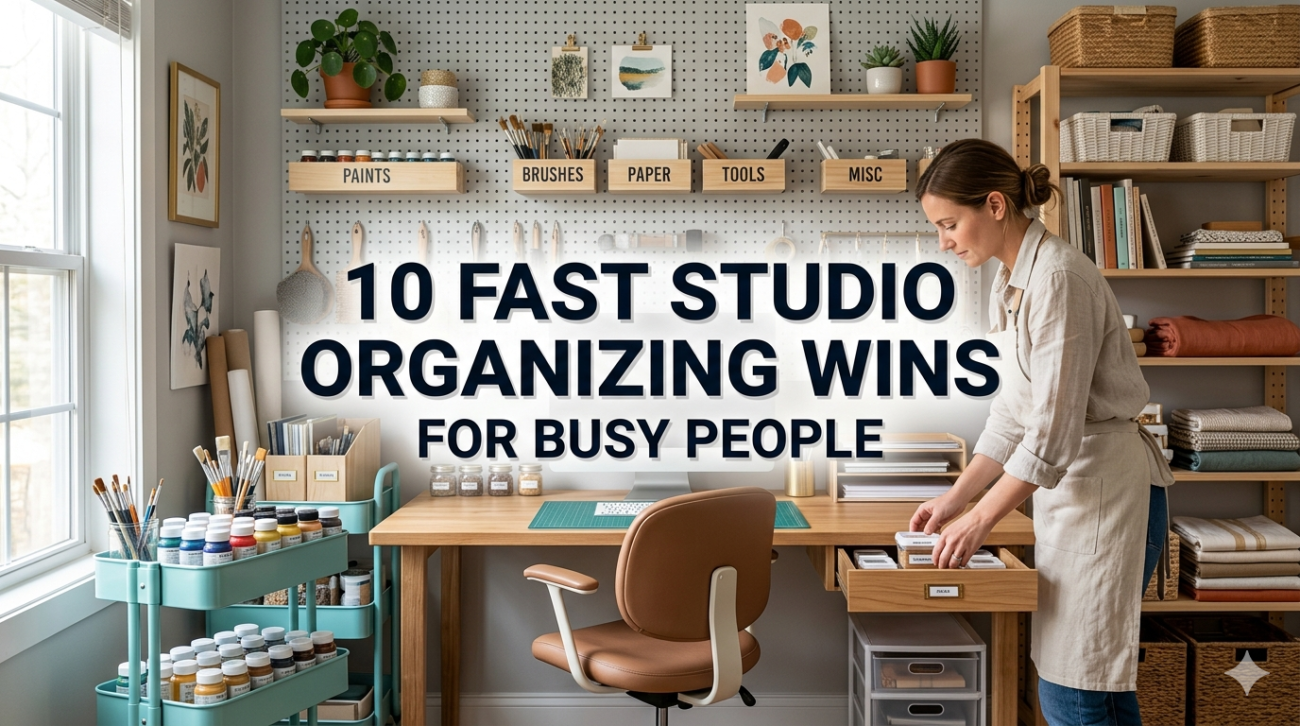
Living in a studio apartment can feel like a constant balancing act between comfort, functionality, and clutter control. When space is limited and life is busy, organization isn’t just about aesthetics—it becomes a survival strategy. The good news is that you don’t need a full weekend overhaul or expensive storage systems to make your studio feel dramatically more organized.
This guide focuses on 10 fast studio organizing wins that can be implemented in minutes or under an hour, even on your busiest days. Each idea is designed for small-space living, quick impact, and minimal effort with maximum return.
Why Fast Organization Matters in a Studio
In a studio apartment, every object competes for visibility and space. Unlike larger homes, there’s no “out of sight, out of mind.” Clutter multiplies visually, making even small messes feel overwhelming.
Here’s how disorganization typically affects studio living:
table: impact of clutter in small spaces
| Area Affected | Result of Clutter | Fast Fix Benefit |
|---|---|---|
| Mental focus | Distraction, stress | Clearer thinking |
| Sleep space | Restlessness | Better rest quality |
| Work area | Reduced productivity | Faster task completion |
| Kitchen zone | Lost items, waste | Easier meal prep |
| Floor space | Reduced mobility | More usable living area |
The key is not perfection—it’s momentum. Small wins build consistency.
- The 10-Minute Surface Reset Rule
One of the fastest transformations comes from clearing visible surfaces: tables, counters, desks, and nightstands.
The idea is simple: spend just 10 minutes resetting flat surfaces every day.
What to do:
- Remove everything that doesn’t belong
- Group items by category
- Return items to designated storage zones
- Leave 1–3 intentional decor pieces only
chart: visual impact of surface clearing
Before Reset:
Clutter density: ██████████
Usable space: ██
After Reset:
Clutter density: ███
Usable space: █████████
Even if nothing else changes, your studio will instantly feel larger.
- Create “Drop Zones” Instead of Random Piles
Busy people don’t fail at organizing—they fail at having systems that match real behavior.
A drop zone is a controlled landing spot for everyday items.
Examples:
- Keys + wallet tray near the door
- Laundry basket near wardrobe
- Charging station for devices
- Small bin for “today’s items”
table: drop zone system setup
| Zone Type | Location | Items Stored |
|---|---|---|
| Entry zone | Door area | Keys, bags, mail |
| Tech zone | Desk/nightstand | Chargers, devices |
| Clothing zone | Closet corner | Worn-but-not-dirty clothes |
| Utility zone | Kitchen corner | Bills, receipts |
This prevents “random placement clutter,” which is the biggest studio space killer.
- Use Vertical Space Immediately
If you’re short on space, your walls are your second floor.
Fast wins include:
- Adhesive hooks for bags and jackets
- Hanging organizers on doors
- Wall-mounted shelves for daily items
- Pegboards for flexible storage
chart: space utilization comparison
Horizontal storage only: ███████
With vertical storage: ██████████████
Vertical organization doubles your usable area without expanding your footprint.
- The One-In, One-Out Rule (Instant Version)
This rule prevents long-term clutter buildup.
Every time you bring something new into your studio, remove one similar item immediately.
Examples:
- New shirt → donate old shirt
- New mug → remove unused one
- New gadget → discard broken one
table: clutter growth control
| Time Period | Without Rule | With Rule |
|---|---|---|
| 1 month | +15 items | Balanced |
| 3 months | +50 items | Stable |
| 6 months | Overflow | Controlled space |
It takes seconds but prevents long-term overload.
- The “Visible Floor” Standard
In studio living, floor visibility equals mental clarity.
Goal: At least 70% of your floor should remain visible at all times.
Quick actions:
- Store shoes vertically or in racks
- Avoid floor piles
- Use under-bed storage bins
- Keep walking paths clear
chart: floor clarity impact
Clear floor (70%+ visible): Calm, spacious feel
Moderate clutter: Manageable but busy
Full clutter: Stressful, confined feeling
A clear floor instantly improves perceived space size.
- The 5-Item Reset Basket Trick
Instead of cleaning everything, use a basket to collect only 5 misplaced items at a time.
Process:
- Grab basket
- Collect 5 random items
- Return them to proper places
- Stop and repeat later if needed
Why it works:
- Prevents overwhelm
- Encourages micro-cleaning habits
- Keeps momentum manageable
table: cleaning method comparison
| Method | Effort Level | Completion Rate |
|---|---|---|
| Full deep clean | High | Low for busy people |
| 5-item reset | Low | High consistency |
- Assign “Zones” for Everything
In small studios, chaos often comes from undefined space usage.
Divide your studio into functional zones:
- Sleeping zone
- Working zone
- Storage zone
- Relaxation zone
Even if physically overlapping, mentally assigning zones helps behavior consistency.
chart: mental organization benefits
No zones: ███ (confusion)
Basic zones: ███████ (moderate clarity)
Clear zones: ████████████ (high efficiency)
- Use Transparent Storage for Quick Visual Access
Opaque storage leads to forgotten items. Transparent bins reduce duplication and clutter.
Best uses:
- Pantry items
- Craft supplies
- Tech accessories
- Toiletries
table: storage visibility impact
| Storage Type | Item Awareness | Time Saved |
|---|---|---|
| Opaque boxes | Low | More searching |
| Labeled boxes | Medium | Some efficiency |
| Transparent bins | High | Fast access |
- The “2-Minute Rule” for Instant Cleanup
If a task takes under 2 minutes, do it immediately.
Examples:
- Hang jacket
- Put cup in sink
- Fold blanket
- Toss trash
This prevents micro-clutter accumulation.
chart: task accumulation over time
Ignoring small tasks: ████████████
Applying 2-minute rule: ████
Over time, this dramatically reduces mess buildup.
- Night Reset Routine (5–7 Minutes)
Before sleeping, reset your studio lightly so the next morning starts clean.
Checklist:
- Clear surfaces
- Fold blanket
- Put items back in zones
- Prepare tomorrow essentials
- Quick trash sweep
table: morning outcome comparison
| Night Routine | Morning Result |
|---|---|
| No reset | Chaotic start |
| 5–7 min reset | Calm, productive start |
This is one of the highest ROI habits for studio living.
Combined Impact of All 10 Wins
When combined, these small actions compound into a major transformation.
summary chart:
Organization improvement over time:
Week 1: ███ (slight improvement)
Week 2: ██████ (noticeable clarity)
Week 3: █████████ (strong control)
Week 4: ████████████ (stable system)
Conclusion
Organizing a studio apartment doesn’t require major renovations or complicated systems. What actually works is consistency built on small, fast wins that fit into real-life schedules.
These 10 strategies are designed to:
- Reduce visual clutter instantly
- Improve mental clarity
- Maximize limited space
- Create sustainable habits
The goal isn’t perfection—it’s flow. A studio that works with you, not against you.
FAQs
- How long does it take to see results from these organizing wins?
Most people notice visible improvements within 1–3 days if they apply even 3–4 of the strategies consistently. - Do I need to buy storage products to get started?
No. Most of these methods rely on behavior changes, not purchases. Storage tools only enhance the system later. - What if my studio is extremely small?
These strategies are specifically designed for very small spaces. The smaller the space, the more effective they become. - Which method gives the fastest visible result?
The 10-minute surface reset and visible floor rule create the quickest visual transformation. - How do I stay consistent when I’m busy?
Focus on “micro habits” like the 2-minute rule and night reset routine. These require minimal effort but build strong consistency. - Can I combine all 10 strategies at once?
Yes, but it’s better to start with 2–3 and gradually layer the rest so the system becomes natural rather than overwhelming.