
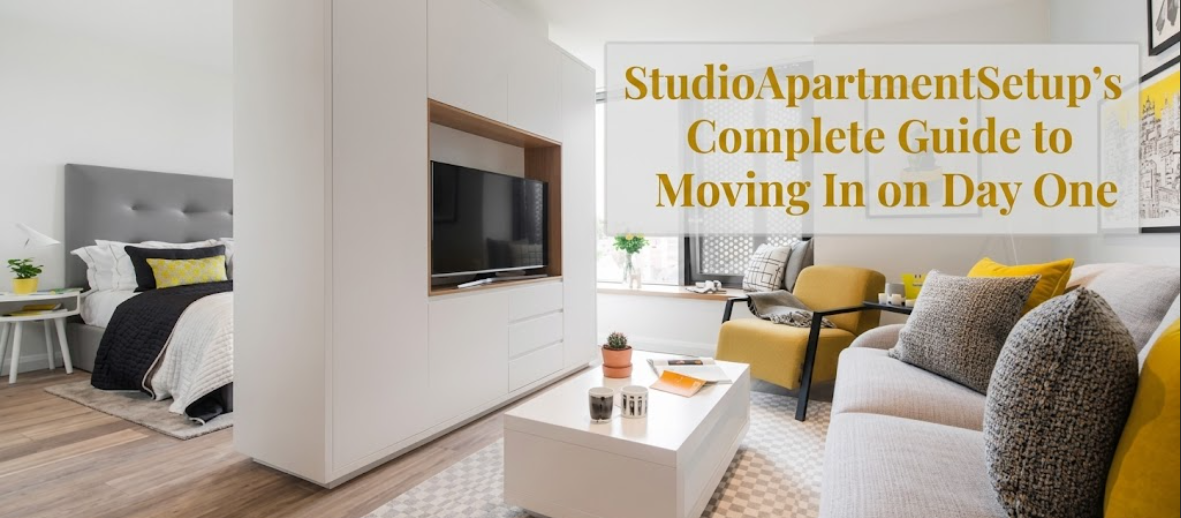
The mistake I see most often is the assumption that moving day in a studio apartment is basically a moving day anywhere else. Get the truck, get the boxes in, get the furniture somewhere, sort the rest out over the next few weeks. It’s an understandable way to think about it. It’s also almost always how people end up with a sofa against the wrong wall, a bed eating far more floor than it needs to, and that persistent, low-grade feeling that something is off, but they can’t quite name what.
I’ve worked with enough clients on small-space setups to say this with some confidence: Day One in a studio is not a logistics problem. It’s a sequencing problem. The order you make decisions in, which piece goes where, what you establish before you unpack, what you hold off on entirely, will determine whether you end up with something that feels designed or something that feels deposited. And the difference between those two outcomes is mostly settled in the first five or six hours.
That’s what this guide is about.
1. The Twenty Minutes Before Anything Comes In
Walk into the empty apartment before anyone else does. Before the movers, before the first box, before your most helpful friend who keeps offering to “just start unpacking things.” Twenty minutes alone in the space, and take them seriously.
This isn’t atmosphere-setting. It’s information. Look at where the light is actually coming from at this time of day. Notice which wall your eye goes to first when you step through the front door. That’s probably your anchor wall, and it’s almost certainly where the bed belongs. Walk from the entrance to the kitchen to the bathroom and pay attention to how you move. That path is the one you’ll take two hundred times a week, and if your furniture arrangement fights it, you’ll feel the friction every single day.
Three things to write down: where you’d naturally sleep based on what the room feels like right now, which area is brightest during working hours, and where a small table would feel right if someone handed you one this second. Those answers carry more weight than any floor plan template you’ll find online, because they’re specific to this room, not a generic one.
One thing that shapes all of these decisions, and that most people never establish ahead of time: the basics of the apartment itself. If you haven’t already done this, read through what to ask your landlord before moving into a studio. Wall construction, outlet placement, whether the building allows wall anchors, which radiators you can work around. All of that determines what’s actually buildable in the space.
2. Bed First. Non-Negotiable.
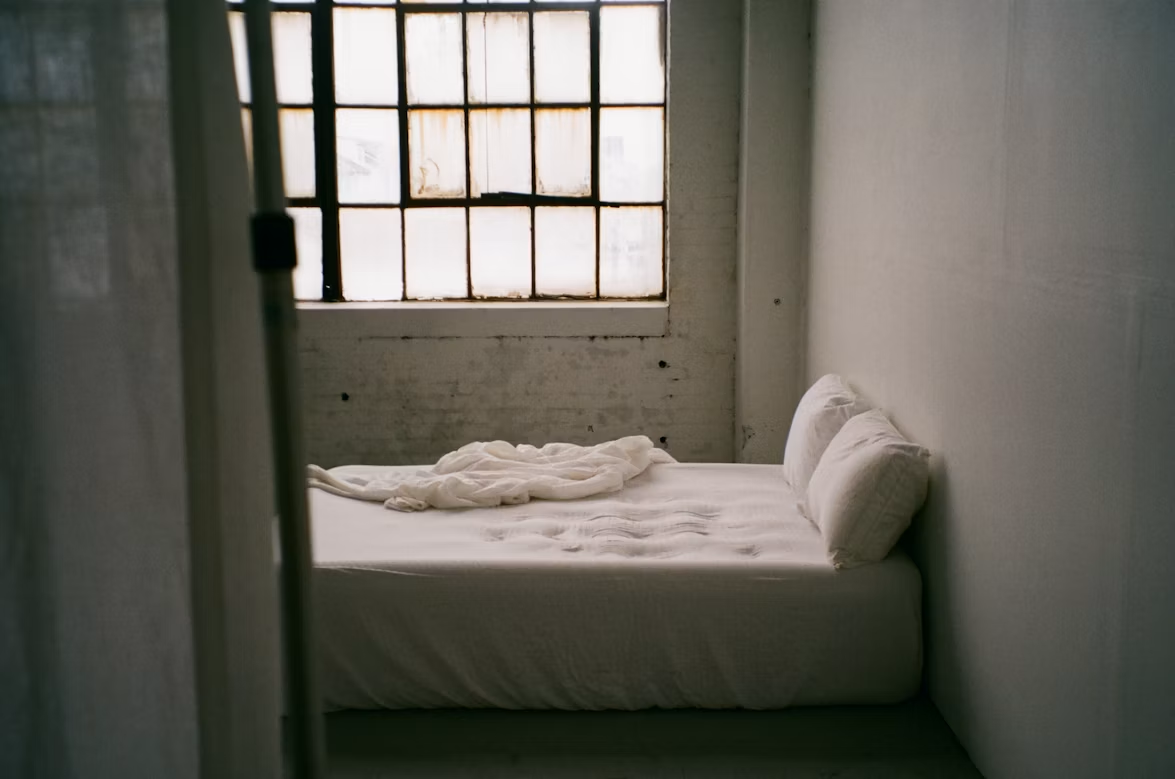
The bed is the largest piece of furniture in a studio apartment, and because of that, it controls the layout of everything else. Place it last, after the sofa is in, after the bookshelf is up, after someone’s already positioned the rug, and you’ll spend the next three days moving at least two other things.
Put the bed in first. Position it, finalize it, don’t revisit it.
The headboard goes against a solid wall. Windows directly above the headboard create draft issues, and more practically, you lose the ability to hang anything above the bed. In a studio, that’s one of your most valuable vertical surfaces. Once the bed is in position, measure clearance on every side you’ll actually walk along. The number I work with is eighteen inches minimum. Less than that and the room starts to feel corridor-like, regardless of how open the rest of the layout is.
Platform beds with integrated storage are worth the extra cost in a studio specifically. A good bed frame with built-in drawers removes the need for a separate dresser in many cases, which returns roughly twelve to fifteen square feet of floor space. If you’re weighing the storage question, the honest breakdown of what actually fits under a bed and what doesn’t is worth reading before you commit to anything.
And if a Murphy bed crossed your mind at any point, I’ll say it clearly: sometimes yes, sometimes no, and the answer depends almost entirely on the specific layout. Not the size of the room in general.
3. Zone the Space Before You Open a Single Box
Once the major furniture pieces are in, stop. Don’t reach for a box. Walk the room and name the zones out loud. Sleeping zone. Working zone. Living zone. Eating zone. You’re doing this because once boxes start opening, flat surfaces fill up immediately, and you lose any sense of where things should actually go versus where things ended up.
Creating the zones first changes everything about how you unpack. When you know the northeast corner is the working area, the cables and the desk lamp go there, not wherever there’s space. When you’ve established that the sofa anchors a distinct living zone and not just fills a gap between the bed and the wall, the things that belong in a living area go to it intentionally.
The reason most studios feel like one undifferentiated room is that nothing in them signals a shift in purpose. The bed and the sofa and the desk are all in the same visual field, competing with each other, and the brain never quite settles into any one of them. The fix is not more furniture, it’s boundary-making. A rug defines a zone more effectively than any wall would. A bookshelf placed perpendicular to the main wall creates a room-within-a-room. A pendant or floor lamp positioned over a seating area tells the eye “this is a distinct place.” There’s a thorough look at exactly how this works in practice over at Studio Apartment Setup, specifically in the guide on creating separate spaces without walls.
Zone first. Then unpack.
4. The Day One Decisions That Cost You Three Weeks Later

Some mistakes are recoverable. These are the ones that aren’t, or at least aren’t without real effort.
The sofa that doesn’t fit through the door. Standard sofas run between eighty and ninety inches. Standard studio entryways are often significantly narrower, and the angle from the hallway into the room makes it worse. I’ve watched delivery crews spend forty-five minutes trying to thread furniture through doors, and sometimes the answer is simply that it doesn’t fit. Measure the door frame height and width, measure the entryway angle, and confirm the clearance path from the front door to where the piece will actually live. Do this before you buy.
All the furniture pushed against the walls. This is the advice people get most, and it’s mostly wrong. Pushing everything to the perimeter creates a room that looks like it’s waiting for something to happen in the middle of it, which, in a studio, is where your actual life is going to take place. Floating pieces slightly away from the walls (six inches is enough) creates a visual depth that reads as more spacious, not less. And it makes zoning possible.
Skipping lighting on Day One with the intention of dealing with it later. This is the one I see the most, it’s also the one with the most invisible consequences. The overhead fixture goes on, it’s harsh and flat, and the plan is to buy a lamp next weekend. Next weekend becomes next month. And for that entire time, the apartment never quite feels right, and the person living in it can’t figure out why. I should say, there are people who genuinely don’t notice this, they adjust to whatever light they have and move on. But if you’re someone who cares about how a room feels, this one costs you daily. Bring one lamp with you on moving day. Even a temporary one. The quality and direction of light in a studio determines more of its character than almost any other single element, and the reason so many studios end up feeling like a hotel room is very often this, specifically.
Over-buying storage before you understand the space. You’re in a new place, you don’t know where anything is going yet, so you buy bins and baskets and wire racks because it feels productive. Two weeks later, half of them are in the wrong places and solving problems you don’t actually have. Furniture with storage built in is always the right first move. Add-on storage solutions work best once you’ve lived in the space and identified the actual gaps.
Day One Checklist
Studio Apartment Setup put this together as a sequencing tool, not a full setup guide. Use it the morning of the move to make sure the decisions happen in the right order.
BEFORE THE BOXES COME IN
- Walk the empty space alone, at least 20 minutes
- Confirm outlet placement and count
- Identify your natural path through the room
- Decide which wall will anchor the bed
AS FURNITURE ARRIVES
- Bed goes in first, placed and finalized before anything else
- Measure 18-inch minimum clearance on all walking sides
- Sofa placed to define the living zone, not fill the nearest gap
- One rug positioned to anchor the main gathering area
BEFORE UNPACKING
- Name your zones aloud, confirm they make sense spatially
- Identify where natural and artificial light will meet each zone
- Confirm the working surface is in a location you can actually sit at daily
AS YOU UNPACK
- Kitchen and bathroom first (function before aesthetics)
- Clothing and wardrobe next
- Books, art, and decorative pieces last, after you’ve lived in it for at least 48 hours
Frequently Asked Questions
Can a studio apartment realistically be set up in a single day?
Functionally, yes. If the sequence is right, bed first, zones before unpacking, kitchen and bathroom ahead of everything decorative, you can have a genuinely livable space by the end of Day One. Settled, in the sense that everything is where it should be and feels considered, takes closer to two weeks of small adjustments. But livable on Day One is absolutely achievable and worth planning for deliberately.
What furniture should be delivered first if I’m coordinating multiple orders?
The bed, always. Then any storage unit that doubles as a room divider or boundary-maker. Then the sofa. Decorative furniture, side tables, accent lighting, and anything modular comes last, after the primary layout is locked. Delivery timing matters more than most people account for. Receiving the rug before the sofa, for instance, means repositioning the rug twice.
How do I make a studio apartment feel less like a temporary space on Day One?
Lighting and textiles. One lamp you actually like, one throw or blanket that’s yours, one or two objects with genuine personal meaning. The rest can be generic and placed-for-now. But those three things change whether the space feels inhabited or staged within the first hour of being in it. Furniture is secondary to that initial sense of being somewhere.
Is it worth hiring a designer for a studio move-in?
If the apartment is under 400 square feet and you haven’t lived in a studio before, a single consultation is often worth more than it costs in avoided mistakes. Returned furniture, repositioned pieces, storage bought for the wrong reasons. Those add up quickly. That said, a measured floor plan, a commitment to zone-first thinking, and a clear unpacking sequence will get most people most of the way there without professional help.
Should I paint or hang art on Day One?
Neither. Color decisions made before you understand how light moves through the room across a full day, morning through to evening, almost always need to be revised. And art hung before the furniture is final gets moved again when the furniture moves. Wait at least a week. Two is better. The space will tell you what it needs once you’ve lived in it, and that information is genuinely hard to get any other way.