
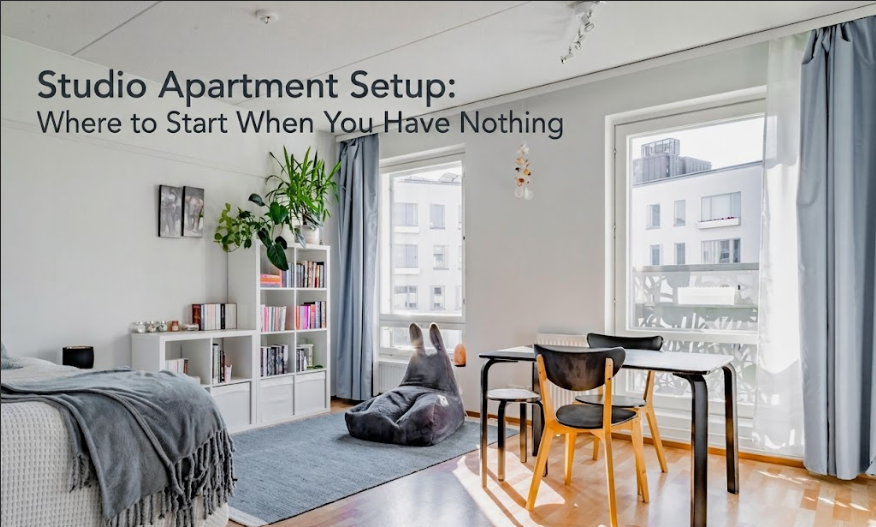
Every empty studio looks exactly the same on move-in day. White walls. A too-small closet. A kitchen the size of a coat rack. And absolutely no idea where to begin.
I’ve walked into hundreds of spaces like this with clients standing there with a credit card, a trunk full of boxes, and the burning impulse to just start buying things. Lamps. Throw pillows. A rug they found on sale. I get it, completely. You want it to feel like home as fast as possible. But sequence matters enormously in a studio apartment, more than in any other space I’ve worked in. Buy in the wrong order and you’ll spend twice, regret half, and end up with something that looks assembled rather than intentional.
So here’s how to actually start.
1. Stop Shopping Before You Do This

Before a single piece of furniture enters the apartment, you need a hand-drawn floor plan. Not a Pinterest board. Not a saved folder of Instagram rooms. An actual sketch of your specific four walls, to scale.
Grab a measuring tape and write down everything: total length and width, the exact location of every door and window, how far the closet juts into the room, where the outlets land, and which direction your light switches face. This takes twenty minutes. And those twenty minutes will save you from returning a sofa that doesn’t clear the front door, which I’ve watched happen more times than I’d care to admit.
Once you have measurements, use something like IKEA’s free room planner, or honestly just graph paper, to sketch a basic layout before you commit to anything. You don’t need design software. You need to see the room as a flat diagram before making three-dimensional decisions about it.
The other thing most people skip entirely? Sit in the empty apartment for twenty minutes before doing anything else. See where the morning light hits. Notice which wall feels like the natural anchor for your eye. Pay attention to how you walk from the front door to the kitchen to the bathroom. That spatial instinct, developed in twenty quiet minutes, will inform every decision that follows.
2. The First Purchases That Actually Matter

When you have nothing, the temptation is to treat the space as a blank canvas waiting for decoration. It isn’t. A studio with nothing in it is an infrastructure problem, not an aesthetic one.
Start with sleep. Your bed is the largest piece of furniture in the room and it will dictate every other decision you make about layout. Get this right first. In a studio, a platform bed with built-in drawers is almost always worth the investment over a basic frame, because those drawers eliminate the need for a separate dresser. In 350 to 500 square feet, that tradeoff matters enormously. If the platform bed is out of reach right now, a basic frame with bed risers and a set of under-bed rolling bins will do the job in the meantime. The point is: storage from day one.
Second is seating. But not a full sectional. Not yet, possibly not ever. A well-proportioned sofa in the 72 to 80 inch range works for most studios. Go smaller and it reads like doll furniture. Go larger and the rest of the room disappears around it. People consistently make the mistake of buying the biggest sofa that physically fits. Physical fit and visual proportion are not the same thing.
Third is a surface for eating and working, which in a studio are usually the same table. A round table seats more people than a rectangular one of equivalent footprint, takes up less visual space, and doesn’t generate that awkward dead corner that rectangular tables always seem to create against a wall. If you have almost no space at all, a wall-mounted drop-leaf is worth a look. It folds flat when not in use and gives you a proper surface when you do need it.
Everything else comes after these three categories are sorted. And I mean everything.
Here’s a simple priority chart to reference as you’re shopping:
| Priority | Category | What to Get | What to Skip For Now |
|---|---|---|---|
| 1 | Sleep | Platform bed with storage drawers, or frame + risers + bins | Decorative headboard, surplus pillows |
| 2 | Seating | 72-80″ sofa, appropriately scaled | Sectionals, accent chairs, large ottomans |
| 3 | Work / Dining | Round table or wall-mounted drop-leaf | Full dining sets, separate work desk |
| 4 | Storage | Floating shelves, over-door organizers | Freestanding armoires, built-in units |
| 5 | Lighting | One floor lamp, one bedside lamp | Chandeliers, lots of accent lights |
| 6 | Decor | One or two meaningful pieces | Collections, full gallery walls, many plants |
Work through these categories in order. It sounds obvious. Almost no one does it.
3. The Layout Mistakes That Create the Biggest Problems
A few patterns keep showing up when I work with clients in smaller spaces, and the layout errors tend to cluster around the same decisions.
The first is pushing all the furniture against the walls. This is instinctive because people assume it creates more open floor space in the center. What it actually creates is a room that looks like a waiting area. Bringing furniture even a few inches off the wall and creating a deliberate grouping makes the space read as designed. If your sofa backs up slightly toward the sleeping area rather than pressing against the opposite wall, you’ve created two distinct zones from one open room. That separation changes how the whole apartment feels to live in.
The second mistake is ignoring vertical space entirely. The walls above your furniture are prime real estate and most people leave them completely bare. Floating shelves that go up rather than just out, a tall mirror that draws the eye upward, artwork hung slightly higher than feels instinctive. These moves expand a room visually without touching the floor plan at all. This breakdown of studio layout mistakes making your apartment feel smaller covers this in good detail if you want to go deeper.
The third mistake, and the one that costs the most to fix later, is not treating the sleeping area as a visually distinct zone. The bedroom and the living room are technically the same room in a studio. But they shouldn’t feel that way. A rug placed under or at the foot of the bed defines that corner as a sleeping space. A thin curtain panel or an open shelving unit used as a partial room divider gives just enough visual separation without blocking light. Even something as simple as a piece of art hung directly above the headboard signals to your brain: this is the bedroom wall. And that signal, subtle as it is, actually makes it easier to sleep.
For anyone who wants to see how small layout adjustments translate into major improvements, these four specific changes that improved one studio apartment are worth a look before you settle on a final arrangement.
4. Making It Feel Like Somewhere You Actually Want to Come Home To
This is the part people rush toward. And I understand the impulse. But it only works well when it comes after the infrastructure is sorted.
Texture first. When you’re working with a single open room, textiles do an enormous amount of heavy lifting. A jute rug, a linen throw, a velvet cushion or two. None of this is expensive. All of it changes how a space feels. A studio with bare floors, plain walls, and a basic sofa feels transient, like you’re camping. The same studio with a rug on the floor and a throw draped over the arm of the sofa reads as inhabited. Like someone actually lives there. That distinction matters more than most people expect it to.
Then, light. Layered light specifically. Overhead lighting in most apartments is functional at best and oppressive at worst. What transforms a studio is having multiple sources at different heights: a floor lamp in the corner, a table lamp on the bedside table, maybe a pendant over the dining area if you’re comfortable with a plug-in cord kit. The ability to turn off the overhead entirely and use only warm, low light in the evening is one of the most effective tools I know for making a studio feel cozy rather than cramped.
And one statement piece. Just one. This is where I always want to be a little indulgent, whether it’s an original print, a distinctive vintage lamp, a bookshelf with real character. A space designed entirely around safe, neutral basics reads as exactly that. One thing with genuine personality elevates everything around it. It doesn’t have to be expensive, it just has to be yours. The visual tricks for making a space feel larger without compromising its warmth are well covered in this guide on studio decor moves that make rooms feel bigger, which approaches it from a practical angle.
Studio Apartment Setup has a good collection of decor ideas worth bookmarking once you’re past the first major decisions and into the finer choices about what to keep and what to let go.
5. Budget: Where to Spend, Where to Save
Most people setting up a studio for the first time aren’t working with an unlimited budget. The question isn’t whether to prioritize, it’s what to prioritize.
Spend on the mattress. Not the decorative pillows, not the headboard. The mattress. You spend roughly a third of your life there, and the effects of consistently poor sleep compound fast. This is the wrong place to economize.
The sofa is the second place where quality actually holds. A cheap sofa that sags within eight months will cost more to replace than buying a mid-range one the first time.
Save on things that are easy to swap later. Throw pillows, accent lighting, smaller decorative objects. These are the things you’ll want to change as your taste evolves anyway, and they’re inexpensive enough to replace without much regret.
Save on storage bins and organizers too, at least initially. Buy inexpensive clear bins, live in the space for three months, and see how your habits actually shake out before investing in a customized system. The space will tell you far more about what you need than any floor plan will. For more on allocating money wisely without making the space feel budget, these budget strategies that made one studio look expensive are worth reading before you start spending.
Studio Apartment Setup covers budget decisions across all categories in useful depth, which is handy when you’re making simultaneous calls about furniture, storage, and decor.
The blank studio stops being intimidating the moment you have an order of operations. Measure first. Buy the foundations in the right sequence. Sort the layout before the decor. Leave room in the floor plan and in the budget for the one or two pieces that genuinely reflect who you are.
Everything else tends to follow.
FAQs
What’s the most common mistake people make when setting up a studio apartment from scratch?
Buying furniture before measuring the room is the big one. The second most common is shopping for decorative items before the functional foundation is in place. Rugs and artwork only work well once the structural decisions are right. Getting the order reversed is what creates that chaotic, assembled feeling so many first studios end up with.
Do I actually need both a bed and a sofa, or can a sofa bed handle both functions?
A sofa bed is a reasonable short-term compromise when budget is genuinely limited, but it’s rarely a good long-term solution. The mattresses in most sofa beds offer poor sleep quality, and after several months, the daily conversion becomes genuinely tedious. A proper bed and a smaller, well-chosen sofa will serve you better in any arrangement beyond a temporary one.
How do I stop my studio from feeling like one big chaotic room?
Zone definition. A rug under or at the foot of the bed anchors the sleeping area. A sofa with its back oriented toward the sleeping zone creates a boundary for the living space. A floor-to-ceiling curtain panel or an open bookcase gives visual separation without blocking light. The zones don’t need physical walls. They just need visual anchors that signal to your brain: this area is for this.
Is it worth buying multi-functional furniture from the start, or should I wait?
From the start. The bed with storage, the table that doubles as a desk, the ottoman with interior storage. These decisions are harder and more expensive to correct later than they are to make correctly upfront. Multi-functional pieces aren’t a compromise in a studio. They’re the standard.
How long does it honestly take to get a studio feeling like home?
Longer than people expect, and that’s completely fine. Getting the furniture right usually takes two to four weeks of living in the space and making adjustments. Getting the decor right takes longer, sometimes several months, because it needs to reflect what actually resonates with you in the space rather than what looked appealing in a store. Don’t rush it. A space that evolves gradually almost always ends up more personal and more liveable than one that was fully styled in the first weekend.

One thought on “Studio Apartment Setup: Where to Start When You Have Nothing”