

The one I was most confident about came in third. That was the first real surprise from spending several weeks with five different storage ottomans in a studio apartment, using each one the way it would actually be used: as a coffee table, as extra seating when a friend came over for dinner, and as daily-access storage for the kind of things that accumulate in a studio and have nowhere obvious to go.
I’ve designed and worked on enough small spaces to have opinions about storage ottomans going in. The velvet tufted one was going to win on aesthetics. The big flat-top rectangle was going to be the most practically useful. The plain fabric cube was going to feel cheap.
What actually happened was more instructive than any of those assumptions, and I want to walk through it as honestly as I can.
1. Why Standard Ottoman Reviews Miss What Studio Living Requires
Most furniture reviews are written for spaces where an ottoman occupies one defined role. It sits in a living room beside a sofa, and its job is to be a footrest, occasionally a coffee table surface, or a place to set a tray. The storage is almost secondary.
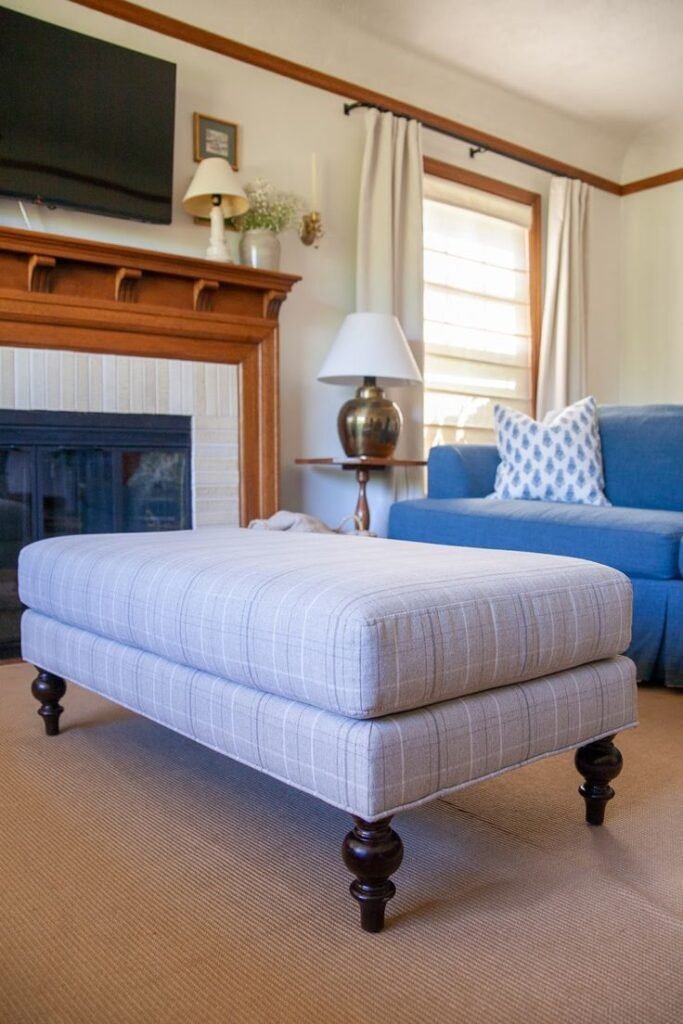
In a studio, the ottoman is almost never doing just one thing. It’s the coffee table when you’re eating lunch at the couch. It’s the extra seat when someone comes over and the only chair in the room belongs to a desk. It might be the closest flat surface to the bed, which means it functions as a nightstand whether you planned that or not. And then it’s supposed to hold things too, accessed regularly, not once a week to pull out a spare blanket but several times a day to get to whatever actually lives inside.
When I set out to test these with Studio Apartment Setup’s actual audience in mind, that’s the frame I was working from. An ottoman that performs beautifully in a large living room may be exhausting in 420 square feet, because the access pattern is completely different. The daily friction matters in a way it doesn’t when you’re opening something twice a week.
The five pieces we worked with fell into rough categories by price and style: a $62 fabric cube, a $95 flat-top rectangle, a $130 button-tufted upholstered rectangle, a $165 mid-century-style ottoman with wooden legs, and a $210 storage bench that runs longer and lower than a typical ottoman. One studio, one month, and the question I was trying to answer: which one actually earns its square footage?
2. How Each One Actually Performed
The chart below captures the key metrics across all five. I’ll get into each individually after.
| Ottoman Style | Price | Interior Capacity | Lid Type | Table-Ready Top | Daily Use Rating |
|---|---|---|---|---|---|
| Fabric Cube | $62 | ~60L | Lift-off (no hinge) | Soft, needs tray | Excellent |
| Flat-Top Rectangle | $95 | ~45L | Hinged, front-open | Hard, tray-optional | Good with caveats |
| Tufted Rectangle | $130 | ~50L | Lift-off, heavy lid | Soft | Beautiful, daily friction |
| Wooden-Leg Upholstered | $165 | ~40L | Lift-off | Soft | Best-looking, least storage |
| Storage Bench | $210 | ~80L | Hinged, rear-open | Hard | High capacity, large footprint |
The $62 Fabric Cube
This was my low expectation going in. It’s also the piece I ended up recommending most consistently for studio use specifically. The lid lifts completely off with no hinge mechanism, which sounds like a design flaw until you’re living with it every day. In a studio where you’re crouching next to this thing and pulling items in and out multiple times a day, a lid that detaches entirely and gets set beside you is faster than fighting a hinge. The interior holds around 60 litres. That’s enough for extra linens, winter accessories, charging cables, the books you’re currently reading, a board game. The surface is soft, which means you’ll want a tray on top if you’re using it as a coffee table, but that’s a fifteen-dollar addition. This didn’t win on looks. It won on living.
The $95 Flat-Top Rectangle
The hard, flat top was what made me expect this to be the studio standout. It functions as a coffee table surface without any tray addition, the dimensions work for a small space, and the design is inoffensive in a clean way. The problem is the lid. Front-hinged means the front panel drops down when you open it, which requires either moving the ottoman or reaching over the dropped panel in a slightly awkward lean. In a studio where furniture is close together by default, you end up shifting it every single time. Small issue in isolation. A consistent one over the course of weeks.
The $130 Tufted Rectangle
This was the one I was most confident about before we started. Button tufting, a solid upholstery weight, proportions that read well in a small room. Visually it’s the strongest of the five, and I want to be clear about that. The issue is the lid, specifically the weight of it. It’s noticeably heavier than the others. The lift-off style means you’re holding that weight while you look for whatever you need inside, and after a couple of weeks of that, the irritation becomes real. The tufting also catches on fine-knit fabrics when you rest bags or clothing on the surface, which becomes its own recurring nuisance. Gorgeous piece. The right home for it is one where storage access is occasional rather than daily.
The $165 Mid-Century Wooden-Leg Ottoman
The wooden-leg upholstered style is what a lot of design-minded studio residents picture when they imagine their ideal storage ottoman. And it genuinely looks the part. The legs create visual clearance beneath the piece, which reduces the heavy ground-hugging look that can make small rooms feel more crowded. The proportions are considered. And then you open it and find that those same legs, plus the lid thickness and the interior frame, have reduced the storage volume to roughly 40 litres. Everything inside has to sit relatively flat. For extra linens, fine. For anything with real height, like a yoga block, a pair of boots, a board game box, you’ll end up stacking awkwardly or leaving it out. If aesthetics are the primary decision driver, this piece earns its price. In a studio where the ottoman is supposed to do serious storage work, it comes up short.
The $210 Storage Bench
This was the surprise in the other direction. The capacity is genuine: around 80 litres, and the long, low form means it works as a bench seat or as an extended footrest for a deeper sofa. The lid opens from the rear on a hinge, which turns out to be smart design for a piece you sit in front of. You just reach back. The hard flat top works as a coffee table without a tray. The challenge for studio use specifically is the footprint: roughly 110 centimetres long, and in a tight room, that length has to pull a clear functional purpose. If the piece is dividing your sleeping and living zones, or anchoring a sofa configuration, the length becomes an advantage. If it’s just filling space in front of a loveseat in a room where there isn’t much room to fill, it starts to feel like it belongs somewhere bigger.
3. The Lid Mechanism Problem That Nobody Discusses Properly
I want to stay on this because it’s the factor most ottoman reviews cover in a single sentence, and in a studio context it matters more than almost any other specification.
There are four lid configurations in the ottoman world: lift-off with no hinge (the lid completely separates), hinged at the back, hinged at the front, and open-top storage with no lid. Each one creates a different daily experience.
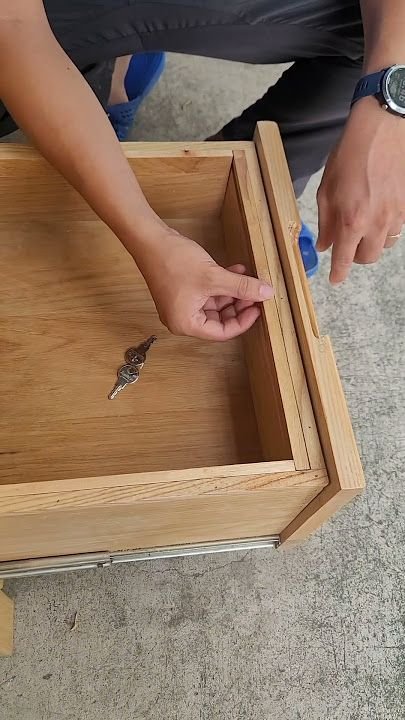
Lift-off is the most accessible in terms of what your arm has to do. You’re not fighting any mechanism, you remove the lid, set it somewhere, get what you need. The trade-off is that the lid becomes a free-floating object you have to manage, which in a studio with limited floor space is its own small inconvenience. Hinged at the rear is the most functional configuration for daily access because you can reach in from the front of the piece without relocating it or adjusting your body position significantly. Hinged at the front creates the problem I described with the rectangle above, you need clearance in front of the piece that a studio frequently can’t offer.
The deeper point here connects to something Studio Apartment Setup covers in the why your studio feels chaotic piece: friction in small repeated daily actions accumulates faster than you expect it to. Something that takes two extra steps every time you do it doesn’t feel like a big problem on day one. By week three it’s a background irritation. By week six you’ve stopped using the storage at all, and the ottoman is just furniture.
4. Storage Volume and Usable Storage Are Not the Same Number
Every ottoman we tested was marketed with a litre capacity. None of those numbers told the full story.
The wooden-leg ottoman lists 40 litres, but the interior is narrow and low-clearance because of the lid’s internal frame structure, so anything taller than about 20 centimetres can’t stand upright. The fabric cube lists 60 litres and the interior is genuinely that usable in all three dimensions. The storage bench lists 80 litres but the narrow long shape means bulky, wide items don’t fit well even though the volume number suggests otherwise.
This is worth thinking about alongside under-bed storage as a companion solution, because the geometry of storage matters as much as the size. Before buying, measure the height of what you’re actually planning to put inside. If it’s mainly flat soft goods, like throws and linens, the lid clearance doesn’t matter much and you have a lot of options. If you need to store something with real height, a board game, shoes, a pair of headphones in a case, the internal clearance dimension is more important than the litre rating on the product page.
I’d also suggest sitting down and making a quick list of exactly what you plan to store, not in general terms but specifically. The “extra stuff” answer leads to buyer’s remorse. The “two throw blankets, the table lamp I swap out seasonally, a box of cables, and my yoga blocks” answer tells you the minimum interior height you need and roughly the volume, which makes the decision considerably easier.
5. What I’d Actually Recommend, and Who Each One Is For
For a studio resident who needs an ottoman that performs reliably every day across all its roles, the $62 fabric cube is the answer for most situations. It holds the most genuinely usable volume relative to its floor footprint, the lid access is the easiest of the group, and with a tray on top it functions as a coffee table. It isn’t the showpiece. But in a space where every piece is doing multiple jobs under daily use, functional wins.
If aesthetics are a genuine priority and you’ve found other solutions for larger storage items, the wooden-leg mid-century option holds its own as a room presence. It makes the space feel designed rather than assembled, and for someone with under-bed storage handling the heavy lifting, the reduced interior capacity isn’t necessarily disqualifying. Studio Apartment Setup’s studio essentials guide addresses this tension between “looks great” and “does more” directly, because it’s one of the defining decisions of small-space furniture shopping.
The storage bench makes sense for a studio with a longer sofa you’re trying to anchor, or a zone definition situation where you want something that reads as furniture rather than purely as storage. Not the most versatile piece in the group, but in the right layout it earns its length.
The $130 tufted rectangle belongs in a one-bedroom. The lid weight, the tufting snag issue, the daily access friction: minor inconveniences at low frequency, genuine daily irritations in a small space where everything is used constantly.
Where the Testing Shifted My Thinking
Going in I was looking for the best ottoman. Coming out I had a more useful question, which is: best for what pattern of use, what storage priorities, and how many times a day someone opens the thing?
The budget-oriented storage hacks guide at Studio Apartment Setup makes this point from a slightly different angle: the most efficient storage solutions in small spaces match actual daily behavior, not ideal-case behavior. The fabric cube beat four more expensive ottomans not because it’s better furniture, it isn’t, but because it fits how a studio actually gets used rather than how a studio is imagined to get used.
That difference turned out to be the whole test.
Frequently Asked Questions
How much storage capacity do I actually need in an ottoman for a studio? For most studio residents using the ottoman for soft goods and miscellaneous daily items, 50 to 60 litres of genuinely usable volume is the practical target. Below that and you’re constantly rationing what deserves to be inside. Above 80 litres the ottoman is usually too long or too large for the floor footprint a studio can spare. Focus on interior clearance height as much as total volume, especially if you plan to store anything with real height to it.
Can a storage ottoman actually replace a coffee table in a studio? Yes, reliably so, with one condition: the top surface needs to be hard and flat. Soft-top ottomans need a tray to hold drinks and plates without wobbling, and the tray takes up real surface area. If the ottoman is your primary coffee table, look specifically for a hard flat-top model and check the dimensions against what you actually need from that surface. Most storage ottomans run 85 to 115 centimetres wide, which is narrower than a conventional coffee table but functional for a studio couch setup.
How do I know if the ottoman’s interior will fit what I want to store? Make a list of your three most specific intended items. Measure the tallest one. Then look for an ottoman with interior clearance height at least 5 centimetres above that measurement to allow for actual use rather than perfect-condition fit. Interior clearance is the number most product listings omit or bury; it’s worth emailing the seller or brand directly if you can’t find it in the specs.
Is faux leather or fabric more practical for a studio ottoman? For regular seating use and daily handling, faux leather in a darker shade holds up better over time and cleans easily with a damp cloth. Fabric in lighter colors shows soil faster than most studio residents expect, especially if the piece is used as extra seating during meals. For a piece that’s primarily decorative and accessed occasionally, fabric gives more visual warmth. For something used daily as seating, a coffee table, and a storage point, faux leather is the more forgiving choice.
What’s the best way to organize the inside of an ottoman so it doesn’t become a pile? Use two or three fabric bins sized to fit the interior in a single layer. Each bin gets a category (cables and tech, extra linens, seasonal items) and lifts out independently. The bins also protect the interior lining from sharp corners on items like remote controls or cables. A set of fabric cubes sized to fit typically runs $15 to $25 and changes the functionality of the ottoman completely.
The storage ottoman is probably the most underestimated piece of studio furniture in terms of how much the specific decision matters. Pick the wrong lid mechanism and you feel it every day. Pick the wrong interior volume and it either crowds the room or fails the storage job it was bought to do. But get it right and one piece quietly solves four problems at once, which in a studio apartment is about as close to perfect as furniture gets.