
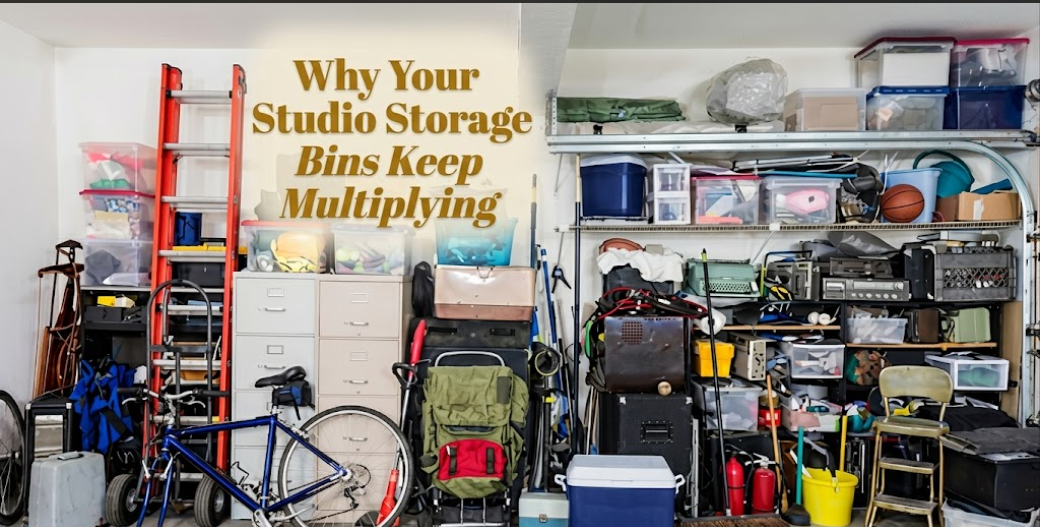
For the first couple of years I worked with studio clients, my default advice for a cluttered space was almost embarrassingly simple. Get a few bins. Sort things into them. Done.
It felt like sound advice. It is, technically, sound advice. The problem showed up later, usually three or four months after a project wrapped, when a client would message me asking where they should put a new bin they’d just bought. Not because they’d run out of stuff to store. Because the bins they already had weren’t working, and somehow the fix for a bin that isn’t working is always another bin.
I started noticing it across nearly every studio I’d helped set up, and it’s become one of the most common patterns I bring up when I’m working through storage with Studio Apartment Setup readers specifically. Clients who’d started with two bins were sitting on six. The bins weren’t failing because they were the wrong size or the wrong brand. They were failing because nobody, myself included at the time, had asked what specifically each one was supposed to hold. That’s the mistake. I was treating bins like a solution instead of what they actually are, which is just packaging for a decision you haven’t made yet.
1. The Bin Feels Like Progress, Even When It Isn’t
Buying a bin produces a small, real hit of satisfaction. You’ve done something. The pile of loose stuff goes from visible chaos to a contained shape with a lid on it, and your brain logs that as resolved.
It isn’t resolved. It’s relocated.
A bin with no defined category becomes a junk drawer with a lid. Phone chargers next to a half-used candle next to three receipts you meant to file and a single glove. None of that is a category. It’s just stuff that needed somewhere to go in a hurry, and the bin gave it somewhere. Six weeks later it’s full, you can’t remember what’s in the bottom half, and the obvious move feels like getting a second bin for the overflow.
This is where I see people go wrong constantly, and it’s rarely about laziness. It’s that a container looks like a system. It has structure, it stacks, it sometimes even has a label maker label on the front. But a system sorts things by what they are and how often you use them. A bin just holds things, and holding is not the same job as sorting.
2. How the Multiplication Actually Happens
I’ve tracked this pattern enough times now that it has a shape. Here’s roughly how it plays out across a typical studio, start to finish.
Month 1: One bin appears, usually labeled something broad like “misc” or nothing at all. It absorbs whatever’s been sitting on a counter or chair.
Month 2: Bin one is full. A second bin shows up for the overflow, usually purchased to match the first because matching feels organized.
Month 3: Neither bin gets emptied or sorted. A third bin appears, often specifically because the first two are “a mess” and a fresh start feels easier than untangling the old ones.
Month 4 to 6: The original bins are quietly pushed to the back of a closet or under furniture. New bins take their place in the visible rotation. Nobody has thrown anything out. The studio now has somewhere between five and eight containers, most holding a near-identical mix of unsorted items.
Month 7 and beyond: A bin gets opened looking for something specific, the search takes fifteen minutes across three containers, and the person concludes the apartment “just doesn’t have enough storage.”
It almost never does. It has plenty of storage. What it doesn’t have is categories, and bins without categories multiply the same way mismatched socks multiply in a drawer. Each one represents an unresolved decision rather than a completed one.
3. The Real Cause Sits Underneath the Bins, Not Inside Them
Here’s the part that surprised me when I actually sat down and audited a few of these studios properly instead of just adding more storage.
The volume of stuff people own usually isn’t the problem. The categorization is. A studio with twelve clearly labeled categories and one bin each looks and functions completely differently than the same volume of stuff split across six vague, overlapping bins.
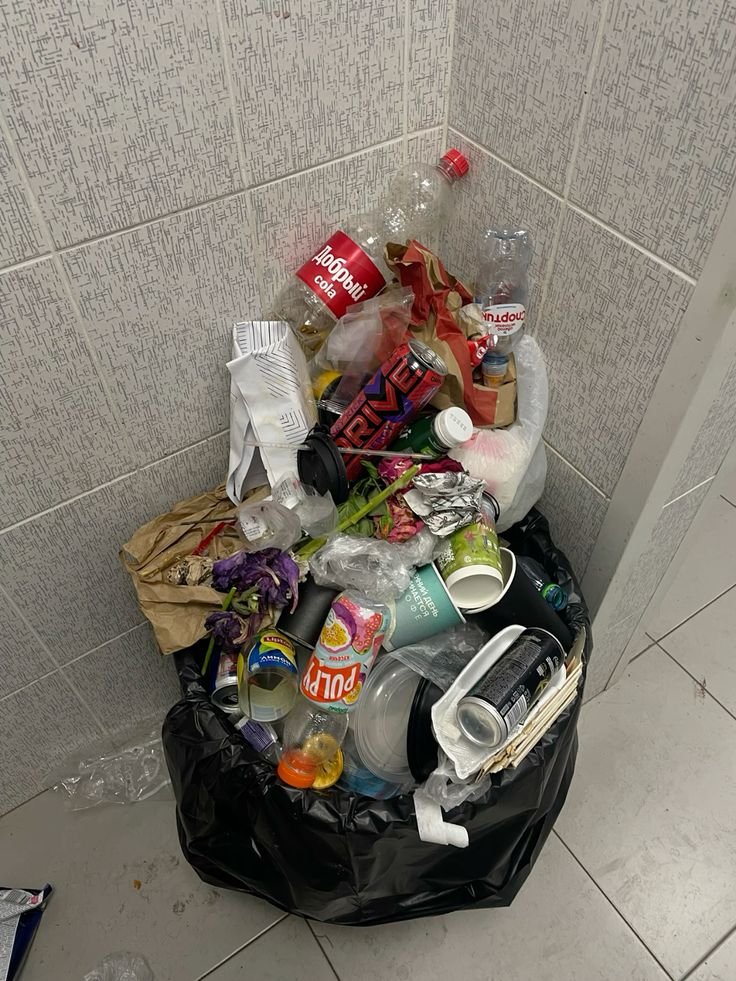
The fix starts with a full dump, not a tidy-up. Everything currently in bins comes out onto the bed or floor, all at once, so you can actually see the real categories hiding underneath the chaos. Cables and electronics. Bathroom backups. Paperwork. Seasonal clothing. Once you separate by what something actually is rather than where it happened to land, the number of bins you genuinely need usually drops, it doesn’t grow.
I did this with a client in a 360-square-foot studio who’d accumulated seven bins over about a year and a half. After the full sort, her actual categories numbered four: cables and tech accessories, bathroom overflow, off-season clothing, and craft supplies. Four bins. Properly labeled. Three of the original seven went straight to donation, empty, because once their contents were sorted elsewhere, there was nothing left that needed a generic catch-all home.
For readers dealing with a closet that’s contributing to the same pattern, Studio Apartment Setup has a detailed breakdown in Why Your Studio Closet Feels Impossible (And a Fix That Works) that walks through almost the identical audit process, just applied to hanging storage instead of bins.
4. Where People Go Wrong Most Often
The most common version of this mistake isn’t hoarding. It’s buying matching bins before sorting anything, because a coordinated set of containers feels like an aesthetic upgrade and a functional one at the same time.
It’s only the first.
A set of six identical lidded boxes from a home store looks fantastic stacked on a shelf. But if you bought them before knowing what would go inside, you’re filling six containers to match a shelf, not to match your actual categories. Three end up half-empty. One ends up impossibly overstuffed because that’s where everything without an obvious home landed. The visual win is real. The functional win usually isn’t there yet.
I’d rather see someone buy one slightly mismatched bin that holds exactly one defined category than five matching ones bought on spec. Buy the containers after the sorting, not before. It feels backward compared to how most home stores market storage, but it’s the order that actually works.
5. What Actually Stops the Multiplying
A few habits genuinely break this cycle, and none of them are complicated.
One bin, one job. If a bin doesn’t have a single clear category written on it, in actual words, it’s not a storage solution yet. It’s a holding pen. Write the category on the outside before you put a single thing inside.
Cap the count. Decide upfront how many bins your studio can reasonably hold, based on the actual storage zones available, not on how many you feel like buying that week. If you’ve hit your cap and something new needs a home, that’s a sign to either consolidate an existing bin or get rid of something, not buy bin number nine.
Audit every few months. Categories drift. The “cables” bin slowly absorbs things that aren’t cables because it was open and convenient. A five-minute check-in every couple of months catches that before it turns into bin number ten.
If your studio’s storage feels chronically insufficient no matter how much you buy, the deeper issue is sometimes the layout rather than the containers themselves, which is a different problem with a different fix. What Happens When You Go 30 Days Without Buying Anything New is worth reading if any of this sounds familiar, because the no-buy stretch is often what finally exposes which bins are doing real work and which ones are just along for the ride.
6. When Another Bin Actually Is the Right Call
None of this means bins are bad. They’re genuinely one of the most useful tools in a small space, used correctly.
A new bin earns its place when a real, new category shows up. You take up a hobby that needs its own supplies. You start working from home and suddenly have cables and a second monitor that need a defined spot. A baby arrives and there’s an entirely new category of stuff your studio never had to account for before. Those are legitimate reasons for bin number five, six, or seven.
What’s not a legitimate reason is “the current bin feels messy.” Messy bins almost always mean the category was too broad to begin with, not that the container count is too low. Fix the category first. The bin question usually answers itself after that.
A good place to start, if your studio’s overall storage zones still feel undefined, is Studio Apartment Setup’s where-to-start guide, which walks through assigning zones before you assign containers to them. Containers are the easy part. Knowing what goes where is the part everyone skips.
The studios that stop accumulating bins aren’t the ones with the least stuff. They’re the ones where every bin actually knows its job.
FAQs
How many storage bins should a studio apartment realistically have?
There’s no fixed number, but if you can’t name what’s in each bin without opening it, you likely have more than your categories actually need. Most well-organized studios run somewhere between four and eight clearly defined bins, not because that’s a magic number, but because that’s usually how many genuine categories a single person’s belongings sort into.
I already have a pile of mismatched bins from over the years. Should I replace them all?
Not right away. Empty everything out first and sort by category before deciding what to keep. You’ll likely find some existing bins fit a category perfectly once it’s actually defined, and replacing a perfectly functional container just for visual matching is rarely worth the cost.
Is it bad to use bins for things I rarely think about, like a junk drawer equivalent?
A little flexibility is fine, every home has a small catch-all for genuine odds and ends. The problem starts when that one flexible bin becomes the default destination for anything you don’t feel like categorizing properly. Keep it small and check it occasionally, or it grows into bin number two without you noticing.
Do clear bins work better than solid-colored ones for this kind of system?
For categories you access semi-regularly, yes, because you can confirm contents at a glance instead of opening multiple bins to find one. For pure long-term storage, seasonal items you only touch once or twice a year, the visual matters less than the label on the outside.
What’s the fastest way to tell if a bin is actually working or just adding clutter?
Ask yourself if you could describe its contents in one sentence without opening it. If the honest answer involves words like “stuff,” “random things,” or “I’m not totally sure,” that bin needs a sorting session, not a neighbor.