
Every client conversation about storage units starts the same way. They’ve already decided. They just want me to agree with them.
“I’m just going to get a storage unit.” Said with the tone of someone announcing they’ve solved the problem. And look, sometimes that’s the right call. But the misconception I run into constantly, in studios across Toronto and in messages from readers everywhere else, is that renting space elsewhere is automatically smarter than fixing the space you’ve already got. It’s treated like a foregone conclusion instead of a financial decision with actual numbers attached to it.
It rarely gets run as a decision. It gets run as a relief valve.
1. The Math Nobody Actually Does First
A standard 5×10 storage unit in a mid-sized city runs somewhere between $90 and $160 a month, depending on climate control and location. In bigger markets, especially anything close to downtown, that climbs past $200. Twelve months in, you’ve spent $1,080 to $2,400 on a unit you visit maybe four times a year.
Now compare that to what the same money buys inside your apartment. A set of bed risers, two rolling under-bed bins, a floor-to-ceiling shelf column, and a pegboard panel runs somewhere around $150 to $250 total, one time. I broke down the exact products and costs for Studio Apartment Setup readers in 7 Studio Apartment Storage Hacks That Cost Under 50 Dollars, and the gap between “rent space forever” and “buy storage once” is not subtle.
The honest comparison isn’t storage unit versus no storage. It’s storage unit versus a one-time investment in using the square footage you’re already paying rent on. Most people skip that comparison entirely because the storage unit feels like the path of least resistance. It is the path of least resistance. It’s also, in almost every case I’ve run the numbers on, the more expensive one over any stretch longer than six months.
2. When Off-Site Storage Genuinely Makes Sense
I don’t think storage units are a scam, and I want to say that clearly because the rest of this article is going to sound like I do.
There are real situations where renting space outside your apartment is the right move, not a workaround. A client of mine in a 510-square-foot studio in Liberty Village kept a single bike, a set of skis, and a kayak paddle, of all things, in a $95-a-month unit for exactly the four winter months she used the skis. That’s seasonal gear with genuinely awkward dimensions. No amount of vertical shelving makes a kayak paddle a good roommate.
Moving transitions are another legitimate case. If you’re between leases, downsizing from a larger place, or waiting on a closing date, a short-term unit bridges the gap without forcing decisions you’re not ready to make. Same goes for inherited furniture you haven’t decided whether to keep, sell, or pass along. Storing it for two or three months while you figure that out is a reasonable use of the expense.
The pattern in all of these: the storage is temporary, or the item itself genuinely doesn’t fit any reasonable system inside a small space. Skis. A second set of dining chairs for the holidays. A few boxes during an active move. That’s a fundamentally different decision than “I have too much stuff for my apartment, permanently, and I’m going to pay monthly to pretend that’s not true.”
3. When It’s Just Expensive Avoidance
Here’s where people go wrong most often, and it’s not really about the storage unit at all. It’s about what gets put in it.
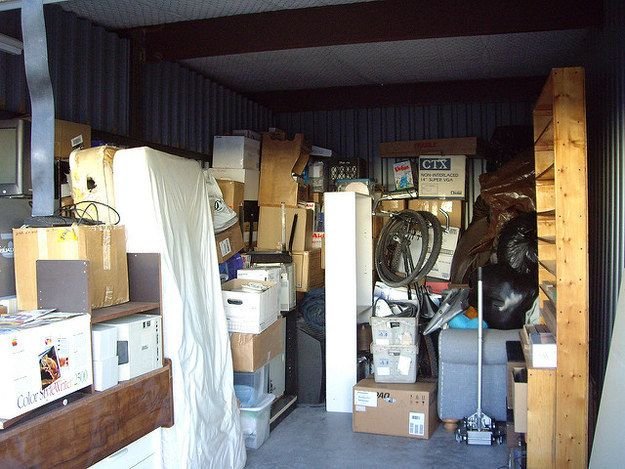
I’ve helped clients move out of units they’d been paying for, two years, sometimes longer, and watched them unpack boxes of things they’d forgotten owning. Clothes that don’t fit anymore. Kitchen equipment duplicated because they couldn’t remember what was in storage. A box labeled “misc” that, when opened, was actually just misc. Nothing in it mattered enough to remember, and they’d paid roughly $2,000 over that stretch to keep not remembering it.
That’s the avoidance pattern. The storage unit becomes a place to put the decision off rather than a place to put the items. And because it’s off-site, out of sight, the cost stops registering the same way a cluttered closet would. You don’t see it every day, so it doesn’t feel like a problem, even though the monthly charge is still hitting your account on schedule.
If what’s going into the unit is daily-use furniture, seasonal clothing you’d actually wear, or anything you’d reach for more than twice a year, that’s not a storage problem anymore. That’s a “my studio’s storage system isn’t built correctly” problem, and the fix is almost never more square footage somewhere else. It’s usually under your own bed, or up a wall you’ve been ignoring. The piece I wrote on using vertical space the right way covers exactly how much capacity most studios leave completely unused, and it’s a genuinely surprising amount once you measure it.
4. Pros and Cons, Side by Side

Stripped of the emotional decision-making, here’s the actual breakdown.
| Off-Site Storage | In-Apartment Storage System | |
|---|---|---|
| Upfront cost | Low (sometimes $0 to move in) | $100–$300 one time, depending on setup |
| Ongoing cost | $90–$200+ monthly, indefinitely | None after initial purchase |
| Access | Requires a trip, often during business hours | Immediate, anytime |
| Best for | Seasonal items, moving transitions, awkward-shaped gear | Daily and weekly-use items, clothing, kitchen overflow |
| Risk | Costs compound silently over years | Requires actual decluttering effort upfront |
| Long-term value | None, it’s pure rent | Increases functional space permanently |
The “low upfront cost” line on the storage unit side is doing a lot of quiet damage in most people’s budgeting. It feels cheap because the first month is cheap. The fifteenth month is where it actually gets expensive, and by then it’s just background noise on a credit card statement.
5. The Middle Ground Most People Skip
The honest answer for most studio renters isn’t “never use a storage unit.” It’s “use one for a defined, short window, and use it on purpose.”
Set an actual end date when you rent the unit. Three months for a move. One season for skis. Write it down somewhere you’ll see it, because storage units have a way of becoming permanent through sheer inertia rather than any decision you actually made. If you’re three months past your own deadline, that’s the signal to either deal with what’s in there or accept you’re paying rent on a second, much smaller apartment you never visit.
And before defaulting to a unit at all, do the honest inventory first. Go through what you think needs off-site storage and sort it into three piles: things you’d genuinely miss, things you forgot you owned, and things that belong somewhere specific in your actual apartment if you set it up right. That third pile is usually bigger than people expect. The under-bed storage breakdown on Studio Apartment Setup walks through exactly what kind of items earn a spot under a bed frame, and it solves more of this than people assume before they actually measure their clearance.
This is also worth saying plainly: if your studio is genuinely too small for your life, not your stuff, your life, that’s a different conversation than storage. That’s the studio versus one-bedroom conversation, and no amount of clever bins fixes a layout problem that’s really about needing a second room.
The off-site unit will always feel like the faster fix. It usually isn’t the cheaper one, and it’s almost never the permanent one. Most studios have more usable storage built into them than their renters give them credit for, which is the whole premise Studio Apartment Setup keeps coming back to. Find that first. Pay for somewhere else to keep your stuff only once you’ve actually run out of somewhere here.
FAQs
Is a storage unit ever worth it for someone in a small studio? Yes, specifically for seasonal or oddly-shaped items, or during a defined transition like a move. The mistake is treating it as a permanent extension of your closet rather than a short-term, purpose-driven rental.
How much does the average person actually spend on storage units per year? Most mid-sized city units run $90 to $160 monthly, which adds up to roughly $1,080 to $1,920 annually. Climate-controlled units or anything in a major downtown core often run higher.
What’s the biggest mistake people make with off-site storage? Putting things in storage they’d actually use regularly, then forgetting they exist. If you haven’t thought about an item in six months, it’s either genuinely seasonal or it’s something you should evaluate getting rid of rather than continuing to pay rent on.
Can vertical storage and under-bed storage really replace a storage unit? For daily and seasonal household items, almost always. For things like sports equipment with awkward dimensions, or furniture during an active move, no system inside a studio replaces the practicality of off-site space for a limited window.
How do I know if I should declutter instead of renting storage? If most of what you’re considering storing falls into “might use someday” rather than “definitely use seasonally,” that’s a decluttering decision dressed up as a storage decision. Be honest about which pile it actually belongs in before signing a storage lease.