
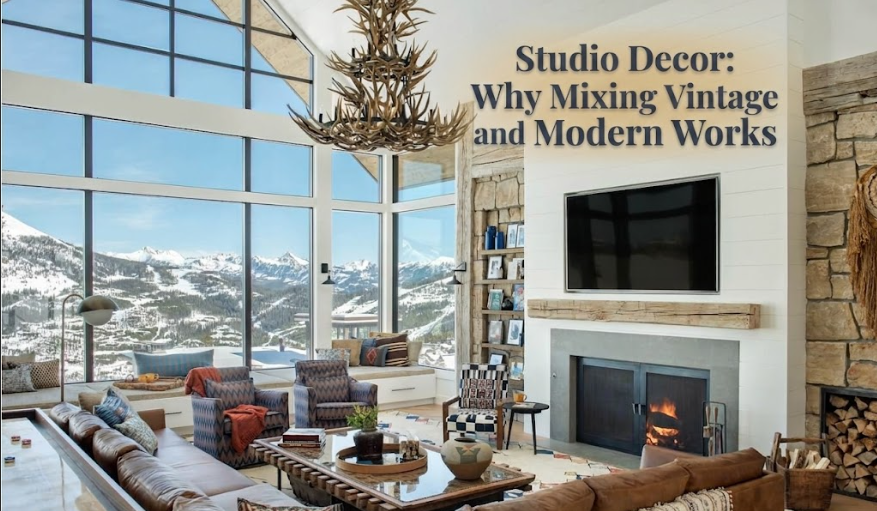
The first real studio I ever worked on for a paying client was a disaster, and the disaster was partly my fault.
Not entirely. She came to me with everything already in place: a matching living set from a contemporary furniture store, all the same walnut veneer finish, the same low-slung profile, the same decade. Clean, modern, consistent. And completely, desperately lifeless.
I was young enough then to think I should be diplomatic. I said something about adding “warmth.” She asked what that meant. I said it vaguely. She added throw pillows. Nothing changed. It took me three more visits and an uncomfortable conversation before I told her the truth: the space was technically cohesive and it had no soul. What it needed was something older. Something that hadn’t been designed this year.
That project changed how I’ve thought about studio interiors ever since.
1. The Myth That Keeps Studio Apartments Looking Like Hotel Rooms
Most small-space decorating advice is quietly obsessed with matching. Same wood tone throughout. Same metal finish. Same furniture period. The logic is that consistency in a tight space equals visual calm, and visual calm equals the room feeling larger. On the surface, that sounds perfectly reasonable.
It’s also why so many studios look like they were decorated by a very careful robot.
The belief that you have to commit to one era to make a studio work is, bluntly, wrong. Cohesion in interior design has never meant sameness. It means things that feel like they belong together, and belonging is created through shared qualities, colour, proportion, material, tone, not through shared year of manufacture. A 1960s walnut credenza beside a clean contemporary sofa is cohesive if the wood tones echo each other and the scale is right. A vintage brass lamp beside a modern platform bed is cohesive if brass or warm gold appears somewhere else in the room.
These things speak the same language even though they were made in different decades.
The question isn’t whether you can mix vintage and modern. You absolutely can. The real question is how do you do it so the room feels intentional rather than accidental. And that requires knowing what each type of piece actually contributes to the mix.
2. What Vintage Actually Brings to a Small Space
Vintage pieces do something modern ones almost never can: they give a room a visual biography. A piece made in 1955 carries the evidence of time. The craft decisions. The material quality. The proportions of an era before furniture was primarily designed to be photographed for a social media post. Even when you don’t know where a piece came from, your eye recognises something that was made with intention.
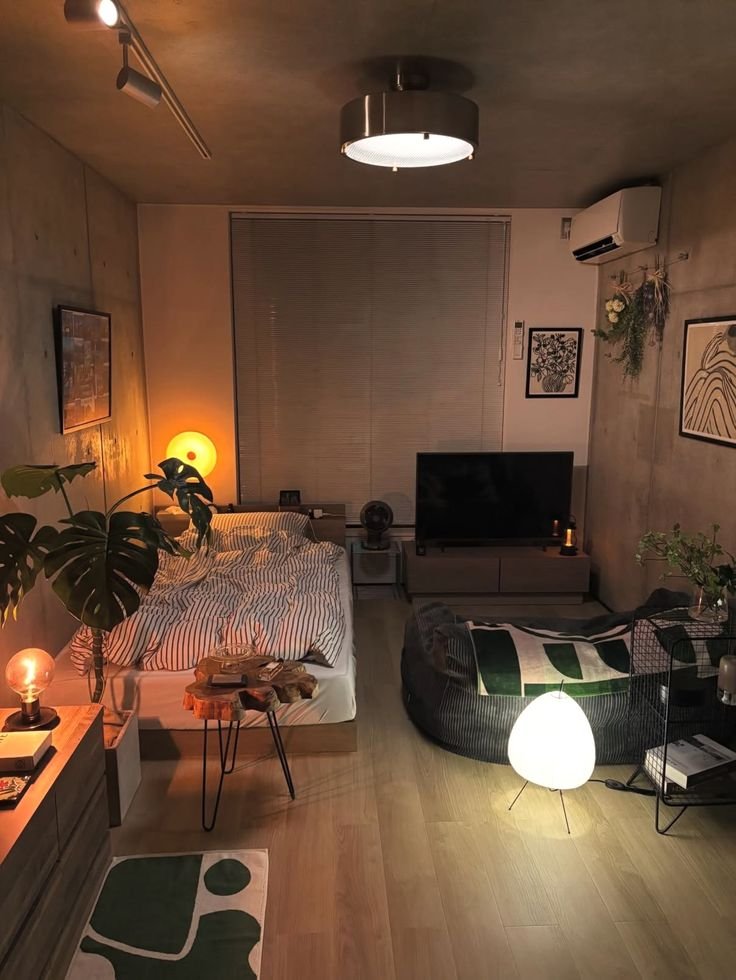
In a studio apartment, this matters more than people realise.
One of the most consistent things I hear from readers at Studio Apartment Setup is that their space feels like it could belong to anyone. Perfectly nice, completely generic. That’s the matching-furniture-set trap in action. When everything comes from the same collection in the same year, there’s no evidence that an actual human with an actual personality put the room together. A single vintage piece breaks that immediately. Not ten pieces. One. A small 1950s teak side table. A ceramic lamp with a hand-thrown base. A framed print with some real patina on it. These objects stop being furniture and start being reasons to look.
There’s also a purely practical dimension here, especially for studios. Vintage furniture from the mid-20th century was often made for rooms with lower ceilings and tighter footprints. A compact mid-century armchair at 30 inches wide is frequently a smarter decision for 400 square feet than the oversized accent chair currently trending in design content. When a piece was sized for a similar constraint, it tends to fit naturally. If you’ve been wondering why your studio still feels crowded despite careful planning, it might have more to do with furniture era than furniture placement, and these common decor mistakes and what they were replaced with are worth reading through with that lens in mind.
3. Where Modern Pieces Earn Their Keep
I’m not suggesting you clear out anything contemporary. Modern design solves problems that vintage design, for all its charm, often doesn’t bother with.
Storage and flexibility, for a start. Modern furniture designed specifically for small spaces tends to be far more functional. Hidden drawers, modular shelving, bed frames with built-in storage, sofa beds that actually fold properly. Vintage furniture was designed for homes where people owned fewer things and had more rooms to put them in. A studio dweller today needs modern solutions for storage, and there’s absolutely nothing wrong with that.
Beyond function, modern pieces do something essential in a mixed space: they create breathing room. The clean lines of a contemporary sofa, a plain white shelving unit, a simple bed frame without decorative detail, these are the resting points for your eye. They’re the visual silence that makes your vintage pieces louder. Without that contrast, even beautifully chosen vintage items can start to feel chaotic because there’s nothing neutral for them to land against.
Think of your modern pieces as the architecture of the room. The steady, quiet structure. Then think of your vintage pieces as the points of interest, the moments where the room asks you to stop and look. When both are working well, the studio develops its own gravity. It pulls you in.
What Vintage and Modern Each Contribute
| Design Element | What Vintage Brings | What Modern Brings |
|---|---|---|
| Seating | Character, craftsmanship, human scale | Clean lines, flexibility, storage options |
| Lighting | Sculptural quality, patina, warm personality | Scale control, ceiling breathing room |
| Storage | Solid construction, warmth, visible charm | Efficiency, hidden function, open feel |
| Colour | Warm woods, aged brass, faded earthen tones | Neutral whites, greys, blacks, natural oak |
| Accessories | Uniqueness, handmade quality, conversation | Visual consistency, deliberate repetition |
| Overall Effect | Story, soul, evidence of a specific person | Structure, calm, visual breathing space |
The best mixed studios draw from both columns deliberately. Not equally and not randomly. The ratio shifts depending on your room’s natural light, ceiling height, and your own tolerance for visual richness.
4. The Rule Nobody Teaches: Tension Is the Point
Good mixed-era design always lives in tension. And tension is not the same thing as chaos.
Tension is what happens when two different things are placed together and you notice both of them more because of the contrast. A weathered vintage oak table under a sharp contemporary pendant light. A clean modern white wall behind a bold piece of mid-century pottery. Your eye moves between them and something actually happens in the room.
Chaos is what happens when nothing has priority. When every piece is competing for attention and nothing provides relief.
Studio apartments are particularly vulnerable to chaos because there’s no separate room to absorb the overflow. Everything you own is visible from practically every other corner, which means every decision you make is always in conversation with all the other decisions. You can’t hide a mistake in a studio the way you can in a three-bedroom home.
The way I manage tension is through what I call the anchor rule. One intentional vintage piece per zone. Not per square foot. Per zone. Your sleeping area gets one vintage lamp or a single piece of art with some history to it. Your living zone gets one standout vintage find, a credenza, a lounge chair, a framed print from a different decade. Your workspace gets a vintage desk or a beautiful old object on the shelf. That’s it. Everything else supports those anchors without competing with them.
This is also exactly why matching furniture sets often make studios look more static, not more polished. They eliminate tension entirely. And without tension, there’s no reason for the eye to move through the space, and a room where your eye doesn’t move always feels smaller than it actually is.
5. The Scale Problem Everyone Gets Wrong Eventually
I’ve watched this happen more times than I can count. Someone finds a vintage piece they genuinely love. A beautiful 1940s mahogany sideboard. A heavy oak farmhouse table. A dramatic antique armoire. They bring it home and it takes over the room completely. The space doesn’t feel curated. It feels like the furniture is the resident and the person just visits.
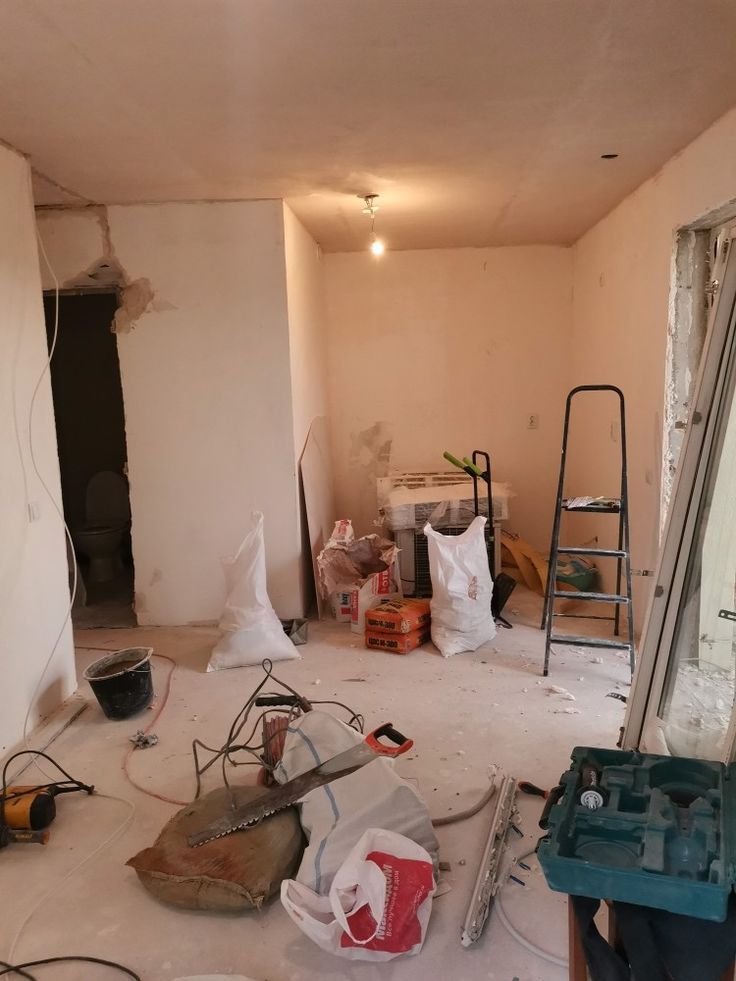
Scale in a studio is not a suggestion. It’s everything.
The standard I give clients now: anything vintage you’re considering for a studio should be proportionate to what a well-chosen modern piece in that same function would look like. If you’d never put a 78-inch contemporary sofa in that corner, don’t put a 78-inch vintage chesterfield there either. If a slim modern console makes sense by the entryway, a vintage piece of similar dimensions makes sense too. The era changes. The footprint doesn’t.
Practical numbers for studio vintage shopping: seating under 72 inches wide. Occasional chairs under 32 inches across. Credenzas and sideboards no longer than half the wall they’ll sit against. Coffee tables that leave at least 18 inches of clearance on each side. These aren’t arbitrary. They’re the proportions that let a studio breathe while still housing a meaningful piece.
It helps enormously to have the zones of your studio mapped before you start hunting for vintage pieces. Studio Apartment Setup has solid guidance on creating distinct spaces within an open floor plan that applies directly here. Knowing which zone a piece belongs to before you buy it is the difference between a room that works and a room you keep rearranging every three months.
Colour Is the Thread That Holds the Whole Thing Together
This doesn’t need a section number. It’s more like the underlying truth that makes everything else above actually land.
When people mix vintage and modern and it doesn’t work, the problem is almost never the style combination. It’s colour. The vintage piece has amber undertones and the modern palette is cool grey. The antique carries soft sage and everything else is stark white. They’re sharing a room but they’re not having a conversation.
Choose your colour thread before you choose your pieces. If you’re building a warm palette, cream, terracotta, warm white, natural wood tones, every piece you bring in has to carry at least one of those notes. If you’re building cool, charcoal, slate, soft blue-grey, pale natural oak, same rule applies. Colour is the signal that convinces the eye these things belong together even when they came from completely different places and different decades.
And then there’s light. A vintage brass lamp reads one way in afternoon sun and another entirely under warm evening bulbs. Getting your studio’s lighting right is a much bigger lever than most people realise. A mixed-era space that looks sophisticated under a layered lighting plan can look confusing and busy under a single overhead fixture. The pieces don’t change. The light does.
FAQs
Is there a vintage-to-modern ratio I should follow in a studio?
Not a strict one. A rough 70% modern foundation with 30% vintage interest tends to work well. Modern provides the structure and vintage provides the moments that make people stop and look. But ratios shift depending on the size of each piece. A large vintage credenza counts far more than three small vintage accessories. Trust your eye over any formula.
Can I mix two different vintage eras in the same studio, like 1920s Art Deco and 1970s pieces?
Yes, with deliberateness. The more distant the eras, the more intentional you need to be with a unifying thread. A 1930s Art Deco lamp and a 1970s ceramic bowl can absolutely coexist if they share a warm metallic or earthy quality. What tends to fail is four or five different eras with no common material, tone, or colour to connect them. The thread matters more than the era.
My studio has very low ceilings. Does that affect which vintage pieces will work?
Significantly. Low-ceilinged studios are best served by vintage pieces that sit close to the ground. Mid-century modern furniture with its tapered legs and lower profiles is excellent for this. Avoid vintage pieces with tall backs, heavy canopies, or strong vertical proportions. Those tend to make a low ceiling feel lower, not work with it.
I found a vintage piece in an unusual colour. How do I make it work in a neutral studio?
Identify the most neutral tone within that colour and echo it subtly elsewhere in the room. If the piece is a faded terracotta cabinet, add one terracotta throw pillow and a single artwork with an earthy warm note in it. The unusual colour becomes intentional when it appears more than once. But stop at two or three repetitions or it starts to feel laboured rather than considered.
Will mixing vintage and modern date my studio faster than committing to one style?
Actually, the opposite is almost always true. Spaces that are purely trend-driven, all one era or anchored to one fashionable moment, date fastest because they’re tied to a specific year. Spaces that mix eras well are more resilient because they don’t depend on any single trend cycle. A well-chosen vintage piece from 1962 sitting beside a clean modern sofa looks just as considered today as it did five years ago, and will still look right five years from now. That’s the real argument for mixing.
A studio that mixes well isn’t trying to be two things at once. It’s being one very specific thing: a space that has both structure and soul. The modern pieces give it clarity. The vintage pieces give it history. And when those two things are in balance, with intention behind the choices and colour holding everything together, a studio stops feeling like a place you settled for and starts feeling like a place that was put together by someone who cared how it turned out.
That’s the difference. And it’s not a small one.