
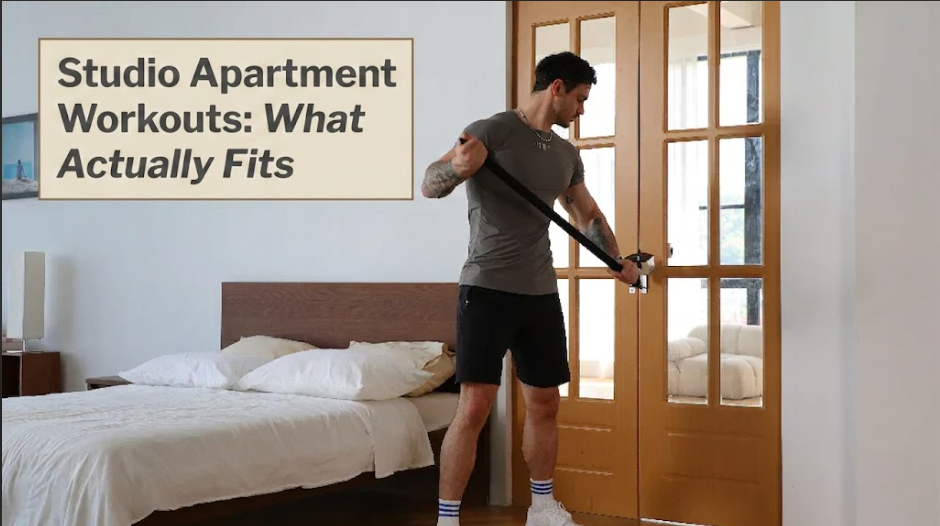
A pair of adjustable dumbbells and forty square feet of clear floor will get you further than almost any home gym package built for a house with a spare room to dedicate.
That’s really the whole article in one sentence. But the specifics matter, especially the parts about noise, storage, and the equipment that looks great in an ad and terrible once it’s sitting in the corner of a 350 square foot apartment for six months.
1. Measure the Floor You Actually Have, Not the Apartment You Wish You Had
Start here, before buying anything. Most studios don’t have forty square feet of genuinely clear floor sitting around waiting for a workout. They have maybe six feet by six feet once the bed, the desk, and whatever’s currently parked in front of the closet get accounted for.
Walk your space and clear it the way you would for an actual workout, then measure what’s left. Not what could be left if you moved the couch permanently. What’s actually available on a normal Tuesday. That number tells you more about what equipment makes sense than any product description will.
2. Pick Equipment That Earns Its Storage Space
This is where most studio workout setups go wrong, and it’s rarely about the workout itself. It’s about what happens to the equipment for the twenty-three hours a day it isn’t being used.
A treadmill or a rowing machine takes up a fixed footprint permanently, whether you’re using it or not, and in a studio that footprint is also your living room floor, your yoga space, and the path between your kitchen and your bed. Adjustable dumbbells, resistance bands, a suspension trainer, a folding mat. All of that earns its keep because it disappears when you’re done.
If vertical storage is part of your plan, and in a studio it usually has to be, Studio Apartment Setup’s guide to using vertical space the right way is worth reading before you decide where gear actually lives between sessions.
3. The Noise Problem Nobody Mentions Until the Neighbor Does
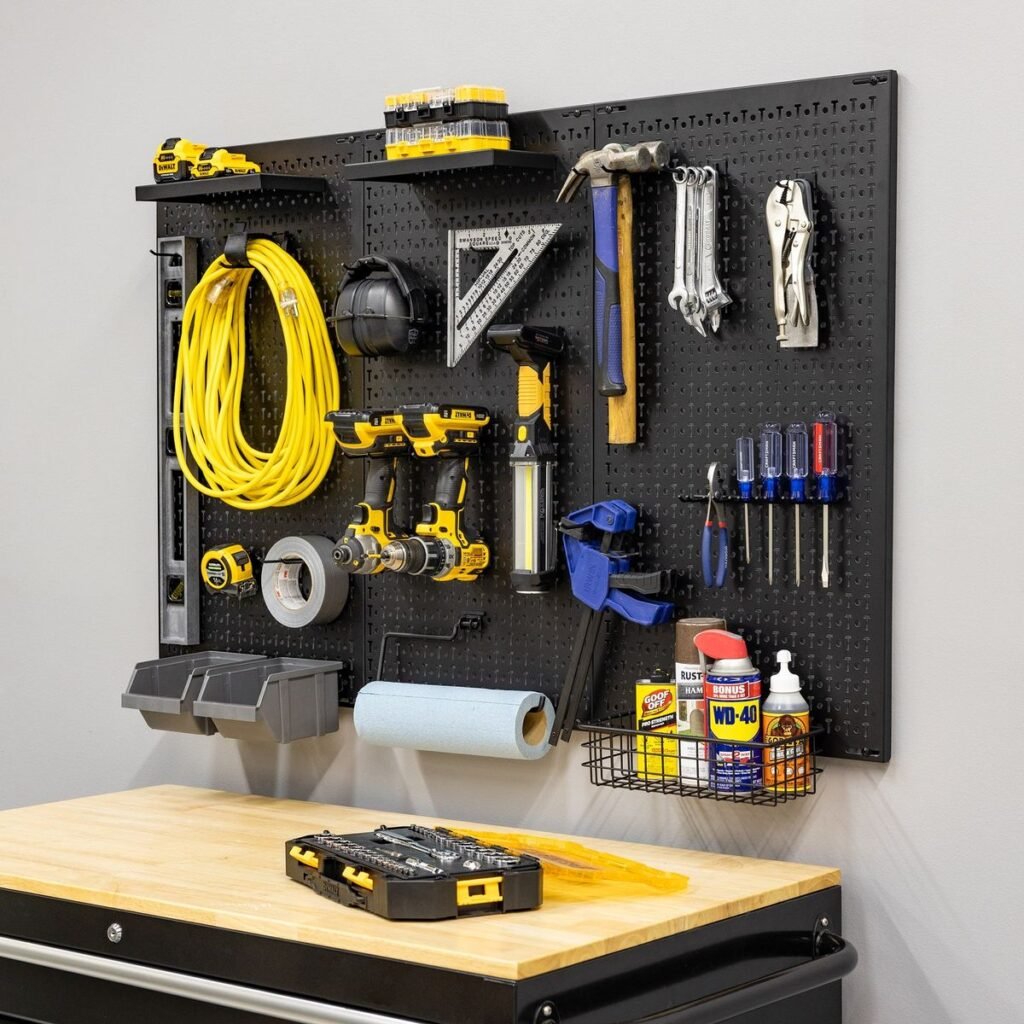
Here’s where people usually go wrong, and it’s not about space at all. It’s about impact. Jump rope, burpees, box jumps, anything with a landing, sends sound straight through most studio apartment floors, especially in older buildings with wood subfloors instead of concrete.
A thick interlocking foam mat under your workout area cuts down on that more than people expect, and it protects your own floor too, especially if you’re renting and security deposits are involved. This is the kind of detail that doesn’t show up in workout videos shot in someone’s actual house with concrete slab floors and no downstairs neighbor to worry about.
And a quick side note here, slightly off topic but worth saying. If you’ve ever wondered why your studio still feels chaotic even after a cleanup, equipment that’s technically put away but still visually present, mats leaning against walls, bands hanging off doorknobs, is a bigger contributor to that feeling than people realize. Worth keeping in mind as you build out a setup.
4. What Actually Fits vs What Doesn’t
Here’s the comparison most people need before they buy anything.
| Equipment | Footprint When Stored | Noise Level | Studio Verdict |
|---|---|---|---|
| Adjustable dumbbells | Small, stackable | Low | Fits well |
| Resistance bands | Almost none | Silent | Fits well |
| Folding yoga mat | Minimal, rolls or folds flat | Silent | Fits well |
| Suspension trainer | Minimal, hangs on a door | Low | Fits well |
| Treadmill | Large, fixed footprint | High impact noise | Usually doesn’t fit |
| Full squat rack | Very large, fixed footprint | Moderate to high | Usually doesn’t fit |
| Rowing machine | Large, hard to store upright | Moderate | Borderline, check clearance first |
The pattern is pretty consistent. Anything that folds, rolls, stacks, or hangs survives studio living. Anything built to sit permanently in one spot usually doesn’t, no matter how good the workout is.
5. Where the Gear Actually Lives Between Sessions
This is the step people skip, and it’s the one that determines whether the whole setup lasts past month one. A mat that has nowhere to go ends up rolled in a corner forever. Dumbbells with no home end up under the bed in a way that makes under-bed storage useless for anything else.
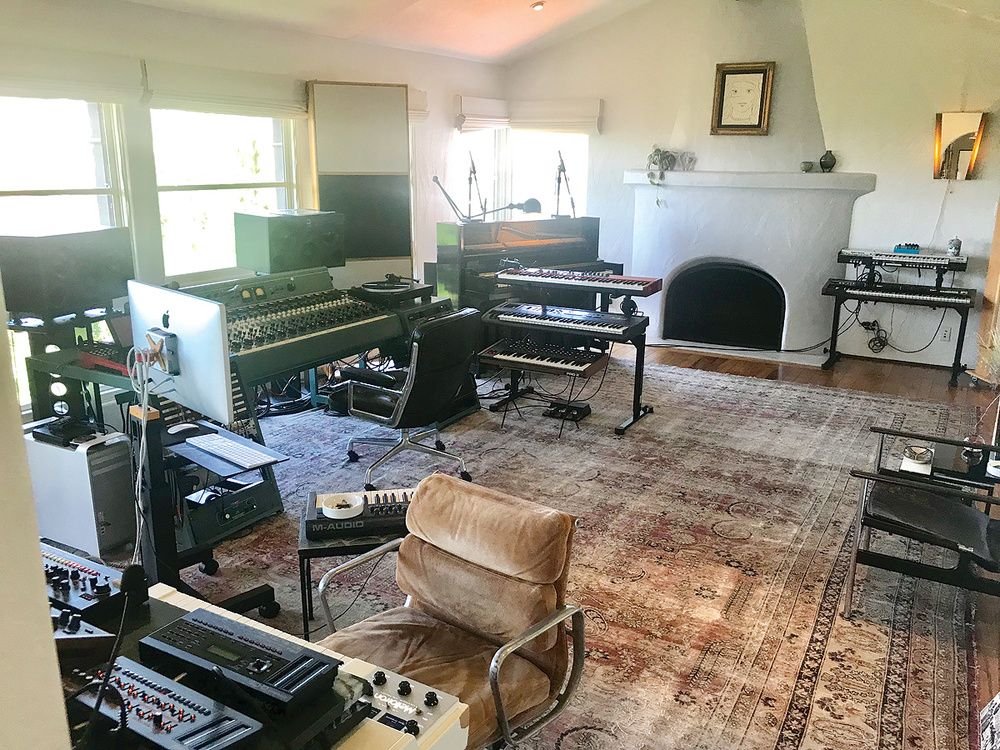
Over-door storage is one of the most underused spots for this. A canvas organizer or a few sturdy hooks on the back of a closet door holds bands, a jump rope, and a folded mat without taking up a single inch of floor space, and Studio Apartment Setup has a good breakdown of the over-door spots most people miss entirely.
Under-bed storage works too, as long as you’re using a container built for it rather than just sliding loose dumbbells under there and hoping. Studio Apartment Setup’s guide on what actually fits under a bed covers the weight and clearance issues that come up specifically with gear like this, which is heavier and more awkwardly shaped than most of what people typically store down there.
And if budget is part of the equation, which it usually is, Studio Apartment Setup’s roundup of storage hacks under fifty dollars has a handful of options that work specifically well for compact workout gear without much investment.
6. Building a Routine Around What You Actually Have
Once the space and storage side is sorted, the workout itself gets simpler than people expect. Bodyweight movements, resistance band circuits, and short dumbbell sequences cover most of what a treadmill or a full rack would have done anyway, just without the permanent footprint. A six foot by six foot clear patch of floor is genuinely enough for the vast majority of strength and conditioning work most people are trying to do at home.
The trade-off is real, to be fair. You won’t get the same experience as a fully equipped gym, and certain types of training, heavy barbell work especially, just don’t translate to a studio setup no matter how creative the storage gets. But for most people the gap between “studio workout” and “full gym” is smaller than the marketing for home gym equipment wants you to believe.
7. A Few Questions People Actually Ask
Can a treadmill realistically fit in a studio apartment? Physically, sometimes. Practically, it usually eats permanent floor space and creates noise that travels through floors, which makes it one of the harder pieces of equipment to justify in a one-room layout.
What’s the quietest workout equipment if I have a downstairs neighbor? Resistance bands, a suspension trainer, and slow-controlled dumbbell work are about as quiet as workout equipment gets. Anything involving jumping or impact needs a thick mat underneath regardless of equipment choice.
Do I need a full setup, or is minimal equipment actually enough? For most goals, a set of adjustable dumbbells and a few bands covers more ground than people expect. Add a mat for floor work and that’s a genuinely complete setup for a studio.
Where do I store gear when it’s not in use? Over-door organizers, under-bed containers built for the weight, and stackable dumbbell sets that tuck into a closet corner all work better than leaving things out on the floor between sessions.
Is bodyweight training alone enough without buying any equipment? For a lot of fitness goals, yes, especially when paired with resistance bands later if progress stalls. It’s also the cheapest possible starting point if you’re not ready to commit to equipment yet.
If gear clutter ends up being the bigger issue once you’re a few months into a routine, Studio Apartment Setup’s piece on the mistakes most first-timers make in year one covers a lot of the same accumulation problem from a different angle.