
There’s a specific kind of mistake almost everyone makes in their first studio kitchen, and it has nothing to do with cooking skill. It’s buying groceries like you’re still stocking a full-size fridge and a pantry that doesn’t exist. Six kinds of vinegar, a bag of rice the size of a small dog, three backup jars of something you used once. None of it fits, and within a week the counter looks like a warehouse overflow rather than a kitchen.
Studio kitchens don’t fail because people can’t cook in them. They fail because people shop for a kitchen they don’t have.
1. Shop for the Space You Actually Own
Most studio kitchens run somewhere between two and four feet of usable counter space, a fridge that’s often apartment-sized rather than full-depth, and cabinets that were clearly designed by someone who’d never tried to fit a stand mixer anywhere. Shopping habits built for a house kitchen simply don’t translate.
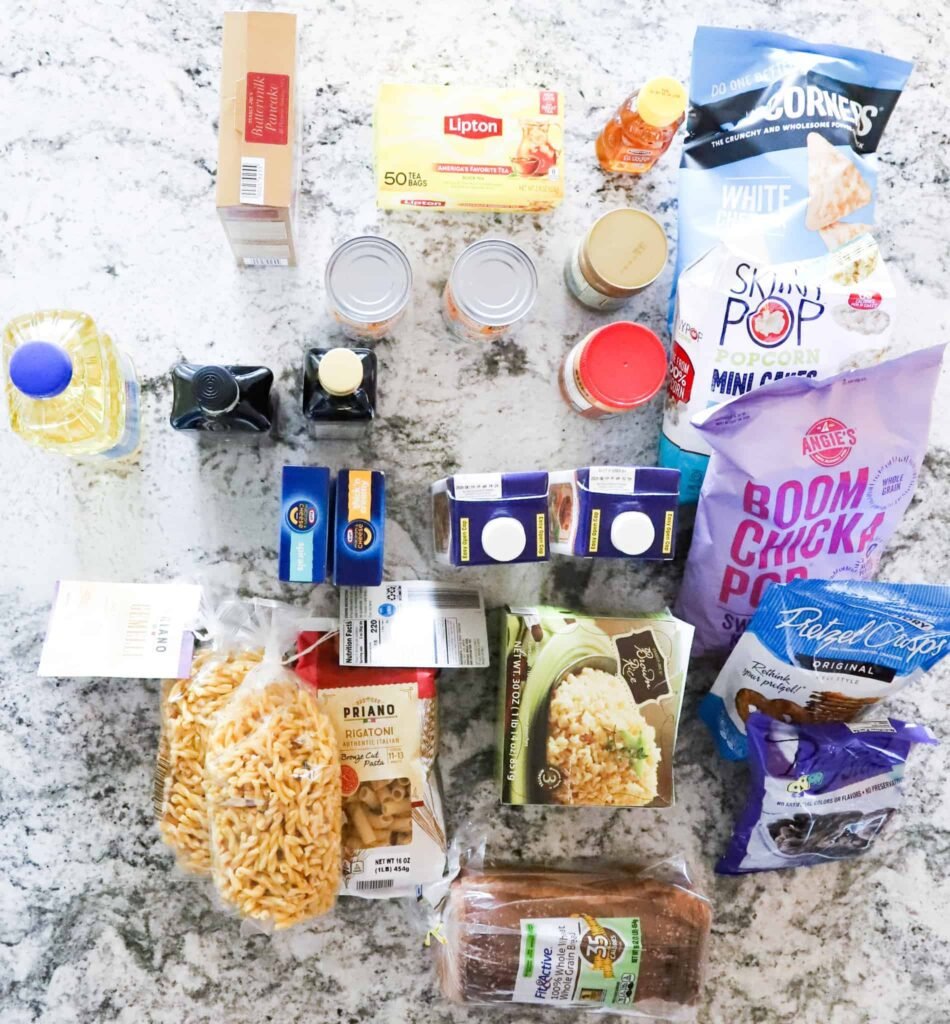
The fix isn’t complicated, but it does require a mental shift. Buy in smaller, more frequent quantities rather than the bulk-stock approach that works in bigger homes. A studio fridge with a genuinely functional produce drawer can maybe hold a week’s worth of fresh vegetables before things start getting buried and forgotten behind the milk. Buying for three or four days at a time, rather than a full week, keeps food visible and actually usable instead of turning into science experiments in the back corner.
If your kitchen has no pantry at all, which is common in older studio buildings, this matters even more. We covered the storage side of that problem in our piece on running a studio kitchen with no pantry, but the shopping habit and the storage setup really need to work together. There’s no point solving one without the other.
2. The One-Pan Rule Changes Everything
Here’s where people usually go wrong, and it’s an easy mistake to make: they buy ingredients for recipes that need four pots, two pans, and a full set of mixing bowls, then try to execute that recipe in a kitchen with one working burner and a counter the size of a cutting board.
A better approach, and one that actually gets used consistently, is building a rotation of meals that work in one pan or one pot. Sheet-pan dinners, one-skillet stir-fries, grain bowls assembled from a single pot of rice and whatever protein you cooked alongside it. This isn’t about limiting your cooking ambition. It’s about matching your ambition to your actual equipment, which is a distinction a lot of studio cooking advice online completely skips over.
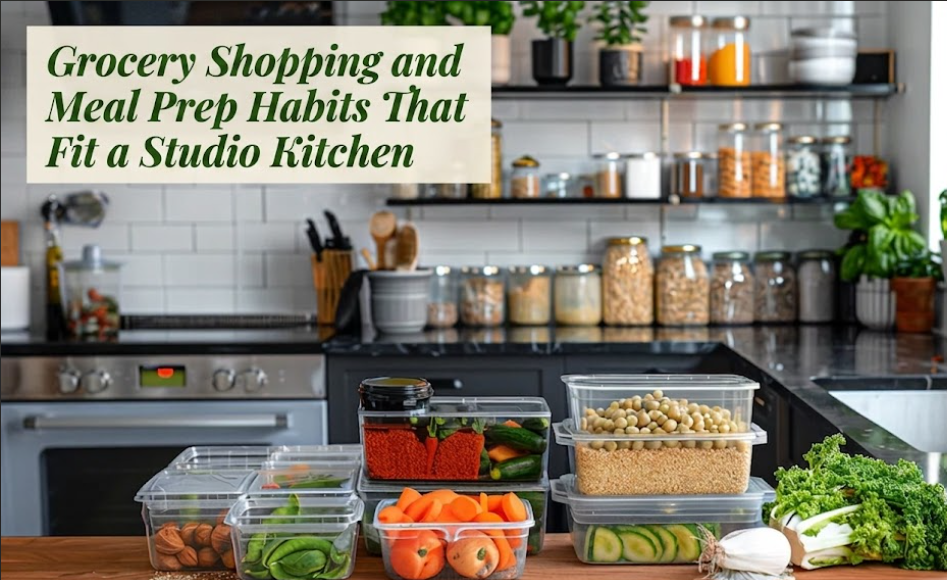
And it’s worth saying, since it trips people up, that “meal prep” in a studio doesn’t have to mean seven identical containers lined up for the week. That system works great in a house with a full fridge shelf to dedicate to it. In a studio, it often just eats your entire fridge and leaves no room for anything fresh. A looser version, prepping two or three components (a cooked grain, a roasted vegetable, a protein) that you recombine differently each day, tends to hold up better in a small kitchen.
3. What Actually Fits in Studio Storage
Before a grocery trip does any good, it helps to know exactly what your kitchen can absorb. This is a rough breakdown based on what typically fits in a standard studio setup without turning the counter into overflow storage.
| Category | Realistic Weekly Amount | Where It Actually Goes |
|---|---|---|
| Fresh produce | 4-5 items max | Fridge crisper, used within days |
| Proteins | 2-3 varieties | Freezer for backup, fridge for near-term |
| Dry goods (rice, pasta, grains) | 1-2 bags at a time | Sealed containers, vertical shelf or over-fridge |
| Canned/jarred staples | 4-6 items | Small shelf or under-sink bin |
| Snacks/extras | Minimal, rotating | Counter jar or single drawer |
If you’re just moving in and building this out from scratch, our guide on studio essentials for week one walks through what’s genuinely necessary versus what can wait, and kitchen gear is a big part of that list.
4. Vertical Storage Is Doing More Work Than Your Cabinets
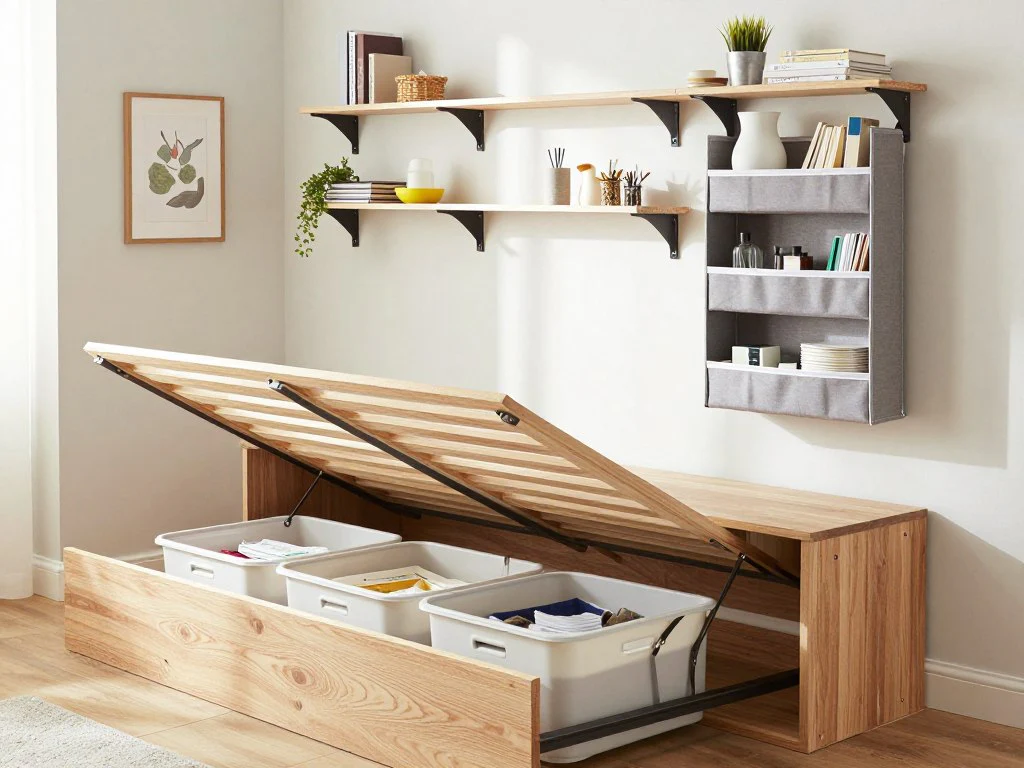
Cabinet space in a studio kitchen is usually the first thing to run out, and once it does, groceries start living on the counter, which makes the whole kitchen feel smaller than it is. Vertical storage solves a lot of this. Over-the-door racks, wall-mounted shelving above the stove, a hanging basket for onions and potatoes that would otherwise take up a whole shelf. None of it requires renovation, and most of it costs under fifty dollars total.
We tested a batch of these exact fixes for under fifty dollars in an earlier piece, and a few of the cheapest options ended up being the most useful long-term, which isn’t always how these things go. If cabinet space is genuinely the bottleneck in your setup, that’s worth a read before your next big shop, since buying groceries for storage you don’t have yet just creates clutter you’ll deal with later anyway.
One small tangent here. A lot of people assume more storage automatically fixes a cramped kitchen, and sometimes it does, but sometimes the real problem is that groceries are being bought faster than they’re being used, which no amount of shelving actually solves. Worth checking which one is actually happening before buying another rack.
5. Building a Shopping List That Matches Your Fridge, Not Your Ambitions
The single biggest habit shift that makes studio kitchens work is building the grocery list around what’s already in the fridge, not around a Pinterest-worthy meal plan built from scratch every week. Before shopping, a quick look at what’s left from the last trip, what’s about to turn, and what’s already got a use planned, saves both money and space. It sounds obvious written out like that. It’s rarely how people actually shop.
A rough but reliable system: buy a base of two or three proteins, a couple of grains or starches, and produce that overlaps across multiple meals rather than one-off ingredients used once and forgotten. A bunch of spinach that works in eggs, a stir-fry, and a salad earns its spot in a small fridge. A specialty ingredient bought for one recipe and never touched again does not, no matter how good that one recipe turns out.
Studio Apartment Setup gets a fair number of questions from readers who’ve just moved and are trying to figure out grocery habits before they’ve even unpacked the kitchen boxes. The honest answer is usually to wait a week, cook with whatever’s simplest, and build the list based on what actually got used rather than what seemed like a good idea in the store.
Common Mistakes
The most common one, by far, is overbuying produce with good intentions and no plan, then watching half of it go bad because there was never a real cooking plan behind the purchase. A close second is buying specialty equipment, a rice cooker, an air fryer, a stand mixer, before confirming there’s actually a place to store it when it’s not in use. Studio Apartment Setup has heard from more than a few readers who bought a great appliance and then spent weeks with it sitting on the counter because there was nowhere else for it to go.
A Final Note
None of this requires cooking less ambitiously or eating worse. It just means shopping in a way that matches the kitchen you’re standing in, not the one from your last apartment or the one in someone else’s kitchen tour online. Buy less at a time, use vertical space before you run out of horizontal space, and build a list around what’s already in the fridge rather than what looked good in a recipe video at midnight.
FAQs
How often should I actually be grocery shopping in a studio? Two to three smaller trips a week tends to work better than one big weekly haul, mainly because studio fridges don’t have the depth to hold a full week of fresh produce without things getting buried and wasted.
Is meal prepping even worth it if I don’t have much fridge space? Yes, but the container-stacking version most people picture doesn’t always work. Prepping a few components separately, a grain, a protein, a roasted vegetable, and mixing them differently each day uses far less space than seven identical meals lined up.
What’s the single most useful storage upgrade for a tiny kitchen? Vertical space above the counter or over the fridge, generally. It’s the area most studio kitchens leave completely empty while the counter and cabinets overflow.
Should I buy in bulk to save money even with limited storage? Only for items that genuinely store well long-term, like rice, pasta, or canned goods, and only in amounts your shelving can actually hold without spilling onto the counter. Bulk-buying fresh produce in a studio almost always backfires.
What kitchen tools are actually worth the counter space they take up? A sharp knife, one good pan, and a single pot cover most studio cooking needs. Beyond that, it depends on what you actually cook regularly, not what looked useful in a store.
For more on making the most of a kitchen with almost no pantry space, our breakdown on studio kitchen storage when counters are tiny goes deeper into the setup side of this same problem.