

Most under-bed storage looks exactly like what it is: a plastic bin shoved under a mattress, visible from three angles, doing its job and announcing that fact loudly the second anyone walks in. That’s the whole problem with how this space usually gets used. It’s treated purely as function, with zero thought given to the fact that it’s sitting in plain view of your entire living room.
A studio doesn’t have the luxury of hidden storage the way a house does. There’s no attic, no spare closet down the hall, no garage shelf. The space under your bed is often the single largest storage volume in the entire apartment, and most people waste it on mismatched bins that make the whole room read as temporary.
1. Why the Bin Problem Happens in the First Place
It’s almost always a sizing issue, not a taste issue. People buy whatever storage bin is on sale or already sitting in a closet from a previous move, without measuring the actual clearance under their bed frame first. That mismatch is what creates the visual mess. A bin that’s too short leaves a gap of exposed floor and shadow underneath it. One that’s too tall won’t slide in flush, so it sits half exposed with the lid catching light and dust.
Measure your clearance before buying anything. Most bed frames sit somewhere between 7 and 14 inches off the floor, and that range determines almost every decision that follows. If you’re under 9 inches, you’re working with slim under-bed containers only. Above 12 inches, you have real flexibility, including rolling drawers or even small furniture pieces built specifically for that gap.
2. Storage That Doesn’t Read as Storage
The fix that actually changes how a room looks isn’t a better bin. It’s choosing pieces designed to look intentional rather than improvised.
Woven or felt storage baskets with lids read as decor even when they’re doing the same job as a plastic tote. Underbed drawers with wood or fabric fronts, the kind sold as bed risers with built-in storage, disappear visually because they match the bed frame’s proportions instead of contrasting against it. And a bed skirt, which sounds a little dated, genuinely solves the “I can see everything under there” problem in about thirty seconds if you don’t want to buy new containers at all.
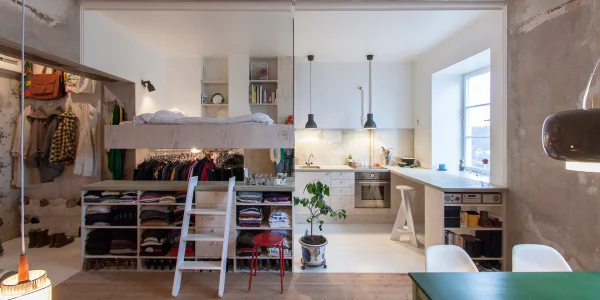
Here’s a rough comparison of what tends to work depending on your situation.
| Option | Best For | Downside |
|---|---|---|
| Woven lidded baskets | Seasonal clothing, blankets | Not fully dust-sealed |
| Fabric-front rolling drawers | Everyday items you access often | Costs more upfront |
| Clear vacuum-seal bags in bins | Off-season bedding, bulky coats | Takes effort to repack |
| Bed skirt over existing bins | Renters who can’t buy new storage | Doesn’t add capacity, just hides it |
| Platform bed with built-in drawers | Long-term studio living | Bed becomes hard to move later |
If you’re renting short-term, the bed skirt option is honestly underrated. It costs almost nothing and solves the visual problem instantly, even if the bins underneath are exactly the mismatched mess you started with.
3. What Actually Belongs Under There
Not everything should go under a bed, and this is where I see people go wrong constantly. They store things they need weekly, which means they’re on their knees digging through a bin every few days, and eventually the whole system gets abandoned because it’s inconvenient.
Under-bed space works best for things you touch monthly or seasonally. Off-season clothing, spare bedding, luggage, out-of-rotation shoes, and hobby supplies you use occasionally all make sense here. Daily items belong somewhere with easier access, even if that means a slightly less efficient spot elsewhere in the studio.
There’s also a weight consideration people skip. If your bed doesn’t have a solid platform base with slats spaced closely, packing heavy bins under there can add strain over time, particularly with a metal bed frame that already flexes a bit under normal use. Distribute weight rather than loading one end.
4. Matching It to the Rest of the Room
This is really the difference between under-bed storage that looks like a dorm setup and one that looks considered. Pick a material or color family that echoes something else already in the room. If your studio leans warm and neutral, woven baskets in a similar tone to a side table or shelving unit tie the space together instead of adding another texture that competes for attention.

Studio Apartment Setup gets this question a lot from readers doing a full studio setup from scratch: should storage match the bed frame, or the room’s overall palette? Generally the room’s palette wins, since the bed frame is one piece among several, but if you’re working with a platform bed that already has a strong wood tone, coordinating storage to that specific piece usually looks more deliberate.
If you’re still working out the bigger picture of what goes where in your layout, studio apartment storage using vertical space pairs well with this, since under-bed and vertical storage solve different problems and work best planned together rather than as an afterthought.
A Quick Gut Check Before You Buy Anything
- Measure clearance under your current bed frame first
- Decide whether you need daily, weekly, or seasonal access
- Pick one material family that already exists somewhere in the room
- Skip anything you’d need to repack constantly, that’s a sign it’s the wrong spot
- If you’re renting and can’t commit to new furniture, a bed skirt buys you time
None of this requires spending much. The baskets and rolling drawers that look genuinely nice tend to run 20 to 40 dollars each, and you likely only need two or three to cover the space properly. It’s less about budget and more about picking pieces on purpose instead of grabbing whatever’s closest at the store.
For anyone furnishing a studio from zero and trying to figure out what actually needs buying in week one versus what can wait, studio apartment essentials, what you need week one and nothing more is a good companion piece, since under-bed storage usually isn’t urgent enough to be on that first list anyway.
The gap under a bed frame is one of the few places in a studio where you get real volume without giving up any floor space you’d otherwise walk on. Worth using it properly instead of treating it as an afterthought bin situation.
FAQs
How much clearance do I need for under-bed storage bins? Most standard under-bed bins need at least 7 inches of clearance. If your frame sits lower than that, look for slim-profile containers made specifically for low clearance rather than forcing a standard bin to fit.
Can I put a mattress directly on the floor and still get under-bed storage? Not really, no. A floor mattress eliminates the space entirely, so if under-bed storage matters to you, you’ll need at least a low platform frame or bed risers to create clearance.
Is it bad to store items under the bed for a long time without checking them? Generally fine for clothing and bedding stored properly in sealed containers, but items should still get checked every few months for moisture or pests, especially in older buildings or ground floor units.
What’s a good budget option if I can’t spend much on storage right now? A bed skirt paired with whatever bins you already own solves the visual problem for under 20 dollars while you save up for better containers later. It’s not a permanent fix, but it’s a genuinely useful one.
Do rolling drawers work better than bins for everyday access? Yes, if you’re storing anything you reach for more than once a month. Bins require pulling the entire container out, while rolling drawers slide open in place, which matters more than people expect once they’re actually living with the setup.
If bed frame options are still an open question for your layout, is a Murphy bed actually worth it in a studio is worth reading before you commit to a platform frame, since it changes the under-bed storage equation entirely if you go that route instead.