
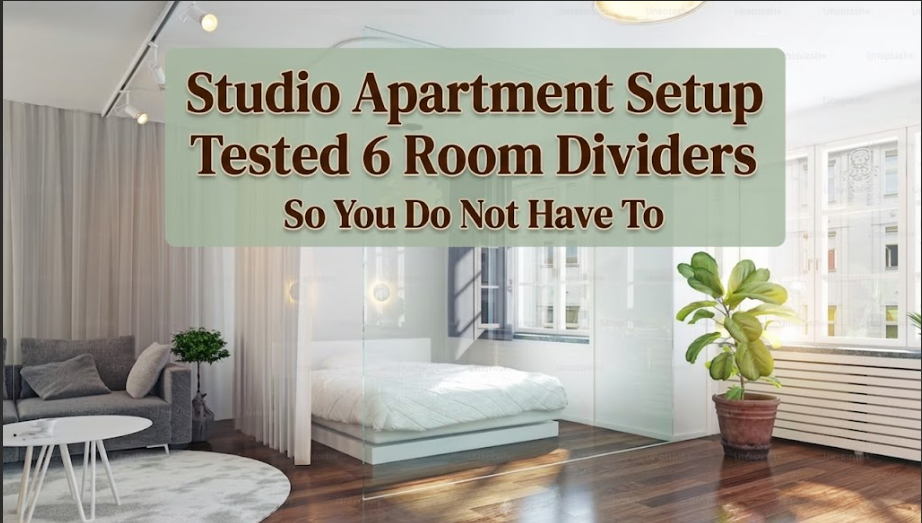
The one that worked best cost $67.
Of six room dividers tested across three studio apartments over several weeks, a slatted pine wood screen from a discount furniture retailer outperformed the custom bookshelf, the designer folding panels, and every fabric-based option run through the same conditions. That was not the expected result. And it changed what I now tell clients to buy first when they ask about zone separation.
Here’s what the testing looked like, what failed, and what the whole exercise taught me about a product category that’s significantly more variable than most people realize before they spend money on it.
1. The Studios, the Criteria, and the Six Contenders
Three studios: 340, 440, and 520 square feet. Each divider was placed in the same approximate zone boundary position in each space and used across two to three weeks of normal daily living. The evaluation criteria were consistent throughout: how much visual separation it created, how it affected light in both zones, how stable it was with regular movement near it, and the ratio of floor space it consumed to the actual zone definition it delivered.
The six:
A three-panel folding screen in bamboo, 72 inches tall, from a mid-range home furnishings chain.
An open-back bookshelf, 60 inches, placed perpendicular to the wall with books loaded on both sides.
Three hanging macramé panels, roughly 58 inches long each, suspended from ceiling hooks.
A slatted pine wood screen, 70 inches, four panels hinged together.
A low credenza, 36 inches, used as a visual zone marker without any vertical element above it.
And a grouping of four large floor plants: two fiddle-leaf figs and two monstera, clustered loosely at the threshold between zones.
2. The Ones Worth Buying
The slatted screen earned its ranking on one quality that turned out to matter more than everything else combined: it created visual separation while still letting light pass through at a natural angle. Stand on the living side and the sleep zone reads as distinct. The room doesn’t feel cut in half. In smaller studios especially, the difference between a divider that blocks light and one that filters it is the difference between a space that feels divided and one that feels destroyed.
The pine build was solid enough that it didn’t wobble when someone walked near it, which immediately put it ahead of most folding screens in the same price range. At $67, it was also the second-cheapest option tested.
The open-back bookshelf performed well in two of the three studios, less well in the third, and the reason was ceiling height. In spaces with 9-foot ceilings, a 60-inch shelf looks deliberately low, like a purposeful zone boundary. In the studio with 8-foot ceilings, it looked like the shelf had been left in the middle of the room because there was nowhere to put it. Studio Apartment Setup covers the proportional logic behind this kind of decision in the piece on how to use vertical space the right way, and it’s directly relevant here. The bookshelf-as-divider approach rewards ceiling height. Without it, the visual effect is off.
The plant grouping surprised me. Not for privacy, which four plants cannot provide, but for zone signaling. A loose cluster of large floor plants at the threshold between a sleeping area and a living area creates a visual cue that the space is changing. It reads as intentional. For a studio where one person works from home and needs a psychological separation between the desk and the bed, the plant boundary does something genuinely useful. I’ve started recommending it specifically in that situation. The Studio Apartment Setup piece on whether small space living affects your mood goes into why spatial signals like this have a measurable effect, even when the physical change is minimal.
3. The Ones to Skip
The bamboo folding screen was the most consistent disappointment across all three studios. Photographs well. Wobbles noticeably in person when anyone walks within two feet of it. The hinges on most screens in the $80 to $150 range are not built for regular proximity movement, and a divider that shifts every time someone passes it stops feeling like a zone element and starts feeling like something you need to manage. The solution is a screen made from heavier material with a wider base plate, but at that point the cost jumps considerably and the piece weighs enough to make it less portable than it should be.
The macramé panels were the category everyone wanted to work and none of them did. They look good in the right photograph, from the right angle, in the right light. From most angles in a real studio, three hanging fabric panels floating in the middle of the room look like decorative wall art that wandered away from the wall. They provide essentially zero visual separation, they move with any draft, and they signal “stylish” rather than “zone boundary.” Macramé belongs on a wall. Putting it in the middle of a room and calling it a divider is hoping the aesthetic carries more structural logic than it does.
The credenza produced the one finding I didn’t anticipate. At 36 inches, it provided no meaningful privacy for anyone in the sleep zone. But in the smallest of the three studios, the 340-square-foot space, it was the only divider that didn’t make the room feel smaller. Its low profile preserved the sightline across both zones while still creating a clear floor-level signal that the space changes on this side of the piece. For any situation where a shared studio needs a practical but non-imposing zone marker, the credenza is worth a second look, as long as privacy isn’t the reason you’re looking for a divider at all. The Studio Apartment Setup article on whether two people can actually share a studio addresses when that kind of low barrier is and isn’t enough.
4. The Scorecard
| Divider | Visual Privacy | Light Impact | Stability | Floor Footprint | Verdict |
|---|---|---|---|---|---|
| Slatted pine screen | Medium-high | Minimal | Good | Small | Buy this first |
| Open bookshelf | Medium | None | Excellent | Medium | Works if ceiling is 9ft+ |
| Plant grouping | Low | None | Excellent | Medium | Zone signal, not privacy |
| Bamboo folding screen | Medium | Low | Poor | Small | Not recommended |
| Macramé panels | Very low | None | Poor | None | Decoration only |
| Low credenza | Very low | None | Excellent | Medium | Small spaces, no privacy need |
One thing the scorecard doesn’t capture: how each option holds up after six months of real use. The folding screen develops hinge wear. Plants need consistent care and look noticeably bad when they don’t get enough light, which is common in studios. The slatted wood screen, if solid pine, shows no visible change. The bookshelf, loaded properly, only gets more grounded over time.
5. The Placement Error That Keeps Showing Up
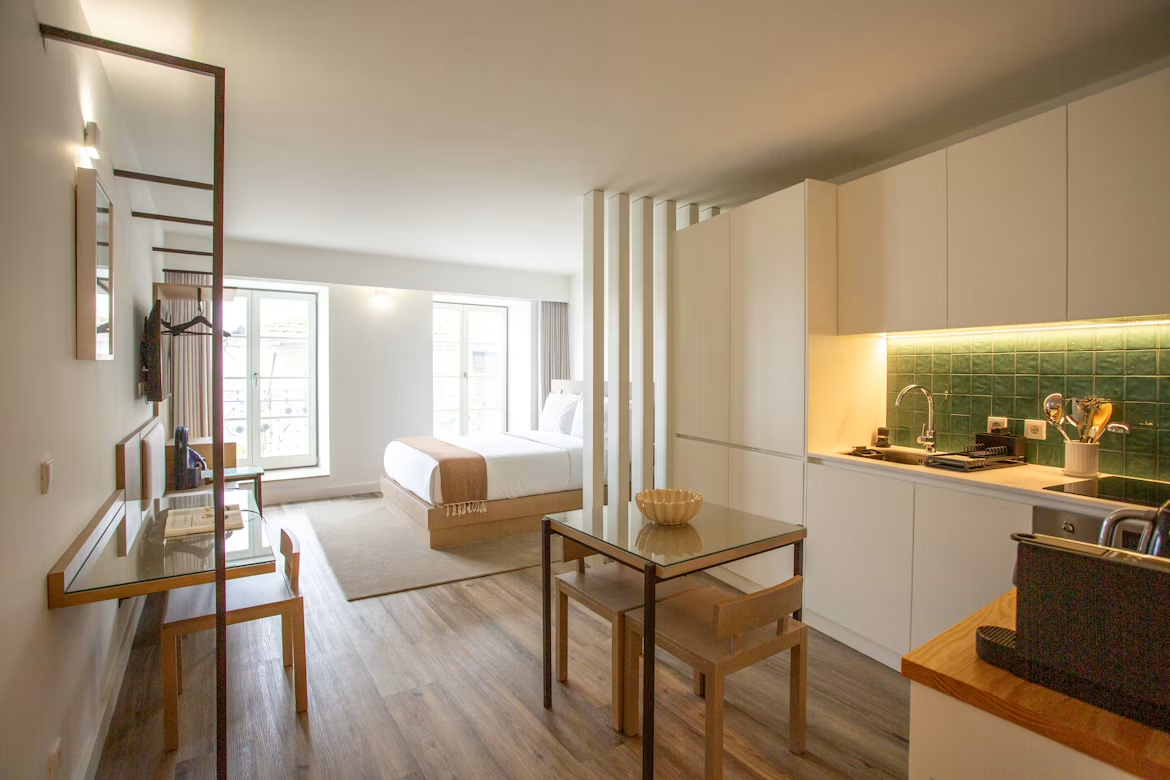
Almost every first attempt at placing a room divider puts it in a straight line cutting the room exactly in half.
This is almost always wrong.
Two problems. First, splitting a studio in half typically creates one zone that’s slightly too small for its intended purpose and one with more space than it needs. The divider should reinforce a zone boundary the furniture was already starting to suggest, not impose a new one from scratch. Second, a perfectly centered placement tends to make both halves feel like incomplete rooms rather than distinct zones. Angling the divider slightly, or aligning it with the edge of an existing furniture grouping, creates the same separation with a less institutional feel.
Height is the other consistent miscalculation. A divider at 60 inches doesn’t block the sightline for someone standing. For privacy from a standing position, 72 inches is the practical minimum. For privacy from a seated or reclining position, which is the more common studio need, something in the 60 to 66-inch range is fine. Know what you’re actually solving before you commit to a height.
The layout thinking that has to happen before any of this is worth the effort is covered in the Studio Apartment Setup piece on the signs a studio layout will make you miserable. That framing helps clarify what the divider is supposed to be solving, which in turn makes the choice much easier.
Frequently Asked Questions
The slatted screen sounds good. Does the number of panels matter?
Yes. A two-panel screen is essentially a flat wall that tips over easily. Four panels give enough zigzag to stand on their own reliably. Six panels can work in wider openings but the footprint expands. For most studio divider applications, four panels at 70 to 72 inches tall is the right configuration.
Can a room divider make a small studio feel smaller?
Absolutely, and it’s one of the most common results of a poor choice. Any divider that blocks light aggressively, or consumes more floor space than it delivers visual separation for, compresses both zones. The slatted screen and the open bookshelf both managed this well in testing. Solid-panel folding screens and anything opaque without structural interest typically don’t.
My studio has an irregular floor plan with an angled wall. Where do I put the divider?
Work with the angle rather than against it. If a wall already creates a natural corner or nook on one side of the space, that’s usually where the sleep zone wants to sit. A divider positioned to close off that corner, even partially, reads as more intentional than one fighting the geometry. The plants and credenza are the most flexible options for irregular plans because neither requires a straight wall to anchor against.
I live with a partner and we have opposite schedules. Is any of these six enough?
For genuinely different sleep and wake schedules, none of the six tested here are sufficient on their own. You need a ceiling-mounted curtain system with a blackout layer to get real light and sound separation at the level that different schedules require. The dividers here handle zone signaling and visual separation for shared waking use. Acoustic and light privacy for sleep is a different problem requiring different hardware.
Is the plant grouping actually a real design strategy or is it just filler?
It’s a real one. A cluster of four large plants at a zone boundary does something that no furniture can: it creates a living edge, one that reads differently from every angle and changes subtly over time. Interior designers use plant groupings as zone markers in residential projects regularly. The limitation is maintenance. If the plants don’t thrive in your studio’s light conditions, the effect deteriorates quickly and you’re left with a sad-looking barrier instead of a considered one.
The $67 slatted screen is still in one of the three test studios. The macramé panels were donated after week three. That’s probably the most efficient summary of how these options actually land when you live with them.