
By the Studio Apartment Setup Team
Most of what gets repeated about studio apartments doesn’t hold up once you’ve actually lived in one. Some of it was true twenty years ago and stuck around anyway. Some of it was never true at all, just repeated often enough that it started sounding like fact. Here are five we hear constantly, and what’s actually going on underneath each one.
| Myth | Reality |
|---|---|
| A studio will always feel small | Layout decides that far more than square footage does |
| You need a big budget to make it feel finished | A handful of cheap, well-placed pieces do most of the work |
| Two people can’t realistically share a studio | It’s a logistics problem, not an impossibility |
| Dark paint shrinks a small room | It depends entirely on light source and finish, not the color itself |
| A studio is just somewhere you sleep | That’s a furniture and zoning failure, not a fact about studios |
1. No, a Studio Doesn’t Have to Feel Small
This one survives because it’s partly true at first, and then people stop testing it. Walk into a studio with the bed pushed against the longest wall, a coffee table doing triple duty, and no clear path between the kitchen and the door, and yes, it’ll feel cramped. That’s not the unit. That’s the layout.
What actually changes the feeling of size is whether the space reads as zoned or as one undivided blob. A rug under the seating area, a bookshelf turned sideways instead of flat against a wall, lighting that’s warm in one corner and brighter in another, these do more for perceived space than another fifty square feet would. We’ve written before about how to split a studio into zones without putting up actual walls, and it remains the single biggest lever most people never pull.
Here’s where people usually go wrong: they blame the apartment for a problem that’s actually sitting in the furniture arrangement, and they go looking for a bigger unit instead of rearranging the one they’ve got.
2. You Don’t Need a Big Budget to Make It Feel Finished
People picture a finished studio and assume it cost real money to get there. Sometimes it did. More often, the difference between a studio that looks pulled together and one that looks like a dorm room is a few cheap, specific changes, not an expensive overhaul.
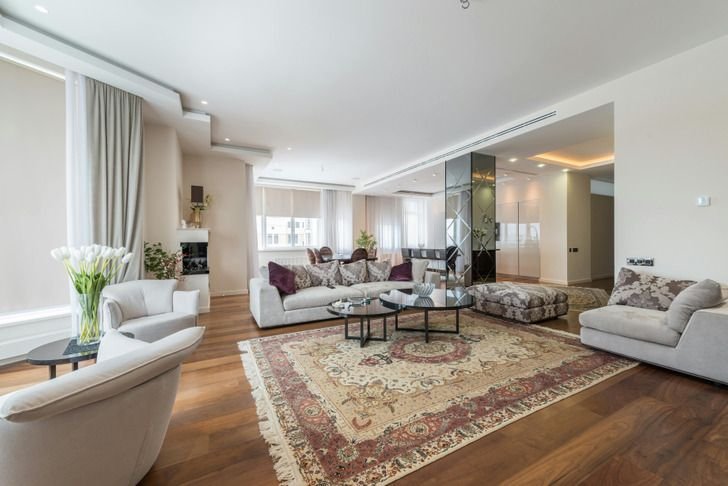
Swapping a harsh overhead bulb for a warmer one. Adding a single textured throw pillow instead of three mismatched ones. Hanging curtains slightly above the window frame so the ceiling reads taller than it is. None of that requires a renovation budget, and most of it costs less than a single dinner out. If you want the fuller list, we put together a set of storage and styling fixes that all come in under fifty dollars, and a few of them double as the styling wins, not just storage ones.
And to be clear, you can absolutely spend more if you want to. That’s a choice, not a requirement.
3. Two People Living in a Studio Isn’t the Disaster People Assume
This myth gets repeated by people who’ve never actually tried it, which is part of why it persists. Two adults in one room is a real adjustment. It is not automatically a relationship-ending one, and treating it like a foregone conclusion does couples a disservice before they’ve even worked out a system.
What actually predicts whether it works isn’t the square footage, it’s whether each person has one space that’s genuinely theirs, even if it’s just a desk corner or a specific chair, and whether schedules get worked out instead of assumed. Couples who do this well tend to negotiate quiet hours and storage zones the same way roommates do, just with more compromise built in. We went deep on this exact question in a separate piece on whether two people can actually share a studio, and the honest answer is more nuanced than either “it’s fine” or “it’s impossible.”
4. Dark Paint Doesn’t Automatically Shrink a Small Room
This is the myth that’s most context-dependent of the five, so it’s worth being precise instead of just contradicting it outright. A dark wall in a room with one small north-facing window absolutely can feel heavier. The same dark wall in a room with good light and a matte or eggshell finish often reads as cozy and intentional rather than cramped.
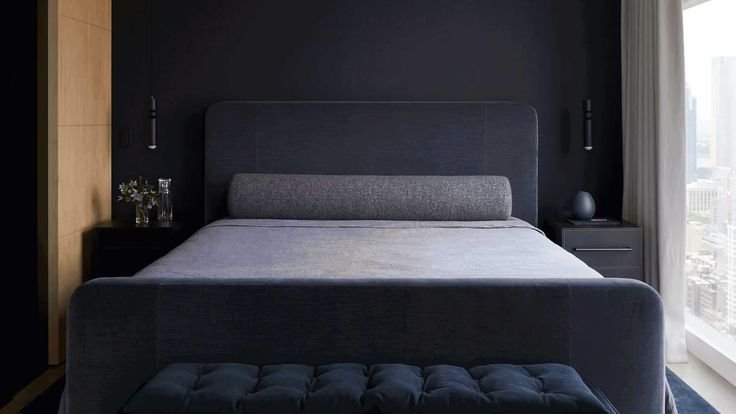
The variable isn’t the color, it’s the light source and how reflective the finish is. A glossy dark paint in low light will swallow a room. A matte charcoal on one accent wall, paired with layered lighting and lighter furniture against it, frequently makes a studio feel more deliberate than an all-white box does. We tested this question directly in our piece on whether dark paint actually works in small spaces, and the short version is that the rule of thumb everyone repeats is too simple to be useful.
5. A Studio Isn’t Just Somewhere You Sleep
People say this one almost as a joke, but it shapes how they actually set the place up, and not for the better. Treat a studio like a hotel room you’re passing through, and it starts to feel like one. No real cooking setup, nowhere to sit that isn’t the bed, nothing on the walls because it’s “temporary.”
A studio holds a full life fine. It just requires admitting upfront that you live there, not that you’re stopping over. That means a kitchen stocked enough to actually cook in, a seating spot that isn’t a mattress, and at least a little personality on the walls. Studio Apartment Setup exists largely because of how often we hear from people who lived in their studio for two years before it finally felt like home, and it almost always traces back to this exact mindset shift, not to anything they bought.
A studio is a real home with a smaller footprint. It behaves like whatever you set it up to behave like.
Frequently Asked Questions
Is it actually true that studios feel smaller than they are? Only if the layout works against the space. A well-zoned studio with intentional furniture placement reads larger than its square footage, and a poorly arranged one feels smaller than it is regardless of size.
Do I need to repaint a studio to make it feel bigger? No. Lighting changes and furniture placement usually move the needle more than paint color does, and they cost less.
How much should I expect to spend making a rented studio feel finished? There’s no fixed number, but most of the visible improvement in a studio comes from a handful of low-cost changes rather than one big purchase. Budget for lighting and textiles before furniture if you’re prioritizing.
Can two people really make a studio work long term? Many do, but it takes explicit agreements about space and quiet time that a one-bedroom lets couples skip. It’s a logistics question, not a relationship verdict.
Is dark paint ever a bad idea in a small studio? It can be, specifically in rooms with limited natural light and a glossy finish. In a brighter room with a matte finish, it’s usually fine and often better than plain white.
A studio earns its reputation one bad layout at a time, and loses that reputation just as fast once someone stops treating it like a layover. If the hotel-room comparison in that last myth sounded familiar, we wrote a longer piece on exactly why studios end up feeling that way, and what tends to fix it.