
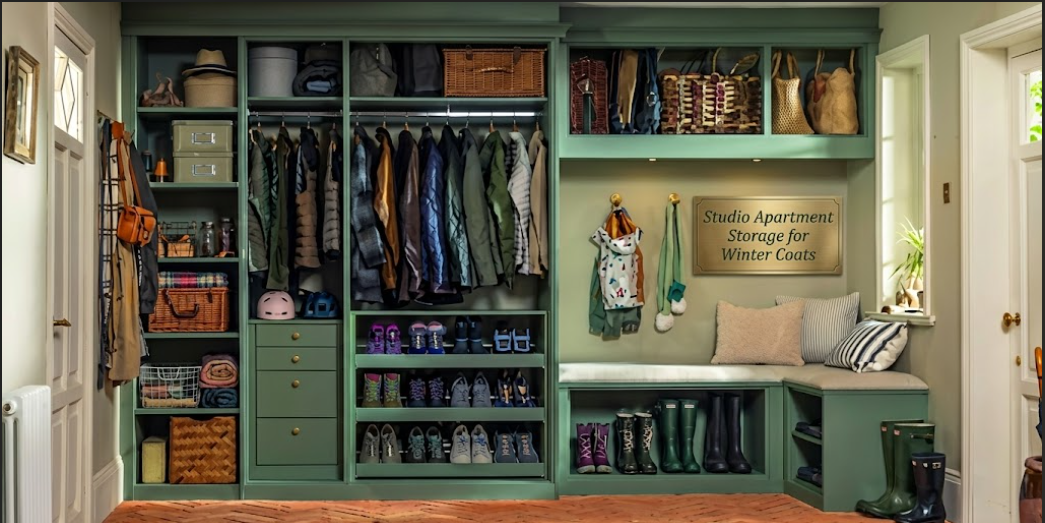
Winter coats are the enemy of small spaces. Not because they’re ugly, not because they’re bulky, but because nobody tells you what to do with them before you sign the lease.
You move in. You have a closet. The closet has a rod. You hang your coat. Then another coat. Then a parka for the really brutal days, a wool mid-length for everything in between, and suddenly sixty percent of your available rod space is gone before a single pair of pants goes up. What’s left for the rest of your wardrobe? Barely enough to function.
This is a structural problem, not a willpower problem. And it has real solutions.
1. Why Winter Coats Specifically Break Studio Closets
In a house, or even a one-bedroom apartment with a proper mudroom or entry closet, outerwear has a home that’s separate from your main wardrobe. That separation matters more than people realize.
In a studio, it doesn’t exist. Everything lives together. Coats, clothes, shoes, gym bags, linens you don’t know where else to put. The closet becomes a catch-all and the rod suffers for it.
A standard studio closet runs between 48 and 60 inches wide. A heavy winter parka takes up roughly 6 to 8 inches of rod space on its own. Run that math on three or four winter coats and you’ve already consumed 24 to 32 inches. That leaves you with maybe a foot and a half for everything else. I’ve walked into studios where a client had spent real money on furniture and lighting, and the room still felt chaotic because two coats were permanently draped over a dining chair near the door. The chair wasn’t the problem. Storage was.
The issue isn’t that studio closets are small, it’s that they were never designed to handle four-season living in a single hanging zone. That expectation is the part that needs to change.
2. The Active Coat vs. Stored Coat Principle
The shift that changes everything is this: stop treating all your coats as if they need to be equally accessible every day.
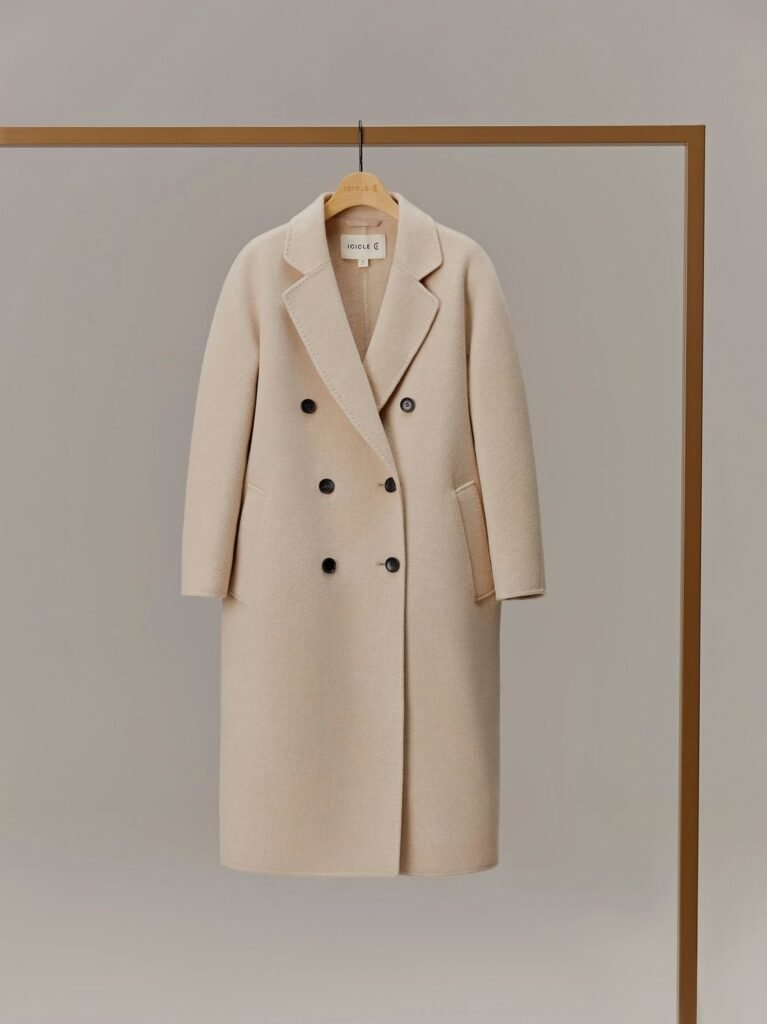
You rotate through two coats with any regularity during the winter months, three at most. The others sit untouched for weeks. Treating all of them as active storage is exactly what causes the closet to feel impossible from day one. If you haven’t already read through the breakdown on why your studio closet feels impossible and a fix that works, it reframes the problem in a way that’s genuinely useful before you start moving things around.
Active coats, the ones you’re reaching for on a Tuesday morning, belong near the entry. Stored coats belong somewhere else entirely.
For active coats, a small cluster of hooks near the front door is cleaner and more functional than any rack. Two or three well-chosen hooks, mounted at a height that actually works for your coat length, give you a landing spot the moment you walk in. And because they’re visible, the hooks have to earn their place aesthetically. Matte black, unlacquered brass, or shaped wood pegs read as intentional. A chrome hook from a hardware store reads as an afterthought.
For stored coats? Vacuum compression bags are the single most underused tool in studio living. A long Canada Goose parka compresses to approximately the size of a folded towel when vacuum-sealed. That bag fits into an under-bed box, onto a high closet shelf, or tucked into a suitcase you’re not actively using. The coat comes out in perfect condition once you unseal it. I’ve recommended this to clients who were convinced they had no storage to spare and it changed everything.
The exception worth knowing about: structured coats with defined shoulders or a stiff silhouette don’t compress well. They lose their shape. Those go on proper cedar hangers, in a garment bag if possible, and get pushed to a low-traffic corner of the closet or into a wardrobe if the apartment can accommodate one.
3. Storage Options: A Practical Comparison
The right solution depends on how many coats you’re working with, whether you can put anything into the walls, and how much floor space you can afford to give up. Here’s an honest look at the main options.
| Storage Option | Best For | Approx. Cost | Strengths | What to Watch |
|---|---|---|---|---|
| Wall-mounted hooks near entry | 1-2 daily-use coats | $20 – $80 | Clean, design-forward, accessible | Looks cluttered with more than 3 items |
| Over-door coat rack | Renters, no-drill situations | $20 – $55 | Tool-free, no wall damage | Only works cleanly for 1-2 coats |
| Freestanding coat rack | 3-5 coats, visible entry zone | $40 – $130 | Flexible placement, no drilling | Eats floor space |
| Vacuum storage bags (off-season) | 2-4 puffer or parka styles | $10 – $35 | Enormous space savings | Structured coats lose shape |
| Under-bed flat storage boxes | Folded or compressed items | $25 – $65 | Uses dead space, fully hidden | Not ideal for hanging-only coats |
| Freestanding wardrobe or armoire | Small closet or no closet | $200 – $700 | Full hanging zone, enclosed | Heavy, requires floor clearance |
A few notes on this table. The over-door rack gets recommended constantly, and I understand why, it requires no tools and costs almost nothing. But it only functions cleanly if you’re managing one coat at a time. Any more than that and the door stops closing properly and the rack starts to bow. If you go that route, treat it as a one-coat solution, not a four-coat one.
And freestanding wardrobes aren’t just for apartments with no closet at all. A narrow wardrobe in the 20 to 24 inch depth range can sit in a corner of a studio without overwhelming the room, and it gives you dedicated outerwear hanging that takes the pressure off the main closet entirely. The visual payoff depends entirely on what you choose. A wardrobe that looks like it belongs in a college dorm undermines the whole space. One that looks like a furniture choice works.
4. Vertical Space and the Entry Zone
The entry of a studio apartment gets more visual attention than any other part of the room. It’s where guests land, it’s what you see when you walk in, and it’s often where things pile up fastest because there’s no defined place for them to go.
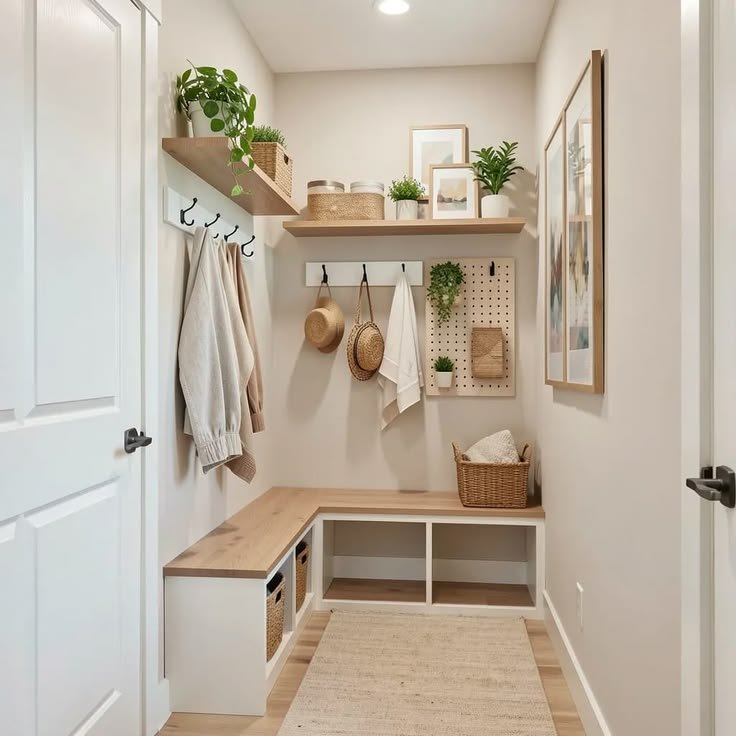
The Studio Apartment Setup approach to this particular problem is practical: define the entry zone deliberately. Even if it’s just a two-foot strip near the front door. Hooks. A small bench if you have room. A tray for keys. The presence of intention in that zone communicates organization across the whole room, and it keeps coats off the chair.
For anything going into vertical space on the closet side, the piece on how to use vertical space the right way is worth reading before you buy any closet system or add a second rod. It’s easy to invest in the wrong configuration and discover it doesn’t actually help once everything is hung up.
Vertical storage for winter coats specifically means one thing: high shelving. A folded and bagged coat on a top shelf doesn’t count against your rod. A compression-bagged parka on a high shelf above your hanging zone is invisible and completely out of the way. This is the move that creates space where none seemed to exist.
5. What People Get Wrong: The Proximity Trap
The most consistent mistake I see is optimizing entirely for convenience at the cost of everything else.
Every coat ends up near the door because it’s easy to grab. Then a bag joins the pile. Then a scarf. Then a hat. And what started as a practical coat area becomes the visual anchor of the room, and not in a good way. The studio feels smaller because the first thing your eye lands on is clutter.
A studio that reads as well-designed isn’t necessarily larger. It just manages what gets visible real estate and what doesn’t.
One thing I’ll mention here, slightly off the main point but worth saying: this same logic applies to shoes. Shoes near the entry are just as guilty of making an entry zone look chaotic. A small enclosed bench with storage inside handles both problems at once. But that’s a different conversation.
Back to coats: two coats hanging from intentional hooks near the door tells a story of someone who lives there. Five coats crammed onto a door rack tells a different story entirely.
If you do want to use a door for storage and want to go deeper on which doors actually work for this and which ones don’t, the guide on over-door storage spots most people miss covers some genuinely underused options, including the interior closet door and bathroom door for lighter outerwear.
For budget-focused solutions across the whole storage picture, studio storage hacks under $50 has practical options that don’t require drilling or significant investment.
FAQs
Will vacuum storage bags damage my winter coats?
For most puffer coats, parkas, and quilted jackets, no. Down and synthetic fill compresses and re-lofts reliably when the bag is opened. The exception is structured coats with defined shoulder construction or a tailored silhouette. Those lose shape under compression and should be stored on hangers in a garment bag instead. When in doubt, fold the coat loosely into the bag, seal it slowly, and check the shape after a few days before committing it to long-term storage.
How many coats should realistically be accessible in a studio apartment?
Two, with a possible third for extreme weather. Most people overestimate how many coats they actively rotate through. During a typical winter week you’ll reach for the same one or two pieces repeatedly. Anything beyond that can be in vacuum storage or on a high shelf without any inconvenience. Keeping that limit in mind before buying new outerwear is just as important as organizing what you already own.
Is a freestanding wardrobe worth the floor space in a small studio?
For studios with a closet under 48 inches wide, yes. A narrow wardrobe in the 18 to 24 inch depth range gives you a dedicated outerwear zone without taking over the room, provided the piece itself looks like it belongs there. The biggest mistake is buying something inexpensive that reads as temporary. A wardrobe that looks chosen has a very different effect than one that looks like a stopgap.
What hook styles work best for a studio entry wall?
Hooks with a visible backplate or weighted base hold better over time than thin pin-style options and look more finished. If you’re renting and can’t drill, high-rated adhesive hooks work on smooth painted drywall but fail on textured surfaces. Test a single hook before committing to a row. Finish choices: matte black, unlacquered brass, and oiled walnut work across the widest range of interior styles without clashing.
Should I change how I store coats seasonally?
Yes, and twice a year is the right rhythm. At the start of winter, move lightweight jackets to the back or into off-season storage and bring heavy outerwear forward. At the start of spring, reverse it. Clean and dry everything before it goes into long-term storage. This takes about an hour and keeps the closet functioning properly across all four seasons rather than hitting full capacity in October and staying that way.