
The misconception I encounter most consistently is that the bathroom is the one room in a studio you simply accept. People resign themselves to the counter clutter, the overstuffed cabinet under the sink, the three bottles of shampoo balanced on the tub ledge. “The bathroom is just small,” they say. “There’s nothing you can do.”
There is quite a lot you can do.
The studio bathroom is, in my experience, the most underused room in terms of raw storage capacity. The problem isn’t square footage. It’s that most renters only address the surfaces they can see rather than the zones they aren’t touching at all. The spots I’m covering here are specific. Not “add a shelf above the toilet” specific, that’s the first thing everybody tries and it’s far from the most efficient option. The places that actually matter are the gaps, the door faces, the wall above the frame, the inside of every cabinet door, and the under-sink cavity that people assume is full when it’s usually still half-empty.
1. The Zones That Are Actually Empty
Start with the inside of your medicine cabinet door, if you have one. Most medicine cabinets ship with a smooth interior door face and three shallow shelves on the opposite side. What people don’t realise is that interior door face is a magnetic surface in most cases, and even where it isn’t, it accepts adhesive mounting strips cleanly. Thin magnetic strips mounted on the inside of the door hold tweezers, a nail file, bobby pin boxes, a small pair of nail scissors. These are the items that currently live scattered on the counter or loose in a drawer, and they fit perfectly on a strip that’s completely invisible when the cabinet is closed.
The gap beside the toilet is the next overlooked zone. In most studio bathrooms, there’s a vertical corridor between the side of the toilet tank and either the wall or the bathtub surround, typically four to eight inches wide. A slim pull-out tower unit, sometimes marketed as a toilet-side organiser or narrow bathroom floor tower, fits exactly in this gap on most standard bathroom builds. These towers have three to five open shelves and many run on small wheels so they pull out easily. They turn a dead column of air into fully accessible storage for toilet paper, soap bars, cotton rounds, or anything else that doesn’t currently have a home.
High wall space above the door frame goes completely unused in almost every apartment bathroom I’ve been in. The distance between the top of a standard door frame and the ceiling runs anywhere from six to fourteen inches depending on ceiling height. A single floating shelf installed in that space, even a narrow one, holds backup toilet paper, spare soap bars, or extra towels rolled tight. You’re using vertical space with zero floor footprint and zero intrusion into the visual field at eye level.
2. The Under-Sink Cabinet Has More Room Than It Looks
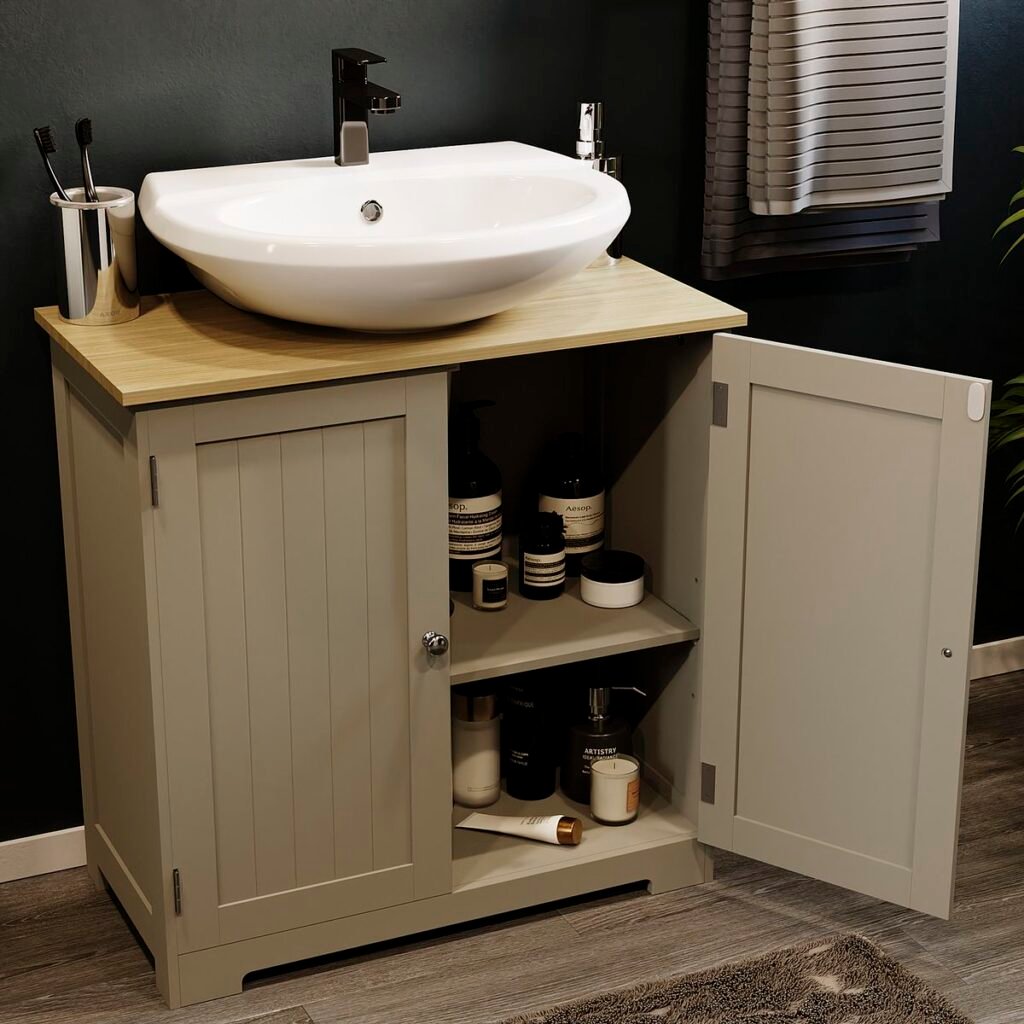
The under-sink cabinet in a studio bathroom is almost always a disaster, not because it’s too small, but because people place items flat on the floor of it without any vertical organisation. The result is that the top half of the cabinet’s interior is empty air while the bottom half is a jumbled mess, and pulling out anything from the back requires removing everything in front of it first.
The fix costs roughly fifteen dollars and takes ten minutes. A tension rod, placed horizontally across the width of the cabinet interior about eight to ten inches below the shelf above, creates an instant hanging rail. Spray bottles, cleaning products with trigger handles, and anything with a grip or loop gets hooked over the rod. The floor of the cabinet clears out completely. A second category of items, bulkier things like spare toilet rolls, larger bottles, a spare cleaning brush, now lives on the floor without competing for space.
Shelf risers are the companion move. A small two-tier riser inside the cabinet lifts one category of products (contact lens solution, extra face wash, lotion) above another so you’re using the full interior height rather than stacking things in a single flat layer and leaving dead air above them. Neither the tension rod nor the riser requires drilling or adhesive. Both are removable instantly. Together they roughly double the functional storage in a cabinet most people had mentally written off.
The side panel of the vanity unit, the flat exterior face of the cabinet that’s visible from the room, is another surface that almost nobody uses. A few adhesive hooks mounted on that side panel hold a hairdryer, a flat iron, a small basket for styling products. This moves items off the counter and out of the drawer without reducing storage space anywhere else. Most adhesive products rated for bathroom humidity hold reliably when applied to a clean, dry surface, though it’s worth reading the weight rating on the label before committing.
3. The Door, the Shower, and the Things People Underload
The back of the bathroom door is chronically underused. People hang a single hook for a towel, sometimes add a small over-door organiser with five or six shallow pockets, and consider it finished. A properly loaded bathroom door, however, holds a thirty-pocket clear over-door organiser stocked with cotton rounds, face masks, hair accessories, individual medication packets, small bottles of things that would otherwise take up counter space. The pockets are shallow but the door is tall, and the capacity is substantially larger than most people expect.
The Studio Apartment Setup piece on over-door storage spots most people miss covers the full apartment, not just the bathroom. A lot of what applies to the bedroom closet door or the entry door applies directly here.
For the shower, the tension-mounted corner pole caddy outperforms the standard hook-over-showerhead version in most situations. The corner pole doesn’t depend on showerhead placement or height, it mounts floor to ceiling using a tension mechanism, and it provides multiple shelves in each corner it occupies. Two poles, one in each shower corner, give you storage capacity that a single hanging caddy can’t match.
Studio Bathroom Storage Audit: At a Glance
Before buying anything new, check each zone:
[ ]  Inside medicine cabinet door  (magnetic strip installed?)
[ ]  Gap beside toilet              (slim tower unit filling it?)
[ ]  Under-sink cabinet             (tension rod for spray bottles?)
[ ]  Under-sink cabinet             (shelf riser for double-stacking?)
[ ]  Wall above door frame          (floating shelf present?)
[ ]  Back of bathroom door          (fully loaded over-door organiser?)
[ ]  Side panel of vanity           (adhesive hooks for dryer/iron?)
[ ]  Shower corners                 (tension pole caddies in both?)
[ ]  Counter surface                (limited to daily-use items only?)
If more than three of those are unchecked, the bathroom has room to gain before any additional product is necessary.
4. What Consistently Underdelivers
The large over-toilet shelf unit is the storage product most studio renters try first and regret later. In product photos these look like a clean, architectural solution. In practice, two problems emerge reliably. First, most of these units aren’t designed to anchor to studs, they rest on the toilet tank lid and lean against the wall, which limits them to very light loads before they become unstable. Second, the footprint they require directly behind the toilet creates a narrowed corridor that makes the bathroom feel significantly more cramped. They’re not useless, but they get loaded beyond their actual capacity almost every time.
Suction cup shelving is the other consistent disappointment. Every rental bathroom has experienced a suction cup shelf failure at some inconvenient hour, usually taking everything stored on it to the floor simultaneously. The newer generation of foam-core adhesive products, specifically the kind rated for bathroom humidity and sold with peel-and-stick pads rather than suction cups, performs dramatically better. They hold reliably at the rated weight when applied correctly, which means a clean surface and a full twenty-four-hour cure time before loading.
If you’re setting up a studio bathroom from scratch and haven’t lived in it yet, the guide at Studio Apartment Setup on what you actually need in week one is worth reading before you buy. Over-purchasing bathroom storage products before you know how you use the space is one of the easier mistakes to make when everything in a new apartment feels urgent.
5. One More Thing the Mirror Isn’t Doing
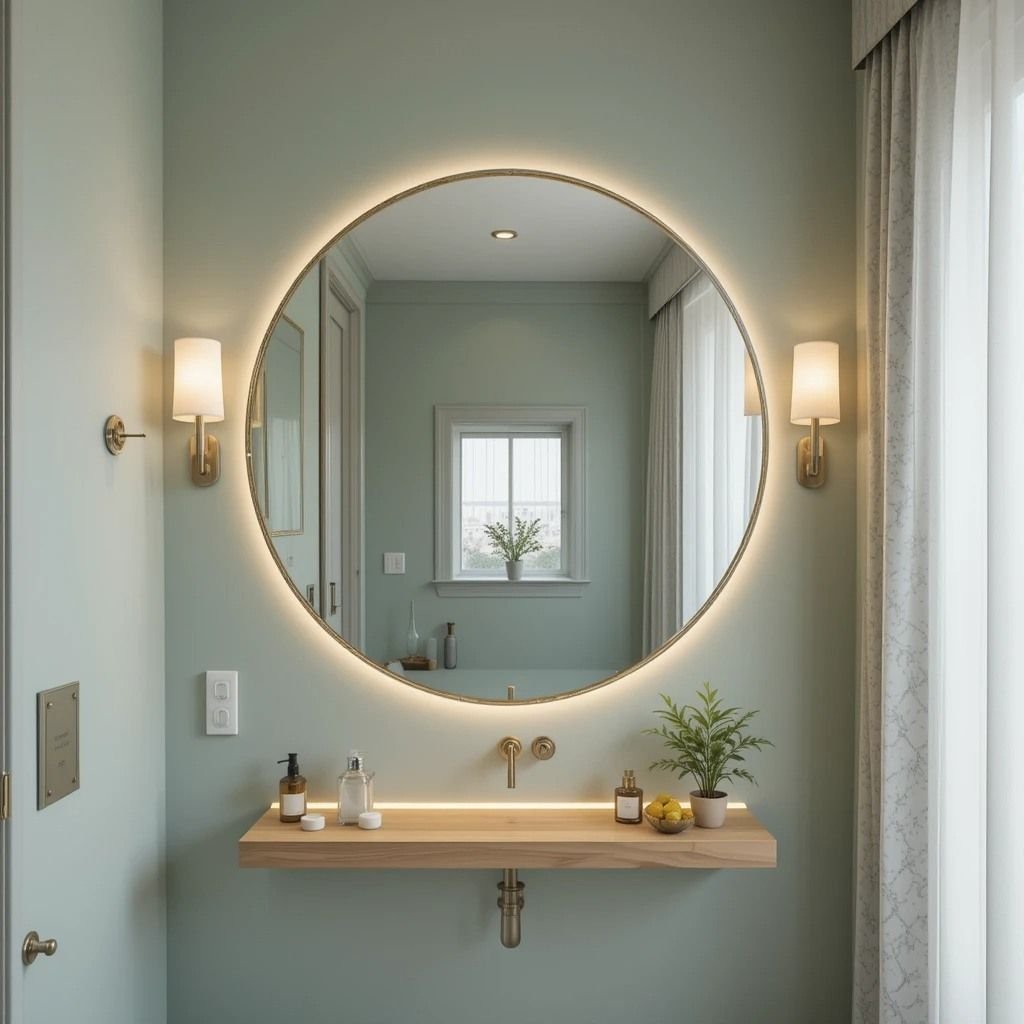
This is a slight detour from storage specifically, but it connects. Most studio bathrooms have one mirror positioned above the sink, sometimes opening as a medicine cabinet and sometimes fixed. What I notice consistently is that the mirror is doing the minimum job, reflecting whoever’s standing directly in front of it, rather than the more useful job of bouncing light across a room that typically gets very little natural light.
A bathroom that feels dark and cramped makes people spend as little time in it as possible, which means things get left out on the counter because there’s no patience to put them away properly, which means the surface clutter never resolves regardless of the storage solutions installed. It’s a behaviour pattern rather than a storage problem, but fixing one helps the other.
Anyway. Mirror placement in the broader apartment is a separate question, and this piece on mirror placement in a studio at Studio Apartment Setup covers the full picture.
The bathroom in a studio apartment responds well to focused attention. The checklist above takes about fifteen minutes to work through. Most of what it turns up costs under thirty dollars to address. The version of the bathroom that people accept on move-in day is rarely the only version available to them.
FAQs
My adhesive hooks keep falling off the tile. Is there a reliable brand?
The surface preparation is almost always the cause before the product is. Clean the tile with isopropyl alcohol, not a general bathroom cleaner, and let it dry fully before applying anything. Most adhesive failures in bathrooms trace back to invisible soap film or mineral deposits on the tile surface. Apply the product, press firmly for thirty seconds, and don’t load it for twenty-four hours. Command, GoodBite, and 3M bathroom-specific lines all perform reliably when applied this way.
I have no cabinet under the sink at all, just exposed pipes. Where do I even start?
A small freestanding shelf unit with open tiers solves this directly. The legs straddle the pipe runs, and the shelves hold the same items a cabinet would. These are sometimes sold as “pipe-friendly vanity shelves” or “under-sink open shelving units.” They don’t drill into anything and they come out cleanly. Why the studio closet feels impossible covers a parallel problem in the closet, the approach of building storage around fixed obstacles rather than being stopped by them, and it maps onto this situation well.
How do I stop the bathroom counter from becoming a dumping ground when I’m running late?
A tray helps more than you’d expect. Put one tray on the counter, sized to hold three or four items maximum, the things you use every single day. The tray creates a boundary. Anything that doesn’t belong in the tray goes elsewhere immediately, not later. The limitation is the point. The counter expands to accommodate whatever is allowed on it, so the only rule that actually holds is a strict one.
Is the slim toilet-side tower stable enough to actually use?
The fixed-foot versions outperform the wheeled ones for stability. Most hold between fifteen and twenty pounds across their shelves, which is more than sufficient for toilet paper, soap, and standard bathroom supplies. Don’t load them with heavy product bottles on the top shelf, weight distribution matters on freestanding units. Fixed-foot versions from the bathroom organiser categories at most major retailers tend to be the most stable options in this price range.
What’s the honest maximum I can store on a bathroom door?
An over-door organiser with clear pockets, the kind designed for shoes originally, realistically holds fifteen to twenty-five pounds of contents across thirty pockets before the door hardware starts feeling stressed. For a rental apartment where the door hinges and frame aren’t reinforced, keep the total load under fifteen pounds to be safe. That’s still a lot of bathroom supplies. Cottons, skincare samples, medication boxes, hair accessories, and small spray bottles fit without coming close to that limit.