

A lot of people assume warm bulbs are cozy and cool bulbs are clinical, end of story, pick whichever mood you’re after and move on. That’s not really how it plays out once you’re living in 400 square feet where the same light has to handle dinner, work calls, and reading at midnight. In a studio, one fixture often does the job three separate rooms would split in a bigger apartment, and that changes the math on warm versus cool more than most lighting guides let on.
1. Warm and Cool Are Just Numbers on a Bulb Box
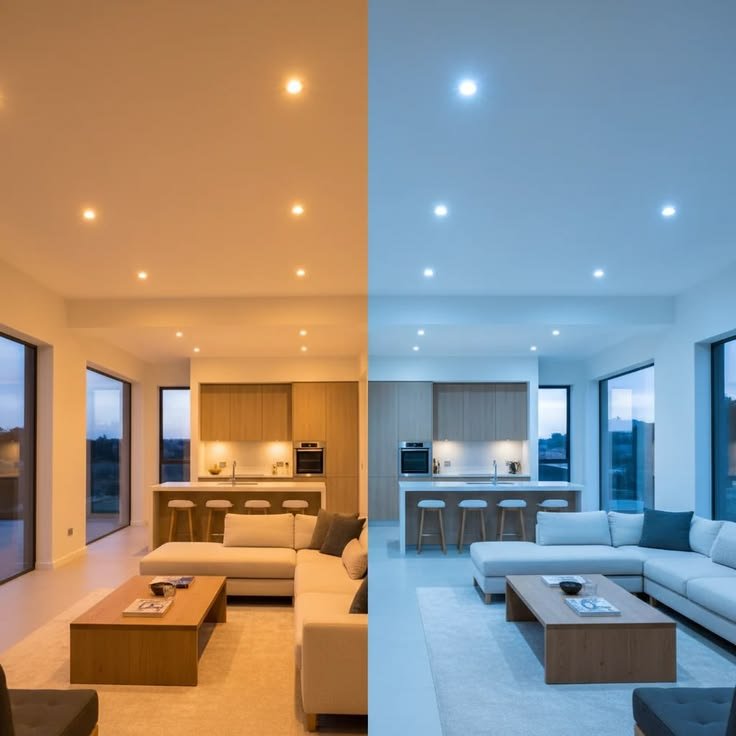
The terms “warm” and “cool” sound subjective, like a vibe you either like or don’t. They’re actually a measurement. Bulbs are rated in Kelvin, and the number tells you almost everything before you even screw it into a socket.
Here’s the range most studio apartments end up shopping in:
2700K – 3000K   Warm white     Amber, soft, the classic "lamp glow"
3500K – 4100K   Neutral white  Balanced, slightly clean, less yellow
5000K – 6500K   Daylight/Cool  Bright, blue-white, alert
Most overhead fixtures and lamps sold for living rooms default to that 2700K range, which is why a studio can feel warm without anyone choosing it on purpose. The cooler end shows up more in kitchen and bathroom fixtures, office lighting, and most LED strip lights sold for “task lighting.” Once you know the number, the warm-versus-cool debate stops being a feeling and starts being a spec you can actually shop for.
2. Where Warm Light Actually Earns Its Keep
Warm bulbs do their best work in the parts of a studio meant for slowing down. A reading lamp next to the bed, a floor lamp in whatever counts as your living room corner, a small accent light near a chair. Skin tones look better under warm light too, which matters more than people expect when your bedroom, your living room, and your video call background are all the same six feet of wall.
It also does something for the room that’s harder to quantify: it makes a small space feel inhabited instead of staged. If your studio has ever felt a little like a hotel room despite having all your own stuff in it, lighting temperature is frequently the actual culprit, not the furniture. Studio Apartment Setup has a piece on exactly that pattern, and bulb temperature comes up more than almost anything else.
The catch is warm light can wash out detail. Folding laundry, checking your makeup, reading fine print on a lease, all of that gets harder under 2700K, even at full brightness.
3. Where Cool Light Pulls Ahead
Flip the use case to anything close to “task” and cool light starts winning. A desk that doubles as a dining table and a home office benefits from something in the 4000K to 5000K range, mostly because it keeps you alert and it renders colors more accurately, which matters if you’re editing photos, color-matching an outfit, or trying to tell if that chicken is actually cooked through.
Kitchens are the clearest case. A warm bulb over a stove makes food look ambiguous in a way that’s mildly unsettling once you notice it. Cool or neutral light fixes that instantly. If you’ve been second-guessing your color choices on walls or cabinets, it’s worth knowing that bulb temperature shifts how every paint color reads, sometimes more than the paint itself does, which is covered in more depth in Studio Apartment Setup’s breakdown of dark paint in small spaces.
Cool light has a ceiling, though. Push it too far into 6000K+ territory in a room you also sleep in, and it starts working against you at 11pm, which is the opposite of what a studio needs from its only bedroom.
4. The Mistake Almost Everyone Makes With a Single Studio Room
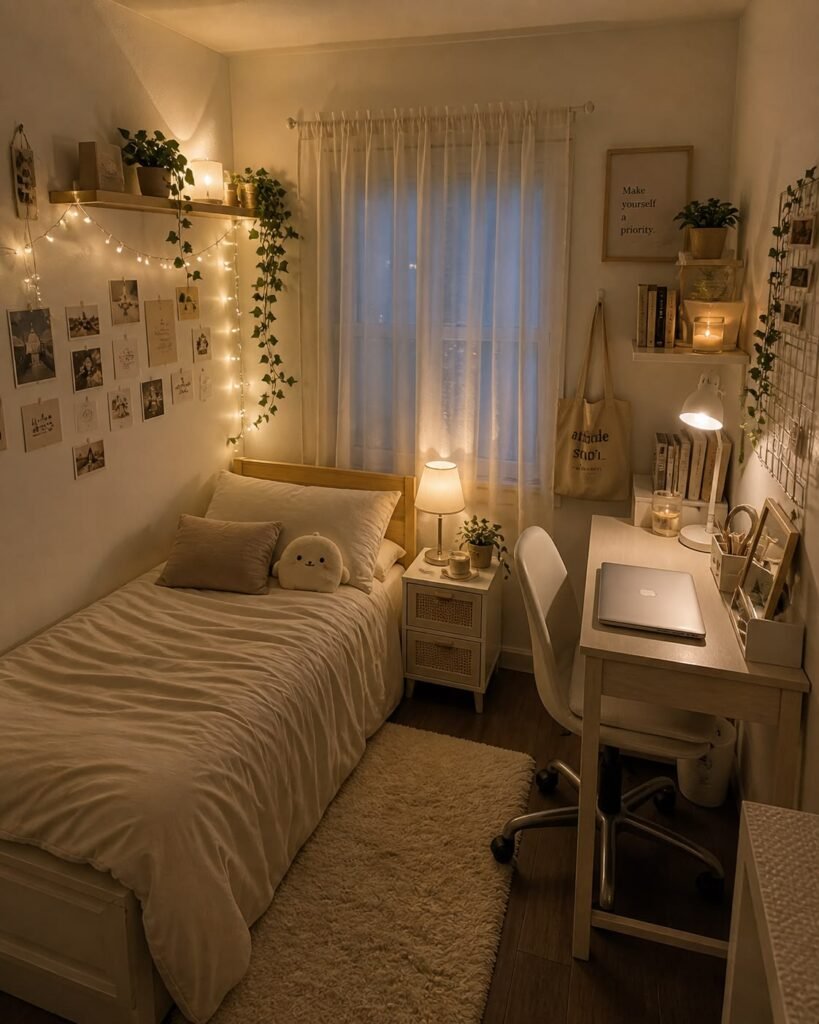
Here’s where people usually go wrong, and it’s an easy mistake to make: they buy one multipack of bulbs and use it everywhere. Same temperature in the reading lamp, same temperature over the stove, same temperature at the desk. It seems efficient. It isn’t.
The result is a studio that’s either dim and amber everywhere, including the one spot you actually need clear light to work or cook, or it’s bright and clinical everywhere, including the one spot you’re supposed to wind down in. And because a studio doesn’t have walls to contain the mismatch, you feel the wrongness of it constantly, not just when you walk into a specific room.
The fix isn’t expensive. It’s just intentional. Different bulbs for different jobs, even within the same fifteen feet of floor space.
5. Warm vs Cool: The Side-by-Side
| Warm (2700K–3000K) | Cool (4000K–5000K) | |
|---|---|---|
| Best for | Sleeping area, lounge corner, evenings | Desk, kitchen, grooming mirror |
| Mood | Relaxed, soft | Alert, clean |
| Color accuracy | Lower, can wash out detail | High, true-to-life |
| Energy at night | Helps you wind down | Can delay sleep if overused |
| Common mistake | Using it over a cooking or work surface | Using it as the only light in a sleeping area |
6. So Which One Actually Wins
Neither, honestly, and that’s the real answer most single-bulb articles skip. The win comes from treating your studio less like one room and more like a handful of small ones, each with its own light temperature doing a specific job. That’s the same logic behind zoning a studio with furniture and rugs instead of walls, and it applies just as well to lighting. Studio Apartment Setup’s guide to creating zones without walls walks through the layout side of this if you haven’t tackled that part yet.
In practice, that usually means warm bulbs near the bed and any seating, neutral or cool bulbs at the desk and kitchen counter, and smart bulbs or a couple of cheap lamp swaps if you don’t want to commit to one fixture forever. It’s a five-dollar fix dressed up as a design decision, and it works.
Swapping bulbs is one of the few studio upgrades that costs almost nothing and actually changes how the whole space feels by dinnertime.
7. Quick Answers to Common Questions
Can I just use cool white bulbs everywhere and call it done? You can, but your sleeping area will likely feel harsher than you want it to at night. Cool light is great for tasks and rough on winding down, so an all-cool setup tends to backfire in the one room doing double duty as a bedroom.
Do warm bulbs make white walls look yellow? Yes, to some degree, especially with bright white or cool-gray paint. It’s usually subtle enough to ignore, but if you’ve picked a specific white for a reason, test the bulb under it before committing to a whole room of warm lighting.
What temperature should I use over a kitchen counter with no separate kitchen? Something in the 3500K to 4500K range tends to work best. It’s bright enough to actually see what you’re cooking without feeling like an exam room.
Is it weird to mix warm and cool bulbs in the same open room? Not if the fixtures are physically separated, like a warm floor lamp by the couch and a cool desk lamp six feet away. It only looks off when both lights are close together and competing for the same patch of wall.
Will changing bulb temperature actually make my studio feel bigger? Not bigger exactly, but more functional, and that often reads as more spacious because the space stops feeling like it’s fighting you. Cooler light near windows during the day can also make a room feel airier, which is a small trick worth trying if your studio runs dim.
If you’re still working through the lighting basics before getting into bulb temperature, Studio Apartment Setup’s piece on why one overhead light ruins everything is a good place to start.