
The assumption I keep running into is that smart home technology is for larger spaces. Multiple rooms, complicated lighting zones, a house where you might be in the kitchen and need to turn off a bedroom light from across the floor. Studios, the thinking goes, are so small that you can reach everything from wherever you’re standing, so why automate any of it?
That assumption is wrong in a specific way. Studios don’t need smart home gadgets for the convenience of not walking across the room. They need them for something different: to create environmental conditions that a single-switch, builder-grade apartment cannot otherwise produce.
The gadgets that work in a studio are the ones that solve the one-room problem. The ones that don’t are the ones designed for a large-home problem that studios don’t have.
1. Smart Lighting: The One Category That Delivers Every Time
A studio apartment with a single overhead fixture and no layered lighting is one of the most common setups I see. It’s also one of the most actively harmful configurations for how people actually feel in a space. I covered the overhead light problem in depth in Studio Apartment Setup’s piece on why one overhead light ruins everything, but the short version is this: flat, cool overhead light at 8 PM tells your brain it’s noon. It suppresses melatonin production. It makes the apartment feel simultaneously institutional and uncomfortable, and there’s no bedroom door to close yourself off from it.
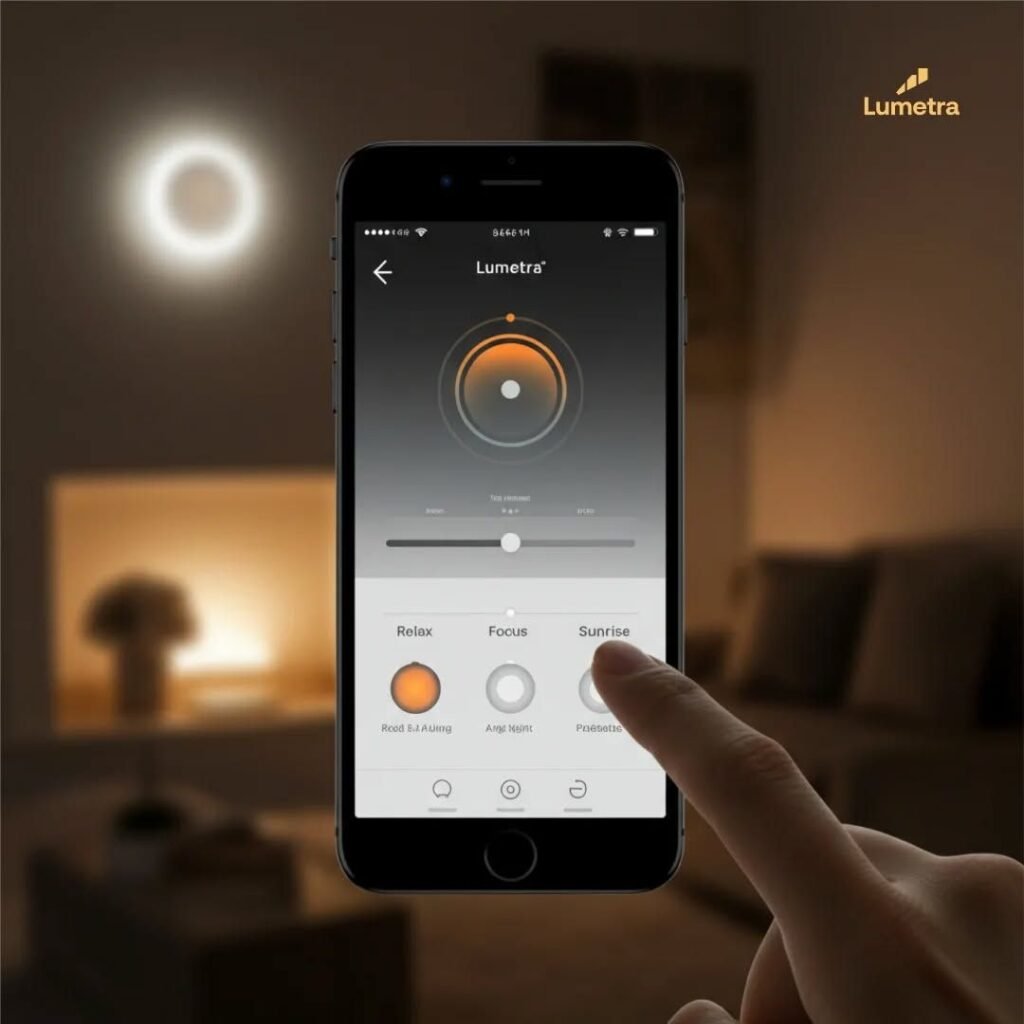
Smart bulbs solve this at a category level. Not because they’re “smart” in any complicated sense, but because they give you precise control over color temperature and brightness in a space where every light affects every zone simultaneously. In a studio, you cannot have a different ambiance in the living area versus the sleeping area unless every bulb in the room is working together. A warm 2700K lamp near the bed means nothing if the overhead is still blasting 5000K cool white from the ceiling.
The setup that works: two to three adjustable smart bulbs in floor lamps or table lamps, scheduled to shift warmer and dimmer from 7 PM onward, with the overhead on a separate smart switch that goes off entirely by 9 PM. This costs less than a single piece of decent furniture and does more for the livability of the space than most design decisions do.
One thing worth prioritizing from the start: hub-free models. A studio dweller who has to set up a separate hub device on a shelf somewhere to make bulbs communicate has immediately introduced another piece of hardware that needs a home. Bulbs that connect directly via Bluetooth or the home’s Wi-Fi eliminate that problem entirely.
2. Smart Plugs: Useful, But Only If You Know Why
Smart plugs get recommended constantly in small-space guides, and the advice is almost always too vague to be useful. “Control your devices remotely” means nothing specific to someone in a studio who is standing eight feet from every outlet at any given moment.
The actual case for smart plugs in a studio is narrower than people think.
First: outlet management. Studios typically have fewer outlets than a larger apartment, and renters usually can’t add them. A smart plug controlling a lamp on a schedule means you’re not getting up to manage it manually at the same time every night. That’s a minor convenience until it’s part of a consistent routine, at which point it becomes a reliable environmental cue, the lamp turns off, the space signals sleep, your brain registers the transition.
Second: energy monitoring. A smart plug that tracks power draw tells you whether the space heater you thought you switched off has actually been running for four hours. In a studio where outlets are shared by everything and the electrical situation is often less organized than in a house, that information is practically useful.
The mistake is buying a set of eight and plugging everything in. Pick two. One for a lamp you want on a schedule, one for a high-draw device you’re most likely to forget.
3. Smart Speakers and Displays: One Works, One Doesn’t
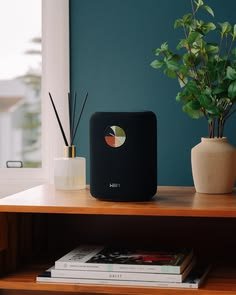
A compact smart speaker in a studio is a reasonable purchase. Voice control for music, for timers, for lights once you’ve set up smart bulbs, for a quick question while your hands are in a sink the size of a washing-up bowl. The audio quality on the small-format models has improved enough that they’re viable as a primary speaker for most people who aren’t particular about audio. In a studio with limited shelf space, a device that functions as speaker, smart assistant, and light controller earns its footprint.
Smart displays are a different matter entirely. A smart display is essentially a tablet mounted on a speaker base that shows you recipe cards, weather feeds, and your calendar. In a house, it goes in a kitchen or an entryway. In a studio, it competes for the same surface space as everything else in the apartment, and the presence of an active screen on a counter is one more visual stimulus in a space that already struggles with having too many focal points. Most studio dwellers who buy a smart display end up repositioning it twice and then putting it in a closet.
The test I apply: does this device solve a problem specific to how you use this space, or does it add a capability that would be useful in a larger home? A compact smart speaker solves a specific problem in any size apartment. A smart display solves a large-kitchen problem that studios don’t have.
4. The Gadgets That Sound Useful and Aren’t
Robot vacuums are the most commonly overpurchased smart home gadget in studios. The pitch makes sense: small space, frequently needs cleaning, hands-free would be convenient. The reality is that most studios have a furniture arrangement dense enough that consumer-grade robot vacuums spend most of their operating time stuck, navigating around chair legs, lodging under a bed frame with three inches of clearance, or running the same path along one open wall while ignoring the rest of the floor.
A decent full-size vacuum, used twice a week, does the job in less time than it takes to empty and reset the robot. Studios are small enough that manual cleaning has a genuine time advantage over automated cleaning.
Smart thermostats are another category that gets complicated in a rental context. Most studio tenants don’t own their HVAC system and cannot replace the thermostat without landlord approval. Even in cases where that’s not a barrier, a studio’s thermal envelope is small enough that the “learning” features of a smart thermostat take months to become useful, if they do at all. A basic programmable thermostat does the same job for a fraction of the cost and without an app dependency.
Smart locks are worth considering if your door accommodates them and move-out inspection isn’t a concern. Not primarily for the access control features. For the simple fact of not having to carry keys in a space where your bag and jacket go on a hook right next to the door. A minor daily convenience. Worth factoring in. Studio Apartment Setup’s rental safety checklist covers the lease considerations here more thoroughly, which is worth reviewing before you make any changes to a rental unit.
Smart Home Gadgets for a Studio: Honest Assessment
| Gadget | Worth It? | What It Actually Solves |
|---|---|---|
| Smart bulbs (warm, adjustable) | Yes | Ambiance and sleep conditions in a one-room space |
| Smart plug, 1-2 with scheduling | Yes, selectively | Lamp timers and energy monitoring for high-draw devices |
| Compact smart speaker | Yes | Speaker + voice control without taking up dedicated shelf space |
| Smart display | No | Solves a kitchen problem studios don’t have; creates visual clutter |
| Robot vacuum | Generally no | Studio furniture density defeats most consumer models |
| Smart thermostat | Depends | Only viable if you own the HVAC; most renters can’t install one |
| Smart lock | Maybe | Confirm lease language before purchasing |
The pattern here isn’t about price or brand. It’s about whether the gadget solves a one-room problem or a multi-room problem. Smart bulbs, smart plugs, and compact smart speakers all solve problems that are specific to or amplified by a one-room living arrangement. Everything else is solving problems studios either don’t have or can address more simply.
If you’re setting up a new studio and figuring out where to spend first, the week-one essentials guide on Studio Apartment Setup covers the broader priority logic, and the same framework applies to gadgets as readily as it does to furniture.
One more thought on this, and then I’ll get to questions. The studios I’ve seen go wrong with smart home tech share one consistent pattern: the person bought an ecosystem before they understood the space. They got the starter kit, the four-device bundle, the matching hub and speaker and plug set, before they’d lived in the studio long enough to know what problems actually needed solving. Spend a month in the apartment first. The problems that genuinely exist will be obvious by then. Understanding what the space actually needs before you buy anything is a better strategy than buying everything and editing down.
Frequently Asked Questions
I already have a smart home setup from a larger apartment. Is it worth reconfiguring everything for a studio?
Audit what you actually use in a given week versus what’s plugged in out of inertia. Smart bulbs and smart plugs transfer directly and are worth setting up. Large display devices and multi-room audio equipment that made sense in a bigger space may not earn their counter or shelf footprint in a studio. The reconfiguration effort is low for most of it, so err toward setting things up and then editing based on what actually gets used.
Do smart gadgets make a studio feel more like a home or more like a tech setup?
Placement determines this almost entirely. Visible wires, multiple hub devices on a shelf, a smart display eating counter space, these read as a tech setup. Smart bulbs in existing lamps, a compact speaker in a corner, plugs behind furniture, these are essentially invisible. The difference between a smart home that adds warmth and one that adds clutter is whether the devices are doing visible or invisible work.
My studio barely has counter space. Which smart gadgets take up the least room?
Smart bulbs are the clear answer. They occupy exactly the same space as a standard bulb and need nothing additional if you choose hub-free models. A compact smart speaker roughly the size of a large coffee mug is the next smallest footprint. Everything else in the smart home category adds a surface item to a space that probably doesn’t have one to spare.
Is there a real difference between a $15 smart plug and a $45 one?
For basic scheduling and on/off control, no meaningful difference. The significant feature at the higher price point is energy monitoring, which shows you how much power a connected device is drawing in real time. For a lamp on a timer, the $15 version does the same job. For a space heater, a window AC unit, or anything else with high or variable power draw, the monitoring feature is genuinely useful and worth the price difference.
Can I set up smart lighting in a studio that only has one overhead fixture and no lamp outlets near the bed?
Yes, but it requires a different approach. A smart plug controlling a floor lamp plugged into any available outlet handles the lamp-near-bed problem regardless of outlet location. For the overhead, a smart bulb in the existing fixture plus a warm lamp on a smart plug gives you the two-tier system the space needs, even if the outlet for the lamp is across the room. The scheduling does the work so you’re not managing it manually each night.