
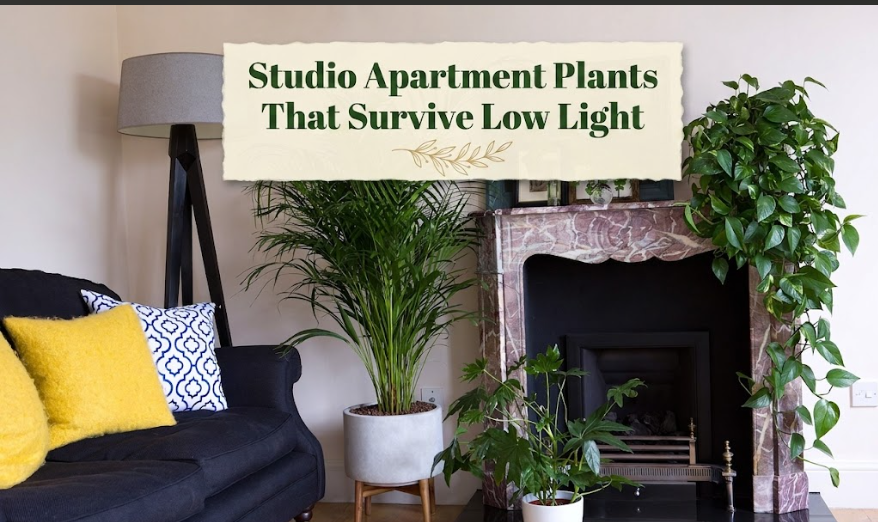
Every few months, someone sits across from me during a consultation and tells me they can’t have plants. Not “I haven’t tried” or “I don’t know which ones to buy.” A flat, resigned no. And when I press them on it, the explanation is always some version of the same thing: “My studio doesn’t get enough light.”
I’ve heard it so often that I wanted to address it properly, because this belief is almost always built on a misunderstanding. Not a small one either. What people are diagnosing as “no light” is, in the vast majority of cases, low light. And those are not the same thing at all.
Low light is where some of the most beautiful houseplants on the planet evolved. The issue isn’t the apartment. The issue is that people keep reaching for plants that want a sunbaked southern exposure, then blame the space when things go sideways by March.
1. What “Low Light” Actually Means (And Why the Distinction Matters)
Low light does not mean darkness. This seems obvious when you say it aloud, but the confusion is genuinely common, and it leads people down a frustrating path.
A north-facing window still brings indirect, ambient daylight into a room. A studio where the main window is partially blocked by a neighboring building or set back from an exterior wall is still receiving reflected light. That light travels, bounces off walls, and fills a room more than people realize, especially when the walls are painted in a light or neutral tone.
True no-light conditions, the kind where plants would have no chance without a dedicated grow lamp, are rare in a lived-in space. We’re talking windowless storage rooms, sealed interior bathrooms, or the kind of basement suite with ground-level slits for windows. A studio apartment, even a shadowy one, is almost never in that category.
What usually happens is that someone tries a trendy plant, a fiddle leaf fig is the classic example, watches it drop leaves within six weeks, and writes off plants entirely. But the fiddle leaf fig wants bright, consistent indirect light and a fairly stable environment. Putting one in a low-light studio is like trying to grow basil in a closet. The plant isn’t failing. The wrong plant was chosen.
If you’ve already put thought into how light moves through your studio and how to work with it rather than against it, as Studio Apartment Setup explores in their piece on room dividers that don’t block natural light, you’re already thinking about your space the right way. Plants fit into that same logic.
2. The Plants That Were Actually Built for This
There is a whole category of houseplants that evolved in low-light conditions, under forest canopies, on shaded cliff faces, in deeply shaded tropical environments. These are not plants tolerating low light through some kind of heroic effort. They prefer it. Direct sun, for many of them, would be genuinely damaging.
Here are the ones I return to most consistently in studio projects:
Pothos is the most forgiving plant I’ve worked with in twenty-plus years of designing spaces. Trailing from a high shelf or hanging in a planter, it handles low light, irregular watering, and occasional neglect with the kind of grace most plants don’t have. The marble queen and golden varieties are particularly striking, variegated leaves that look purposeful and well chosen. One long trailing pothos from a high shelf adds more life to a room than most accessories can.
Snake plant (Sansevieria) is architectural in the best way. Upright, sculptural, and genuinely unbothered by low light conditions. A single tall specimen in the corner of a studio does something to the energy of a room that I’d struggle to put into words exactly, but I’ve seen it repeatedly. It reads as intentional. Water it every two to three weeks and leave it entirely alone. It prefers that arrangement.
ZZ plant has deep glossy leaves with an almost waxy quality that reads as expensive. It grows from rhizomes that store water below the soil, which is why it handles both low light and infrequent watering without issue. I recommend this one most often to clients who travel a lot, or who are honest with me that they tend to forget about their plants for stretches.
Peace lily is perhaps the most elegant of this group. It droops noticeably when it needs water and bounces back within hours once you give it some, which makes it surprisingly readable for someone still figuring out their plant rhythm. It also flowers in low-light conditions, pale white spathes that show up reliably every year. That’s rare in this category and genuinely worth something.
Heartleaf philodendron has a looser, more exuberant quality than pothos, heart-shaped leaves on trailing vines that grow quickly and fill space naturally. It’s a good choice if you want something that feels alive and growing rather than static and composed. Indirect light suits it perfectly.
Chinese evergreen (Aglaonema) deserves more attention than it usually gets. The varieties with pink and red-toned leaves add actual color to a low-light space, which is not something many plants in this category offer. They’re tough, adaptable, and actively prefer the kind of indirect light a studio naturally provides.
Cast iron plant (Aspidistra elatior) earns its name. Near-indestructible, slow-growing, deeply green. Not flashy. But reliable in the kind of understated way that matters when you’re filling a dark corner and want something that won’t ask much of you.
Here’s a quick reference to keep nearby when you’re shopping:
| Plant | Light Requirement | Watering Frequency | Difficulty |
|---|---|---|---|
| Pothos | Low to medium indirect | Every 1–2 weeks | Very easy |
| Snake Plant | Very low to bright indirect | Every 2–3 weeks | Very easy |
| ZZ Plant | Very low to medium indirect | Every 3–4 weeks | Easy |
| Peace Lily | Low to medium indirect | Weekly (watch the droop) | Easy |
| Heartleaf Philodendron | Low to medium indirect | Every 1–2 weeks | Easy |
| Chinese Evergreen | Low to medium indirect | Every 1–2 weeks | Easy |
| Cast Iron Plant | Very low | Every 2–3 weeks | Very easy |
3. Where to Put Them in Your Studio
Placement in a studio is different than in a larger home, because every surface and every corner is already doing something. You’re not decorating a room with space to spare. You’re editing.
Think vertically before you think horizontally. A snake plant or large peace lily on the floor in a corner anchors that space without consuming usable square footage. A trailing pothos or philodendron draped over the edge of a floating shelf at eye level creates movement, depth, a sense of layers in a room that can easily feel flat. That visual layering matters more in a studio than almost anywhere else.
Plants can also serve as a soft zone marker. Studio Apartment Setup has a useful guide on creating distinct spaces without walls, and plants fit naturally into that approach. A low shelf or bench with two or three plants on top of it reads as a visual boundary between your sleeping area and your living space. Not a divider, nothing rigid. But it signals a shift, and that shift registers.
One placement mistake I see constantly: clustering every plant near the one window. It makes sense instinctively, but it’s wrong for two reasons. First, it concentrates greenery in one corner of the room and leaves everything else looking bare. Second, in a studio the window area is usually also your brightest sitting or work spot, and a crowd of plants there creates clutter right where you need clarity.
ZZ plants and cast iron plants sit comfortably eight to ten feet from a light source. Move the lowest-light varieties into the depths of the room and let them work. The pothos and philodendrons can handle middle-ground positions. Keep the peace lily closest to the window if you have one, but still indirect, not sitting directly on the sill in harsh light.
And if you have an accent wall or a feature wall doing work in your space, a plant placed in front of it adds a layer of organic texture that photographs beautifully and reads well in person too. Deep green trailing plants against a warm-toned wall is a combination that works nearly every time. The accent wall ideas covered at Studio Apartment Setup are worth reading alongside this, because the two decisions can be made in conversation with each other.

4. Where People Keep Going Wrong (It Is Almost Never the Light)
The single most common mistake I see with low-light plants is overwatering. Not by a little. By a lot.
In a low-light environment, plants photosynthesize more slowly. That means they take up water more slowly. The soil stays damp for much longer than it would in a bright window. And wet, waterlogged soil in a shaded spot is a near-perfect setup for root rot, which produces yellowing, wilting leaves that look exactly like a plant dying from underwatering. So people water more. And the cycle compounds.
Before you water, push a finger an inch or two into the soil. If it still feels damp, wait. Come back in three or four days. The chart above gives you general timelines, but the soil check is more reliable than any schedule.
The second mistake is buying for the photo rather than the plant. Fiddle leaf figs look stunning in design editorial spreads. They are also genuinely finicky plants that want bright indirect light, consistent humidity, and a very specific watering rhythm. That combination is hard to achieve in most studios. Buying one because it looked good on someone’s mood board is setting yourself up for disappointment, and I say this not to discourage you but to redirect you toward something that will actually thrive.
A third pattern shows up a lot in first apartments. People underestimate how much a single well-chosen plant can accomplish and overcompensate by buying six mediocre ones. The result is a cluttered, mismatched collection of struggling plants that collectively make less of a statement than one confident, healthy specimen would. Studio Apartment Setup covers this exact tendency in their honest look at decor mistakes from a first studio, and it applies just as much to plants as it does to furniture.
Choose fewer. Place them with intention. Let them have a little breathing room.
A plant that actually thrives changes what a room feels like. Not in an abstract way. You notice it when you walk in. In a studio especially, where you’re living and working and sleeping in one contained space, that quality of life matters. Start with one plant from the list above. Give it the placement it deserves. Then watch what it does to the room before you add another.
Frequently Asked Questions
My studio only has one small window. Can I really keep plants alive in there? Yes, provided that window lets in some natural light. Even a modest north-facing window with diffused daylight is enough for snake plants, ZZ plants, and pothos. Position the most light-tolerant options closest to the window and your lowest-light choices deeper in the room. The key is matching the plant to where you’re placing it, not just buying whatever looked appealing at the shop.
Do I need a grow light if my studio is particularly dark? For the plants on this list, generally no. These species were selected specifically because they don’t need supplemental light in typical low-light apartments. You’d only consider a grow light if you want to grow herbs, vegetables, or flowering plants that need bright conditions. For foliage plants in a studio setting, it’s usually an unnecessary expense.
My pothos leaves are turning yellow. Is the low light doing this? In most cases it’s overwatering, not low light. In a low-light environment, soil dries out much more slowly, and consistently wet roots lead to yellowing. Before your next watering, check that the top inch or two of soil is fully dry. If it isn’t, wait. Trim the yellowed leaves and let the plant recover with a drier schedule going forward.
How do I know if a plant is dying from low light versus something else? A plant struggling with insufficient light typically becomes leggy, stretching long, sparse stems as it reaches toward any available source. Leaves may shrink over time or lose their color saturation. Root rot, which often gets misread as a light problem, causes sudden yellowing and soft, mushy leaves that fall off. The pattern and the texture of the decline tells you what’s actually going on.
Are these low-light plants safe around pets? It varies by species. Pothos and philodendrons are mildly toxic to cats and dogs if eaten, causing oral irritation. Peace lilies are similarly mild but should be kept out of reach of curious pets. Snake plants, ZZ plants, and Chinese evergreens also have some toxicity for animals. Cast iron plants are generally considered non-toxic and are a safer choice if you have a pet that tends to chew on greenery. When in doubt, position plants on high shelves rather than at floor level.