

About three months after a client of mine moved into her first studio in Toronto’s west end, she called me. She was a copywriter, had just started a new job, and had treated the move as a fresh-start project: new apartment, new furniture plan, new everything. She’d spent her first weekend measuring, mapping, and ordering. By month three, she told me, “I think I made every possible wrong decision.”
She hadn’t. But she’d made the predictable ones. The same ones I’ve seen play out, almost in sequence, across nearly every first studio I’ve worked with or consulted on over the years.
The mistakes first-timers make in year one aren’t random. They follow a recognizable arc, month by month, and that arc is worth understanding before you find yourself three-quarters of the way through it.
1. Furnishing the Space Before You Know How You Actually Use It
The first mistake happens in week one, and it sets up everything else.
Most people move into a first studio with a plan already formed. They’ve saved inspiration photos, they’ve browsed furniture sites, they know which rug they want. The physical move happens, and within days, sometimes hours, the purchasing begins. A sofa arrives before the first full week is over. A bookshelf goes up on day three because the blank wall is unsettling.
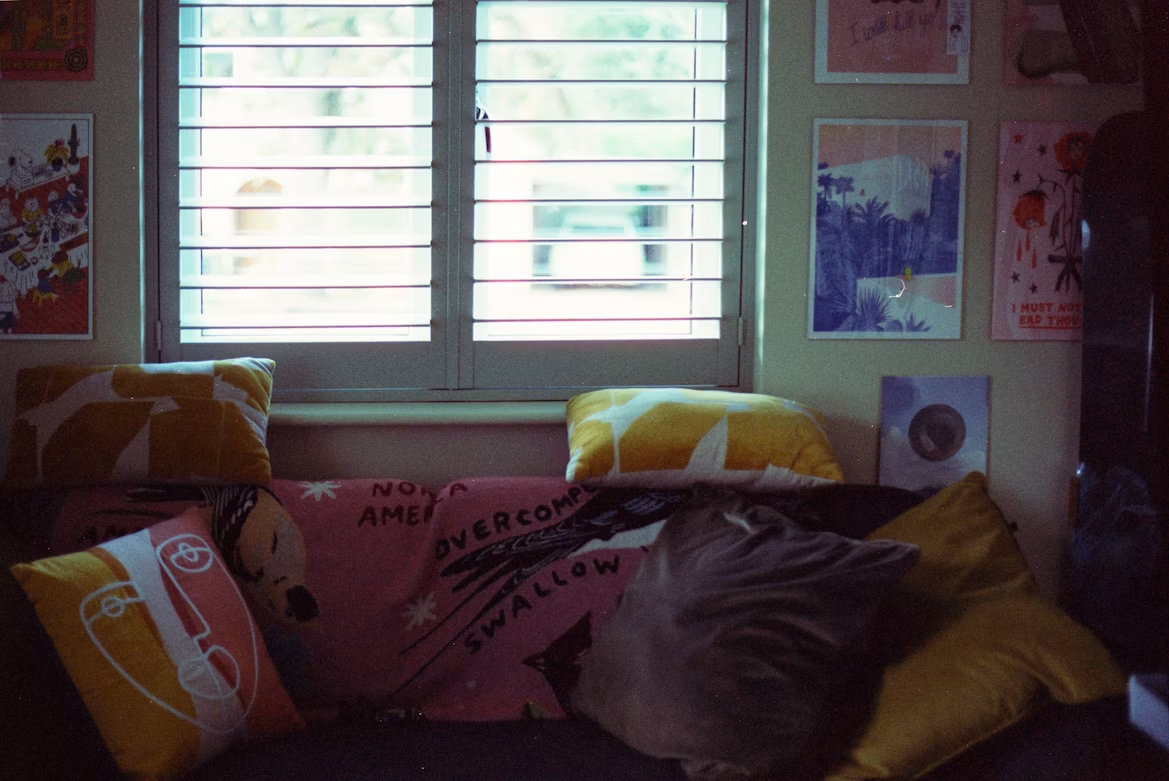
What they don’t have yet is any real understanding of how they move through this specific space. Which corner feels naturally like a desk zone. Where afternoon light lands and for how long. Whether the area near the kitchen becomes a natural gathering point or stays dead. Where they instinctively drop things the moment they walk in the door.
The studio will teach you all of this, but only if you give it time. Starting with less in the first weeks isn’t an aesthetic stance. It’s a practical one. You’re collecting information about a space you don’t know yet, and furniture is a decision you’ll live with for years.
The clients who do this well set a loose rule: no major furniture decisions in the first four weeks. They bring what they already own, live with it arranged however it lands, and notice what feels wrong before they spend money on solving it. Some people find their natural work zone is nowhere near the window they assumed would anchor a desk. Some find the living area wants to face a completely different direction. These aren’t discoveries you make from a floor plan, you make them by living there first.
The copywriter I mentioned had ordered her sofa before she’d slept in the space once. By week two she knew it was in the wrong position. By month one she knew it was slightly too large. It never moved the whole year, because moving it meant moving everything else.
2. The Scale Problem That Compounds Everything After It
The second consistent first-timer mistake grows directly from the first one. When you furnish fast, you almost always furnish with pieces that look right in a catalog or a showroom and turn out to be wrong for the actual square footage of your studio.
Scale errors in small spaces are persistent. They don’t fade into the background over time, you don’t stop noticing them, and they create problems that ripple outward into every other decision you try to make.
The most common version: a sofa that’s too deep. A 40-inch deep sectional is generous and comfortable in a normal living room. In a 380-square-foot studio, it cuts the usable floor space so severely that the whole apartment feels like a furniture showroom with a bed in it. The second most common: a dining table sized for four people that realistically seats two in this space, but takes up the square footage of four. Third, bed frames with tall vertical elements that create what reads, visually, as a room-within-a-room, turning the sleeping corner into something cramped and enclosed.
The measurement people forget most often is depth, not width. Everyone measures wall-to-wall. Fewer people measure how far into the room a sofa or desk will actually extend, and whether that depth leaves a walkable, breathable zone in the center of the space.
A sofa that’s 33 inches deep instead of 40 can return nearly 18 inches of floor space. That’s not a minor comfort compromise; that’s the difference between a room that flows and one you sidestep through every morning.
If you’re still figuring out where to start with a studio setup from scratch, scale decisions are the right first conversation, before storage, before zones, before style. Get the proportions wrong and no amount of clever organization corrects the feeling.
3. The Storage Spiral That Quietly Starts Around Month Five
By mid-year, something predictable happens. The person has settled in, accumulated the natural accumulation of a life being lived, and decided the root cause of their frustration is that they don’t have enough storage.
So they buy bins.
Then they need somewhere to put the bins, so a shelving unit arrives. Then the shelving unit needs to look organized, so matching containers follow. Labels appear. A pegboard goes up in the kitchen. By month seven, the studio has developed what I think of as a storage installation. It’s not décor. It’s not furniture, exactly. It’s a collection of systems layered over a space that now reads as cluttered regardless of how neatly each bin is organized.
Here’s where the mistake is most misunderstood: the problem usually isn’t a lack of storage. It’s a lack of closed storage paired with too much open storage filled to capacity. Every fully loaded open shelf, every row of labeled bins, every grid of hooks with something hanging from each one represents things the eye has to register every time it scans the room. Organized items still count as visual information.
First-Year Storage Arc: What It Typically Looks Like
| Timeframe | Behavior | What’s Actually Happening |
|---|---|---|
| Month 1-2 | Minimal storage, things sitting out | Space feels unfinished; drives first purchase |
| Month 3-4 | Bins and baskets appear | Visually tidier but room still feels busy |
| Month 5-6 | Shelving units added | Storage becomes part of the visual noise |
| Month 7-9 | Labels, matching containers, systems | Same amount of stuff, now better organized |
| Month 10-12 | Fatigue sets in | Real decision: edit possessions or keep building systems |
The people who come out of year one with studios that genuinely work for them almost all make the same decision at that month 10-12 fork. They stop building systems and start editing what they own. Not because they’ve become minimalists, but because they’ve realized the storage was never the actual problem.
Closet storage in studios is a good case study in this. Most first-timers treat the closet as a place to stuff overflow, then wonder why it stops working. The studios where storage actually functions well are the ones where closets are treated as planned storage systems from the start, not catch-all zones for whatever didn’t fit elsewhere.
And yes, I realize I’m drifting a bit into closet specifics here when I was talking about the broader spiral. The point is the same across all of it: adding more containers to a studio doesn’t solve the underlying volume problem. It delays it, and it adds a visual layer that makes the space feel more congested in the process.
4. Living in the Space for a Year Without Establishing Any Zones
The fourth mistake ties all the others together, and it’s the one that creates the persistent low-level dissatisfaction that’s hard to name. Most first-timers spend their entire first year in a studio without defining any zones at all.
The bed is the bed. The couch is the couch. But where does the sleeping zone end? Where is work supposed to happen, and where is the actual off-the-clock space? When the laptop lives on the couch and the meal gets eaten on the bed because the coffee table is covered in work, and sleep happens six feet from where a full workday just occurred, the brain struggles to register any of those contexts as distinct.
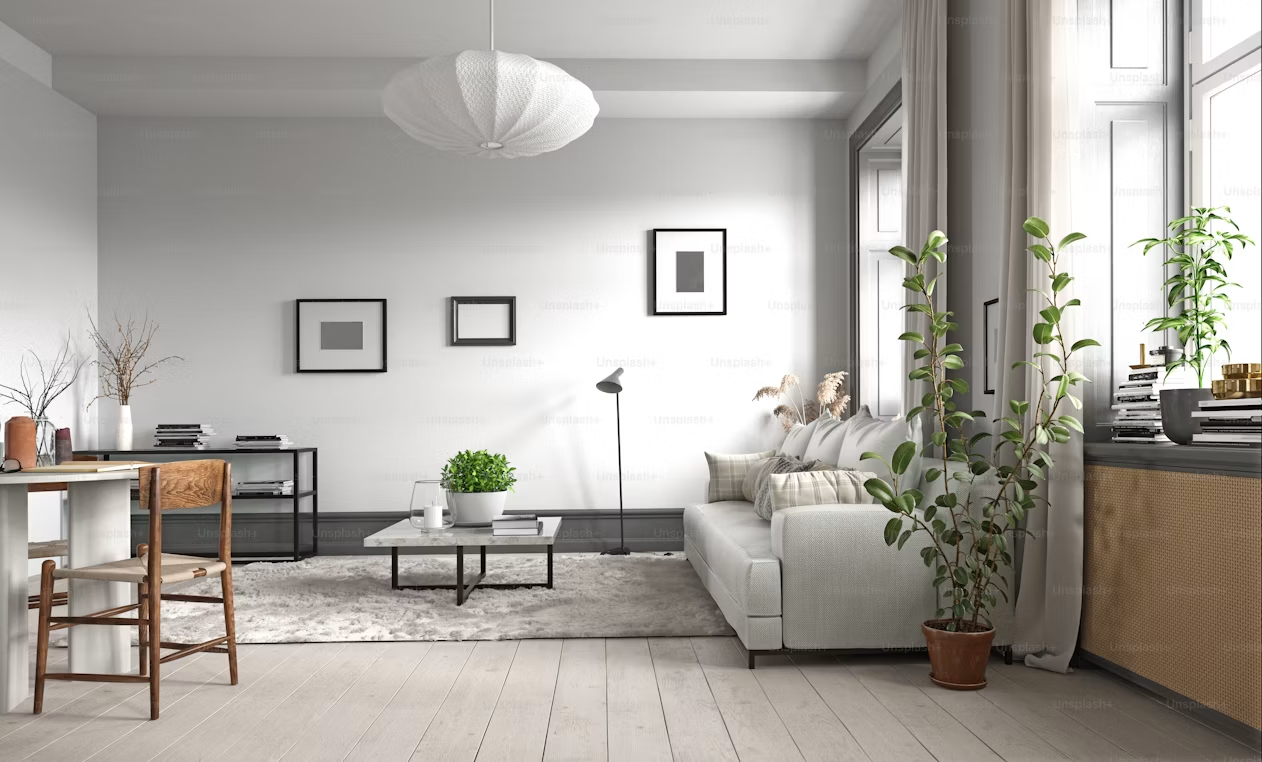
Studios don’t need walls between zones. But they need something. A rug under the seating area that signals that zone has a boundary. A dedicated lamp over the desk that makes it distinct from everything else around it. Furniture positioned at a slight angle rather than flush to the wall, which changes the reading of a corner from generic space to claimed space.
The under-bed storage question is actually related to this in a way people don’t always see. Treating the sleeping area as a zone with its own storage logic, rather than a place where the bed happens to sit, changes how that area functions cognitively, not just practically.
Without any zone definition, the studio feels like one large, unfinished room regardless of how organized or furnished it is. That unfinished quality wears on people because the brain never gets to switch context. Work is everywhere. Rest is nowhere specific. And everything about the space reads as temporary, even if you’ve been there for ten months.
Studio Apartment Setup covers zone creation in a few different ways across its guides, because it surfaces as the underlying issue in so many different questions. The details vary but the core principle holds: the space needs to be divided into contexts the brain can actually identify, and that division costs almost nothing to create.
First studios are usually a learning experience. That’s not a consolation prize, it’s genuinely how it works. The second studio almost everyone gets right in ways they couldn’t have planned for, because the first one taught them things no article can.
The goal isn’t to avoid the curve entirely. It’s to understand it well enough to exit it faster.
Frequently Asked Questions
I’m four months in and I’m already over my studio. Is that the space or is it something I did?
Almost always a combination of both, weighted toward decisions made in the first few weeks. The furniture scale issues, the storage buildup, and the lack of zone definition all compound by month four and create a generalized frustration that feels like the space itself is the problem. Try resolving one issue at a time rather than everything at once. Scale is usually the highest-impact change.
When should I actually buy furniture for a new studio?
After at least three to four weeks of living in the space with only what you need functionally. That timeline gives you enough information about traffic patterns, light, and natural use zones to make better decisions. Anything bought before that is guesswork, and in a small space, guesswork is expensive.
How much open shelving is too much for a studio?
One well-curated unit, not fully loaded, with visible breathing room between groupings. Beyond that, open storage in a studio tends to add more visual noise than it resolves in practical convenience. Closed storage, even budget closed storage, gives the eye a surface to rest on rather than more things to register.
Does a rug actually make a studio feel bigger?
Properly sized, yes. A rug that’s too small has the opposite effect and makes the furniture it sits under look like it’s floating. The general principle: the front legs of seating should sit on the rug, not beside it. Getting the rug size right is one of the faster, cheaper ways to make a studio feel like it has a defined living area rather than just furniture arranged in a room.
My studio came unfurnished and I have almost nothing. Where do I actually start?
Bed first, then seating, then a surface for work or eating. Everything else should wait. The first weeks in an empty studio are genuinely useful: you’ll notice where the light is, where you naturally spend time, where things feel awkward. That information is worth more than a fast full-room setup that locks you into choices before you understand the space.